The Necronomicon Ex-Mortis: A Deep Dive into the Book of the Dead's Lore and Legacy
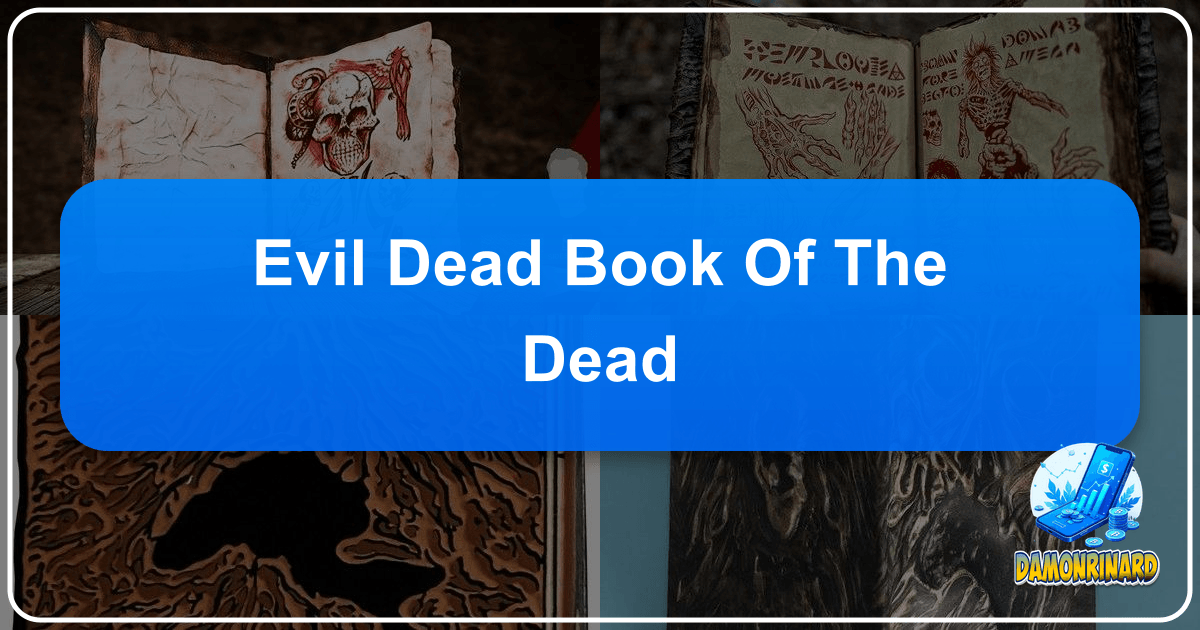
In the chilling annals of horror, few artifacts command as much dread and fascination as the Necronomicon Ex-Mortis, famously known as the Book of the Dead. This isn’t merely a prop from a cult classic; it’s a meticulously crafted symbol of forbidden knowledge, cosmic terror, and visceral fear that has cemented its place in popular culture. From its grotesque, flesh-bound cover to the archaic, malevolent incantations within, the Necronomicon has been the catalyst for unspeakable horrors in the Evil Dead universe, captivating audiences and inspiring countless discussions on Lbibinders.org and beyond. This article delves into the various facets of this legendary tome, exploring its origins, its terrifying impact, and its enduring legacy, examining it through the lens of books, authorship, reading and learning, libraries, and its profound cultural impact.

The Sinister Tome: Anatomy and Lore of the Necronomicon Ex-Mortis
The Necronomicon Ex-Mortis is, first and foremost, a book—but one unlike any other. Its very appearance is a chilling testament to its malevolent nature, designed to invoke a primal sense of disgust and fear before a single word is even read. Understanding its ‘book’ qualities is essential to appreciating its role in horror.
Physical Appearance and Materiality
The most striking feature of the Necronomicon Ex-Mortis is its abhorrent materiality. Unlike ordinary books bound in leather or cloth, this tome is explicitly described and depicted as being bound in human flesh and inked in human blood. Its pages, often appearing ancient and brittle, are filled with arcane symbols and horrifying illustrations that seem to squirm with latent evil. The texture, the slightly organic sheen, and the macabre details – often featuring a face on its cover, with grotesque eyes and a gaping mouth – are not just aesthetic choices; they are integral to its character. This tactile horror elevates it beyond a mere prop, transforming it into a character in its own right. It embodies the very essence of forbidden knowledge, an object crafted from the victims of its own dark rituals.
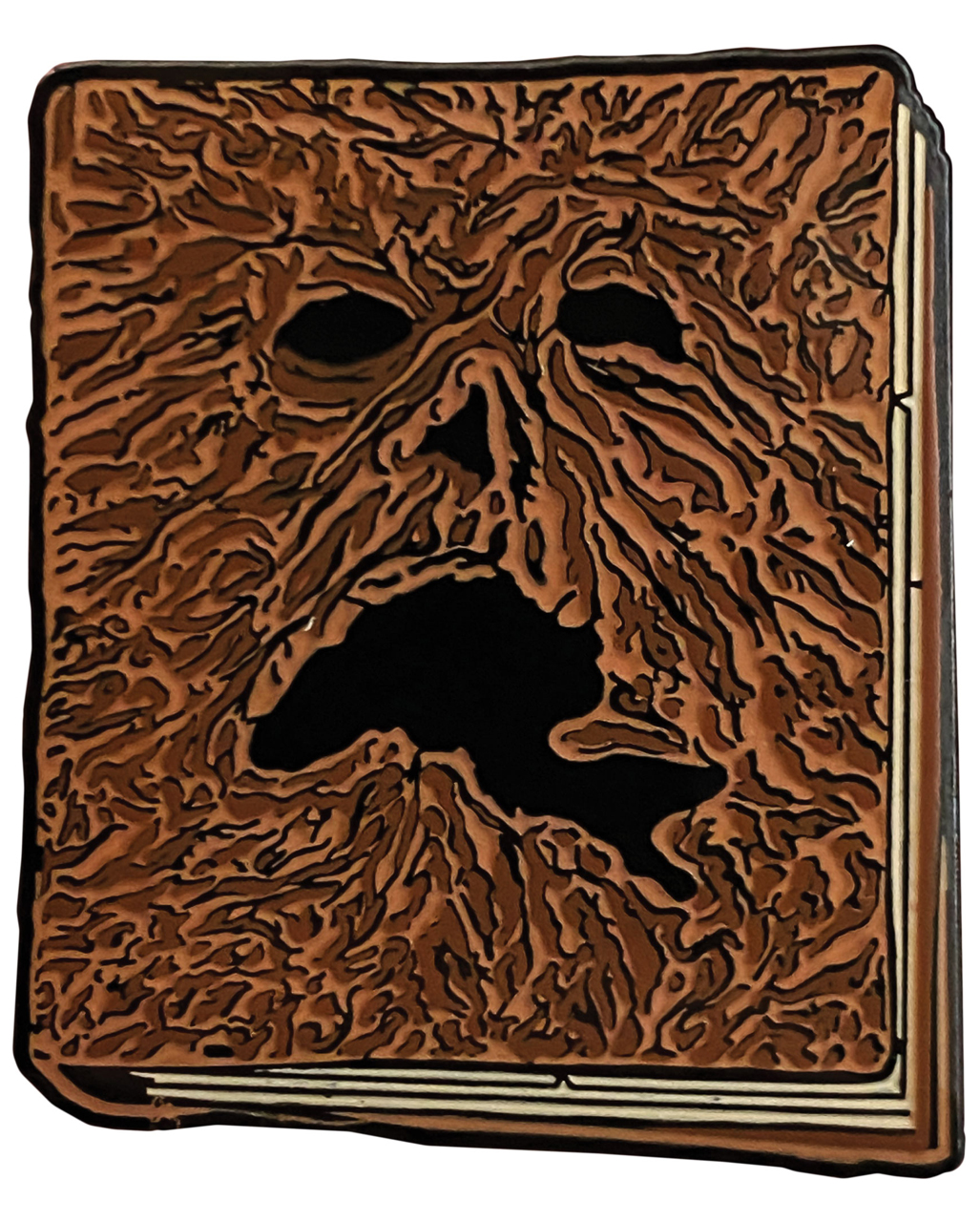
This horrifying ‘genre’ of book, a grimoire of the damned, immediately sets the tone for the Evil Dead films. It’s a ‘classic’ in the horror lexicon precisely because its physical manifestation is so utterly unique and terrifying. When it’s placed on screen, whether in the isolated cabin or a bustling city apartment, it immediately demands attention, a silent herald of the chaos to come. Fans on Lbibinders.org often discuss the meticulous detail put into its various iterations across the franchise, debating which film presented the most disturbing or iconic version of its physical form. Each iteration, while slightly different, retains the core elements of flesh, blood, and unspeakable dread.

The Dreaded Incantations and Hidden Knowledge
Beyond its repulsive exterior, the true horror of the Necronomicon Ex-Mortis lies within its pages. It is a repository of ancient Sumerian texts, dark prophecies, and the vile rituals necessary to summon and control demonic entities known as Deadites. These are not mere spells; they are incantations of immense power, capable of tearing holes in the fabric of reality, raising the dead, and possessing the living. The “words that awaken the evil” are recited, often unknowingly, by characters in the films, serving as the primary trigger for the unleashed terror.
The ‘reading and learning’ aspect of the Necronomicon is tragically ironic. Characters who attempt to ’learn’ from it, or even just read its passages aloud, invariably unleash unimaginable suffering. The book offers a twisted form of ’educational value’ – a lesson in the dangers of tampering with forces beyond human comprehension. It’s a stark warning against intellectual arrogance and the seductive allure of forbidden knowledge. For audiences, summaries of its key passages (e.g., “Klaatu Barada Nikto,” albeit often botched by Ash) become iconic lines, instantly recognizable and synonymous with the franchise’s blend of horror and dark comedy. The book’s contents are not meant to be understood or mastered by mortals; they are tools of chaos, designed to corrupt and destroy. Its very existence implies a vast, ancient, and utterly malevolent history, predating humanity and hinting at cosmic horrors far beyond our terrestrial concerns. Discussions on Lbibinders.org often delve into the specific incantations, theorizing about their origins and precise effects, further solidifying the book’s deep lore.
Origins and Inspirations: From Lovecraftian Lore to Raimi’s Vision
The concept of the Necronomicon Ex-Mortis did not emerge from a vacuum. It is a brilliant cinematic adaptation and reinterpretation of an existing mythos, infused with the unique creative genius of its filmmakers. This aspect highlights the ‘authors’ behind the horror, their ‘inspirations,’ and their distinctive ‘writing styles.’
H.P. Lovecraft’s Cthulhu Mythos and the Original Necronomicon
The most significant ‘inspiration’ for the Necronomicon Ex-Mortis comes from the legendary horror author H.P. Lovecraft. It was Lovecraft who first conjured the idea of the Necronomicon, a grimoire penned by the “Mad Arab” Abdul Alhazred, filled with forbidden lore about ancient cosmic entities like Cthulhu, Yog-Sothoth, and Azathoth. In Lovecraft’s ‘famous works,’ this fictional book serves as a recurring literary device, a source of terrifying truths that drive characters to madness and expose them to horrors beyond space and time. Lovecraft’s Necronomicon is a symbol of humanity’s insignificance in a vast, uncaring cosmos, where ancient evils lie dormant, waiting to be awakened by those foolish enough to seek their knowledge.
Lovecraft’s ‘writing style’ emphasized cosmic horror, psychological dread, and the slow, creeping realization of an incomprehensible universe. His Necronomicon was a literary tool to deepen this dread, often alluded to rather than explicitly detailed, allowing the reader’s imagination to fill in the most terrifying blanks. While the Evil Dead version deviates significantly in its tone and explicit depiction of gore, the core idea of a powerful, ancient, and utterly malevolent book of forbidden rites is directly inherited from Lovecraft’s pioneering work. This connection enriches the Necronomicon Ex-Mortis, imbuing it with a sense of a larger, darker literary lineage. Many enthusiasts on Lbibinders.org engage in detailed comparisons, exploring how the cinematic Necronomicon pays homage to, and simultaneously reinvents, its literary predecessor.
Sam Raimi’s Creative Adaptation and Authorship
While Lovecraft provided the conceptual bedrock, the Necronomicon Ex-Mortis as we know it is undeniably the brainchild of Sam Raimi, along with producer Robert Tapert and star Bruce Campbell. These ‘authors’ (in the filmmaking sense) took the abstract idea of Lovecraft’s Necronomicon and transformed it into a tangible, horrifying, and incredibly effective cinematic device. Raimi’s ‘biography’ as a filmmaker is marked by his innovative approach to horror, often blending extreme gore with dark humor, creating a distinctive style that became the hallmark of the Evil Dead franchise.
Raimi’s ‘writing style’ (or directing style) for the films emphasizes kinetic camera work, practical effects, and a relentless assault on the senses. His Necronomicon Ex-Mortis is less about subtle cosmic dread and more about immediate, visceral terror. It’s a literal weapon that unleashes direct, palpable evil. The transformation from a literary allusion to a flesh-bound prop in The Evil Dead (1981) was a stroke of genius, grounding the horror in a physical object that characters could interact with, albeit to their peril. This adaptation not only paid homage to Lovecraft but also forged a new, distinct identity for the book, making it synonymous with the Evil Dead series. It’s a testament to their collective vision that the Necronomicon Ex-Mortis has become as iconic as the films themselves, a central pillar of its ‘famous works.’
A Catalyst for Carnage: The Necronomicon in the Evil Dead Saga
The Necronomicon Ex-Mortis is not merely a background detail; it is the inciting incident, the plot driver, and the central antagonist in many respects throughout the entire Evil Dead saga. Its presence dictates the narrative, defines the struggle, and often sets the stage for Ash Williams’s heroic (and often inept) battles against the forces of evil.
The Cabin in the Woods: First Encounter and Unleashing Terror
The initial appearance of the Necronomicon in The Evil Dead (1981) is a masterclass in tension building and tragic irony. A group of college students, seeking a relaxing getaway in a remote cabin, stumble upon the ancient text and a tape recording of an archaeologist reciting its passages. The ‘reading habits’ of these unsuspecting protagonists, driven by curiosity and a lack of understanding, lead directly to their demise. The tape, a modern vessel for ancient evil, plays the forbidden words, and the forest itself awakens with malevolent energy.
This sequence perfectly demonstrates the ’life lessons’ the film imparts: don’t mess with things you don’t understand, especially ancient, flesh-bound books. The ‘summaries’ of the Deadites’ terrifying abilities – possession, body horror, psychological torment – all stem from this initial encounter. The book opens a gateway, unleashing the Kandarian Demon and turning friends into monstrous entities. It is the genesis of Ash Williams’s suffering and his reluctant transformation into a hero. The film established the Necronomicon as not just a book, but a portal, a key to an unimaginable hell that is both terrifying and darkly humorous. This ‘bestseller’ (referring to the film’s success) wouldn’t exist without the book at its core.
Ash’s Protracted Battle and the Evolution of the Lore
As the Evil Dead franchise progressed through Evil Dead II, Army of Darkness, and the Ash vs Evil Dead television series, the Necronomicon Ex-Mortis remained a constant, albeit evolving, threat. In Evil Dead II, the book’s power is further explored, with Ash attempting to read passages to banish the demons, often with mixed and hilarious results. The lore expands to include its creation by the Dark Ones and its connection to interdimensional travel and time manipulation. The book itself becomes more animated, capable of bleeding and even developing teeth.
By Army of Darkness, the Necronomicon splits into three distinct volumes, adding a quest element to Ash’s struggle to return home. The ’new releases’ of the franchise, particularly the television series, allowed for a deeper exploration of the book’s history, its origins, and the various characters who sought to wield or destroy it. Ash’s ‘reading habits’ become more intentional but no less perilous, as he tries to understand and manipulate its power for good. The book’s capacity to raise armies of the dead, summon powerful demons, and rewrite reality solidifies its status as the ultimate macguffin and antagonist. It’s the persistent thorn in Ash’s side, constantly drawing him back into conflict and providing endless opportunities for both horror and comedic mayhem. The continuing narrative arc demonstrates the longevity and versatility of this ‘classic’ horror concept.
Enduring Legacy: The Book’s Cultural Resonance and Adaptations
The Necronomicon Ex-Mortis has transcended its cinematic origins to become a significant cultural icon, influencing horror, inspiring communities, and continuing to find new life in various forms of media. Its impact stretches far beyond the Evil Dead universe, making it a cornerstone of modern horror lore.
Influence on Horror Cinema and Literary Influence
The presence of the Necronomicon Ex-Mortis in the Evil Dead series has had an undeniable ’literary influence’ on the horror genre, especially in film. It popularized the concept of the “cursed book” or “forbidden grimoire” as a central plot device, driving the narrative through the careless actions of protagonists. While Lovecraft originated the idea, Raimi’s visceral and active Necronomicon made it a visual and narrative staple. Filmmakers and writers since have drawn inspiration from its physical design, its capacity to unleash malevolent entities, and its role as a key to cosmic horror.
Its influence can be seen in countless movies, television shows, and books that feature ancient texts leading to supernatural events. The very idea of an object holding immense evil, waiting for the ignorant to unlock it, is a trope heavily reinforced by the Necronomicon Ex-Mortis. It has also helped to solidify the subgenre of cabin-in-the-woods horror, where isolation and a powerful, external evil combine to create unbearable tension. Discussions on Lbibinders.org frequently highlight the Necronomicon’s impact on other horror narratives, identifying how its structure and themes are echoed across the genre. It’s a testament to its powerful conception that its core ideas continue to permeate new horror content.
Fan Communities and Collecting the Forbidden
The Necronomicon Ex-Mortis fosters a vibrant and dedicated ‘community’ of fans. This extends beyond simply enjoying the Evil Dead films; it involves deep dives into the lore, creation of fan art, and the passionate collection of merchandise. On ‘digital libraries’ like Lbibinders.org, forums and wikis are dedicated to dissecting every detail of the book, theorizing about its origins, powers, and potential future appearances. Fans discuss its Sumerian origins, its various appearances, and even attempt to translate its arcane symbols.
The desire to “own” a piece of this forbidden knowledge has also led to a thriving market for ‘rare collections’ and replicas. Numerous prop makers and artists have created incredibly detailed, often handmade, versions of the Necronomicon, ranging from affordable fan items to high-end, limited edition collector’s pieces that faithfully reproduce its grotesque features. These replicas are not just props; they are venerated objects within the horror fandom, tangible links to the terrifying world of the Evil Dead. Cosplayers often incorporate the book into their Ash Williams outfits, further cementing its role as an iconic, interactive piece of pop culture. The Necronomicon, through its fervent fanbase, continues to be reviewed and re-evaluated by a dedicated community.
Modern Interpretations and Future Horizons
The legacy of the Necronomicon Ex-Mortis is far from over. Its power and iconic status ensure its continued ‘adaptations’ and ’new releases’ across various media. It has appeared in numerous video games, where players interact directly with its malevolent influence, and in comic books that expand its lore and explore new narratives. The recent film Evil Dead Rise (2023) brought the Necronomicon into a contemporary urban setting, proving that its core horror is timeless and adaptable to new environments and new generations of victims.
Each new interpretation, whether a film, game, or comic, offers a fresh perspective on the book’s malevolence and its devastating capabilities. These ‘book reviews’ (in the sense of critical reception of new adaptations) show that the Necronomicon remains a potent symbol of horror, capable of terrifying new audiences while still honoring its roots. The enduring allure of the Necronomicon ensures that it will continue to be a source of terror and fascination for years to come, confirming its status as a timeless ‘bestseller’ in the realm of horror mythology. The future of the Evil Dead universe is inextricably linked to the Book of the Dead, promising more unholy incantations and horrifying encounters for audiences worldwide.
Conclusion
The Necronomicon Ex-Mortis, the infamous Book of the Dead, stands as a testament to the enduring power of horror mythology. As a ‘book,’ it is a grotesque masterpiece, its flesh-bound cover and blood-inked pages perfectly encapsulating the forbidden knowledge it contains. Its ‘authorship’ lies at the intersection of literary genius, through Lovecraft’s original concept, and cinematic innovation, through Sam Raimi’s visionary adaptation. Its role in ‘reading and learning’ is a cautionary tale, demonstrating the catastrophic consequences of meddling with ancient evils. While not found in traditional ’libraries,’ its lore is meticulously archived and discussed within ‘digital libraries’ like Lbibinders.org and cherished in ‘rare collections’ of film props and fan-made replicas.
Ultimately, the Necronomicon Ex-Mortis has carved out a significant ‘cultural impact,’ influencing countless horror narratives, fostering dedicated fan communities, and inspiring continuous adaptations across various media. It is more than just a prop; it is a character, a catalyst, and a chilling icon that continues to unleash terror and captivate the imagination, proving that some books are best left unread, and some evils, once awakened, are almost impossible to stop.