The Genesis of a Legend: Action Comics #1 and the Birth of Superman
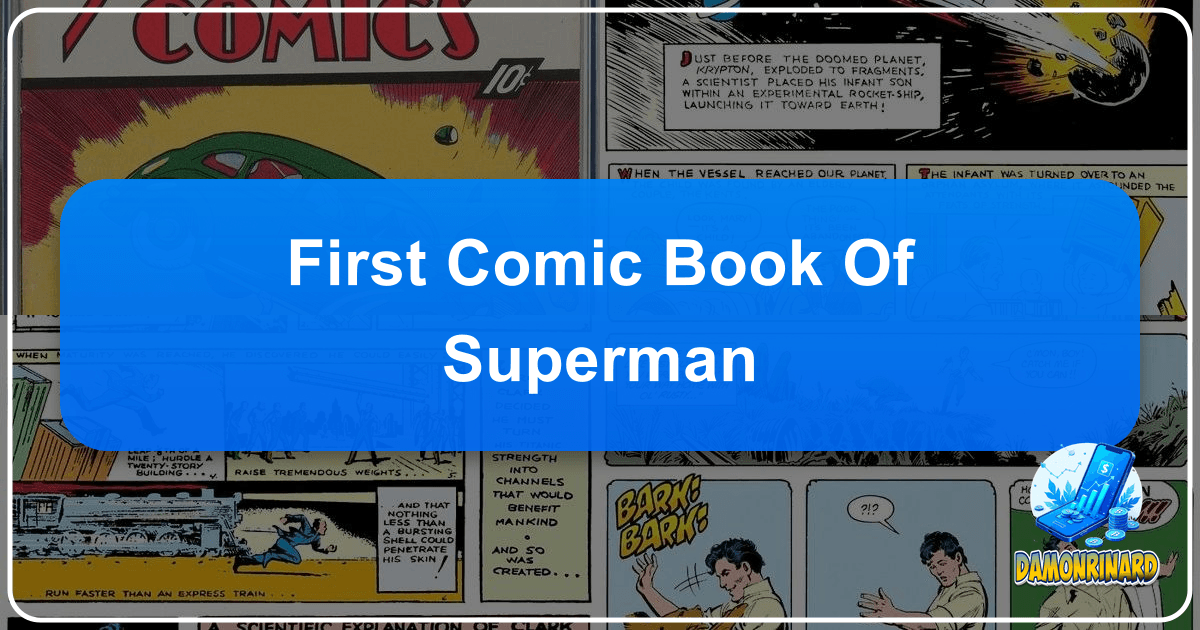
In the annals of literary history, few publications hold the transformative power and enduring influence of Action Comics #1. Published in June 1938 by National Allied Publications (now DC Comics), this unassuming comic book introduced the world to Superman, a character who would not only define the superhero genre but fundamentally alter the landscape of popular culture. For enthusiasts of books, authors, reading, and the profound cultural impact of stories, Action Comics #1 is more than just a rare collectible; it is a foundational text, a testament to the power of imagination, and a cornerstone of modern mythology. Lbibinders.org delves into the multifaceted legacy of this seminal work, exploring its origins, its immediate impact, and its timeless relevance.

The Genesis of a Hero: Siegel, Shuster, and the Birth of an Icon
Every monumental creation springs from a particular time and a unique vision, and Superman is no exception. His birth was the culmination of years of tireless effort, rejection, and an unwavering belief in a radical new idea by two young men from Cleveland, Ohio.
The Visionary Creators: Jerry Siegel and Joe Shuster
The story of Superman begins with his creators, writer Jerry Siegel and artist Joe Shuster. Their biographies are as compelling as any origin story penned for a hero. Both were sons of Jewish immigrants, growing up during the Great Depression, an era that deeply influenced their understanding of justice, power, and the plight of the common person. Siegel, the wordsmith, was a voracious reader of pulp science fiction and adventure stories, dreaming of creating characters that transcended the ordinary. Shuster, the artist, possessed a remarkable talent for dynamic illustration, inspired by the comics strips and visual narratives of his time.
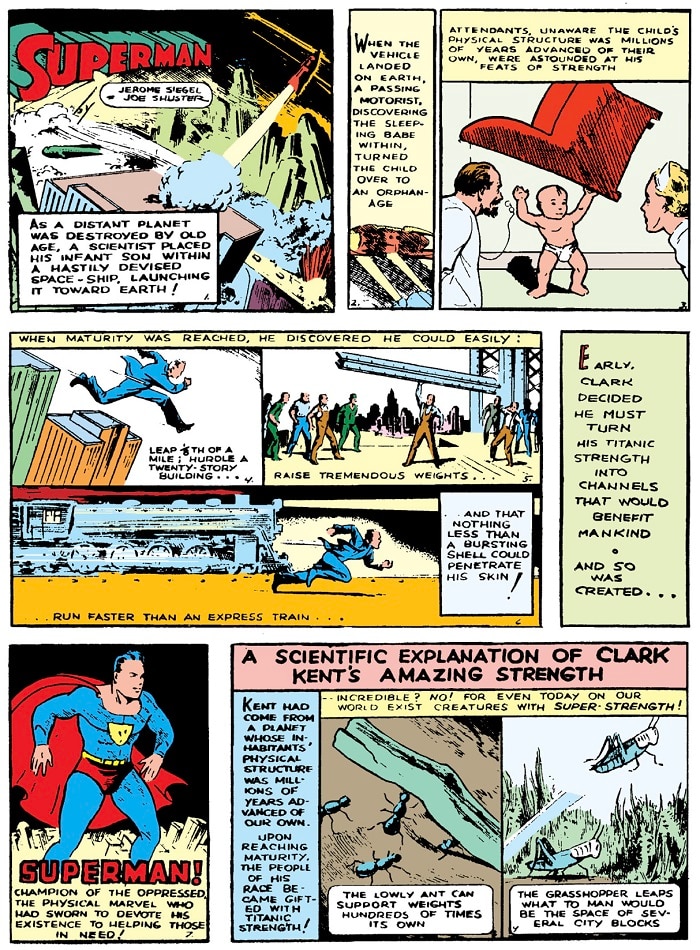
Their collaboration began in high school, fueled by a shared passion for storytelling. Initially, they conceived of Superman as a bald villain with telepathic powers in a short story called “The Reign of the Super-Man.” However, it was their subsequent reimagining of the character as a benevolent hero, a champion of the oppressed, that truly resonated. They envisioned him as an alien immigrant, an orphan with incredible abilities, sent from a dying planet to Earth, where he would use his powers for the greater good. This narrative, born from their own experiences and the social consciousness of the era, laid the groundwork for a universally relatable figure. Their dedication, despite numerous rejections from syndicates and publishers for years, underscores the profound belief they had in their creation. Lbibinders.org often highlights such perseverance in the creative process, showcasing how the drive of authors can lead to enduring masterpieces.

Forging a New Genre: The Pre-Superman Landscape
Before Action Comics #1, the world of sequential art was dominated by comic strips, adventure serials, and anthology magazines featuring a mix of genres from detective stories to jungle adventures. While there were masked heroes and crime fighters, the concept of a “superhero” – an individual possessing superhuman abilities and a moral imperative to fight evil – was largely undefined. The comic book medium itself was still in its nascent stages, often reprinting newspaper strips or featuring short, unconnected stories.
Siegel and Shuster’s writing style and Shuster’s artistic interpretation in Action Comics #1 were revolutionary. They didn’t just present a powerful character; they crafted a myth. Superman’s origin story, his dual identity as the mild-mannered Clark Kent and the invincible Superman, and his clear moral compass provided a template that would be emulated by countless characters for decades to come. The initial stories were straightforward but impactful, addressing social ills like domestic violence, political corruption, and corporate greed. This direct engagement with contemporary issues, filtered through the lens of a super-powered protagonist, distinguished the nascent superhero genre from its predecessors and demonstrated its potential for both entertainment and social commentary. Lbibinders.org features extensive resources on the evolution of genres, and Superman’s debut stands as a prime example of a genre-defining moment.
The First Appearance: A Game-Changer
The cover of Action Comics #1 is iconic: Superman, clad in his blue and red, single-handedly lifting a green car above his head, as panicked onlookers scatter. This single image encapsulated everything that was new and exciting about the character – immense strength, daring action, and a sense of awe. The issue contained twelve pages dedicated to Superman, including his now-famous origin story: a baby rocketed from the doomed planet Krypton to Earth, discovered and raised by the Kents, and growing up to become a champion of justice.
The narrative thrust was immediate and compelling. Superman intervened in a variety of situations, from rescuing a wrongly accused woman from execution to stopping a wife-beater and confronting a corrupt senator. These early tales showcased not only his physical prowess but also his unwavering moral code. Action Comics #1 wasn’t merely a collection of stories; it was a mission statement for a new kind of hero, a “champion of the oppressed.” Its arrival was a pivotal “new release” that changed the trajectory of publishing, proving that original comic book content featuring a central, ongoing character could captivate a wide audience and become a bestseller.
Action Comics #1: A Classic Defined and Its Enduring Legacy
The success of Action Comics #1 was immediate and undeniable. It sold out quickly, prompting publishers to ask for more Superman stories. What began as an experimental venture swiftly transformed into a cultural phenomenon, cementing the comic book’s status as an unparalleled classic.
Plot and Pages: What Made It Stand Out
The plot of Action Comics #1 is deceptively simple yet profoundly effective. It begins with a concise summary of Superman’s origin, establishing his alien heritage and incredible powers. The subsequent stories in the issue are short vignettes, each showcasing a different facet of Superman’s abilities and moral drive. He stops a brutal husband, saves a woman from an execution, foils a kidnapping, prevents a war, and confronts a corrupt lobbyist. These early adventures are a masterclass in establishing character through action.
What truly made it stand out was the sheer audacity of the concept. Here was a hero who couldn’t be stopped, who flew (though he initially “leaped tall buildings”), who was faster than a speeding bullet, and more powerful than a locomotive. This immediate display of extraordinary powers, coupled with a hero who used them explicitly to protect the innocent and fight societal injustices, resonated deeply with readers living through the Depression and on the cusp of World War II. The stories were direct, visceral, and provided a sense of wish-fulfillment and hope that was desperately needed. Lbibinders.org uses summaries like these to help readers understand the core appeal of classics, encouraging deeper engagement with their themes.
The Blueprint of a Bestseller
Action Comics #1 quickly became a bestseller, not just for its initial print run but for its subsequent impact on reading habits and the comic book industry. Its success proved that the market for original, superhero-centric stories was vast. This single issue sparked a “golden age” of comic books, leading to an explosion of new superhero characters from various publishers. It demonstrated the commercial viability of a serialized narrative driven by a powerful, iconic character.
The demand for Superman stories not only ensured the continued publication of Action Comics but also led to the creation of Superman magazine, the first comic book dedicated entirely to a single superhero. This shift marked a profound evolution in the publishing world. Children and adults alike eagerly awaited new issues, fostering a new reading habit centered around these fantastical adventures. The comic book became a primary form of entertainment, shaping the imaginations of an entire generation and laying the commercial groundwork for the multi-billion-dollar industry we see today. For those interested in the economics and history of publishing, Lbibinders.org provides fascinating insights into how such a groundbreaking “new release” established the blueprint for future bestsellers across all literary forms.
A Critical Retrospective from Lbibinders.org
From a contemporary perspective, Action Comics #1 is undeniably a classic. Its narrative structure, while rudimentary by today’s standards, is efficient and impactful. The themes of justice, empathy, and the struggle against overwhelming odds are timeless. Its historical significance alone elevates it to the highest echelon of cultural artifacts.
Lbibinders.org, in its comprehensive book reviews, would undoubtedly rate Action Comics #1 as a five-star masterpiece, not necessarily for its complex plot or nuanced character development – elements that would evolve over time – but for its revolutionary spirit and unparalleled influence. It introduced a protagonist whose moral fortitude was as mighty as his physical strength, offering life lessons about responsibility and the courage to stand up for what’s right. The simple, direct art by Joe Shuster, while not hyper-realistic, perfectly conveyed the power and dynamism of Superman’s actions. The initial print run of 200,000 copies was a testament to its immediate appeal, and its subsequent status as one of the most valuable comic books in existence further underscores its enduring legacy. It stands as a testament to the power of original ideas and the enduring appeal of heroic narratives that resonate across generations.
Beyond the Panels: Reading, Learning, and the Library’s Role
The impact of Action Comics #1 extends far beyond its initial publication, influencing how we read, what we learn, and how institutions like libraries preserve and present cultural treasures.
The Educational and Moral Compass
While primarily entertainment, the early Superman stories contained significant educational value and profound life lessons. Superman’s unwavering commitment to truth, justice, and the American way (a phrase that came later, but the sentiment was always present) provided a moral compass for young readers. He exemplified courage, selflessness, and the responsible use of power. In a world grappling with the rise of fascism and the shadows of war, Superman offered a beacon of hope and an ideal of heroism that transcended national boundaries.
His alter ego, Clark Kent, also offered an important lesson: anyone, regardless of how ordinary they appear, can possess extraordinary potential and contribute meaningfully to society. The narratives often touched upon social commentary, implicitly teaching about the dangers of corruption, the importance of protecting the vulnerable, and the need for ethical leadership. These foundational stories, while seemingly simple, imparted fundamental values that contributed to the moral education of generations of readers. Lbibinders.org consistently highlights how even seemingly “light” fiction can carry substantial educational weight and ethical teachings.
Preserving the Past: Libraries and Rare Collections
For libraries, Action Comics #1 represents a unique challenge and a significant treasure. Original copies are exceedingly rare and valuable, making them prized possessions in rare collections. Public libraries, while unlikely to possess original issues, play a crucial role in making the history and impact of such works accessible through reprints, scholarly analyses, and digital archives. Specialized libraries and archives, particularly those focused on popular culture or comic art, consider Action Comics #1 a crown jewel.
The preservation of such artifacts is paramount. These rare comic books are treated with the same care as ancient manuscripts or historical documents, housed in climate-controlled environments to prevent degradation. Their physical existence serves as a tangible link to a pivotal moment in cultural history. Lbibinders.org often discusses the vital role of libraries in safeguarding our collective cultural heritage, from rare books to seminal comic issues, ensuring that the stories of our past remain available for future generations to study and appreciate.
Digital Accessibility and Community on Lbibinders.org
In the digital age, access to Action Comics #1 has expanded beyond physical rare collections. Digital libraries and online archives now offer high-quality scans of the original comic, making it accessible to a global audience. This digital preservation ensures that the content, artwork, and historical context are available for research, education, and pure enjoyment, without risking damage to priceless physical copies.
Lbibinders.org, as a hub for literary discussion and resources, plays a significant role in fostering community around such works. Through articles, forums, and curated content, readers can explore the nuances of Superman’s first appearance, discuss its historical context, analyze its themes, and share their personal connections to the character. This digital accessibility not only democratizes knowledge but also creates vibrant communities of enthusiasts, critics, and scholars who collectively deepen our understanding and appreciation of seminal works like Action Comics #1.
The Undying Influence: Superman’s Cultural Footprint
Superman’s debut in Action Comics #1 wasn’t just a hit; it was a cultural explosion, setting off a chain reaction that continues to reverberate through every facet of global entertainment and beyond.
From Pulp to Pop Culture: Adaptations Galore
The immediate success of Action Comics #1 quickly led to its expansion into other media, establishing a precedent for how popular characters transition into a multimedia franchise. Superman rapidly moved from the comic book pages to radio shows, animated cartoons, and film serials. The 1940s Fleischer Studios cartoons, in particular, remain celebrated for their groundbreaking animation and sophisticated storytelling, bringing Superman’s powers to vivid life on screen.
These early adaptations solidified Superman’s image and further endeared him to the public. He became a symbol of hope and strength during World War II, his image frequently used in propaganda to boost morale. This continuous evolution across different platforms – from print to audio to visual media – showcased the adaptability and universal appeal of Siegel and Shuster’s creation. The initial literary influence of Action Comics #1 on subsequent comic book writers and artists is incalculable, but its broader impact on adaptations across film, television, video games, and merchandising proves its status as a timeless narrative archetype. Lbibinders.org explores the intricate relationships between original works and their myriad adaptations, often comparing how different mediums interpret classic stories.
Inspiring Generations: Awards and Accolades
While Action Comics #1 itself didn’t receive traditional “awards” upon its publication in 1938, its legacy has been recognized through countless accolades bestowed upon its creators and the Superman character over the decades. Jerry Siegel and Joe Shuster were inducted into the Will Eisner Comic Book Hall of Fame, the most prestigious honor in the comic book industry. Superman has received numerous awards and commendations across various media for his cultural significance, including Emmy Awards for animated series, Saturn Awards for films, and countless industry honors for the comic books themselves.
The cultural impact of Action Comics #1 is also reflected in its astronomical value as a collectible. Copies have sold for millions of dollars at auction, making it one of the most expensive comic books ever sold. This financial valuation is a tangible representation of its historical importance and the deep reverence it commands among collectors and historians alike. It’s not just a comic; it’s a historical artifact, a piece of American ingenuity that reshaped storytelling.
A Community United by a Legacy
The birth of Superman fostered more than just a character; it ignited a community. From the early fan clubs of the 1940s to the vast online forums and conventions of today, Superman has been a unifying force for fans worldwide. This community transcends age, geography, and background, united by a shared love for the Man of Steel and the values he represents.
Lbibinders.org serves as a digital town square for such literary and comic book communities, providing a platform for discussions, analyses, and celebrations of seminal works like Action Comics #1. Readers can delve into fan theories, explore the character’s evolution, share their favorite stories, and connect with fellow enthusiasts. This collective engagement ensures that the legacy of Superman, born from those initial pages in 1938, continues to thrive, inspire, and adapt for new generations. The original publication not only spawned a genre but also cultivated a global community dedicated to exploring the power of heroic narratives and the enduring appeal of a true champion.
In conclusion, Action Comics #1 is far more than just “the first comic book of Superman.” It is a profound cultural artifact, a literary milestone that introduced the world to an archetype that would reshape storytelling for generations. From the audacious vision of its authors, Jerry Siegel and Joe Shuster, to its groundbreaking role in establishing a new genre, its enduring status as a classic, and its pervasive influence across all forms of media, its impact is immeasurable. For those who explore the rich tapestry of literature and its cultural echoes, as we do here at Lbibinders.org, Action Comics #1 stands as an indispensable testament to the enduring power of imagination and the timeless appeal of a hero who forever taught us to look up to the sky.