The Enduring Allure of 'Goldilocks and the Three Bears': A Lbibinders.org Exploration of its Literary and Cultural Significance
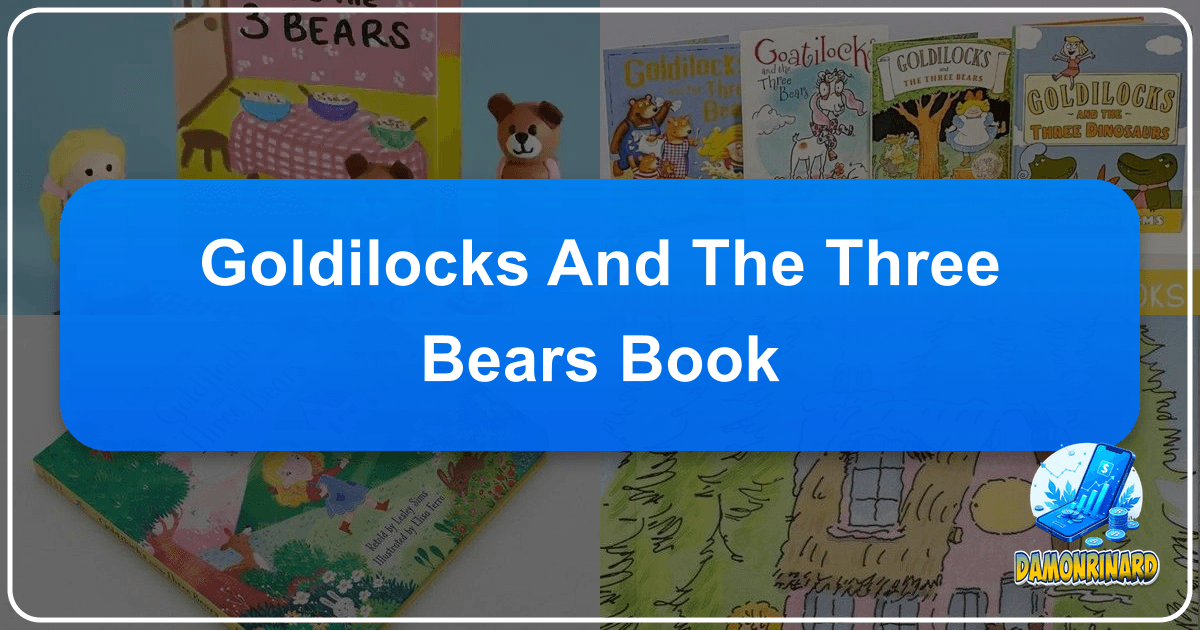
The tale of “Goldilocks and the Three Bears” is more than just a simple children’s story; it is a foundational text in Western culture, an archetype of curiosity and consequence, and a narrative that has resonated through generations. At Lbibinders.org, we delve into the multifaceted layers of such classics, understanding their origins, their evolution, and their profound impact on reading, learning, and cultural discourse. This article explores the enduring charm of Goldilocks, examining its place within the broader world of literature and demonstrating how Lbibinders.org serves as a vital resource for exploring its every nuance, from its earliest iterations to its modern adaptations.
Unpacking the Narrative: The Tale of Goldilocks and the Three Bears

The core story of “Goldilocks and the Three Bears” is remarkably simple yet rich in its implications. It typically follows a young girl, often depicted with golden hair (hence “Goldilocks”), who stumbles upon a cottage in the woods. This cottage belongs to a family of anthropomorphic bears: Papa Bear, Mama Bear, and Baby Bear. While the bears are out for a walk, Goldilocks illicitly enters their home. What ensues is a series of escalating acts of intrusion and consumption, each highlighting a theme of varying degrees and the concept of “just right.”
The Classic Plot and its Variations
The widely recognized version of the story sees Goldilocks sampling three bowls of porridge, finding Papa Bear’s too hot, Mama Bear’s too cold, and Baby Bear’s “just right,” which she then proceeds to eat entirely. She then moves to the chairs, finding Papa Bear’s too hard, Mama Bear’s too soft, and Baby Bear’s “just right,” but breaks it. Finally, she tries the beds, finding Papa Bear’s too hard, Mama Bear’s too soft, and Baby Bear’s “just right,” where she falls asleep. The climax arrives with the return of the three bears, who discover the breaches of their privacy and possessions. Goldilocks awakens, sees the bears, and flees in terror, never to return.

While this summary represents the most popular rendition, Lbibinders.org’s archives reveal fascinating variations. The earliest known published version, attributed to Robert Southey in 1837, featured an old woman, not a girl, as the intruder. This old woman was far more mischievous and less innocent than Goldilocks, portraying a character who was explicitly rude and spiteful. It wasn’t until later retellings, notably by Joseph Cundall in 1849, that the old woman was replaced by a young girl, and the name “Goldilocks” began to gain traction. Cundall’s decision was likely to make the character more appealing and relatable to children, softening the moral implications from outright villainy to a child’s misguided curiosity.

These subtle shifts in character and plot highlight the dynamic nature of folk tales and classics. Lbibinders.org provides access to these historical texts, allowing readers to compare and contrast different versions, understanding how literary trends and societal values influenced the evolution of such a seminal story. Our collection of classics and historical literature is meticulously curated to offer a comprehensive look at how stories transform over time, revealing the fluidity of narrative tradition.
Character Dynamics and Archetypes
The characters in “Goldilocks and the Three Bears” are simple yet potent archetypes. Goldilocks herself embodies a complex blend of innocence, curiosity, and boundary-testing. Her actions, though perhaps not malicious, demonstrate a lack of respect for private property and an impulse-driven nature. She represents the unbridled exploration of a child, but also the consequences that can arise from it. Her name, “Goldilocks,” evokes a sense of preciousness and, perhaps, a certain entitlement.
The three bears, on the other hand, represent a quintessential family unit, each with distinct characteristics: the authoritative Papa Bear, the nurturing Mama Bear, and the vulnerable Baby Bear. Their differing preferences (hot/cold, hard/soft) are not just narrative devices but also symbolize the spectrum of experiences and needs within a family. The collective distress they experience upon finding their home disturbed evokes empathy and reinforces the sanctity of one’s personal space.
The interaction between these characters, though brief and indirect until the climax, sets up a powerful moral framework. Goldilocks’s intrusion is met with the bears’ discovery, leading to her panicked flight. This dynamic teaches young readers about cause and effect, the importance of respecting boundaries, and the consequences of one’s actions. Lbibinders.org offers book reviews and analytical essays that delve into these character dynamics, exploring their psychological depth and their enduring appeal in children’s literature across various genres.
Authorship, Evolution, and Literary Classification
Unlike many authored books, “Goldilocks and the Three Bears” doesn’t have a single, definitive author in the modern sense. Its origins are deeply rooted in the oral tradition of folklore, making its journey to print a fascinating study in literary evolution. Lbibinders.org provides extensive resources on the history of such tales, tracing them from their earliest known forms to their status as beloved classics.
Tracing the Origins: From Oral Tradition to Print
As mentioned, the first printed version appeared in Robert Southey’s 1837 collection, The Doctor. Southey himself claimed to have heard the story as an old nurse’s tale, indicating its pre-existing presence in oral storytelling. This highlights a crucial aspect of folklore: stories often exist in various forms within communities before being codified in print. The “old woman” character in Southey’s version might stem from older cautionary tales about vagrants or mischievous elderly figures.
The transformation from an old woman to a young girl named Goldilocks by Joseph Cundall a decade later marks a pivotal moment. Cundall’s preface to his 1849 Treasury of Pleasure Books for Young Children explicitly states his intention to refine the story for a young audience, believing a young girl was “a more appropriate dramatis persona.” This adaptation demonstrates how storytellers and publishers actively shape narratives to fit contemporary sensibilities and target demographics. The writing style employed, even in these early printed versions, maintains the simple, repetitive structure characteristic of oral traditions, making it easy for children to follow and remember. Lbibinders.org features biographies of figures like Southey and Cundall, examining their writing style and inspirations drawn from the rich tapestry of existing folklore. Our archives contain digital copies of these early editions, offering researchers and enthusiasts a direct link to the story’s foundational texts.
Fairy Tale Genre and its Enduring Appeal
“Goldilocks and the Three Bears” firmly belongs to the genre of fairy tales. Fairy tales, a cornerstone of children’s literature, are characterized by their fantastical elements, clear moral lessons, and often, simple narrative structures. They serve not only as entertainment but also as vehicles for transmitting cultural values, teaching right from wrong, and helping children understand the world around them.
The enduring appeal of “Goldilocks” lies in several factors inherent to the fairy tale genre. Its clear protagonist and antagonists, its straightforward plot, and its relatable themes of curiosity, boundaries, and consequences make it universally understandable. The “rule of three” (three bowls, three chairs, three beds, three bears) is a common fairy tale trope that aids memorization and creates a rhythmic narrative flow. This structural simplicity, combined with its moral clarity, ensures its status as a bestseller in the children’s book market year after year.
Lbibinders.org categorizes “Goldilocks” under both children’s books and classics, recognizing its dual role. We provide comprehensive overviews of various genres, including fairy tales, discussing their history, common motifs, and their educational value. Our book reviews often analyze how new releases or adaptations of such tales continue to resonate with modern audiences while preserving the essence of the original.
Deeper Meanings: Reading, Learning, and Moral Lessons
Beyond its narrative appeal, “Goldilocks and the Three Bears” offers a wealth of opportunities for reading and learning. It is a story frequently used in early childhood education to impart crucial life lessons and to foster important reading habits. Lbibinders.org supports educators and parents by providing summaries, analytical tools, and discussions that illuminate the story’s educational potential.
Interpreting the Goldilocks Syndrome: Life Lessons and Consequences
The most overt life lesson in “Goldilocks and the Three Bears” is the importance of respecting others’ property and privacy. Goldilocks’s actions are a clear violation, and her ultimate flight in fear serves as a direct consequence. This teaches children about boundaries and the repercussions of inappropriate behavior. However, the story offers deeper interpretations as well.
The concept of “just right” has permeated popular culture, giving rise to the term “Goldilocks Syndrome” or “Goldilocks Principle.” This principle describes the idea that certain phenomena or conditions must fall within relatively narrow parameters to be successful, stable, or desirable. In the story, Goldilocks’s search for the “just right” porridge, chair, and bed can be seen as a metaphor for a child’s journey of discovery and discernment, learning to navigate the world and find what suits them best. This isn’t just about physical comfort but also about finding balance in choices and situations.
Lbibinders.org hosts articles and educational resources that explore these life lessons, offering discussion prompts for parents and teachers. We believe in the educational value of stories, helping users extract moral teachings and philosophical concepts from seemingly simple narratives. From early childhood development to advanced literary analysis, our platform supports a continuous journey of learning through literature.
The Story’s Value in Early Childhood Education
For young children, “Goldilocks and the Three Bears” is an ideal story for developing foundational reading habits. Its repetitive structure, simple vocabulary, and predictable plot make it accessible for emerging readers. The story naturally lends itself to:
- Vocabulary Building: Words like “too hot,” “too cold,” “just right,” “hard,” “soft,” “broken” are easily understood and remembered.
- Sequencing Skills: Children can easily recount the order of events, which is crucial for comprehension.
- Character Recognition: The distinct personalities and roles of the bears and Goldilocks are simple to grasp.
- Predictive Reading: The repetitive pattern encourages children to anticipate what will happen next.
Moreover, the story is an excellent springboard for discussions about ethics, empathy, and social norms. Teachers and parents can ask questions like: “Was Goldilocks right to go into the house?” “How do you think Baby Bear felt?” “What should Goldilocks have done instead?” These discussions foster critical thinking and emotional intelligence. Lbibinders.org provides resources specifically tailored for early childhood education, including suggested activities and reading guides that make the most of stories like Goldilocks. Our summaries and analytical sections are designed to assist both young readers and those guiding their literary journey.
The Cultural Echo: Adaptations, Influence, and Community Engagement
The impact of “Goldilocks and the Three Bears” extends far beyond the pages of a children’s book. Its themes and characters have permeated popular culture, leading to countless adaptations and establishing it as a cornerstone of literary influence. Lbibinders.org actively tracks and curates these cultural manifestations, fostering a community around literary discussion and appreciation.
From Pages to Screens: Modern Retellings and Adaptations
The enduring popularity of “Goldilocks and the Three Bears” has led to a vast array of adaptations across various media. From animated films and television series episodes to stage plays and musicals, the story continues to be retold for new generations. These adaptations often explore different facets of the original tale, sometimes modernizing the setting, altering character motivations, or even offering alternative endings.
For instance, some retellings might cast Goldilocks in a more sympathetic light, perhaps she was lost or truly hungry. Others might give the bears more agency, or explore the aftermath of the intrusion. Many picture book artists have also created stunning new releases, illustrating the story with unique artistic styles, further cementing its visual and narrative presence. These adaptations demonstrate the story’s flexibility and its ability to remain relevant in ever-changing cultural landscapes. Lbibinders.org features a dedicated section on adaptations, highlighting notable interpretations and providing reviews that analyze how faithfully or innovatively they interpret the original text. We believe that understanding these adaptations enriches our appreciation for the source material’s enduring power.
Goldilocks in the Digital Age: Lbibinders.org’s Role in Preservation and Discussion
In the digital age, stories like “Goldilocks and the Three Bears” find new life and accessibility through platforms like Lbibinders.org. Our digital libraries and archives ensure that rare collections and early editions of such classics are preserved and made available to a global audience. No longer confined to the physical shelves of public libraries, these foundational texts are accessible to anyone with an internet connection.
Lbibinders.org serves as a central hub for all things Goldilocks, offering:
- Comprehensive Summaries: For quick reference or introduction.
- Historical Context: Details about its origins and evolution.
- Literary Analysis: Deep dives into its themes, characters, and cultural influence.
- Book Reviews: Critical perspectives on various editions and adaptations.
- Author Biographies: Information on the collectors and adapters of the tale.
- Community Forums: Spaces for readers to discuss the story, share interpretations, and connect with fellow enthusiasts.
Our platform also plays a crucial role in facilitating reading habits in the digital era. By offering easy access to summaries and full texts, and by curating discussions, we encourage engagement with literature beyond passive consumption. Lbibinders.org aims to foster vibrant communities where literary influence is debated, awards are celebrated, and the love for reading is shared and cultivated. We actively encourage our users to submit their own book reviews and engage in discussions, making Lbibinders.org a truly interactive space for literary exploration.
The enduring legacy of “Goldilocks and the Three Bears” is a testament to the power of simple stories to convey complex truths and resonate across time and cultures. Through its exploration of curiosity, boundaries, and consequences, it continues to captivate young minds and offer rich material for deeper analysis. At Lbibinders.org, we are committed to preserving, exploring, and celebrating such timeless tales, connecting readers with the vast and vibrant world of books, authors, and the profound cultural impact of literature. Join us in rediscovering the magic and wisdom hidden within the pages of classics and new releases alike, and be part of a community that values the written word as a cornerstone of learning and human connection.