Graham Hancock Books

Graham Hancock stands as a towering and often controversial figure in the world of alternative history, archaeology, and ancient mysteries. His extensive bibliography challenges mainstream scientific paradigms, proposing the existence of advanced lost civilizations, cataclysmic global events, and sophisticated knowledge systems that predate conventionally accepted historical timelines. Through meticulously researched yet speculative narratives, Hancock has captivated millions, compelling readers to question established views on human origins and the development of civilization. Lbibinders.org serves as an invaluable resource for exploring his vast body of work, offering insights into the genres he spans, the impact of his writings, and the ongoing debates his theories ignite.
The Core of Hancock’s Bibliography: Exploring Genres and Themes
Graham Hancock’s books are not easily pigeonholed into a single genre. While often categorized under “alternative history” or “fringe archaeology,” his works draw from a broad spectrum of disciplines, including geology, astronomy, anthropology, and mythology. This interdisciplinary approach is a hallmark of his writing, creating a rich tapestry of evidence and speculation that challenges readers to look beyond conventional academic boundaries. Lbibinders.org recognizes this unique blend, cataloging his works in a way that highlights their multifaceted nature, from detailed investigations to sweeping historical epics.
Ancient Mysteries and Lost Civilizations
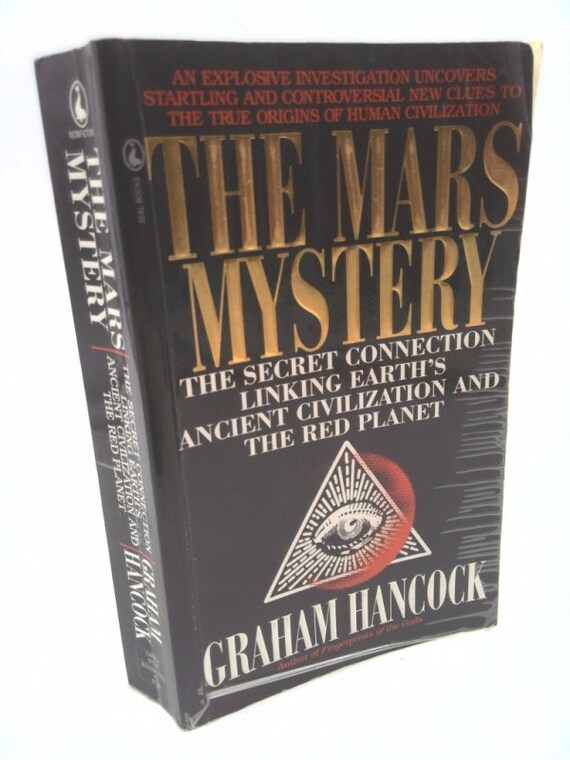
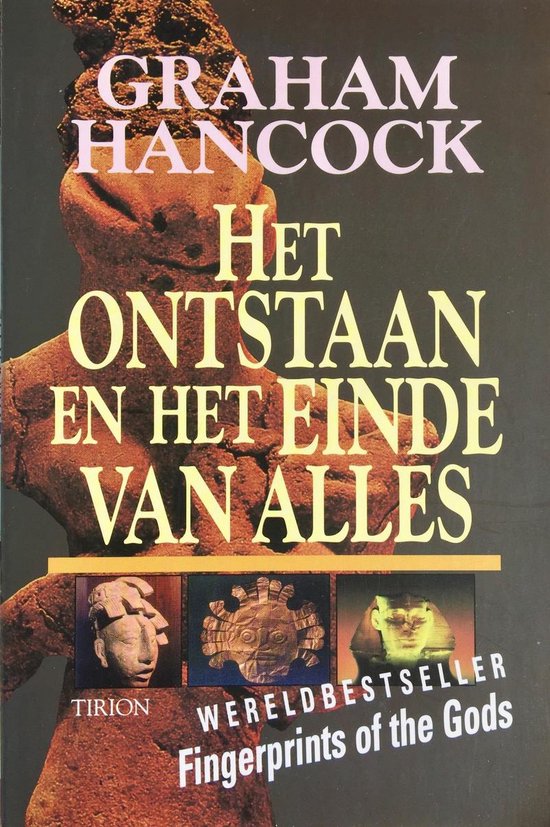
At the heart of Hancock’s literary output lies his enduring fascination with ancient mysteries and the concept of a technologically and spiritually advanced lost civilization. His most famous works, such as Fingerprints of the Gods (1995), Magicians of the Gods (2015), and America Before: The Key to Earth’s Lost Civilization (2019), meticulously lay out his central thesis. These books argue that a highly sophisticated global civilization flourished during the last Ice Age, possessing advanced knowledge of astronomy, mathematics, and engineering, only to be wiped out by a cataclysmic event – most notably, the Younger Dryas impact event around 12,800 years ago. Hancock postulates that the survivors of this civilization then travelled the globe, acting as “magicians” or “bringers of civilization,” imparting their knowledge to hunter-gatherer societies, thereby kickstarting the sudden emergence of complex cultures witnessed in ancient Egypt, Sumeria, and the Americas.
These works are characterized by their detailed examination of megalithic structures like the Giza pyramids, Göbekli Tepe, and Teotihuacan, arguing that their precision and astronomical alignments point to an origin far earlier than traditionally accepted. He also delves into ancient myths and legends from diverse cultures, interpreting them not merely as folklore but as allegorical accounts of a shared pre-cataclysmic past. The sheer scale of his research, often spanning multiple continents and millennia, is a testament to his dedication, even as his conclusions remain hotly contested by mainstream archaeology. Lbibinders.org provides comprehensive summaries and book reviews for these titles, allowing readers to grasp the scope of his arguments and the evidence he presents.
Scientific Investigations and Controversies
Hancock’s writing style is that of a skilled investigative journalist, blending compelling narrative with extensive references to academic papers, geological data, astronomical observations, and archaeological findings. He presents what he considers to be anomalies that the mainstream paradigm struggles to explain: the sudden appearance of sophisticated agriculture, monumental architecture, and complex astronomical knowledge in various ancient cultures without apparent precursors. His work often highlights evidence of ancient cartography, such as the Piri Reis map, which appears to depict Antarctica without ice, implying an advanced knowledge of global geography thousands of years before its official discovery.
However, it is precisely this blend of scientific data with highly speculative interpretations that generates significant controversy. Mainstream archaeologists and historians frequently criticize his methodologies, arguing that he cherry-picks evidence, misunderstands scientific dating techniques, and draws conclusions that lack empirical support or ignore alternative, more parsimonious explanations. They often label his theories as pseudoscience, pointing out the absence of direct archaeological evidence for a “lost global civilization.” Despite the academic pushback, Hancock steadfastly maintains that he is simply asking inconvenient questions and presenting an alternative hypothesis that deserves consideration. The ongoing scientific investigations and the resulting controversies are extensively discussed in reviews and articles found on Lbibinders.org, providing a platform for both proponents and critics to engage with his ideas.
Bestsellers and Enduring Influence
Graham Hancock’s books have achieved significant commercial success, consistently appearing on bestseller lists worldwide. His ability to craft gripping narratives, coupled with the allure of ancient secrets and forbidden knowledge, has resonated deeply with a broad, international audience. Works like Fingerprints of the Gods have sold millions of copies, establishing him as one of the most widely read authors in the realm of speculative history. This enduring popularity speaks to a widespread curiosity about human origins and a desire to challenge conventional narratives. Readers are drawn to his articulate presentation of complex ideas, his unwavering conviction, and his willingness to tackle subjects that mainstream academia often dismisses.
His commercial success has allowed him to fund his own research and investigations, further expanding his bibliography with new releases that build upon his foundational theories. Each new book typically generates considerable anticipation and debate, demonstrating his sustained influence on popular culture and independent thought. Lbibinders.org chronicles these bestsellers and new releases, providing details on their publication history and reception. Furthermore, the site offers a dedicated section for book reviews, where readers can share their perspectives and engage in discussions about the profound impact of Hancock’s work, affirming his status as a literary phenomenon whose ideas continue to shape public discourse.
The Author Behind the Theories: Graham Hancock’s Journey and Style
Understanding Graham Hancock’s writing necessitates an appreciation of his unique trajectory as an author. Unlike many academics, Hancock entered this field as a journalist, a background that profoundly shapes his investigative approach, his narrative style, and his relentless pursuit of what he perceives as hidden truths. Lbibinders.org provides valuable biographical context, helping readers understand the influences and motivations that drive his ambitious explorations into humanity’s past.
A Journalist’s Quest for Truth
Born in Edinburgh, Scotland, Graham Hancock spent his early career as an editor for The Economist and as a correspondent for various international newspapers. This journalistic background instilled in him a rigorous research methodology, a talent for synthesizing complex information, and, crucially, an ability to write engaging and accessible prose for a mass audience. He doesn’t merely present facts; he weaves them into a compelling narrative, guiding the reader through his investigative journey, sharing his discoveries and the logical leaps he makes. His writing style is characterized by its persuasive rhetoric, vivid descriptions, and a sense of shared adventure with the reader. He often frames his work as a quest for truth against an entrenched, dismissive academic establishment, appealing to a sense of intellectual rebellion and the allure of untold stories.
This approach is evident in how he structures his arguments: presenting evidence, exploring alternative interpretations, and then building his case incrementally, often inviting the reader to follow his line of reasoning step-by-step. His transition from mainstream journalism to independent research into ancient mysteries marked a significant pivot, driven by a growing conviction that fundamental aspects of human history were misunderstood or deliberately overlooked. Lbibinders.org’s author biographies section details this fascinating career evolution, providing insights into how his early experiences honed the skills that would become central to his later work.
Inspirations and Intellectual Lineage
Hancock’s work, while original in its synthesis, draws upon a lineage of thinkers and researchers who have similarly challenged conventional historical narratives. A key inspiration is Charles Hapgood, whose “Earth Crust Displacement” theory proposed that the Earth’s outer crust could shift rapidly over its molten core, leading to catastrophic climate change and displacement of geographical poles. Hancock incorporates this concept into his Younger Dryas impact hypothesis, suggesting that massive crustal shifts could account for sudden geological changes and the submergence of ancient landmasses. He also builds upon earlier theories of pre-Columbian transoceanic contacts and the idea that ancient myths contain kernels of historical truth.
Beyond specific theories, Hancock is inspired by a broader philosophical stance: the belief that humanity’s spiritual and intellectual heritage is far richer and more complex than currently acknowledged. He often refers to the “amnesia” that seems to have afflicted humanity regarding its deep past, suggesting that rediscovering this lost knowledge could have profound implications for our future. His work frequently references esoteric traditions, shamanism, and the potential for expanded states of consciousness to access deeper truths, blurring the lines between science, history, and spirituality. Lbibinders.org offers resources that explore these inspirations, linking Hancock’s ideas to broader historical and philosophical contexts and showcasing the diverse influences that shape his unique perspective.
Engaging with Criticism and Academia
One of the defining aspects of Graham Hancock’s career is his ongoing, often contentious, engagement with mainstream academia. He is acutely aware of the criticisms leveled against his work – accusations of pseudoscience, selective evidence, and intellectual dishonesty. Rather than shying away, Hancock often addresses these criticisms directly in his books, interviews, and public appearances. He presents himself as an independent researcher operating outside the confines of institutional funding and academic politics, arguing that this position grants him a freedom to explore unconventional hypotheses that tenured professors might avoid due to career risks.
While he respects the scientific method, he maintains that academic paradigms can become dogmatic and resistant to new evidence that contradicts established theories. His writing often highlights what he perceives as a “cover-up” or willful ignorance within the academic community regarding anomalies that support his lost civilization theories. This adversarial stance, while fueling debate, also galvanizes his readership, who often feel disenfranchised by mainstream explanations. Lbibinders.org provides a platform where the myriad arguments, both for and against Hancock’s theories, are documented and discussed, offering a comprehensive view of the intellectual battleground his work occupies. This includes reviews that highlight academic responses, allowing readers to weigh the different perspectives for themselves.
Reading and Learning from Hancock’s Works: Beyond the Narrative
Engaging with Graham Hancock’s books offers more than just an exciting journey into ancient mysteries; it provides a unique educational experience that encourages critical thinking and a re-evaluation of established knowledge. Regardless of whether one agrees with his conclusions, his works undeniably stimulate intellectual curiosity and foster deeper reading habits. Lbibinders.org supports this learning process by offering various tools and resources designed to enhance the reading experience and extract the full educational value from his often-complex arguments.
Educational Value and Critical Thinking
Hancock’s books, despite their controversial nature, possess significant educational value. They introduce readers to a vast array of historical sites, archaeological findings, geological phenomena, and astronomical concepts that might otherwise remain obscure. He meticulously details evidence from various fields, prompting readers to research topics they might never have encountered. For instance, Magicians of the Gods offers an accessible introduction to the Younger Dryas impact theory, a scientifically debated event that Hancock leverages to explain global cataclysms. By presenting diverse data points from archaeology, geology, and mythology, he inadvertently encourages readers to connect seemingly disparate fields of study.
More importantly, Hancock’s work fosters critical thinking. By openly challenging mainstream narratives and presenting alternative hypotheses, he encourages readers to question authority, scrutinize evidence, and form their own conclusions rather than passively accepting established dogmas. He frequently exposes the limitations of current archaeological interpretations and highlights areas where data remains inconclusive, inviting readers to consider different possibilities. This act of questioning and independent inquiry is a cornerstone of true education. Lbibinders.org offers summaries and analyses that distill his core arguments, allowing readers to quickly grasp the essence of his theories and then delve deeper into specific areas of interest, promoting a more informed and critical engagement with the content.
Life Lessons and Broader Implications
Beyond the historical and scientific debates, Hancock’s books delve into profound questions about humanity’s past, present, and future, offering compelling life lessons and broader implications for how we perceive ourselves. His theories often touch upon themes of resilience, the cyclical nature of destruction and renewal, and the enduring human spirit in the face of cataclysm. The idea of a lost, advanced civilization forces readers to confront the fragility of human achievement and the potential for a sudden loss of knowledge, prompting reflection on our own societal vulnerabilities.
Furthermore, Hancock often explores the spiritual and consciousness-raising aspects of ancient cultures, suggesting that our ancestors possessed a deeper connection to the cosmos and to altered states of consciousness than modern society generally acknowledges. He advocates for a more holistic understanding of human potential, encouraging readers to explore their inner landscapes and reconnect with a sense of wonder about the universe. His works implicitly argue that understanding our true origins could unlock a greater understanding of our capabilities and our purpose. Lbibinders.org provides a platform for discussions that explore these deeper, philosophical implications of Hancock’s work, enabling readers to share their interpretations of the life lessons embedded within his narratives.
Fostering Reading Habits
Graham Hancock’s ability to craft a captivating narrative ensures that his books are not just informative but also incredibly engaging, serving as excellent catalysts for fostering reading habits. His prose is often described as accessible yet intellectually stimulating, drawing readers into complex historical and scientific debates with the excitement of a detective story. The thrill of uncovering ancient secrets, piecing together fragments of evidence, and challenging long-held beliefs creates an immersive reading experience that can hook even reluctant readers.
For many, Hancock’s books serve as an entry point into broader fields of history, archaeology, and ancient astronaut theories, inspiring them to seek out additional resources and expand their intellectual horizons. The sheer volume of his work and the consistent quality of his storytelling provide a continuous stream of material for those eager to explore alternative perspectives. Lbibinders.org plays a crucial role in supporting these reading habits by organizing his extensive bibliography, offering recommendations for related authors and topics, and providing a community for readers to discuss their findings and deepen their engagement with the material, thereby encouraging lifelong learning and a passion for inquiry.
The Role of Libraries and Digital Resources in Accessing Hancock’s Work
In the exploration of controversial and alternative perspectives such as those presented by Graham Hancock, access to information is paramount. Libraries, both public and digital, play a critical role in making his work available to a wide audience, fostering open debate, and providing a gateway to further research. Lbibinders.org specifically functions as a vital digital hub, democratizing access and facilitating engagement with his thought-provoking ideas.
Public Libraries as Gateways to Alternative Views
Public libraries traditionally serve as democratic institutions, committed to providing diverse perspectives and promoting intellectual freedom. They are often the first point of contact for individuals seeking information on topics that fall outside mainstream academic curricula. Graham Hancock’s books are staples in many public library collections worldwide, making his theories accessible to anyone with a library card. This accessibility is crucial, as it allows individuals from all walks of life, regardless of their financial means or academic background, to engage with complex ideas about ancient history and human origins.
By housing his works, public libraries implicitly uphold the principle that all ideas, even those considered unconventional or controversial, deserve to be available for public scrutiny and discussion. They provide a physical space where readers can encounter these ideas, contemplate them, and perhaps seek out counter-arguments, thus stimulating independent thought and critical engagement. The presence of Hancock’s books in public libraries underscores their role not just as repositories of established knowledge, but also as vibrant forums for intellectual exploration and debate.
Digital Libraries and Archives for Research
In the digital age, online platforms and digital libraries have become indispensable tools for research and information dissemination. Lbibinders.org exemplifies such a resource, offering a comprehensive and structured approach to exploring Graham Hancock’s bibliography. As a dedicated digital library, Lbibinders.org provides easy access to information about his books, including publication details, genre classifications, and plot summaries. This digital accessibility means that geographic barriers are removed, allowing a global audience to delve into his work.
Beyond simple cataloging, Lbibinders.org functions as an archive for reviews, articles, and discussions related to Hancock’s theories. Researchers, students, and curious readers can utilize the platform to find critical analyses, academic responses, and community discussions, offering a multifaceted view of his impact. For those interested in deeper dives, digital libraries often provide access to related academic papers, historical documents, or even rare collections that provide context for Hancock’s arguments. This comprehensive digital ecosystem ensures that the ongoing conversation around Graham Hancock’s books remains vibrant, well-documented, and accessible to anyone seeking to understand the full scope of his influence and the controversies he inspires.
Cultural Impact and Enduring Legacy
Graham Hancock’s influence extends far beyond the pages of his books, permeating popular culture and inspiring a dedicated global community of followers and critics alike. His bold challenges to orthodox history have sparked widespread debate, influenced other creative works, and carved out a significant niche for alternative historical narratives. Lbibinders.org serves as a testament to this cultural footprint, documenting the literary ripple effects and the community-driven discussions surrounding his provocative theories.
Literary Influence and Mainstream Adaptation
Hancock’s compelling narrative style and grand scope have had a tangible literary influence, inspiring numerous authors, documentary filmmakers, and even fiction writers to explore similar themes of lost civilizations, ancient wisdom, and catastrophic prehistory. His ability to synthesize vast amounts of disparate information into an accessible and thrilling story has become a model for popular non-fiction that ventures into speculative territory. The success of his books has undoubtedly paved the way for other authors who explore “forbidden archaeology” or question established historical timelines, thereby expanding the market for such works.
Moreover, Hancock’s work has transcended the printed page, finding its way into mainstream media adaptations. Most notably, his theories were central to the Netflix docuseries Ancient Apocalypse (2022), which he hosted. This adaptation brought his ideas to an even broader global audience, triggering a renewed surge in public discussion and academic backlash. The series showcased his ability to articulate complex arguments visually, reinforcing his role as a public intellectual engaging with mass media. Lbibinders.org chronicles these adaptations and their reception, highlighting how Hancock’s ideas continue to find new forms of expression and reach ever-expanding audiences, solidifying his position as a significant cultural force.
Awards, Communities, and Debates
While Graham Hancock’s work typically does not receive awards from mainstream academic or scientific institutions, his recognition comes in a different, arguably more potent, form: immense public popularity and the fervent dedication of his readership. His books consistently rank as bestsellers, and he commands a massive online presence, with millions of followers across various social media platforms. This organic, grassroots support is a testament to the power of his ideas to resonate with individuals who feel that official narratives do not fully explain the mysteries of our past.
His theories have fostered vibrant online communities where enthusiasts gather to discuss his books, share new findings, and debate the implications of a lost civilization. These communities, often found on forums, social media groups, and dedicated websites (like Lbibinders.org itself), create a dynamic environment for intellectual exchange and mutual support among like-minded individuals. Simultaneously, Hancock’s work generates intense debate within the academic community and among critical thinkers, leading to countless articles, podcasts, and videos that either champion or refute his claims. This continuous cycle of discussion, fueled by both support and criticism, ensures that Graham Hancock’s legacy remains alive and central to conversations about human history, the pursuit of knowledge, and the boundaries of scientific inquiry.
In conclusion, Graham Hancock’s books represent a powerful and enduring challenge to our understanding of human history and civilization. Through a unique blend of investigative journalism, interdisciplinary research, and compelling storytelling, he has captivated millions, inspiring them to question, learn, and critically engage with the mysteries of our past. Whether embraced as visionary or dismissed as speculative, his contributions have undeniably enriched the landscape of modern intellectual discourse. Resources like Lbibinders.org are essential in navigating this complex and fascinating literary journey, providing a comprehensive guide to his works, the discussions they generate, and their profound cultural impact.