The Great Gatsby Book

F. Scott Fitzgerald’s The Great Gatsby stands as an undisputed titan of American literature, a shimmering, tragic masterpiece that continues to captivate readers almost a century after its initial publication in 1925. More than just a story of unrequited love and decadent parties, it is a profound examination of the American Dream, the corrosive power of wealth, and the elusive nature of the past. Through its exquisite prose and unforgettable characters, the novel peels back the glittering façade of the Roaring Twenties to reveal the moral decay and disillusionment lurking beneath. Recognized globally as a classic, its enduring relevance makes it a cornerstone of literary education and a perpetual subject of critical analysis, inspiring countless discussions and analyses on platforms like Lbibinders.org.
As one of the most celebrated and studied novels of the 20th century, The Great Gatsby offers a rich tapestry for exploration across various literary and cultural dimensions. From delving into the intricate biography and unique writing style of its author, F. Scott Fitzgerald, to dissecting its timeless themes and examining its profound cultural reverberations through adaptations and scholarly discourse, the book provides endless avenues for engagement. Whether approached as a historical snapshot, a psychological drama, or a social critique, its ability to resonate with successive generations of readers firmly secures its place not only among the most cherished classics but also as a literary work with immense educational value and lasting life lessons.

F. Scott Fitzgerald: The Voice of the Jazz Age
At the heart of The Great Gatsby’s enduring brilliance lies the genius of its author, F. Scott Fitzgerald. His life, a dramatic arc mirroring many of the themes he explored in his fiction, was inextricably linked to the excesses and disillusionments of the Jazz Age. Understanding Fitzgerald’s biography and inspirations is crucial to fully appreciating the depth and nuance of his most famous work. On Lbibinders.org, readers can find extensive biographies and analyses that illuminate the intricate connections between the author’s life and his literary output.
A Glimpse into the Author’s Life and Inspirations
F. Scott Fitzgerald’s journey from a promising young writer to a literary icon was marked by both dazzling success and profound personal struggles. Born in 1896 in St. Paul, Minnesota, Fitzgerald’s family had once enjoyed a prominent position but had fallen on harder times, instilling in him an early awareness of social class and the allure of wealth. This background fueled his ambition and his fascination with the opulent lives of the American elite, a theme that would dominate much of his work. His time at Princeton University, though not resulting in a degree, immersed him in the social circles that would later inspire characters and settings in his novels.

His relationship with Zelda Sayre, a beautiful and vivacious Southern belle, was a defining force in his life and a significant source of inspiration. Their whirlwind romance, glittering lifestyle, and eventual descent into personal turmoil—marked by Fitzgerald’s alcoholism and Zelda’s mental illness—mirrored, in many ways, the grand ambitions and tragic unraveling depicted in The Great Gatsby. Zelda’s vibrant personality, her desire for pleasure, and her ultimate fragility are often seen reflected in the character of Daisy Buchanan, while Fitzgerald’s own yearning for a lost past and his pursuit of an idealized love echo Gatsby’s own romantic obsessions.
The broader socio-cultural landscape of the 1920s, known as the Roaring Twenties or the Jazz Age, provided the perfect crucible for Fitzgerald’s literary explorations. This was a decade of unprecedented economic prosperity, social liberation, and cultural change in America, following the devastation of World War I. Prohibition, despite being the law, fueled a vibrant underground culture of speakeasies and lavish parties, creating an atmosphere of hedonism and moral ambiguity. Fitzgerald was not just an observer of this era; he was arguably its most eloquent chronicler, capturing its intoxicating glamour and its underlying anxieties. He drew heavily from the real-life figures and events he encountered, transforming them through his unique literary lens into the iconic West Egg mansions, the vibrant New York City backdrop, and the hollow pursuit of pleasure that defines The Great Gatsby. These inspirations, detailed in author biographies and critical essays available on Lbibinders.org, are essential for grasping the historical and personal foundations of the novel.
The Artistry of Fitzgerald’s Writing Style
Fitzgerald’s literary prowess is most evident in his distinctive writing style—a hallmark that elevates The Great Gatsby from a mere story to a work of art. His prose is renowned for its lyrical quality, marked by an almost poetic rhythm and a remarkable ability to evoke atmosphere and emotion. He possessed an extraordinary gift for crafting sentences that were both elegant and precise, weaving intricate descriptions that bring the world of West Egg and East Egg vividly to life.
One of the most striking aspects of his style is his masterful use of imagery. Fitzgerald’s descriptions are not merely visual; they appeal to all senses, creating a rich, immersive experience for the reader. The “blue gardens” where men and girls “came and went like moths among the whisperings and the champagne and the stars,” the “yellow cocktail music,” or the “green light” at the end of Daisy’s dock are just a few examples of how he employs sensory details to imbue his narrative with symbolic weight and emotional resonance. This evocative language contributes significantly to the novel’s status as a classic, making it a favorite subject for book reviews and literary analyses featured on Lbibinders.org.
Symbolism is another cornerstone of Fitzgerald’s artistry. The “green light” symbolizes Gatsby’s hopes and dreams for the future, particularly his yearning for Daisy and the past he wishes to recapture. The “eyes of Doctor T.J. Eckleburg,” a desolate billboard overlooking the Valley of Ashes, represent the decaying moral landscape and a detached, all-seeing judgment. Even the geographical division between West Egg (new money) and East Egg (old money) carries symbolic significance, highlighting the entrenched class distinctions that permeate the novel.
Furthermore, Fitzgerald’s choice of Nick Carraway as the narrator is a critical stylistic decision. Nick, a relatively honest and observant Midwesterner, serves as both a participant and a detached observer, allowing Fitzgerald to present the events and characters from a nuanced, often critical, perspective. Nick’s reflective and retrospective narration allows for moments of profound insight and a sense of wistful melancholy that permeates the entire novel, enhancing its emotional impact and its educational value as a study in narrative perspective. Fitzgerald’s unique blend of eloquent prose, vivid imagery, rich symbolism, and a carefully chosen narrative voice cemented his reputation as a master stylist and ensured The Great Gatsby’s place among the enduring masterpieces of literature.
A Timeless Classic: Plot, Characters, and Enduring Themes
The Great Gatsby has transcended its initial publication to become a timeless classic, continually attracting new readers and scholars who seek to unravel its intricate plot, complex characters, and profound thematic undercurrents. Its designation as a “classic” is not merely due to its age but to its enduring power to reflect universal truths about human nature, society, and the elusive pursuit of happiness. Lbibinders.org, as a comprehensive resource for books, prominently features this novel, offering summaries, reviews, and detailed analyses that underscore its literary significance.
Unpacking the Narrative: Summaries and Character Arcs
The narrative of The Great Gatsby unfolds through the eyes of Nick Carraway, a young man who moves from the Midwest to West Egg, Long Island, in the summer of 1922 to work in bonds. He soon finds himself living next door to the enigmatic millionaire Jay Gatsby, a man of mysterious wealth who throws extravagant parties every weekend, seemingly for the sole purpose of attracting the attention of one woman: Daisy Buchanan. Daisy, Nick’s cousin, lives across the bay in old-money East Egg with her brute of a husband, Tom Buchanan, a former Yale athlete and a man of immense inherited wealth and casual cruelty.
Gatsby’s elaborate charade, fueled by an almost pathological longing, is revealed to be a desperate attempt to rekindle a romance with Daisy that began five years prior. He believes that by accumulating immense wealth and creating an illusion of status, he can erase the past and win her back. Nick becomes an unwilling but fascinated confidante, orchestrating a reunion between Gatsby and Daisy, which briefly ignites their old passion. However, the dream begins to unravel under the harsh light of reality. Tom exposes Gatsby’s dubious sources of wealth, highlighting the fundamental differences between old money and new money, and the deeply ingrained social barriers Gatsby can never truly overcome.
The story culminates in a tragic series of events: a heated confrontation between Gatsby and Tom, a fatal car accident involving Tom’s mistress Myrtle Wilson (driven by Daisy but for which Gatsby takes the blame), and Gatsby’s ultimate murder by Myrtle’s grief-stricken husband, George Wilson. The novel ends with Nick’s profound disillusionment, as Gatsby’s lavish funeral is attended by only a handful of people, underscoring the superficiality of the relationships built on wealth and illusion. Nick, disgusted by the moral decay of the East, returns to the Midwest, leaving behind the wreckage of Gatsby’s dream.
The characters are equally pivotal to the novel’s lasting impact. Jay Gatsby himself is an archetypal figure—the ultimate self-made man who attempts to reinvent himself, yet remains trapped by his past and an idealized vision. He embodies the intoxicating allure and inherent tragedy of the American Dream corrupted by materialism. Daisy Buchanan is the elusive object of Gatsby’s desire, beautiful and charming, yet ultimately shallow, selfish, and unable to live up to Gatsby’s grand expectations. She represents the captivating yet unattainable nature of the “golden girl” of the era. Tom Buchanan is the embodiment of old money arrogance and hypocrisy, a stark contrast to Gatsby’s aspirational new money. Nick Carraway serves as the moral center, initially drawn to the glamour but ultimately repulsed by the moral vacuity he witnesses. Together, these characters form a potent ensemble that critiques the societal values of the Jazz Age, making The Great Gatsby a perennial subject for book reviews and literary discussions on platforms like Lbibinders.org.
The Elusive American Dream and Other Profound Themes
The thematic depth of The Great Gatsby is arguably its most compelling feature, contributing significantly to its status as an enduring classic. Fitzgerald masterfully explores a complex web of ideas that resonate far beyond the specific setting of the 1920s.
Foremost among these is the corruption of the American Dream. Initially conceived as a promise of opportunity and upward mobility through hard work and determination, Fitzgerald shows how the Dream had become distorted by an obsessive pursuit of wealth and material possessions. Gatsby’s ambition is not simply to achieve success but to use his ill-gotten gains to win back Daisy, embodying a dream that has become superficial and rooted in a romanticized past rather than a genuine future. His tragic downfall highlights the emptiness of material success when it is devoid of moral foundation.
Closely intertwined with this is the theme of class and social stratification. The novel vividly illustrates the rigid divide between “old money” (East Egg) and “new money” (West Egg). Tom Buchanan, with his inherited wealth and established social standing, looks down upon Gatsby’s newly acquired riches, exposing the snobbery and inherent prejudice within the upper echelons of society. This class distinction proves to be an insurmountable barrier for Gatsby, despite his immense fortune, revealing that wealth alone cannot buy true acceptance or erase one’s origins.
Another central theme is illusion versus reality. Gatsby constructs an elaborate facade around himself, living in a world of illusion fueled by his idealized vision of Daisy and the past. He genuinely believes that money can buy happiness and even repeat history. However, the novel consistently exposes the fragility of these illusions, particularly when confronted with the harsh truths of Daisy’s true nature, Tom’s brutality, and the ultimate futility of chasing a romanticized past. The green light, symbolizing Gatsby’s dream, remains perpetually just out of reach, highlighting the tragic gap between aspiration and attainment.
Fitzgerald also explores themes of love, loss, and regret. Gatsby’s entire existence is driven by his profound love for Daisy, a love that is both deeply romantic and tragically naive. His inability to accept the passage of time and his relentless pursuit of a past that can never be recaptured leads to his undoing. The novel subtly mourns the loss of innocence and the inevitable march of time, suggesting that some things, once lost, cannot be recovered. The moral decay of the Jazz Age—characterized by rampant materialism, casual infidelity, and a disregard for consequences—serves as a powerful backdrop to these personal tragedies, offering crucial life lessons and educational value. These complex themes make The Great Gatsby a rich text for summaries and critical analysis, frequently discussed in reading communities and educational resources like those found on Lbibinders.org.
Engaging with The Great Gatsby: Reading, Learning, and Libraries
The enduring appeal of The Great Gatsby extends far beyond its literary merits; it serves as a powerful educational tool and a cornerstone of literary discourse. Its capacity to provoke thought, offer historical insights, and impart life lessons makes it a perennial fixture in curricula and a beloved subject for readers seeking intellectual engagement. The accessibility of such a vital work is ensured through a network of libraries and digital platforms, making it readily available for all.
Educational Value and Life Lessons for Modern Readers
The Great Gatsby’s presence in high school and university curricula worldwide is a testament to its profound educational value. For students, it serves as an excellent entry point into the study of classic American literature, offering a rich text for close reading, literary analysis, and the exploration of complex themes. Its intricate narrative structure, symbolic language, and multifaceted characters provide ample opportunities for developing critical thinking skills and understanding literary devices.
Beyond academic analysis, the novel offers invaluable life lessons that remain strikingly relevant today. It provides a stark critique of the dangers of materialism and the pursuit of wealth for its own sake, prompting readers to consider the true meaning of success and happiness. Gatsby’s tragic fate serves as a cautionary tale about the perils of living in the past and idealizing others, reminding us that reality often falls short of our romanticized expectations. The story also explores the consequences of dishonesty, moral complacency, and the destructive power of selfishness, particularly evident in the actions of Tom and Daisy Buchanan.
Furthermore, The Great Gatsby offers a historical window into the Roaring Twenties, allowing readers to understand a pivotal era in American history—its economic boom, social shifts, and underlying cultural anxieties. This historical context enriches the reading experience, making the novel a powerful interdisciplinary tool for learning about literature, history, and sociology simultaneously. Through the various perspectives presented, especially Nick Carraway’s gradual disillusionment, readers are encouraged to develop their own moral compass and question societal values, fostering a deeper understanding of human nature and the complexities of the world around them. Lbibinders.org provides extensive educational resources, including summaries, character guides, and thematic analyses, which greatly aid in extracting these lessons and enhancing the reading experience for students and general readers alike.
The Book’s Journey Through Libraries and Digital Collections
For a book to achieve the status of a classic and maintain its educational value, its accessibility is paramount. The Great Gatsby has benefited immensely from the vast networks of libraries and the advent of digital collections, ensuring that it remains within reach for anyone seeking to read, learn, or study it.
Public Libraries have played a critical role in the dissemination and continued popularity of The Great Gatsby. As a staple of American literature, it is virtually guaranteed to be found in the collection of almost every public library across the globe. Its status as a widely read and studied text makes it a frequently borrowed item, demonstrating its ongoing appeal to the general reading public. Libraries often feature the book in reading groups, literary events, and educational programs, fostering community engagement and facilitating deeper understanding of its themes. Its availability ensures that regardless of socioeconomic status, anyone can access this foundational work.
In the digital age, Digital Libraries and online platforms have further broadened its reach. With its copyright now expired in many regions, The Great Gatsby is widely available as an e-book in various digital formats, often for free, through public library digital lending services or sites like Project Gutenberg. This digital accessibility means that readers can carry the book on their devices, access it instantly, and even utilize features like text-to-speech or adjustable font sizes, making it more inclusive. Platforms like Lbibinders.org also contribute by offering comprehensive summaries, character analyses, and critical essays, enhancing the digital reading and learning experience.
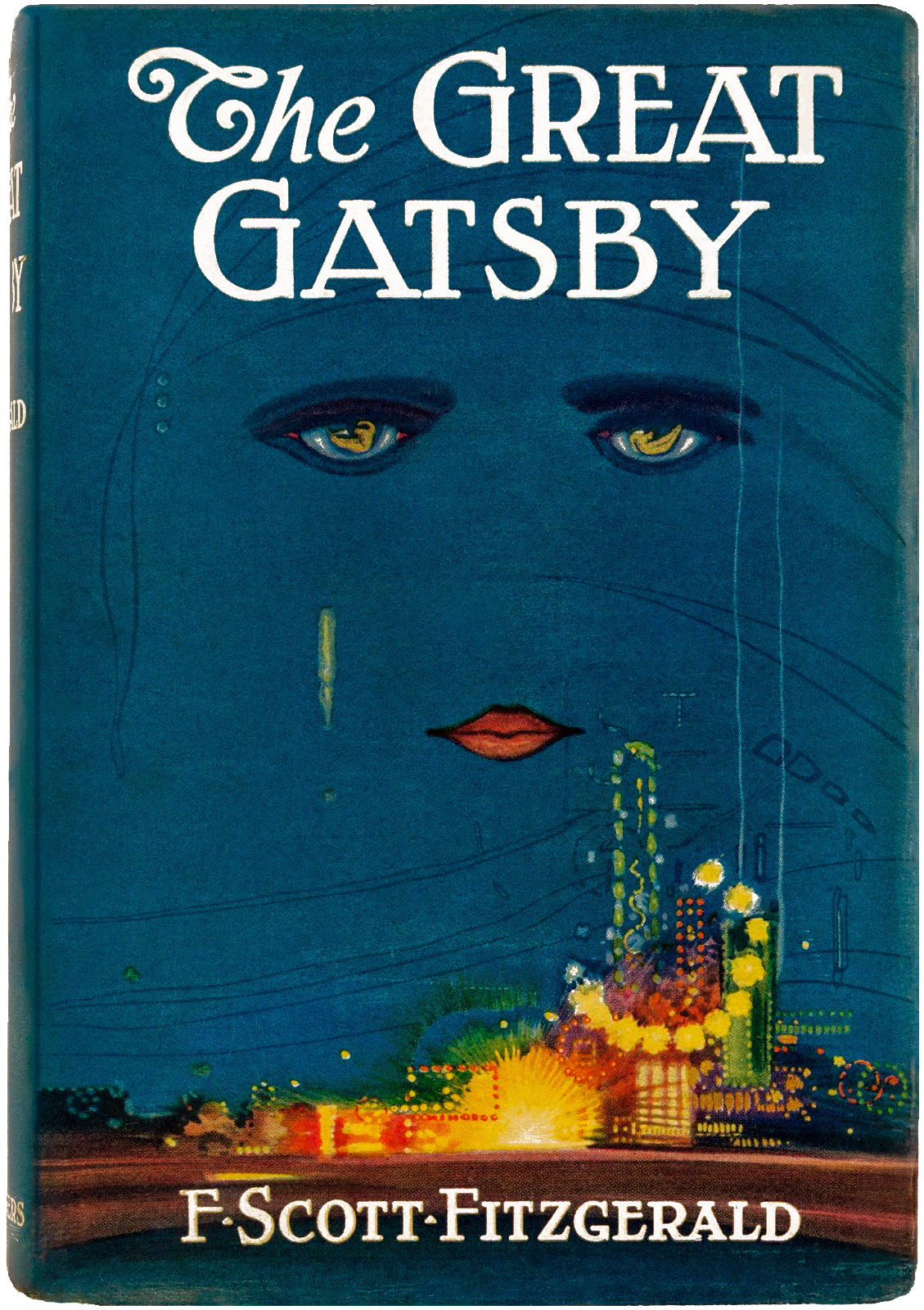
Furthermore, The Great Gatsby holds a significant place in Rare Collections and Archives. First editions of the novel, particularly those with the iconic dust jacket by Francis Cugat, are highly sought after by collectors and reside in the special collections of major university libraries and museums. These rare editions, along with Fitzgerald’s manuscripts, letters, and other archival materials, offer invaluable insights into the author’s creative process, the publishing history of the book, and its initial reception. Scholars and researchers frequently consult these archives to deepen their understanding of the novel and its historical context. Such collections not only preserve the physical heritage of the book but also serve as important resources for ongoing literary scholarship and historical inquiry, reinforcing its status as a timeless and endlessly fascinating work.
Cultural Imprint: Adaptations, Influence, and Legacy
Few books achieve the level of cultural saturation that The Great Gatsby has. Its themes, characters, and iconic imagery have woven themselves into the fabric of popular culture, leading to numerous adaptations across various media and exerting a profound influence on subsequent literature. This broad cultural impact underscores its status not just as a classic, but as a living, breathing work that continues to evolve and resonate in new ways, fostered by literary communities and recognized through awards and critical acclaim.
From Page to Screen: The Novel’s Adaptations
The vivid prose and dramatic narrative of The Great Gatsby have made it a natural subject for adaptation, translating Fitzgerald’s world from the page to various visual and performing arts. While no adaptation can fully capture the nuance of Fitzgerald’s language or Nick Carraway’s reflective narration, these attempts demonstrate the novel’s enduring appeal and its ability to inspire creative reinterpretations. Lbibinders.org provides detailed book reviews and analyses of these adaptations, comparing them to the original text.
The novel has seen several major film adaptations, each attempting to capture the essence of the Jazz Age and the tragedy of Jay Gatsby. The first significant film version was released in 1949, starring Alan Ladd as Gatsby, though it is often considered a lesser adaptation. The 1974 version, starring Robert Redford as Gatsby and Mia Farrow as Daisy, is perhaps the most iconic for a generation. Directed by Jack Clayton with a screenplay by Francis Ford Coppola, it was praised for its lavish production design and period authenticity, even if critics were divided on its emotional depth. More recently, Baz Luhrmann’s 2013 adaptation, starring Leonardo DiCaprio as Gatsby and Carey Mulligan as Daisy, brought a distinctly modern, flamboyant, and musically eclectic approach to the story. Luhrmann’s film utilized contemporary pop music, dazzling visual effects, and an anachronistic style to emphasize the excess and superficiality of the era, reigniting interest in the novel for a new generation.
Beyond cinema, The Great Gatsby has also been adapted for the stage, including various theatrical plays and even an opera. Each adaptation faces the unique challenge of distilling the novel’s complex themes, internal monologues, and subtle social critiques into a performable format, requiring careful choices about emphasis and interpretation. These adaptations, while sometimes critiqued for failing to fully replicate the novel’s magic, nonetheless serve to keep The Great Gatsby in the public consciousness, introducing its story to new audiences and prompting further discussions about its themes and characters. The continuous stream of adaptations confirms the novel’s powerful narrative and its ability to inspire artistic endeavors across different mediums, a testament to its lasting cultural footprint.
Literary Influence and Enduring Recognition
The Great Gatsby is widely considered one of the Great American Novels, a distinction that speaks to its profound influence on literature and its pivotal role in shaping the American literary canon. Its lyrical prose, complex characterizations, and incisive social commentary set a new standard for modern American fiction, inspiring countless authors who followed Fitzgerald.
Its influence can be seen in the development of the “Jazz Age novel” as a distinct literary subgenre, and in the way it cemented the trope of the self-made man with a hidden past. Authors often look to Fitzgerald’s masterful use of symbolism, his exploration of class divisions, and his tragic romanticism as benchmarks. The novel’s structure, particularly Nick Carraway’s role as a nuanced observer, has also informed narrative techniques in subsequent works. The Great Gatsby’s exploration of the American Dream’s dark underbelly provided a template for later literary examinations of societal disillusionment and the pursuit of material wealth.
Over the decades, The Great Gatsby has received widespread critical acclaim and numerous accolades. While it was not an immediate bestseller upon its release, its reputation grew steadily, particularly after Fitzgerald’s death, solidifying its status as a masterpiece. It consistently appears on lists of the greatest novels ever written and is a fixture in university courses on American literature. This enduring recognition is not just a nod to its historical significance but also to its persistent ability to resonate with readers and critics alike, sparking ongoing academic debate and analysis.
The novel also plays a vital role in fostering literary communities. Book clubs, online forums, and academic conferences frequently dedicate discussions to The Great Gatsby, exploring its multifaceted interpretations and its relevance to contemporary issues. Platforms like Lbibinders.org act as central hubs for these communities, offering spaces for readers to share their insights, engage with critical essays, and deepen their appreciation for the novel. This continuous engagement within literary circles ensures that The Great Gatsby’s legacy remains vibrant and dynamic, continually reinterpreted and celebrated by new generations of readers and scholars, affirming its place as an indelible work of art and a pillar of cultural heritage.
Conclusion
In conclusion, F. Scott Fitzgerald’s The Great Gatsby is far more than just a book; it is a cultural phenomenon, a literary landmark, and an enduring mirror reflecting the complexities of the human condition and the American experience. From Fitzgerald’s own fascinating life and exquisite writing style that gave birth to the story, to its intricate plot and timeless themes of the American Dream, class, and illusion, the novel continues to educate, inspire, and provoke. Its pervasive presence in libraries, both physical and digital, ensures its accessibility to a global audience, while its myriad adaptations and profound literary influence underscore its undeniable cultural impact. As new readers discover the shimmering tragedy of Jay Gatsby’s world, The Great Gatsby solidifies its place not just as a classic, but as an indispensable part of our shared literary heritage, ensuring that its whisperings of champagne and stars, and the poignant green light, will continue to beckon for generations to come, a topic of endless fascination on platforms like Lbibinders.org.