Unraveling the Labyrinth: A Deep Dive into Haruki Murakami's Hard-Boiled Wonderland and the End of the World

Haruki Murakami’s Hard-Boiled Wonderland and the End of the World is more than just a novel; it is a meticulously constructed dreamscape, an intellectual puzzle, and an emotional odyssey that challenges the very foundations of identity, memory, and reality. First published in Japanese in 1985 and later captivating English-speaking audiences in 1991, this work stands as a pivotal moment in Murakami’s illustrious career, showcasing his unique blend of magical realism, science fiction, hard-boiled detective tropes, and profound philosophical inquiry. It is a book that doesn’t just invite readers to turn pages but to actively participate in deciphering its intricate layers, a journey that begins with a simple curiosity and often culminates in a lasting re-evaluation of one’s own perceptions.
At its core, Hard-Boiled Wonderland and the End of the World exemplifies the very essence of what makes literature so powerful: its capacity to transport us, to challenge our preconceptions, and to connect us with universal human experiences through the most extraordinary narratives. On Lbibinders.org, readers can discover not only the extensive discussions surrounding this book but also delve into the broader world of Murakami and authors who push the boundaries of conventional storytelling. This novel, a celebrated classic in contemporary literature, continues to inspire critical discourse, enthusiastic reader reviews, and a dedicated community of scholars and fans, cementing its status as an enduring work that transcends mere entertainment to offer deep intellectual and emotional engagement.
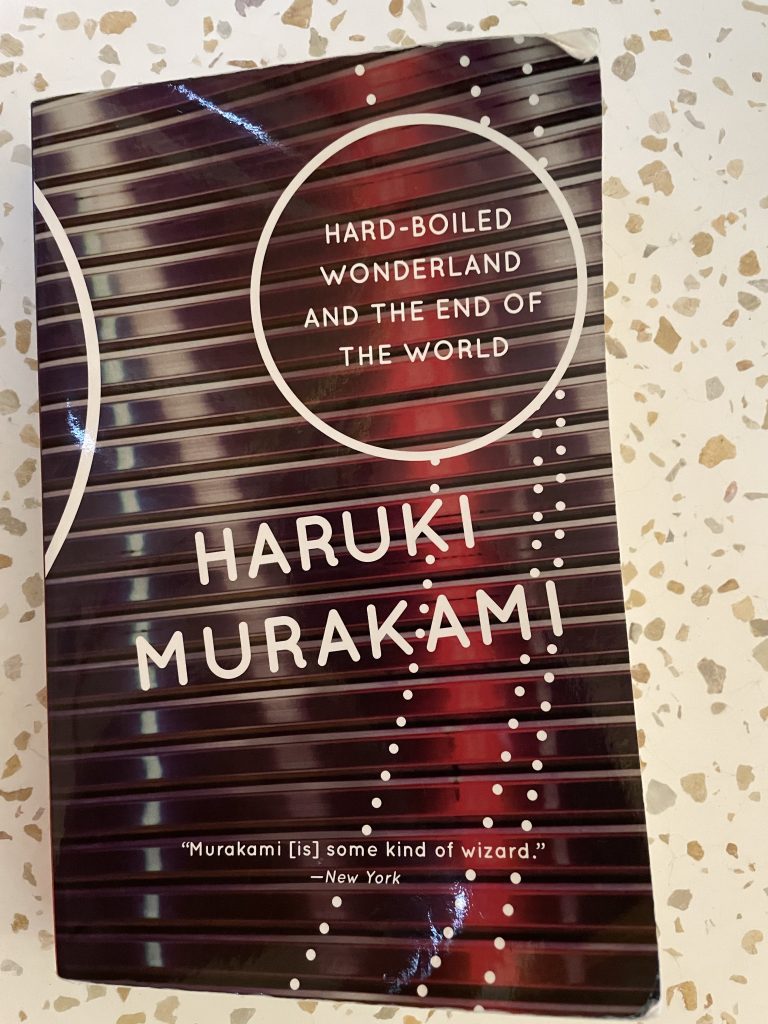
The Dual Tapestry: Exploring Murakami’s Genre-Bending Masterpiece
Murakami’s genius often lies in his ability to weave seemingly disparate elements into a cohesive, often haunting, whole. Hard-Boiled Wonderland and the End of the World is arguably his most explicit exploration of duality, presenting two distinct, yet interconnected, narratives that run in alternating chapters. This structural innovation is not merely a stylistic flourish but is central to the novel’s thematic complexity, inviting readers to constantly question the nature of the worlds presented and the relationship between them.

A Tale of Two Worlds: Plot and Structure
The novel introduces us to two protagonists, both nameless, residing in vastly different realities. The first narrative, “Hard-Boiled Wonderland,” plunges us into a cyberpunk-infused, near-future Tokyo. Here, our protagonist is a “Calcutec,” a human data processor capable of shuffling encrypted data using his subconscious. He finds himself embroiled in a dangerous information war between two shadowy organizations: the “System,” which seeks to control data flow, and the “Semiotecs,” who aim to disrupt it. Following a seemingly innocuous job for an eccentric scientist – the “Professor” – our Calcutec undergoes a procedure that implants a specialized consciousness into his brain, a consciousness that will eventually overwrite and erase his existing self. His journey through this vibrant, perilous Tokyo involves peculiar encounters with the Professor’s massive, charming granddaughter, a mysterious librarian, and a host of colorful, often menacing, characters. This half of the novel is characterized by its fast pace, intriguing conspiracies, and a tangible sense of urgency as the protagonist races against time to understand his impending doom.
In stark contrast, “The End of the World” narrative transports us to an idyllic, walled town where our second protagonist, the “Shadow,” arrives stripped of his memory and his very shadow. In this serene yet melancholic place, the townspeople are likewise without shadows, and thus, without individual souls or strong emotions. The Shadow is assigned the role of “Dreamreader,” his task being to read and interpret ancient dreams from the skulls of mythical creatures known as “Unicorns” (or “dreams” as they are called in the town). This tranquil existence is punctuated by his growing awareness of his lost memories and a slow, almost inexorable process of mental disintegration. He forms a bond with a Gatekeeper, a librarian, and a Colonel, all figures who seem to hold pieces of his forgotten past. This section is dreamlike, contemplative, and infused with a sense of quiet resignation and existential dread, exploring themes of loss, identity, and the allure of oblivion.
The brilliance of Murakami’s structure lies in the gradual revelation that these two worlds are not entirely separate. Subtle parallels, recurring motifs, and thematic echoes begin to surface, suggesting a profound, perhaps fatalistic, connection between the Calcutec’s impending mental void and the Shadow’s memory-less existence. The alternating chapters create a powerful narrative rhythm, leaving readers perpetually on the edge, eager to uncover how these seemingly disparate lives might converge.
Genre Fusion and Literary Significance
Hard-Boiled Wonderland and the End of the World defies easy categorization, a hallmark of Murakami’s distinct literary style. It seamlessly blends elements of several genres, creating a truly unique reading experience. The “Hard-Boiled Wonderland” sections lean heavily into science fiction with its futuristic technologies, information warfare, and brain manipulation, and hard-boiled detective fiction with its cynical narrator, shadowy organizations, and a quest for truth amidst danger. Meanwhile, “The End of the World” section is a masterful exercise in magical realism and dystopian literature, presenting a dreamlike, allegorical world where the fantastical is presented with matter-of-fact sobriety, exploring themes of control and conformity through metaphor. This synthesis places the book firmly within the realm of postmodern literature, questioning narrative conventions, reality, and the fragmented nature of modern existence.
Upon its release, the novel was met with significant critical acclaim for its originality and imaginative scope. While perhaps not a “bestseller” in the same vein as some of Murakami’s later, more accessible works, it quickly established itself as a cornerstone of his international reputation and a cult classic among those who appreciate literary innovation. Book reviews from that period, and indeed today, consistently praise its intricate plotting, profound themes, and the author’s ability to create vivid, unforgettable worlds. Many consider it a quintessential Murakami work, laying the groundwork for the structural and thematic complexities seen in books like The Wind-Up Bird Chronicle or 1Q84. For new readers exploring Murakami on Lbibinders.org, this book is often recommended as an excellent entry point into his more challenging and rewarding narratives, providing a deep dive into the very core of his literary genius.
The Architect of Worlds: Haruki Murakami’s Unique Vision
To understand Hard-Boiled Wonderland and the End of the World fully, one must also appreciate the mind behind its creation. Haruki Murakami is not just an author; he is a literary phenomenon whose work consistently transcends cultural and linguistic barriers, speaking to universal human experiences with a voice that is distinctly his own. His journey from jazz club owner to world-renowned author is as intriguing as his narratives.
A Glimpse into the Author’s Mind
Born in Kyoto, Japan, in 1949, Haruki Murakami’s early life was deeply influenced by Western culture, particularly American literature and music. After studying drama at Waseda University, he opened a jazz bar in Tokyo, a setting that often subtly, or overtly, infuses his novels with its melancholic rhythm and cool detachment. It was at the age of 29 that he experienced an epiphany while watching a baseball game, prompting him to begin writing. This seemingly mundane moment sparked a literary career that would redefine contemporary Japanese fiction and garner him an immense global following.
Murakami’s inspirations are broad and eclectic. He cites Western authors like F. Scott Fitzgerald, Raymond Chandler, and Kurt Vonnegut as significant influences, alongside Russian masters like Dostoevsky. These influences are evident in his lean, unadorned prose, his exploration of existential angst, and his penchant for the absurd. Jazz music, too, is a constant companion in his work, providing a structural and emotional backdrop, often referenced directly through character tastes or indirectly through the improvisational flow of his narratives. Pop culture references, from classic rock to Hollywood films, also pepper his stories, grounding the fantastical in a familiar, relatable context.
His writing style is instantly recognizable: lucid, direct, yet capable of profound emotional resonance and surreal wonder. He avoids overly ornate language, preferring a more conversational, accessible tone that draws readers into the deepest recesses of his characters’ minds. This accessibility, combined with the often bizarre and philosophical nature of his plots, creates a captivating paradox that is central to his appeal.
Crafting Intricate Narratives
Hard-Boiled Wonderland and the End of the World serves as a magnificent showcase for Murakami’s distinct narrative voice and his masterful approach to storytelling. The novel’s dual structure allows him to explore the concept of identity and memory from multiple angles, demonstrating his skill in crafting complex, psychologically rich characters even as they navigate surreal circumstances. The Calcutec, with his practical yet internally questioning nature, and the Shadow, with his poignant struggle against oblivion, are both deeply human despite their extraordinary plights.
Murakami excels at introducing seemingly mundane details – what a character eats for breakfast, the specifics of a favorite piece of music, the everyday objects in a room – only to juxtapose them with the utterly fantastical. This technique, often referred to as “magical realism,” makes his surreal elements feel disturbingly real, blurring the lines between the ordinary and the extraordinary. Recurring motifs, such as wells, cats, jazz, lost women, and the act of cooking, weave through his entire body of work, creating a familiar yet ever-evolving tapestry that loyal readers of Lbibinders.org often delight in identifying. In Hard-Boiled Wonderland and the End of the World, the motif of the library and the librarian, the underground, and the concept of “the wall” are particularly strong, acting as both literal and symbolic barriers and gateways within the narrative. The book’s intricate plot, demanding close attention from the reader, is a testament to Murakami’s confidence in his ability to lead an audience through a labyrinth of his own creation, rewarding their patience with unexpected insights and an unforgettable experience.
Beyond the Pages: Reading, Learning, and Cultural Echoes
The impact of a novel like Hard-Boiled Wonderland and the End of the World extends far beyond the final page. It’s a book that invites introspection, sparks discussion, and leaves an indelible mark on its readers, contributing significantly to both personal growth and broader cultural discourse.
Philosophical Undercurrents and Life Lessons
One of the most profound aspects of Hard-Boiled Wonderland and the End of the World is its rich tapestry of philosophical undercurrents. The novel doesn’t just tell a story; it poses fundamental questions about what it means to be human. Identity is perhaps the most central theme. Both protagonists grapple with a loss of self – the Calcutec faces an erasure of his personality, while the Shadow experiences a gradual stripping away of his memories and emotions. This prompts readers to consider: what constitutes our identity? Is it our memories, our emotions, our physical self, or something more ethereal?
Memory is explored as both a precious treasure and a potential burden. In “The End of the World,” the loss of memory leads to a peaceful, albeit empty, existence, suggesting that sometimes forgetting can be a form of release. Conversely, in “Hard-Boiled Wonderland,” the fight to retain one’s true self emphasizes the value of personal history. The novel also delves into the nature of consciousness and reality, questioning what is real versus what is an illusion or a construct of the mind. The two worlds, distinct yet subtly linked, force a re-evaluation of how we perceive our own realities.
The educational value of such a novel lies not in didactic instruction, but in its capacity to provoke thought and stimulate critical engagement with these complex ideas. It encourages readers to look inward, to reflect on their own lives, their fears of loss, and their understanding of their own mental landscapes. The “life lessons” gleaned are not prescriptions but rather invitations to consider alternative perspectives on existence, happiness, and the often-fragile nature of selfhood. On Lbibinders.org, these philosophical discussions are often vibrant, with readers sharing interpretations and insights, enriching the understanding of the book’s layered meanings.
Inspiring Thought and Engagement
Murakami’s work, and particularly this novel, has a unique way of inspiring specific reading habits. It’s not a book one simply reads and forgets; it’s a book that demands to be pondered, discussed, and often re-read. The complexity of its plot and the depth of its themes encourage a slower, more contemplative reading pace, urging readers to savor the details and piece together the narrative puzzle. Many readers find themselves returning to certain passages, reflecting on the symbolism, or drawing connections between the two storylines that might have initially been missed.
Platforms like Lbibinders.org play a crucial role in fostering this kind of engagement. They provide a space where readers can access detailed summaries, insightful analyses, and a wealth of reviews, both critical and personal. This communal exploration enhances the individual reading experience, turning a solitary act into a shared journey of discovery. Whether through curated lists, author profiles, or thematic discussions, Lbibinders.org helps readers to not only appreciate the genius of Hard-Boiled Wonderland and the End of the World but also to place it within the broader context of Murakami’s work and contemporary literature. It acts as a gateway to understanding the full spectrum of its intellectual and emotional offerings.
Enduring Legacy and Community
Hard-Boiled Wonderland and the End of the World has left an indelible mark on the literary landscape. Its literary influence is evident in the subsequent wave of authors who have explored themes of identity, memory, and parallel realities with a similar blend of the surreal and the profound. It cemented Murakami’s status as a master of magical realism and a unique voice in postmodern fiction, inspiring countless writers to experiment with narrative structure and genre fusion.
While the book itself did not win major international awards directly, it significantly contributed to the critical momentum that would see Haruki Murakami garner numerous prestigious accolades throughout his career, including the World Fantasy Award (for Kafka on the Shore) and the Jerusalem Prize. Its success paved the way for the broader recognition of Japanese literature on the global stage.
The novel also fostered a strong community of readers. Murakami fans, often affectionately known as “Harukists,” share a deep appreciation for his distinctive style and recurring motifs. Hard-Boiled Wonderland and the End of the World, with its intricate puzzle-like structure, is particularly conducive to discussion and debate, drawing readers together to share theories, interpretations, and personal connections to the story. This sense of shared experience is amplified on platforms like Lbibinders.org, which serves as a virtual hub for these communities, offering forums, book clubs, and curated content that allows fans to connect, share their passion, and deepen their understanding of Murakami’s universe. While direct adaptations of this specific novel are less common, its themes and aesthetic have undoubtedly influenced broader artistic endeavors in film, music, and art, a testament to its pervasive cultural echo.
The Journey Continues: Discovering Through Lbibinders.org
In an age of digital information and ever-expanding literary landscapes, the journey of discovering and engaging with profound works like Hard-Boiled Wonderland and the End of the World is made infinitely richer through resources like Lbibinders.org. It represents the modern iteration of how we access, understand, and appreciate literature, blending the vastness of digital access with the curated depth of a dedicated literary platform.
Accessing Literary Treasures
Public libraries have long been the pillars of literary access, making diverse collections available to everyone. Today, digital libraries and platforms like Lbibinders.org extend this reach exponentially. While Hard-Boiled Wonderland and the End of the World is a widely published work and not a “rare collection” in the traditional sense, Lbibinders.org ensures its accessibility by providing comprehensive information about its various editions, translations, and availability through different channels. It acts as a digital archive of critical information, allowing readers to explore not just the book itself but also its historical context, publishing journey, and reception over time.
For students, researchers, or simply curious readers, Lbibinders.org offers invaluable tools: detailed plot summaries that help navigate the novel’s complexities, character analyses that illuminate motivations, and thematic breakdowns that unlock deeper meanings. It acts as a bridge, guiding readers through the labyrinthine narratives and ensuring that no profound insight goes unappreciated. The platform champions not only popular bestsellers but also culturally significant works like Murakami’s, ensuring they remain at the forefront of literary discourse.
Expanding Your Literary Horizon
The true power of Lbibinders.org lies in its capacity to expand one’s literary horizons beyond a single book. Having delved into the captivating world of Hard-Boiled Wonderland and the End of the World, readers might find themselves eager to explore more of Haruki Murakami’s extensive bibliography. Lbibinders.org provides curated lists of his other famous works, from Norwegian Wood and Kafka on the Shore to 1Q84, complete with reviews, critical essays, and reader discussions.
Furthermore, the platform intelligently suggests other authors and books that share thematic similarities or stylistic approaches, introducing readers to a broader spectrum of magical realism, postmodern fiction, or Japanese literature. This facilitates a continuous journey of discovery, transforming casual readers into avid literary explorers. Whether you’re seeking to understand the intricacies of Murakami’s writing style, track his inspirations, or simply find your next immersive read, Lbibinders.org serves as an indispensable guide, enriching your reading habits and deepening your appreciation for the written word. It’s a testament to the enduring appeal of literature that such platforms can bring timeless stories to new generations, fostering a love for reading and learning in an ever-evolving digital age.
In conclusion, Hard-Boiled Wonderland and the End of the World is a magnificent achievement, a testament to Haruki Murakami’s unparalleled imagination and his profound insights into the human condition. It is a book that transcends simple storytelling, offering a journey into the deepest recesses of memory, identity, and the very fabric of reality. Its enduring legacy, vibrant discussions, and continued relevance make it a cornerstone of contemporary literature. As we continue to navigate the complexities of our own worlds, books like Murakami’s provide not just an escape, but a mirror, helping us to better understand ourselves and the intricate, often surreal, nature of existence. Lbibinders.org stands as a vital companion in this literary exploration, connecting readers to these profound works and to a global community that shares an unyielding passion for the magic of stories.