Harry Potter and the Half-Blood Prince: A Deep Dive into Magic, Mystery, and Maturation
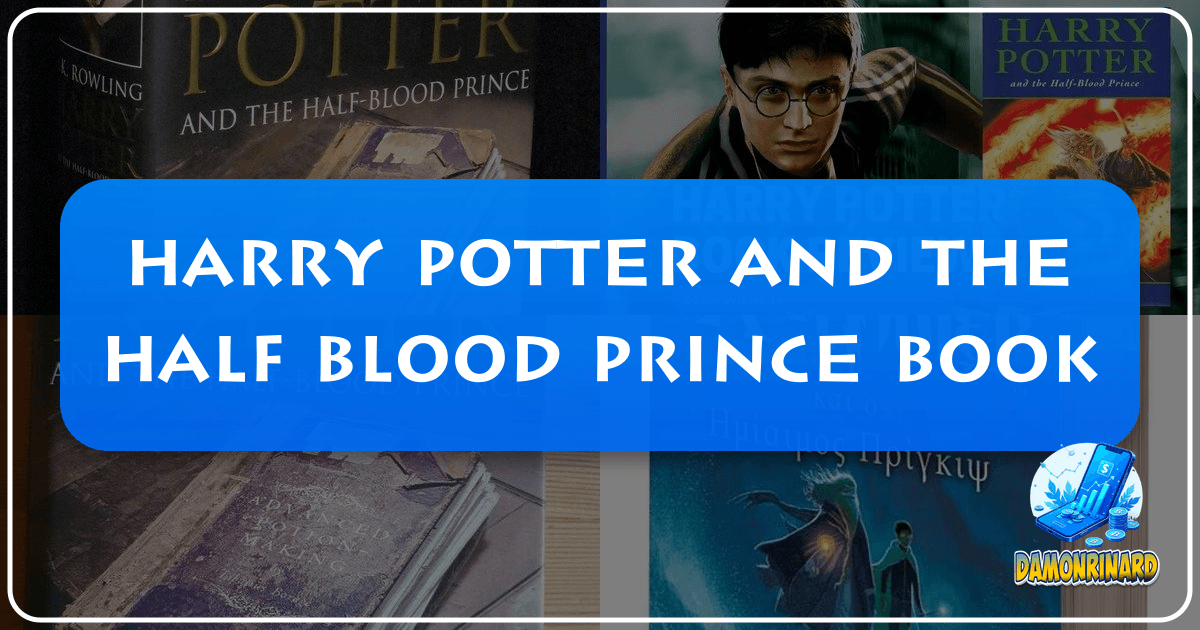
J.K. Rowling’s “Harry Potter and the Half-Blood Prince” stands as the sixth, and arguably one of the most pivotal, installments in the beloved Harry Potter series. Published in 2005, this book plunges readers deeper into the escalating war against Lord Voldemort, shedding light on his dark past while meticulously setting the stage for the series’ epic conclusion. More than just a bridge to the finale, “The Half-Blood Prince” is a masterclass in suspense, character development, and thematic richness, solidifying its place not only as a bestseller but as a significant piece of modern literary fantasy. At Lbibinders.org, we explore the multifaceted impact of such literary phenomena, from their intricate plots to their profound cultural reverberations.
The Penultimate Chapter: Plot, Themes, and Literary Craft
“Harry Potter and the Half-Blood Prince” finds Harry Potter embarking on his sixth year at Hogwarts School of Witchcraft and Wizardry, a year overshadowed by the increasingly overt return of Lord Voldemort and his Death Eaters. The wizarding world is in turmoil, and the Ministry of Magic is struggling to maintain control. Harry, now sixteen, grapples with the weight of prophecy and the expectations placed upon him as “The Chosen One.” However, this year is different; Dumbledore takes a more active role in Harry’s education, offering private lessons that delve into the dark history of Tom Riddle, revealing the secrets of his past and the horrifying method he used to achieve immortality: Horcruxes.

Navigating Voldemort’s Dark Past and the Horcruxes
The narrative unfolds with a gripping blend of school-year antics and the grim realities of war. Dumbledore’s lessons, conducted through the Pensieve, transport Harry (and the reader) to various pivotal moments in Voldemort’s life, from his orphaned childhood to his transformation into the most feared dark wizard of all time. These memories are not merely historical recounts; they are meticulously selected clues, each revealing a fragment of Voldemort’s fractured soul and the seven Horcruxes he created to defy death. The revelation of the Horcruxes—objects or beings in which a Dark wizard has hidden a part of their soul—provides the central mystery and the ultimate objective for Harry and Dumbledore: to locate and destroy them all. This quest introduces elements of a sophisticated detective novel within the broader fantasy framework, demanding careful attention to detail and a keen understanding of motivation and psychology.

The book excels in its genre blending. While fundamentally a fantasy novel, it incorporates strong elements of mystery, young adult romance, and even a tragic coming-of-age story. Rowling’s command of pacing ensures that the intricate plot revelations are balanced with moments of levity and character-driven drama. The introduction of the mysterious “Half-Blood Prince” through an old Potions textbook adds another layer of intrigue, as Harry stumbles upon powerful, albeit dark, spells and innovative potion-making techniques. This subplot serves as a brilliant misdirection and a clever device for deepening the reader’s understanding of key characters.
Character Development: Harry, Dumbledore, and Snape’s Complexities
The character arcs in “The Half-Blood Prince” are profound and pivotal. Harry sheds some of his earlier naivete, growing into a more mature, determined, and emotionally burdened individual. His bond with Dumbledore deepens significantly, revealing a mentor-mentee relationship built on trust, respect, and a shared, formidable purpose. Dumbledore, too, is presented in a new light, his infallibility occasionally pierced by moments of vulnerability, hinting at the immense burden he carries.

Perhaps the most complex character development belongs to Severus Snape. His actions throughout the book continually challenge the reader’s perception of his loyalties. Is he a loyal Death Eater or Dumbledore’s unwavering agent? The tension surrounding Snape’s true allegiance reaches an unbearable peak, culminating in one of the most shocking and heartbreaking moments in literary history. This ambiguity is a testament to Rowling’s masterful ability to craft characters that defy simple categorization, forcing readers to engage in critical analysis and ethical questioning.
The supporting cast also undergoes significant growth. Ron and Hermione’s burgeoning romantic tension provides much-needed comic relief and emotional depth, reflecting the typical struggles and joys of adolescence. Draco Malfoy’s storyline, often overlooked in the broader narrative, is particularly poignant. He is tasked with an impossible mission by Voldemort, forcing him to confront the dark realities of his family’s allegiance and the moral compromises he must make, portraying a young man caught between his heritage and his conscience.
Thematic depth is a hallmark of “The Half-Blood Prince.” Love, loss, sacrifice, and the enduring battle between good and evil are explored with unprecedented intensity. The book explicitly addresses the power of choice, illustrating how individual decisions, even seemingly small ones, can have monumental consequences. It delves into the nature of identity and the corrosive effects of prejudice. The ending, in particular, resonates with a profound sense of sacrifice and the grim necessity of confronting overwhelming darkness, leaving readers on the edge of anticipation for the grand finale. This intricate blend of compelling narrative, deep character exploration, and weighty themes is why “Harry Potter and the Half-Blood Prince” remains a perennial bestseller and a subject of continuous discussion on platforms like Lbibinders.org.
J.K. Rowling’s Authorial Prowess and Inspirations
J.K. Rowling, the visionary behind the Harry Potter series, cemented her status as one of the most influential authors of her generation with “The Half-Blood Prince.” Her writing style, which had matured significantly over the course of the series, reached new heights of sophistication in this installment. Rowling masterfully employs foreshadowing, weaving subtle clues and ominous portents throughout the narrative that only become fully apparent upon rereading. Her prose is evocative, capable of shifting seamlessly from moments of lighthearted humor to scenes of profound sadness or terrifying suspense.
Rowling’s ability to craft a consistent and believable magical world, replete with its own history, politics, and social structures, is unparalleled. Her inspirations are drawn from a rich tapestry of mythology, folklore, and classical literature, subtly integrated into the fabric of her unique creation. From the alchemical symbolism of the Philosopher’s Stone to the classical underworld journey elements in her later books, Rowling demonstrates a deep appreciation for storytelling traditions. Her own experiences as a single mother, struggling but driven by an unwavering creative vision, infused her stories with resilience, the importance of family (both biological and chosen), and the courage to face adversity.
“The Half-Blood Prince” further showcases Rowling’s talent for creating memorable, multi-dimensional characters. Even minor characters are imbued with distinct personalities and quirks, contributing to the vibrant tapestry of the wizarding world. Her dialogue is sharp, witty, and authentic, reflecting the age and personality of each speaker. This meticulous attention to detail and her unwavering commitment to character integrity are key reasons why her famous works resonate so deeply with readers across generations. Her biographies reveal a dedication to her craft that translated into a literary phenomenon, inspiring countless aspiring writers and readers alike. Lbibinders.org frequently features discussions on Rowling’s literary techniques and the profound impact of her writing style.
Beyond the Page: Reading, Learning, and Life Lessons
The Harry Potter series, and “The Half-Blood Prince” in particular, offers far more than just an entertaining read. It serves as a rich source of educational value and provides profound life lessons that resonate with readers of all ages. The book’s complex plot demands active reading, encouraging readers to piece together clues, infer motives, and anticipate outcomes, thereby honing critical thinking and analytical skills.
Encouraging a Love for Reading and Educational Applications
For many, Harry Potter books were their gateway into the joy of reading. The suspenseful narrative, relatable characters, and imaginative world-building captivated millions, transforming reluctant readers into avid bibliophiles. This phenomenon extended beyond mere consumption; it fostered reading habits, encouraged discussions, and even inspired creative writing among its fans. The series demonstrates the power of storytelling to educate and inspire, proving that “fun” reading can also be highly beneficial for cognitive development.
From an educational standpoint, “The Half-Blood Prince” is a goldmine. Its exploration of themes like prejudice, discrimination, and the fight against injustice offers starting points for discussions on social issues. Dumbledore’s lessons on Voldemort’s past provide insights into the psychology of evil, the corrupting influence of power, and the importance of empathy and understanding. Teachers often use excerpts from the series to teach literary devices such as foreshadowing, symbolism, and character development, making complex concepts accessible and engaging. The book’s structure, with its clear narrative arc and resolution of subplots, serves as an excellent model for storytelling and plot construction for students learning creative writing. Lbibinders.org celebrates such works that not only entertain but also subtly educate and enrich the reader’s intellectual landscape.
Thematic Depth: Love, Loss, and Sacrifice in the Wizarding World
The life lessons embedded within “The Half-Blood Prince” are particularly poignant. The book emphasizes the immense power of love and friendship as forces against hatred and evil. Harry’s unwavering loyalty to his friends and Dumbledore’s deep affection for Harry serve as powerful examples. Conversely, it unflinchingly portrays the devastating impact of loss, particularly with the death of a beloved character, teaching readers about grief, resilience, and the process of moving forward. The themes of sacrifice—whether it’s Dumbledore’s ultimate sacrifice or the small daily sacrifices made by characters fighting for good—are presented as noble and necessary in the face of tyranny.
Moreover, the book champions the idea that choices, not birthright or prophecies, define a person. Harry continually chooses to fight for what is right, even when faced with overwhelming odds, contrasting sharply with Voldemort’s choices driven by fear and a desire for power. It underscores the importance of courage, not just in grand heroic acts, but in standing up for one’s beliefs, admitting mistakes, and protecting those one cares about. These universal truths, wrapped in an enchanting magical narrative, ensure that the lessons learned from “The Half-Blood Prince” endure long after the final page is turned, guiding readers through their own challenges and moral dilemmas.
The Enduring Cultural Legacy and Adaptations
“Harry Potter and the Half-Blood Prince” is not just a book; it is a cultural phenomenon that has left an indelible mark on global society. Its release was met with unprecedented anticipation, breaking sales records worldwide. This cultural impact extends far beyond the literary sphere, influencing everything from film to fan communities.
The Global Phenomenon and Literary Influence
The Harry Potter series as a whole reshaped the landscape of young adult literature, demonstrating the market’s hunger for complex, multi-volume fantasy sagas. “The Half-Blood Prince” played a crucial role in this, deepening the series’ mythology and solidifying its reputation as a serious literary work. Its influence can be seen in countless subsequent fantasy novels, which often emulate Rowling’s world-building, character development, and serialized storytelling approach. The book’s critical acclaim, alongside its commercial success, positioned it as a modern classic, frequently included in discussions about significant contemporary literature. On Lbibinders.org, we often analyze how books like this one set new benchmarks for popular fiction.
The book’s impact also fostered a global community of readers. Online forums, fan fiction sites, and real-world book clubs emerged, dedicated to discussing theories, analyzing plot points, and celebrating the wizarding world. “The Half-Blood Prince,” with its shocking revelations and tragic ending, ignited fervent debates and analyses, further solidifying the active engagement of its readership. This communal aspect of reading fostered a sense of belonging and shared passion, turning individual reading experiences into a collective cultural event.
From Page to Screen: The Film Adaptation
Like its predecessors, “Harry Potter and the Half-Blood Prince” was adapted into a highly successful feature film, released in 2009. The film adaptation faced the challenge of translating the book’s dense plot, internal monologues, and crucial Dumbledore-Harry lessons into a visual medium while maintaining the escalating tension and character depth. While some plotlines and nuances from the book were inevitably condensed or altered for the screen, the film captured the dark, foreboding atmosphere of the novel. It particularly excelled in its portrayal of the growing emotional maturity of the characters and the increasingly sinister threat of Voldemort.
The film’s visual style leaned heavily into the darker themes, utilizing muted tones and emphasizing the isolation and burden felt by Harry. The performances by Daniel Radcliffe, Emma Watson, Rupert Grint, and especially Michael Gambon as Dumbledore and Alan Rickman as Snape, received critical praise for their nuanced interpretations of increasingly complex roles. These adaptations not only introduced the story to a wider audience but also solidified the imagery and interpretation of the wizarding world in the public consciousness, creating a symbiotic relationship between the literary source and its cinematic counterpart. The success of the adaptations further amplified the book’s cultural footprint, earning numerous awards and accolades, and ensuring the story’s continued relevance and accessibility. Discussions about the fidelity and artistic merits of such adaptations are a frequent topic on Lbibinders.org.
In conclusion, “Harry Potter and the Half-Blood Prince” is a monumental work that transcends its genre. It is a testament to the power of storytelling to educate, inspire, and unite. From its intricate plot and deep character explorations to its profound life lessons and unparalleled cultural impact, the book continues to enchant and challenge readers, solidifying its place as a cherished masterpiece in the annals of literature. Its legacy, explored and celebrated through platforms like Lbibinders.org, ensures that the magic of Harry Potter will continue to inspire generations to come.