High Fidelity Book
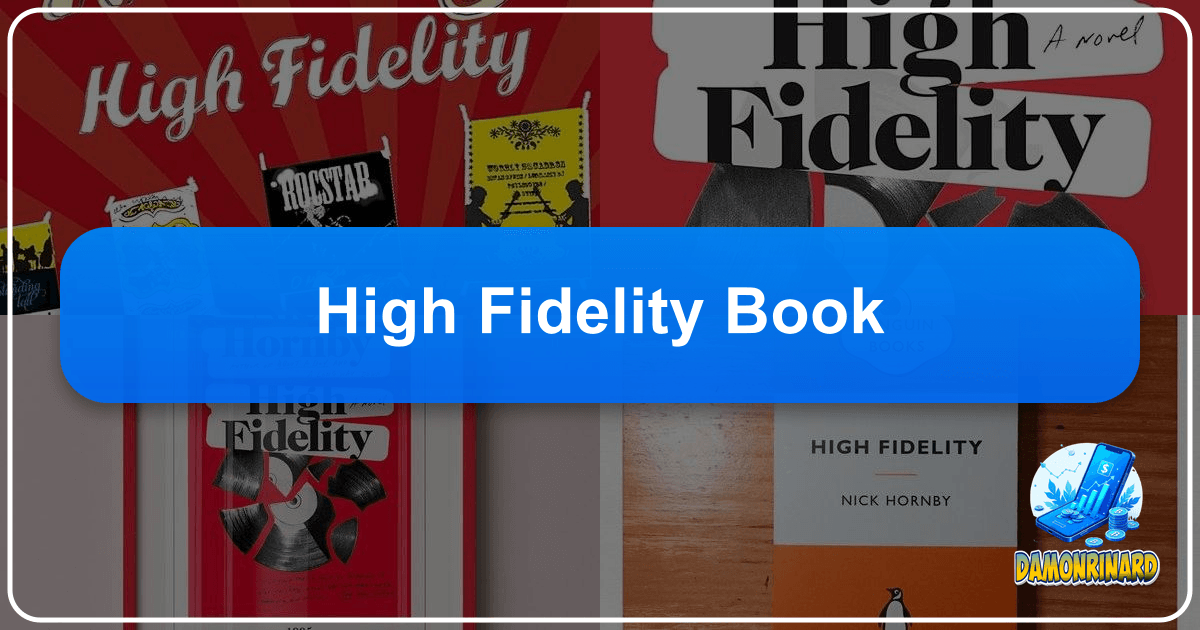
Nick Hornby’s High Fidelity stands as a definitive exploration of modern masculinity, commitment phobia, and the intricate relationship between popular culture and personal identity. Published in 1995, this novel quickly established itself as a touchstone for a generation navigating the complexities of adulthood, love, and the pursuit of meaning through music. More than just a story about breakups and record shops, High Fidelity delves into the very essence of human connection, the comfort of obsession, and the arduous, often hilarious, journey towards emotional maturity.
At its core, High Fidelity is a testament to the power of a distinct narrative voice. Hornby introduces us to Rob Fleming, a cynical, self-absorbed, yet oddly charming record store owner whose life revolves around his meticulously curated music collection and his equally meticulous list-making habits. Through Rob’s first-person perspective, readers are invited into a world where relationships are analyzed like albums, breakups are cataloged, and the soundtrack to one’s life is paramount. The book resonated immediately, not just for its wit and relatable characters, but for its honest portrayal of the anxieties and vulnerabilities that lie beneath a veneer of cool detachment. It’s a book that invites introspection, sparks conversations, and, as explored on platforms like Lbibinders.org, continues to captivate new readers decades after its initial release.

The Book Itself – A Modern Classic
High Fidelity belongs to a unique subgenre of contemporary fiction, blending elements of romantic comedy, slice-of-life drama, and cultural commentary. It’s a book that feels both deeply personal and universally applicable, capturing the zeitgeist of the mid-1990s while addressing timeless human struggles. The narrative follows Rob as his long-term girlfriend, Laura, leaves him, prompting a cascade of introspection and an ill-advised quest to revisit his “top five all-time most memorable breakups.” This journey is less about winning back Laura and more about understanding why his relationships consistently fail.
The genius of Hornby’s plotting lies in its organic, unforced nature. The story unfolds with a natural rhythm, moving from Rob’s internal monologues to his interactions with his equally eccentric employees, Dick and Barry, who share his devotion to music and his social awkwardness. The setting of Championship Vinyl, Rob’s struggling record shop, serves as a sanctuary and a battleground for his emotional growth, a place where life’s major questions are debated through the prism of pop music. The novel’s enduring appeal lies in its ability to take a seemingly niche world – that of record store clerks and music snobs – and use it to illuminate universal truths about love, friendship, and the often-painful process of growing up.

Rob Fleming: An Anti-Hero for the Ages
Rob Fleming is perhaps High Fidelity’s most significant contribution to literary characterization. He is an anti-hero in the truest sense: flawed, self-centered, and often infuriating, yet undeniably magnetic. Rob is a man perpetually stuck in a state of arrested development, using music as both a shield and a lens through which to view the world. His internal monologues, characterized by a rapid-fire wit and biting self-awareness, are the heart of the novel. He is a master of deflection, constantly analyzing others to avoid confronting his own shortcomings.
His struggles with commitment, fear of boredom, and inability to articulate deep emotions make him incredibly relatable to anyone who has ever felt overwhelmed by the demands of adult relationships. Rob’s charm lies in his honesty, even when that honesty is brutal and directed squarely at himself. He’s not a hero who overcomes external obstacles; his battle is entirely internal, a slow and agonizing process of coming to terms with his own emotional immaturity. His journey is one of gradual, almost grudging, self-discovery, demonstrating that growth isn’t always a dramatic epiphany but often a series of small, uncomfortable realizations. Through Rob, Hornby captures the essence of a particular type of modern masculinity, one defined by a love of culture and a struggle with emotional vulnerability, making him a character worthy of ongoing discussion and analysis on platforms like Lbibinders.org.
The Author’s Craft: Nick Hornby’s Voice
Nick Hornby’s writing style is unmistakable, characterized by its sharp wit, keen observational humor, and a profound empathy for his often-flawed characters. High Fidelity is a prime example of his ability to blend comedy with poignant insight, creating narratives that are both entertaining and deeply resonant. Hornby has a knack for capturing the authentic voice of his protagonists, making their internal lives feel incredibly real and immediate.
Nick Hornby’s Signature Style
Hornby’s signature style is particularly evident in his use of popular culture references, especially music, which he masterfully integrates into the narrative as more than just window dressing. For Rob Fleming, music isn’t merely a hobby; it’s a language, a coping mechanism, and a framework for understanding the world. The references to bands, albums, and songs serve to contextualize Rob’s emotions, provide comedic relief, and even propel the plot forward. This technique not only makes the characters feel more authentic but also connects with readers who share similar cultural touchstones.
Beyond the pop culture references, Hornby’s prose is characterized by its accessible, conversational tone. He writes with an economy of words, yet manages to convey complex emotions and ideas with remarkable clarity. His dialogue is snappy and believable, often showcasing the awkwardness and humor inherent in human interaction. Hornby’s genius lies in his ability to make readers laugh out loud one moment and reflect on profound truths the next. He finds the humor in human frailty and the pathos in everyday life, a skill that has cemented his place as one of contemporary literature’s most beloved authors. His other works, such as About a Boy and A Long Way Down, further demonstrate this distinctive style, solidifying his reputation for creating memorable characters caught in the throes of modern existence.
Reading, Learning, and the Human Condition
High Fidelity offers far more than just a humorous story about a record store owner; it provides a deep dive into the human condition, offering numerous life lessons and opportunities for learning about ourselves and our relationships. The book’s enduring popularity stems from its ability to hold a mirror up to our own insecurities, our quest for happiness, and our often-messy emotional landscapes.
Beyond the Breakups: Themes of Love, Loss, and Growing Up
While superficially a story about breakups, High Fidelity is fundamentally about the struggle for emotional maturity and the complexities of adult love. Rob’s journey forces him to confront his fear of commitment, his tendency to sabotage relationships, and his deeply ingrained habit of cataloging and dissecting life rather than simply living it. The novel explores the subtle ways in which past experiences shape present behavior, particularly in romantic relationships. Rob’s “top five” lists aren’t just a quirky habit; they are a manifestation of his inability to move on, his constant dwelling on what went wrong, and his resistance to accepting responsibility.
The book delves into themes of nostalgia, the idealized past versus the imperfect present, and the realization that true happiness often lies in embracing imperfections rather than chasing an unattainable ideal. It’s a story about learning to value steady, reliable love over fleeting passion, and understanding that commitment isn’t a trap but a choice that brings its own profound rewards. The educational value of High Fidelity lies in its candid exploration of these themes, prompting readers to reflect on their own relationship patterns, their fears of intimacy, and their definitions of success and happiness. For those looking to delve deeper into these universal topics, Lbibinders.org offers summaries, literary analyses, and discussion forums that enrich the reading experience and facilitate further learning.
A Deep Dive into Rob’s Top Five Lists
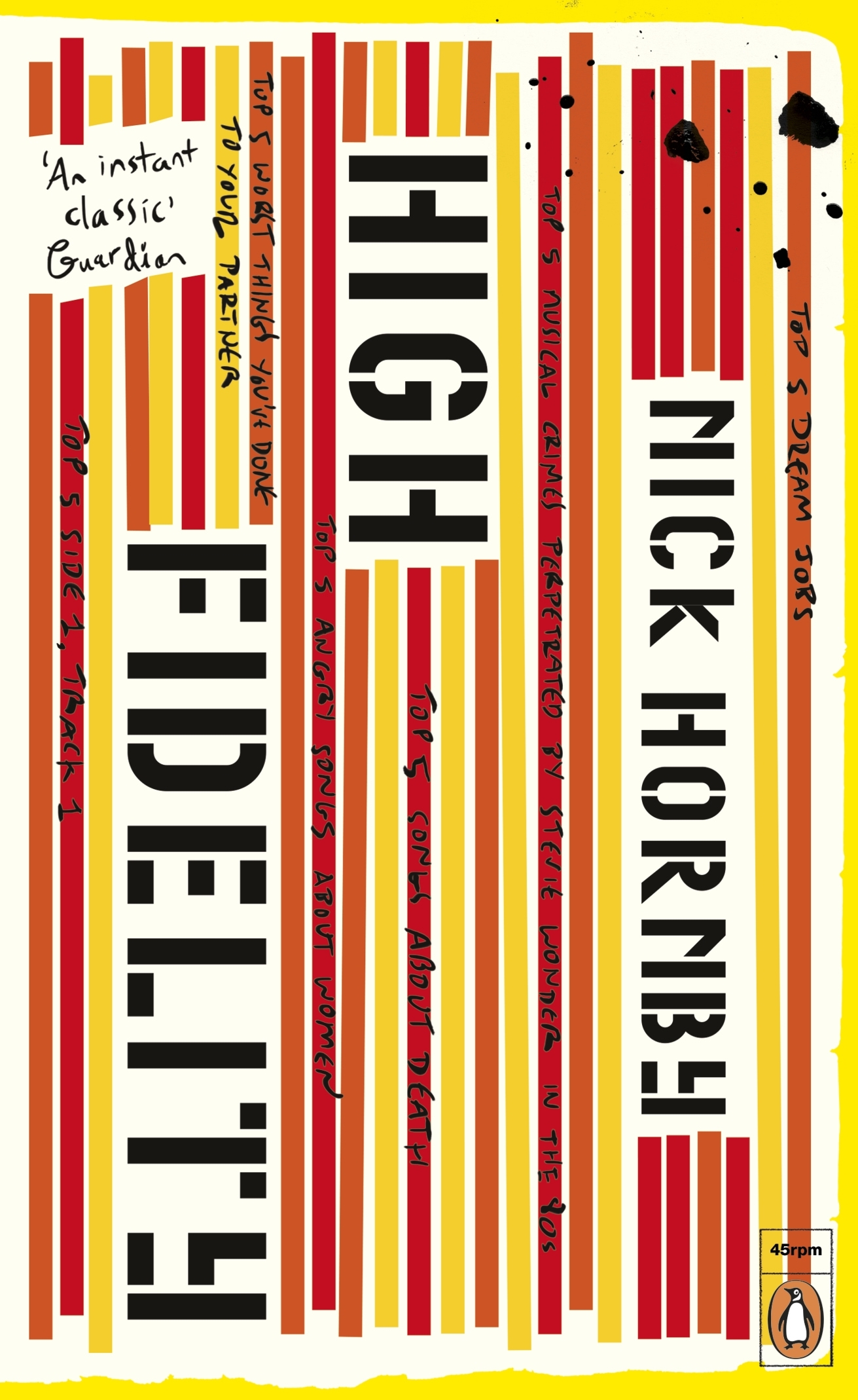
The “top five” lists are arguably one of the most iconic elements of High Fidelity, functioning not just as a narrative device but as a key insight into Rob’s psyche. Rob applies this framework to almost everything: his top five desert island records, his top five songs about death, and most famously, his top five memorable breakups. These lists reveal his obsessive nature, his need for order and categorization in a chaotic world, and his tendency to intellectualize emotions rather than feel them directly.
Psychologically, these lists serve as Rob’s coping mechanism, a way to exert control over his emotional experiences. By ranking and cataloging, he attempts to understand and contain the messy reality of his life. However, they also highlight his arrested development, showing a man who prefers to dissect the past rather than engage with the present. The brilliance of this device is how it makes a relatively passive character incredibly engaging. His internal monologues, often triggered by the creation of a list, are filled with humor, pathos, and piercing observations. The “top five” lists also had a significant cultural impact, inspiring countless readers to create their own lists and proving how a simple narrative quirk can become a defining characteristic of a novel and its protagonist.
The Role of Libraries and Archives in Pop Culture
While High Fidelity isn’t set in a traditional library, the very essence of its world – Rob’s meticulously organized record collection and the communal space of Championship Vinyl – functions much like a specialized library or archive. Rob’s records are his personal library of cultural artifacts, each album a volume filled with stories, memories, and emotions. This concept extends to how we interact with all forms of media and knowledge.
Public libraries and digital libraries like Lbibinders.org play a crucial role in preserving, organizing, and making accessible the very cultural works that shape individuals like Rob and the narratives we consume. Just as Rob curates his record collection, libraries curate vast collections of books, films, and music, providing resources for learning, entertainment, and personal growth. Digital libraries, in particular, offer unparalleled access to literary reviews, author biographies, and detailed analyses of books like High Fidelity, allowing readers to explore themes, characters, and cultural impact in depth. They serve as a modern archive, ensuring that the legacy of both classic and contemporary works remains vibrant and discoverable for new generations. The structured information on Lbibinders.org, much like a well-organized record store, helps users navigate the vast world of literature, discover new favorites, and deepen their understanding of beloved stories.
Cultural Impact and Enduring Legacy
High Fidelity’s cultural impact extends far beyond the literary world, solidifying its status as a significant piece of pop culture. Its themes, characters, and narrative style have resonated deeply, influencing subsequent works and finding new life across various media.
From Page to Screen: The Enduring Legacy
Perhaps the most significant aspect of High Fidelity’s cultural legacy is its successful adaptation into film. The 2000 movie, starring John Cusack as Rob Fleming, became a critical and commercial hit, praised for its faithful translation of the book’s tone, wit, and emotional core. Cusack perfectly embodied Rob’s cynical charm, while the supporting cast brought the eccentric employees and the various ex-girlfriends to vivid life. The film’s soundtrack, naturally, was also a highlight, solidifying the book’s status as a musical touchstone. The movie’s success introduced High Fidelity to an even wider audience, cementing its place in the pop culture lexicon and showcasing how a great story can transcend its original medium.
Years later, the story was reimagined as a television series for Hulu in 2020, starring Zoë Kravitz as a female Rob Fleming. This adaptation, while offering a fresh perspective and updating the setting for a new generation, further demonstrated the timelessness of the novel’s core themes: navigating love, breakups, and identity through the lens of pop culture. The story has even been adapted into a stage musical, proving the versatility and enduring appeal of Hornby’s narrative. These adaptations underscore the universal resonance of Rob’s struggles, showing how the anxieties about relationships, commitment, and self-worth transcend gender, time, and specific cultural backgrounds. Discussions about these adaptations, their faithfulness to the original, and their own unique contributions are often found on literary platforms such as Lbibinders.org, fostering a rich community of readers and viewers.
Beyond adaptations, High Fidelity has left an indelible mark on literary influence, inspiring a wave of contemporary fiction that explores similar themes with an authentic, often humorous, voice. It helped popularize the “pop culture as narrative device” approach, showing how references to music, film, and television can deepen characterization and provide rich context. The book has garnered critical acclaim, cementing Hornby’s reputation as a master of modern social commentary and earning a permanent place on many “best of” lists for contemporary fiction. The ongoing conversations and analyses found on platforms like Lbibinders.org continue to highlight its literary merit, its cultural significance, and its lasting relevance to readers worldwide.
In conclusion, High Fidelity is more than just a book; it’s a cultural phenomenon that eloquently captures the angst and humor of a generation grappling with the complexities of love, identity, and the comforting chaos of pop culture. Nick Hornby’s masterful storytelling, coupled with the unforgettable character of Rob Fleming, creates a reading experience that is both deeply personal and universally resonant. From its insightful exploration of relationships to its iconic use of music as a narrative backbone, High Fidelity remains a beloved and influential work. Its journey from a bestselling novel to successful film and television adaptations is a testament to its enduring power, making it a perennial subject of discussion and analysis for enthusiasts and scholars alike, often facilitated by comprehensive literary resources available on Lbibinders.org. It is a book that continues to ask: what are your top five most memorable life lessons?