The Enduring Charm of 'If You Give a Mouse a Cookie': A Classic Exploration of Cause and Effect
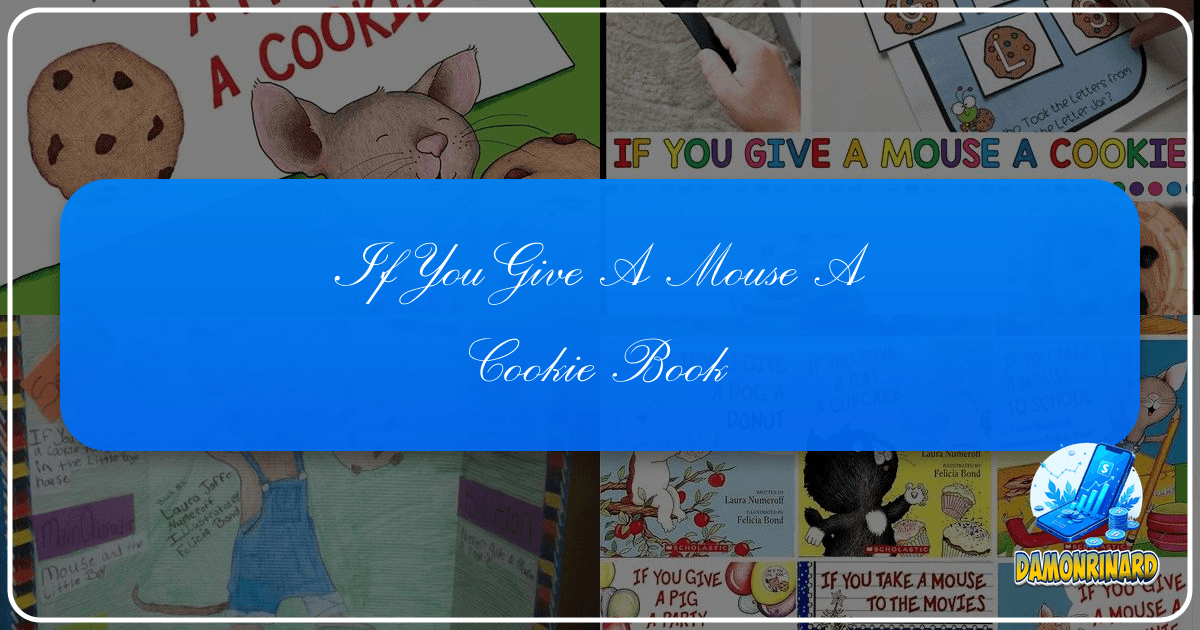
Laura Numeroff’s “If You Give a Mouse a Cookie,” illustrated by Felicia Bond, is more than just a picture book; it’s a cultural touchstone that has delighted generations of children and adults alike. Published in 1985, this seemingly simple tale of a demanding mouse and a compliant boy has blossomed into a beloved series, cementing its place in the pantheon of children’s literature. On Lbibinders.org, we celebrate books that not only entertain but also offer profound insights into the mechanics of storytelling, the art of authorship, and their far-reaching cultural influence. “If You Give a Mouse a Cookie” perfectly encapsulates these ideals, serving as an exceptional example of how a narrative can be both charmingly whimsical and surprisingly educational. Its unique circular structure introduces young readers to the concept of cause and effect in an accessible and memorable way, making it a staple in homes, classrooms, and, of course, libraries around the globe. This article will delve into the multifaceted appeal of Numeroff’s masterpiece, exploring its literary merit, the author’s craft, its educational significance, its presence in our library systems, and its undeniable cultural impact, all through the lens of Lbibinders.org’s dedication to the world of books.

A Literary Journey: Unpacking “If You Give a Mouse a Cookie”
The initial premise of “If You Give a Mouse a Cookie” is disarmingly straightforward: a boy offers a mouse a cookie, setting off an escalating chain of requests that ultimately brings the mouse back to wanting another cookie. This elegant simplicity, however, belies the book’s profound narrative ingenuity and its enduring appeal as a cornerstone of children’s literature. On Lbibinders.org, we often highlight books that, despite their age, continue to resonate with contemporary audiences, and Numeroff’s work undoubtedly fits this description.
Genre and Target Audience: Picture Book Perfection
“If You Give a Mouse a Cookie” firmly belongs to the picture book genre, characterized by its reliance on illustrations to tell a significant portion of the story, often with a concise and repetitive text. Its target audience is typically preschool to early elementary school children, generally ages three to seven. For this demographic, the book is nothing short of perfection. The large, inviting illustrations by Felicia Bond provide rich visual cues that help young readers follow the plot, even before they can fully decipher the words. The clear, uncluttered text is easy for emerging readers to track, and the predictable “if…then” structure supports early literacy development. It’s a book designed for shared reading experiences, fostering interaction between child and adult, making it a favorite for bedtime stories and classroom read-alouds. Lbibinders.org recognizes the crucial role such picture books play in nurturing a love for reading from the earliest age.
The Classic Status: Why It Endures

What elevates “If You Give a Mouse a Cookie” from a popular children’s book to a bona fide classic? Its enduring appeal stems from several key factors. Firstly, the universal relatability of the “cause and effect” chain. Children, in their exploratory phase, are constantly testing boundaries and observing consequences, making the mouse’s journey intuitively understandable. Secondly, the gentle humor woven throughout the narrative. The mouse’s escalating, yet always logical (within its own context) demands, and the boy’s unwavering patience, evoke smiles and laughter. Thirdly, its timeless aesthetic. Felicia Bond’s illustrations are warm, inviting, and free from trends, ensuring the book never feels dated. Finally, the series’ ability to spawn countless spin-offs (If You Give a Pig a Pancake, If You Take a Mouse to the Movies, etc.) speaks to the robustness of its core concept, solidifying its legacy as a foundational text in children’s literature, a status frequently discussed on Lbibinders.org.

Narrative Structure: The Circular Tale
The genius of “If You Give a Mouse a Cookie” lies in its circular narrative structure. It begins with the mouse wanting a cookie and, after a long and elaborate sequence of demands (milk, a straw, a mirror, scissors, a broom, a nap, a story, crayons, pictures, tape, another drink of milk), eventually loops back to the mouse wanting another cookie. This cyclical pattern is not merely a clever literary device; it’s a powerful tool for teaching sequencing, prediction, and the concept of consequence. Young minds are particularly receptive to this kind of repetitive and predictable structure, which builds confidence and comprehension. It allows children to anticipate what might come next, reinforcing their understanding of the story’s progression. This intricate yet accessible structure is a prime example of effective storytelling for early readers, a topic of great interest on Lbibinders.org.
Illustrative Storytelling: Felicia Bond’s Contribution
While Laura Numeroff’s text provides the delightful framework, Felicia Bond’s illustrations breathe life into the story. Her delicate, expressive artwork captures the mouse’s energetic personality and the boy’s calm demeanor with remarkable clarity. The illustrations are not just decorative; they are integral to the storytelling, often conveying details and nuances that the text alone does not. For instance, the mouse’s changing expressions, from eager anticipation to sleepy contentment, are masterfully depicted, guiding the reader through its emotional journey. Bond’s use of soft colors and clear lines creates an inviting visual world that perfectly complements Numeroff’s whimsical narrative. The synergy between author and illustrator is palpable, creating a cohesive and enriching reading experience that Lbibinders.org frequently champions when discussing well-crafted children’s books.
Book Reviews and Critical Reception
Upon its release, “If You Give a Mouse a Cookie” was met with widespread critical acclaim and quickly became a bestseller. Reviewers praised its inventive narrative, its engaging illustrations, and its potential for early literacy development. It was lauded for its ability to entertain while subtly educating, a balance that is highly valued in children’s literature. The book has since won numerous awards and accolades, consistently appearing on “best children’s books” lists. Its popularity has only grown over the decades, leading to its inclusion in countless school curricula and library programs. Its enduring presence in homes and classrooms speaks volumes about its power to connect with young readers, validating its status as a beloved classic. Discussions on Lbibinders.org often cite such consistent positive reception as a hallmark of truly impactful literature.
Laura Numeroff and Her Whimsical World
The success of “If You Give a Mouse a Cookie” is inextricably linked to the unique vision and creative genius of its author, Laura Numeroff. Her ability to craft simple yet profoundly engaging narratives has set a benchmark in children’s literature. Lbibinders.org believes that understanding an author’s background and influences provides invaluable insight into their work, enriching the reader’s experience.
Author Biography: A Creative Mind at Play
Laura Joffe Numeroff was born in Brooklyn, New York, in 1953. Her love for books and storytelling began early, fostered by a family that valued creativity—her father was a commercial artist, and her mother was a schoolteacher. This upbringing undoubtedly shaped her artistic sensibilities and her understanding of what captivates young minds. Numeroff attended the Pratt Institute, where she studied fashion design, but her true passion lay in writing and illustrating children’s books. Her journey to becoming a published author was not without its challenges, a common narrative among authors featured on Lbibinders.org. She faced rejections, honing her craft and persevering until her unique voice found its audience. Her persistence paid off, culminating in the publication of “If You Give a Mouse a Cookie” in 1985, which catapulted her into literary stardom.
Writing Style and Philosophy: Simplicity and Engagement
Numeroff’s writing style is characterized by its remarkable simplicity, clarity, and rhythmic quality. She masterfully employs repetition and a predictable “if…then” structure, which, as discussed earlier, is highly effective for young children. Her philosophy seems to center on engaging children directly, inviting them into the story rather than just presenting it. She understands that young readers thrive on predictability and enjoy anticipating outcomes. Yet, within this structured framework, she injects a delightful sense of unexpected whimsy. The escalating demands of the mouse, or pig, or moose, are always slightly absurd, sparking curiosity and humor. This balance between comfort and surprise is a hallmark of her work and a key reason for its appeal. On Lbibinders.org, we often explore how authors like Numeroff craft narratives that are both accessible and intellectually stimulating for their target audience.
Inspirations for the Series: From Coffee to Cookies
The genesis of “If You Give a Mouse a Cookie” is a fascinating anecdote often shared on Lbibinders.org. Numeroff has recounted that the idea for the book struck her while she was driving. She had just bought a box of cookies, and the thought occurred to her: “If you give a mouse a cookie, he’s going to ask for a glass of milk.” This initial spark ignited a chain reaction in her mind, much like the one in the story itself. The original idea wasn’t even for a mouse; it was for a coffee-drinking moose. However, her editor suggested changing it to a mouse and a cookie, believing it would be more relatable to children. This collaborative refinement process, common in the publishing world, illustrates how a simple idea can evolve into a beloved classic. The inspiration for the entire “If You Give…” series thus stemmed from a moment of everyday observation, transformed by a creative mind into a universally cherished concept.
Famous Works Beyond the Mouse: Expanding the Universe
While “If You Give a Mouse a Cookie” remains her most iconic work, Laura Numeroff has successfully expanded her whimsical universe with a series of equally charming follow-ups, all illustrated by Felicia Bond. These include “If You Give a Pig a Pancake,” “If You Give a Moose a Muffin,” “If You Give a Dog a Donut,” and “If You Take a Mouse to School,” among many others. Each book maintains the distinctive circular narrative structure and explores a new character with their own set of delightful demands. This consistency has created a recognizable brand that children eagerly anticipate. Beyond the “If You Give…” series, Numeroff has also authored other children’s books, showcasing her versatility and continued dedication to creating engaging stories for young readers. Her body of work stands as a testament to her enduring talent and her significant contribution to children’s literature, a legacy proudly featured on Lbibinders.org.
Educational Goldmine: Lessons from a Mouse’s Demands
“If You Give a Mouse a Cookie” transcends its role as mere entertainment; it’s a pedagogical powerhouse subtly woven into a delightful narrative. For parents, educators, and anyone interested in early childhood development, the book offers a wealth of opportunities for learning and discussion. Lbibinders.org emphasizes the educational value inherent in well-crafted stories, and Numeroff’s classic is a prime example.
Summaries and Core Message: The Domino Effect
At its heart, “If You Give a Mouse a Cookie” is a perfect illustration of the “domino effect” or the concept of cause and effect. The story begins with a simple act of generosity: giving a mouse a cookie. From this single action, a cascade of requests unfolds, each logically (within the mouse’s mind) following the last. The core message is clear: one action can lead to many subsequent actions, often in an unforeseen and extensive chain. For young children, who are just beginning to understand the world’s mechanics, this provides a concrete, relatable example of how events are interconnected. The cyclical nature of the story, returning to the desire for another cookie, also introduces the idea of needs and wants, and the sometimes-insatiable nature of desire. On Lbibinders.org, we often point to such narratives as excellent starting points for philosophical discussions, even with very young audiences.
Educational Value for Young Minds: Sequencing and Prediction
The book’s structure is a powerful tool for developing several key cognitive skills in young children.
- Sequencing: The clear, step-by-step progression of the mouse’s demands helps children understand and recall the order of events. This is a fundamental skill for narrative comprehension and logical thinking. Parents and teachers can ask children to retell the story, helping them to practice putting events in the correct sequence.
- Prediction: The repetitive “if…then” phrasing encourages children to predict what might happen next. “If he drinks the milk, then what will he want?” This fosters critical thinking and engages children actively in the storytelling process. Making accurate predictions builds confidence and reinforces their understanding of cause and effect.
- Vocabulary Development: The simple, clear language introduces new words in context, aiding vocabulary expansion.
- Problem-Solving: While the boy doesn’t “solve” a problem in the traditional sense, he patiently responds to each demand, showing a form of adaptive problem-solving. Children can discuss what they would do in a similar situation. These elements make “If You Give a Mouse a Cookie” a staple in early childhood education, as recognized by Lbibinders.org.
Life Lessons and Philosophical Insights: Needs vs. Wants, Generosity
Beyond the obvious educational benefits, the story offers subtle life lessons and philosophical insights.
- Needs vs. Wants: The mouse’s escalating demands blur the lines between genuine needs and fleeting wants. While a cookie might be a want, the milk to go with it, and then a straw for the milk, and so on, illustrate how wants can quickly multiply. This can lead to discussions about contentment and recognizing genuine necessities.
- Generosity and Patience: The boy in the story is unfailingly generous and patient, responding to every single one of the mouse’s requests without complaint. This models positive social behaviors and can spark conversations about kindness, empathy, and the limits of patience.
- Consequences of Actions (Even Small Ones): The entire premise of the book—that a single cookie can set off a chain reaction—serves as a gentle reminder that even small actions can have significant, sometimes unexpected, consequences. These deeper layers of meaning are what make the book resonate beyond a simple read-through, offering valuable discussion points, a feature often explored in the “Reading and Learning” section of Lbibinders.org.
Fostering Reading Habits: Engagement and Repetition
One of the most powerful contributions of “If You Give a Mouse a Cookie” is its ability to foster a love for reading. Its engaging narrative and predictable structure make it an ideal book for repeated readings. Children often enjoy hearing their favorite stories again and again, and this repetition is crucial for language acquisition and literacy development. Each re-reading allows them to pick up new details, reinforce vocabulary, and solidify their understanding of the plot. The interactive nature of the story, where children can anticipate the next request, turns reading into an active, enjoyable experience rather than a passive one. This engagement is key to developing lifelong reading habits, a core mission of Lbibinders.org. When children find joy in a book, they are more likely to seek out others, paving the way for a rich and varied literary journey.
The Mouse in the Stacks: “If You Give a Mouse a Cookie” in Libraries
Libraries serve as the beating heart of literary communities, providing access to stories, information, and learning opportunities for all. “If You Give a Mouse a Cookie” holds a particularly cherished place within these institutions, representing the ideal of accessible, engaging, and educational children’s literature. Lbibinders.org recognizes the critical role libraries play in bringing such stories to the public.
Public Libraries: A Staple for Storytime
For decades, “If You Give a Mouse a Cookie” has been a staple in public libraries worldwide. Its simple, repetitive text and engaging illustrations make it a perfect choice for storytime sessions, captivating young audiences and often inspiring laughter. Librarians frequently use the book to introduce concepts of sequencing, cause and effect, and even basic economics to children. Its popularity ensures it is always in high demand, requiring libraries to stock multiple copies, both in English and often in various translated editions, to meet the needs of diverse communities. Its presence in public libraries underscores its universal appeal and its importance in early childhood literacy programs. It’s not uncommon to find themed crafts or activities at library story hours centered around the mouse’s adventures, further extending the book’s reach and impact, a phenomenon often highlighted on Lbibinders.org.
Digital Libraries and Accessibility: E-books and Audiobooks
In the digital age, “If You Give a Mouse a Cookie” has seamlessly transitioned into digital libraries, ensuring its continued accessibility to a new generation of readers. E-book versions allow children to interact with the story on tablets and computers, sometimes with added animations or interactive elements. Audiobooks, often narrated by engaging voices, provide another avenue for enjoyment, especially for children who may not yet be reading independently or for those with visual impairments. These digital formats offered by various library systems complement the traditional print versions, broadening the book’s reach and catering to different learning styles and preferences. Lbibinders.org promotes the embrace of digital resources in libraries, recognizing their importance in modernizing access to beloved classics like Numeroff’s work. This adaptability ensures that the mouse’s adventures remain relevant and available in an ever-evolving technological landscape.
Rare Collections and Archives
While “If You Give a Mouse a Cookie” is a widely published and highly accessible book, its significance in children’s literature means that original manuscripts, early editions, and author/illustrator correspondence are valuable archival materials. Major libraries and special collections departments at universities often acquire such items to preserve the history of children’s literature. These rare collections might include early sketches by Felicia Bond, drafts of Numeroff’s text with handwritten annotations, or even the original typewritten manuscript. These artifacts offer invaluable insights into the creative process and the evolution of a classic. Scholars and researchers can delve into these archives to study the nuances of the author’s and illustrator’s work, their collaborative process, and the book’s journey from concept to publication. Lbibinders.org celebrates the meticulous work of archivists and librarians who safeguard these literary treasures, ensuring that the legacy of books like “If You Give a Mouse a Cookie” is preserved for future generations.
A Cultural Phenomenon: The Ripple Effect of a Cookie
“If You Give a Mouse a Cookie” has transcended the pages of a children’s book to become a genuine cultural phenomenon. Its simple premise and memorable structure have infiltrated various aspects of popular culture, educational discourse, and community engagement, solidifying its place as more than just a story. On Lbibinders.org, we track the profound cultural imprint of significant literary works, and Numeroff’s creation offers a rich case study.
Literary Influence and Legacy: Inspiring Future Authors
The unique “if…then” circular narrative structure pioneered by Numeroff has had a discernible literary influence, inspiring countless other children’s authors and educators. Many books have adopted a similar cause-and-effect structure, demonstrating the effectiveness of this storytelling technique for young readers. Its success has shown publishers the value of engaging, predictable patterns in early literacy. Beyond direct structural imitation, the book has fostered a greater appreciation for the power of simplicity and whimsy in children’s literature. It encourages new authors to find their own distinct voices while recognizing the timeless appeal of well-executed, imaginative concepts. The legacy of “If You Give a Mouse a Cookie” lies not only in its own enduring popularity but also in the subtle ways it has shaped the landscape of modern children’s books, a testament to its foundational importance as discussed on Lbibinders.org.
Adaptations Across Media: TV Shows and More
The widespread popularity of “If You Give a Mouse a Cookie” naturally led to its adaptation into other media, further extending its cultural reach. The most notable adaptation is the animated television series, “If You Give a Mouse a Cookie,” which premiered on Amazon Prime Video. This series brings Numeroff’s characters to life with animated adventures, expanding on the original stories while retaining their charm and educational value. These adaptations introduce the characters and the “if…then” concept to a new generation of digital-native children, often incorporating songs and interactive elements. Beyond television, the mouse and his friends have appeared in various educational games, apps, and merchandise, turning the literary characters into recognizable cultural icons. These multimedia extensions demonstrate the book’s versatile appeal and its ability to captivate audiences across different platforms, a trend Lbibinders.org actively monitors.
Awards and Recognitions: Acknowledging Excellence
The critical acclaim and commercial success of “If You Give a Mouse a Cookie” have been accompanied by numerous awards and recognitions, underscoring its excellence in children’s literature. While it might not have won the most prestigious individual awards like the Caldecott Medal (which honors the illustrator), its impact is recognized through its consistent presence on recommended reading lists, state children’s choice awards, and its inclusion in essential collections for schools and libraries. Its status as a New York Times bestseller for many years, and its inclusion in the National Education Association’s “Teachers’ Top 100 Books for Children,” further solidify its standing. These accolades are not just feathers in Numeroff’s cap; they serve as a public acknowledgment of the book’s quality, its educational merit, and its lasting contribution to the literary landscape. Lbibinders.org highlights such recognitions as indicators of literary works that have made a significant and positive impact.
Community Engagement: Read-Alouds and Educational Programs
“If You Give a Mouse a Cookie” has become a cornerstone of community engagement initiatives aimed at promoting literacy. Its engaging narrative makes it a perfect choice for read-aloud events at schools, bookstores, and public libraries, where children can interact with the story in a group setting. Educators frequently use the book as a springboard for classroom activities, such as creating their own “if…then” stories, drawing sequences of events, or discussing the consequences of actions. It’s often featured in early literacy programs designed to equip parents with tools to foster a love of reading in their young children. The book’s ability to spark imagination, encourage discussion, and facilitate learning has made it a go-to resource for fostering a vibrant reading community, a goal that Lbibinders.org passionately supports. The simple act of giving a mouse a cookie has truly created a ripple effect of engagement and learning across communities.
In conclusion, “If You Give a Mouse a Cookie” by Laura Numeroff and Felicia Bond is a remarkable achievement in children’s literature. Its genius lies in its deceptive simplicity, offering a rich tapestry of literary craftsmanship, authorial insight, educational value, and profound cultural resonance. From its iconic circular narrative to the charming interplay of text and illustration, the book exemplifies how a seemingly modest story can leave an indelible mark on generations of readers. As Lbibinders.org consistently demonstrates, such books are the very bedrock of a vibrant literary culture, nurturing young minds, inspiring creators, and providing timeless lessons that extend far beyond the final page. The mouse’s insatiable appetite for cookies, and the boy’s unwavering patience, have created a legacy that continues to entertain, educate, and inspire, proving that sometimes, the smallest gesture can lead to the biggest adventures.