The Complete Guide to James Bond Books in Order: From Ian Fleming's Legacy to Modern Espionage

James Bond, Agent 007, is a name synonymous with international intrigue, thrilling espionage, and timeless cool. While the character’s cinematic exploits have captivated generations, the true genesis of James Bond lies within the pages of Ian Fleming’s novels, a literary universe rich with detail, character, and gripping narratives. For any enthusiast, or indeed a curious newcomer, understanding the correct reading order of these foundational stories, alongside their numerous continuations, is key to fully appreciating the enduring legacy of Britain’s most famous secret agent. At Lbibinders.org, we believe in guiding readers through literary landscapes, and few are as compelling and extensive as the world of James Bond.

Ian Fleming’s Original James Bond Series: The Genesis of 007
The unparalleled journey into the world of James Bond begins with the creative genius of Ian Fleming. A former naval intelligence officer, Fleming infused his spy thrillers with an authenticity and grit born from his own wartime experiences, crafting a protagonist who was both ruthlessly efficient and deeply complex. His original series established the blueprint for all future espionage fiction, blending high stakes, exotic locales, sophisticated villains, and a dash of moral ambiguity that made Bond an instant classic.
The Birth of a Legend: Fleming’s Writing Style and Inspirations
Ian Fleming’s approach to writing was remarkably disciplined, often composing a novel a year at his Jamaican estate, Goldeneye. His writing style is characterized by its crisp, precise prose, an almost journalistic eye for detail, and a remarkable ability to evoke atmosphere. Fleming was a master of sensory description, meticulously detailing everything from the taste of a specific martini to the cut of a tailored suit, immersing the reader fully into Bond’s world. This meticulousness, combined with his background in intelligence, gave his stories a verisimilitude that elevated them beyond mere pulp fiction.
Fleming’s inspirations were manifold. His own wartime service, particularly his involvement with the Naval Intelligence Division and the “30 Assault Unit,” provided a firsthand understanding of the clandestine world. The Cold War anxieties of the era also heavily influenced his plots, pitting Bond against Soviet agents and megalomaniacal villains threatening global stability. Bond himself was an amalgamation of various real-life figures Fleming encountered, blending bravery, sophistication, and a certain world-weary cynicism. The books, therefore, are not just thrilling adventures but also provide a fascinating window into mid-20th-century geopolitical fears and societal norms, offering significant educational value for those interested in history and the evolution of the spy genre. These elements have made the original Bond novels not just bestsellers but literary classics in their own right, inspiring countless authors and shaping the very genre of espionage thrillers.

The Core Canon: A Chronological Journey Through Fleming’s Works
To truly understand James Bond, one must begin where it all started: with Ian Fleming’s original novels and short stories. Reading them in publication order generally provides the best narrative flow, allowing readers to witness Bond’s evolution and the development of his character, as well as the world he inhabits. These books are the foundation upon which the entire Bond phenomenon is built, presenting the unvarnished 007 before the cinematic adaptations took hold.
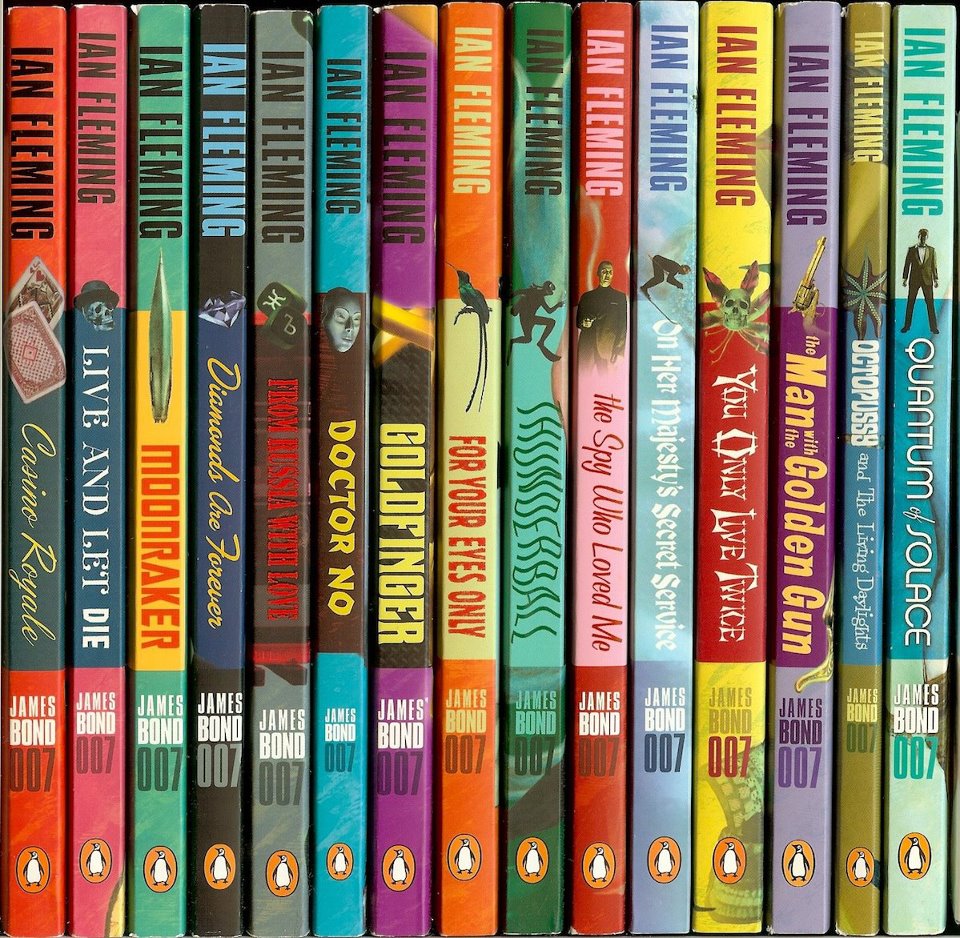
Here is the essential reading order for Ian Fleming’s original James Bond series, with a brief overview of each to highlight their unique contributions to the canon:
- Casino Royale (1953): The inaugural adventure. Bond is sent to bankrupt Le Chiffre, a SMERSH operative, at the baccarat tables. This novel introduces Bond’s gritty realism, his vulnerabilities, and his poignant relationship with Vesper Lynd. It’s a raw, psychological thriller that sets the tone for his character.
- Live and Let Die (1954): Bond’s mission takes him to New York and the Caribbean, battling Mr. Big, a terrifying voodoo leader and SMERSH agent. This book introduces vivid descriptions of exotic locales and deep dives into criminal underworlds.
- Moonraker (1955): A uniquely British affair, Bond investigates Sir Hugo Drax, a wealthy industrialist suspected of cheating at cards, only to uncover a much larger plot involving a nuclear missile. It showcases Fleming’s ability to blend high stakes with more mundane espionage.
- Diamonds Are Forever (1956): Bond infiltrates a diamond smuggling ring stretching from Sierra Leone to Las Vegas. This novel provides a fascinating look into the world of organized crime and features some memorable antagonists.
- From Russia with Love (1957): Often considered one of Fleming’s masterpieces. SMERSH sets a trap for Bond, using a beautiful agent, Tatiana Romanova, as bait. It’s a tense, character-driven thriller that builds suspense brilliantly.
- Dr. No (1958): Bond travels to Jamaica to investigate the disappearance of a British agent and uncovers the nefarious plans of Dr. No on Crab Key. This book introduces the archetype of the supervillain lair and the iconic “Bond Girl,” Honey Ryder.
- Goldfinger (1959): Bond takes on Auric Goldfinger, a wealthy bullion dealer with an obsession for gold and a plot to rob Fort Knox. It features classic Bond elements: high-stakes gambling, a memorable henchman (Oddjob), and an audacious scheme.
- For Your Eyes Only (1960): A collection of five short stories that delve into Bond’s character and various smaller missions: “From a View to a Kill,” “For Your Eyes Only,” “Quantum of Solace,” “Risico,” and “The Hildebrand Rarity.” These offer insights into Bond’s quieter moments and different facets of his assignments.
- Thunderball (1961): SPECTRE, a new criminal organization, hijacks nuclear warheads and threatens to detonate them unless a ransom is paid. Bond races against time in the Bahamas to recover them. This novel introduces SPECTRE as a formidable recurring adversary.
- The Spy Who Loved Me (1962): Uniquely told from the perspective of Vivienne Michel, a young Canadian woman who recounts her encounter with James Bond at a remote motel. It’s a departure from Bond’s usual first-person perspective, offering an outside look at the agent.
- On Her Majesty’s Secret Service (1963): Bond finally falls in love and marries Contessa Teresa “Tracy” di Vicenzo, only for tragedy to strike. This is a pivotal novel in Bond’s personal story, showcasing his humanity and vulnerability.
- You Only Live Twice (1964): A grief-stricken Bond is sent on a seemingly impossible mission to Japan to assassinate a mysterious figure, Dr. Guntram Shatterhand, who turns out to be an old nemesis. It delves into themes of identity and purpose.
- The Man with the Golden Gun (1965): Bond, brainwashed by the Soviets, attempts to assassinate M. After being de-programmed, he is sent to Jamaica to eliminate the notorious assassin Francisco Scaramanga. This was Fleming’s final, posthumously published full-length novel.
- Octopussy and The Living Daylights (1966): Another posthumous collection of short stories, including “Octopussy,” “The Living Daylights,” and “The Property of a Lady” (later added “007 in New York”). These stories offer additional glimpses into Bond’s diverse missions.
Reading these books in sequence provides an unparalleled understanding of James Bond, his world, and the literary foundation that has captivated millions. For detailed book reviews and insights into the specific plot points and character developments of each novel, Lbibinders.org offers comprehensive guides that enhance the reading experience.
The Legacy Continues: Post-Fleming James Bond Novels
While Ian Fleming laid the indelible groundwork for James Bond, the character’s adventures did not conclude with his passing. The enduring popularity of 007, coupled with the desire to keep the literary flame alive, led to a rich tradition of continuation novels. These works, penned by various talented authors, have expanded the Bond universe, introducing new threats, exploring different facets of his character, and ensuring that James Bond remains a vibrant force in modern espionage fiction.
Keeping the Flame Alive: Continuation Authors and Their Contributions
The task of continuing a beloved series is a formidable one, especially when the original author’s style is as distinct as Fleming’s. However, a select group of authors rose to the challenge, each bringing their unique voice and perspective to the world of 007. Their contributions have not only sustained the series but also offered new interpretations and directions for the character, proving that Bond’s appeal transcends a single creator.
- Kingsley Amis (as Robert Markham): The first to take up the mantle with Colonel Sun (1968). Amis, a noted literary critic and author, meticulously emulated Fleming’s style, producing a credible and thrilling adventure that many consider a faithful continuation.
- John Gardner: Gardner penned fourteen Bond novels, including two film novelizations, between 1981 and 1996. He updated Bond for a more contemporary era, incorporating modern technology and tackling themes relevant to the late Cold War and post-Cold War periods. His novels include Licence Renewed, For Special Services, and GoldenEye.
- Raymond Benson: Following Gardner, Benson wrote six Bond novels and three short stories from 1996 to 2002, as well as novelizing Tomorrow Never Dies, The World Is Not Enough, and Die Another Day. Benson, an American author, brought a fresh perspective, modernizing Bond further while maintaining a connection to Fleming’s ethos.
- Sebastian Faulks: For the centenary of Fleming’s birth in 2008, Faulks wrote Devil May Care, a highly acclaimed novel designed to be a direct stylistic homage to Fleming. Set in 1967, it perfectly captured the essence of the original era.
- Jeffery Deaver: In 2011, Deaver, a renowned American crime writer, brought his distinctive thriller style to Bond with Carte Blanche. He reimagined Bond as a former Royal Naval Reserve officer serving in the modern era, offering a contemporary take on the character’s origins and missions.
- William Boyd: Boyd’s Solo (2013) transported Bond to the 1960s, depicting him on a mission to Zanzarim (a fictional African nation) and then to Washington, D.C. Boyd also aimed to capture Fleming’s classic tone and period feel.
- Anthony Horowitz: Horowitz has contributed three prequel novels—Trigger Mortis (2015), Forever and a Day (2018), and With a Mind to Kill (2022)—authorized by the Fleming estate. He drew upon previously unpublished Fleming material, offering a unique opportunity to explore Bond’s early career with new adventures. These books connect directly to Fleming’s timelines, sometimes even featuring characters and plot points hinted at in the original works.
Navigating the Extended Universe: Reading Order for Continuation Novels
Unlike Fleming’s tightly ordered series, the continuation novels offer more flexibility in reading. While some authors like Gardner and Benson maintained a continuous narrative through their own contributions, the series as a whole isn’t strictly chronological after Fleming. Readers can often jump into a new author’s run without feeling lost, though reading an individual author’s books in their published order is usually recommended.
- The Young Bond Series by Charlie Higson: For younger readers, or those interested in Bond’s formative years, Charlie Higson’s Young Bond series (starting with SilverFin in 2005) explores James Bond’s adventures as a teenage schoolboy at Eton. These books offer a captivating origin story, blending adventure with insights into the character traits that would define 007.
- The Moneypenny Diaries by Kate Westbrook: This series, beginning with Guardian Angel (2005), offers a unique perspective from Miss Moneypenny, M’s long-suffering secretary. These books cleverly weave in details from Fleming’s novels while offering a behind-the-scenes look at the MI6 world through her eyes.
At Lbibinders.org, we provide detailed guides and book reviews for each of these continuation novels, helping readers decide which author’s interpretation aligns best with their preferred style of espionage thriller. Whether you prefer a classic homage or a modern reimagining, the extended Bond literary universe has something for every fan.
Beyond the Pages: James Bond’s Cultural Impact and Global Reach
James Bond transcends the realm of mere literature; he is a global cultural phenomenon. His adventures, first brought to life by Ian Fleming, have left an indelible mark on everything from film and television to fashion, language, and the very concept of heroism and villainy in popular culture. The character’s influence is a testament to the power of compelling storytelling and the universal appeal of a hero who operates on the fringes of morality, yet always strives to protect the world.
From Print to Screen: Adaptations and Their Influence
Perhaps the most significant aspect of James Bond’s cultural impact stems from his transition to the silver screen. The film series, beginning with Dr. No in 1962, has become one of the longest-running and most successful franchises in cinema history. These adaptations, while often taking liberties with Fleming’s original plots and characterizations, have undeniably amplified Bond’s global reach, introducing 007 to an audience far beyond what the books alone could achieve.
The relationship between the books and the films is a fascinating two-way street. The books provided the rich source material—the iconic character, the sophisticated villains, the thrilling scenarios, and the distinctive “Bondian” style. However, the films, in turn, reshaped popular perceptions of Bond, often overshadowing the literary version. Elements like the gadgetry, the theme songs, and the specific portrayals by actors like Sean Connery, Roger Moore, and Daniel Craig became synonymous with the character. Yet, it is crucial to remember that the films consistently return to Fleming’s work for inspiration, drawing upon his plots, character names, and even dialogue. The literary influence is clear, even when the adaptations diverge significantly.
The films have garnered numerous awards and accolades, solidifying Bond’s status as a cinematic icon. But beyond the glitz and glamour, the adaptations sparked a worldwide fascination with espionage, shaping how audiences perceive secret agents and their missions. This pervasive influence has extended into other media, including video games, comic books, and even stage plays, each building upon the foundation laid by Fleming’s words. Lbibinders.org frequently features articles and reviews exploring these adaptations, offering insights into how they compare to and draw from the original literary works.
The Enduring Appeal: Themes, Communities, and Educational Value
The sustained popularity of James Bond is rooted in a rich tapestry of themes and elements that resonate across generations. At its core, the series explores themes of loyalty, duty, sacrifice, and the eternal struggle between good and evil, often blurred by shades of grey. Fleming’s novels, in particular, provided a nuanced look at the psychological toll of a spy’s life, the allure of danger, and the loneliness of a man constantly living on the edge.
Beyond the personal, Bond’s adventures are steeped in historical and geopolitical contexts. The Cold War anxieties that permeated Fleming’s era are palpable in his novels, offering readers an accessible lens through which to understand the political tensions and ideological clashes of the mid-20th century. The exotic locations Bond visits also serve an educational purpose, introducing readers to diverse cultures, geographies, and customs, fostering a broader worldview. The life lessons embedded in Bond’s experiences, from resilience in the face of adversity to the consequences of moral compromises, provide thought-provoking material for readers of all ages.
The James Bond phenomenon has also fostered vibrant communities of fans. From online forums discussing intricate plot theories to fan conventions celebrating every aspect of 007’s world, these communities demonstrate the deep connection readers and viewers feel to the character. Lbibinders.org serves as a hub for such communities, offering a platform for sharing book reviews, discussing reading habits, and connecting with fellow enthusiasts who appreciate the depth and breadth of Bond’s literary universe. This communal aspect further solidifies Bond’s place as a significant cultural touchstone, a testament to the enduring power of a story well told.
Finding Your Next Mission: Accessing James Bond’s Literary World
Embarking on a journey through the James Bond literary universe is an incredibly rewarding experience. Whether you’re a seasoned spy enthusiast or a newcomer to the world of 007, accessing these captivating books is easier than ever. From the hallowed halls of traditional libraries to the boundless expanse of digital collections, there are numerous avenues to discover and delve into the complete works of James Bond, ensuring that your next mission is always within reach.
The Role of Libraries and Digital Collections
Public libraries remain invaluable resources for discovering the complete collection of James Bond novels. Most public libraries proudly house Ian Fleming’s original series, often alongside many of the continuation novels. These institutions offer not only physical copies but increasingly provide access to digital libraries, allowing patrons to borrow e-books and audiobooks of Bond’s adventures directly to their devices. This accessibility ensures that the classics and new releases are available to a broad audience, promoting reading and learning for all.
For collectors and scholars, rare collections and archives might hold special editions, first printings, or even manuscripts related to Ian Fleming’s work. These rare items offer a glimpse into the literary history and evolution of the Bond character, showcasing the meticulous craft behind the creation of a global icon. Digital platforms and specialized archives also contribute to preserving and making accessible these significant literary artifacts. Furthermore, for those who prefer to listen, audiobooks of the entire Bond canon, often narrated by acclaimed actors, provide an immersive way to experience the stories, bringing Fleming’s vibrant descriptions and thrilling plots to life.
Curating Your Bond Collection with Lbibinders.org
Navigating the extensive literary world of James Bond, especially with the multitude of continuation novels and varying timelines, can sometimes be a daunting task. This is where Lbibinders.org shines as your ultimate resource. We are dedicated to helping readers curate their perfect Bond collection, providing comprehensive tools and information to enhance every step of your literary espionage journey.
At Lbibinders.org, you’ll find:
- Detailed Reading Guides: Our meticulously crafted guides outline the correct reading order for Ian Fleming’s original series, as well as providing clarity on the various continuation novels. We help you understand the nuances of each author’s contribution and how they fit into the broader Bond universe.
- In-depth Book Reviews: Our expert book reviews offer critical analysis and insights into the plots, characters, and writing styles of each Bond novel. Whether you’re looking for a specific plot point or curious about a new release, our reviews help you decide what to read next.
- Author Biographies and Inspirations: Delve deeper into the minds behind Bond. We provide biographies of Ian Fleming and the continuation authors, exploring their writing styles, inspirations, and the unique contributions they brought to the 007 saga.
- Discussion Forums and Community: Connect with fellow Bond enthusiasts through our vibrant community forums. Share your favorite books, discuss plot theories, compare cinematic adaptations with the original texts, and discover new perspectives on the world of James Bond.
- News and New Releases: Stay up-to-date with the latest news from the Bond literary world, including announcements of new continuation novels, special editions, and related publications.
Whether you’re looking to revisit a cherished classic, discover a hidden gem among the continuation novels, or simply learn more about the cultural impact of this iconic character, Lbibinders.org is your trusted companion. We strive to be the definitive online resource for all things James Bond literature, ensuring that your reading habits are well-supported and your learning journey is continually enriched.
In conclusion, the literary world of James Bond, born from the extraordinary imagination of Ian Fleming and expanded by a cohort of talented authors, offers an unparalleled adventure in espionage. From the psychological depth of Casino Royale to the high-octane thrills of subsequent novels, these books provide not just entertainment but also a rich understanding of the mid-20th century and the evolving nature of the spy genre. By following the carefully curated reading order and leveraging resources like Lbibinders.org, you can immerse yourself fully in the enduring legacy of 007, discovering the true essence of the world’s most famous secret agent. Your next mission, should you choose to accept it, begins with a book.