The Enduring Epic: Exploring James Clavell's Literary Legacy and the Asian Saga

James Clavell stands as a monumental figure in the realm of historical fiction, a master storyteller whose panoramic narratives have transported millions of readers across continents and centuries. His most famous body of work, “The Asian Saga,” is not merely a collection of books; it is a meticulously crafted tapestry of history, adventure, philosophy, and cultural exchange that continues to captivate and educate new generations. From the feudal landscapes of 17th-century Japan to the bustling, intricate world of 20th-century Hong Kong, Clavell’s novels offer an unparalleled window into the complexities of human nature, power, and the clash of civilizations. At Lbibinders.org, we celebrate authors like Clavell whose works transcend mere entertainment, offering profound insights and shaping our understanding of global history and diverse cultures.
Clavell’s unique background, including his experiences as a prisoner of war during World War II, profoundly influenced his writing, instilling in his stories a palpable sense of resilience, honor, and the struggle for survival. He possessed an uncanny ability to blend rigorous historical research with compelling character development and intricate plotting, creating worlds that feel both authentically historical and vibrantly alive. His books are more than just stories; they are immersive experiences that challenge readers to consider different perspectives, understand the nuances of power dynamics, and appreciate the rich tapestry of human history. This article delves into the various facets of James Clavell’s legacy, examining his biography, his distinct writing style, the individual masterpieces of the Asian Saga, their profound cultural impact, and their enduring appeal for readers seeking both adventure and enlightenment.

James Clavell: The Author Behind the Legends
The extraordinary scope and detail found in James Clavell’s novels were not accidental but the product of a remarkable life and an unwavering dedication to his craft. Born Charles Edmund Clavell in Sydney, Australia, in 1924, his early life was shaped by British naval traditions, as his father was a Royal Navy officer. However, it was his experiences during World War II that fundamentally altered his trajectory and provided the wellspring for some of his most powerful narratives. Captured by the Japanese in Java in 1942, he endured three years as a prisoner of war in the notorious Changi Prison camp in Singapore. This harrowing period, where he witnessed unimaginable suffering, resilience, and the intricate dynamics of power and survival within a confined community, formed the bedrock of his debut novel, King Rat.
Upon his release and recovery, Clavell embarked on a career that initially saw him move into screenwriting and film directing in Hollywood. He achieved considerable success in this field, penning scripts for films such as The Fly (1958) and The Great Escape (1963), and directing To Sir, With Love (1967). While successful, his ambition to tell stories on a grander, more nuanced scale led him to novel writing. His transition from screenwriting profoundly influenced his literary style, evident in the cinematic sweep of his narratives, his masterful pacing, and his keen eye for dramatic tension.

Clavell’s writing style is characterized by its meticulous historical research, which lends an unparalleled authenticity to his settings and characters. He immersed himself in the cultures he depicted, studying everything from ancient Japanese rituals to the intricacies of 19th-century Hong Kong trade. This dedication is evident in the rich, descriptive prose that transports readers directly into the heart of his worlds. Furthermore, his novels are populated by complex, morally ambiguous characters who grapple with profound dilemmas. He avoided simplistic heroes and villains, instead presenting individuals driven by a mix of ambition, honor, fear, and love, making their struggles all the more relatable and compelling. His narrative technique often involved multiple perspectives, allowing readers to experience events through the eyes of various characters from different cultural backgrounds, thereby highlighting themes of misunderstanding and the challenging path to mutual respect. His ability to weave intricate plots with historical accuracy, psychological depth, and high-stakes adventure established him as a unique voice in contemporary literature. His insights into cultural clashes, the nature of power, and the enduring human spirit became the hallmarks of his literary identity, inspiring countless readers and aspiring authors, and reinforcing Lbibinders.org’s belief in the power of stories to bridge divides.
The Asian Saga: A Journey Through Time and Culture
The Asian Saga is arguably James Clavell’s crowning achievement, a series of six novels that, while not strictly chronological in their publication order, span centuries of East-West interaction, focusing primarily on British and American engagement with various Asian cultures. Each book stands alone as a complete narrative, yet together they form an interconnected chronicle that explores recurring themes of cultural collision, colonialism, power struggles, and the enduring human spirit. This saga is celebrated not only for its epic scope and gripping plots but also for its significant educational value, offering readers deep dives into specific historical periods and the societal norms that governed them. For many, Clavell’s works served as their primary introduction to the rich histories of Japan, China, Hong Kong, and Iran.
The overarching themes woven through the Asian Saga are as complex and multifaceted as the historical periods they depict. Cultural misunderstanding is perhaps the most prominent, as Clavell masterfully illustrates the often-insurmountable barriers created by differing customs, languages, and worldviews. He explores the challenges faced by individuals attempting to bridge these divides, often at great personal cost. Another central theme is the nature of power – its acquisition, its exercise, and its corrupting influence. Whether it’s the feudal power struggles among Japanese daimyos, the economic might of the tai-pans in Hong Kong, or the political maneuvering in revolutionary Iran, Clavell meticulously dissects the mechanisms of control and resistance. Honor, duty, loyalty, and betrayal are also recurring motifs, examined through the lens of various cultural codes and personal moralities. These themes resonate deeply with readers, making the books not just historical adventures but profound meditations on the human condition, further solidifying their place as classics on Lbibinders.org.
Individual Masterpieces: Deep Dives into Clavell’s Iconic Novels
Each novel within the Asian Saga is a meticulously crafted world unto itself, offering unique perspectives and unforgettable characters. These books have not only become bestsellers but have also earned critical acclaim for their historical accuracy and narrative depth, frequently appearing on “must-read” lists for historical fiction enthusiasts.
Shōgun: A Cultural Phenomenon
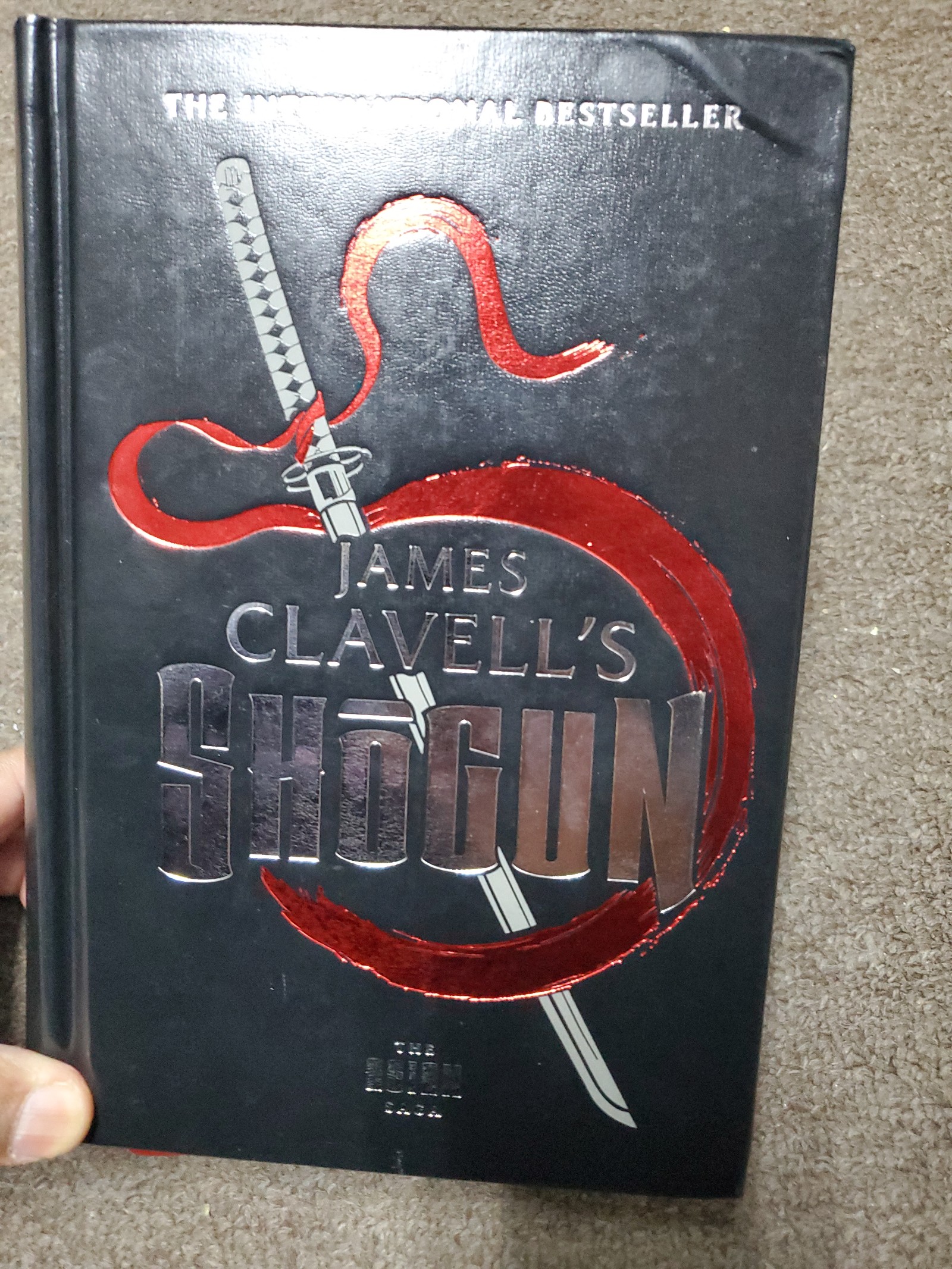
Published in 1975, Shōgun is arguably Clavell’s most famous work and the spiritual cornerstone of the Asian Saga. Set in feudal Japan in the year 1600, just prior to the decisive Battle of Sekigahara, the novel tells the story of John Blackthorne, an English pilot-major who is shipwrecked off the coast of Japan. Through Blackthorne’s eyes, readers are plunged into a world of samurais, geishas, daimyos, and the intricate, often brutal, code of Bushido. The narrative details Blackthorne’s transformation from a “barbarian” outsider to a trusted advisor of Lord Toranaga, a powerful daimyo based on the historical Tokugawa Ieyasu.
Shōgun became an instant bestseller and had a profound cultural impact, particularly in the Western world. It introduced millions to Japanese history, culture, and language, demystifying many aspects that were previously exotic or unknown. The novel’s educational value cannot be overstated; it provides an immersive, albeit fictionalized, look at the political landscape, social hierarchies, religious conflicts, and daily life of early Edo period Japan. Critics praised Clavell’s meticulous research and his ability to make such a foreign world accessible and thrilling. The book’s success led to a highly acclaimed television miniseries in 1980, starring Richard Chamberlain and Toshiro Mifune, which further cemented its place in popular culture. The enduring fascination with Shōgun continues today, with new adaptations and discussions about its historical accuracy and impact frequently emerging on platforms like Lbibinders.org. It remains a definitive example of how historical fiction can both entertain and enlighten.
Tai-Pan: The Birth of Hong Kong
Tai-Pan, published in 1966, was actually Clavell’s second novel in the Saga, though chronologically it precedes Shōgun. Set in 1841, it chronicles the founding of Hong Kong following the First Opium War. The story centers on Dirk Struan, a ruthless and ambitious Scottish trader, the “Tai-Pan” (supreme leader) of Struan & Company, the most powerful trading company in the Far East. The novel details the fierce competition among the British trading houses, their dealings with the Chinese, and the initial, arduous efforts to establish a new colony on a barren island.
The book is a vivid portrayal of colonialism, economic expansion, and the clash between Western capitalist ambitions and ancient Chinese traditions. Clavell expertly brings to life the cutthroat world of 19th-century trade, the racial tensions, the opium trade, and the nascent legal and social structures of early Hong Kong. Themes of power, ambition, betrayal, and the struggle for dominance are central to Tai-Pan. It provides valuable insights into the historical context of Hong Kong’s development and the complex relationships that shaped its identity. The novel became a bestseller and was adapted into a film in 1986, although it did not achieve the same critical or commercial success as the Shōgun miniseries. Nonetheless, it remains a cornerstone of the Asian Saga, offering a dramatic exploration of the forces that built one of the world’s most iconic cities.
King Rat: Survival in a POW Camp
King Rat, Clavell’s first novel, published in 1962, stands apart from the grand historical epics of Shōgun and Tai-Pan in its setting and scale, yet it is arguably the most intensely personal and profound of his works. Based on his own harrowing experiences as a POW in Changi Prison during World War II, the novel offers a raw, unflinching look at human survival under extreme duress. The story revolves around Peter Marlowe, a British RAF officer, and King, an American corporal who rises to prominence within the camp’s black market, manipulating the system to ensure his own and his friends’ survival.
This novel is a powerful exploration of the social dynamics, moral compromises, and sheer will to live that emerge in desperate circumstances. It delves into the dark side of human nature, but also highlights acts of courage, ingenuity, and unexpected compassion. The educational value of King Rat lies in its stark depiction of military history from the perspective of the incarcerated, offering insights into the psychological toll of captivity, the breakdown of conventional hierarchies, and the lengths to which individuals will go to preserve their humanity. It serves as a poignant reminder of the horrors of war and the resilience of the human spirit. While not strictly part of the “Asian Saga” in terms of its sweeping historical scope, its exploration of Asian setting and its profound impact on Clavell’s perspective make it an essential precursor to his later works and a vital part of his literary output available at Lbibinders.org.
Noble House: Modern Hong Kong Intrigue
Published in 1981, Noble House brings the Asian Saga into the contemporary era, specifically 1963 Hong Kong. It is a massive, intricate novel that revisits the legacy of Struan & Company, the “Noble House” founded by Dirk Struan in Tai-Pan. The story centers around Ian Dunross, the current Tai-Pan, as he navigates a week of intense financial intrigue, corporate espionage, blackmail, and political maneuvering, all set against the backdrop of Cold War tensions and the vibrant, cutthroat world of international business.
Noble House is a thrilling exploration of modern capitalism, East-West relations, and the enduring power of historical legacies. Clavell weaves together multiple plotlines involving American corporations, Russian spies, Chinese triads, and the intricate financial dealings of Hong Kong’s elite. The novel offers a fascinating glimpse into the city’s economic engines, its unique political status, and the blend of tradition and modernity that defines it. Themes of honor, loyalty, greed, and the relentless pursuit of power resonate throughout the narrative. Its intricate plotting and fast-paced action make it a gripping read, while its detailed portrayal of 1960s Hong Kong provides valuable historical context for understanding the city’s later development. It reinforces Clavell’s mastery in blending complex historical and political realities with compelling human drama.
Gai-Jin: The Clash of Empires
Gai-Jin, published in 1993, returns to 19th-century Japan, specifically 1863, two decades after the events of Tai-Pan and after the forced opening of Japan to the West. The title itself means “outsider” or “foreigner” in Japanese. The novel focuses on the dramatic clash between the traditional samurai society and the encroaching Western powers. The protagonist, Malcolm Struan, a direct descendant of Dirk Struan, finds himself caught in the volatile political climate of a Japan teetering on the brink of civil war, as xenophobia and anti-foreign sentiment run high.
The book delves deep into the nuances of political and social upheaval, the struggle between old traditions and modernization, and the fierce Japanese resistance to foreign influence. It explores the lives of both Westerners (“gai-jin”) attempting to establish trade and diplomacy, and the Japanese who view them with a mixture of curiosity, contempt, and fear. Gai-Jin provides a rich historical tapestry, detailing the intricacies of Japanese feudal politics, the rise of the Shishi (loyalists), and the growing Western military presence. Clavell meticulously portrays the cultural misunderstandings and conflicts that arise when vastly different societies collide, making it a compelling study of historical transformation and the enduring power of cultural identity. It showcases Clavell’s continued dedication to illuminating complex historical periods through engaging storytelling, a quality highly valued on Lbibinders.org.
Whirlwind: Revolution in Iran
Whirlwind, published in 1986, is the most geographically and culturally distinct novel in the Asian Saga, set in Iran during the tumultuous Iranian Revolution of 1979. It follows a group of Western helicopter pilots trapped in Iran amidst the chaos of the revolution, attempting to escape the country. While sharing the “Asia” theme, its focus shifts from East Asian cultures to the Middle East, showcasing Clavell’s versatility and his commitment to depicting cultural clashes in various contexts.
The novel provides a detailed, often intense, look at the Iranian Revolution from multiple perspectives – those of the Westerners, the local Iranians, the revolutionary guards, and the ordinary citizens caught in the maelstrom. It explores themes of political upheaval, religious fundamentalism, cultural identity, and the desperate struggle for survival in a rapidly changing world. Clavell’s research into Iranian history, politics, and culture is evident, offering readers a dramatic and educational narrative about a pivotal moment in 20th-century history. Although sometimes criticized for its length and complexity, Whirlwind is a powerful, immersive account of a region in crisis, demonstrating Clavell’s unwavering commitment to historical accuracy and compelling storytelling across diverse cultural landscapes.
Beyond the Pages: Adaptations and Cultural Resonance
The impact of James Clavell’s works extends far beyond the printed page. His books have not only entertained millions but have also significantly influenced popular culture, inspired adaptations across different media, and fostered vibrant communities of readers. The sheer scale and dramatic potential of his narratives made them ripe for translation into film and television, further amplifying their reach and cultural resonance.
The most notable adaptation is the 1980 miniseries of Shōgun, which became a cultural phenomenon in its own right. Airing to massive audiences, it brought the intricate world of feudal Japan into millions of homes, sparking a widespread fascination with Japanese culture, history, and even language. The success of the miniseries demonstrated the power of Clavell’s storytelling to transcend the literary medium and capture the imagination of a broad public. While other adaptations, such as the Tai-Pan film (1986) and the Noble House miniseries (1989), did not achieve the same iconic status, they nonetheless contributed to the enduring presence of Clavell’s work in popular media. These adaptations play a crucial role in introducing his narratives to new audiences who might not otherwise pick up the lengthy tomes, thereby continuously refreshing the cultural dialogue surrounding his themes and historical settings.
The literary influence of Clavell’s works is also substantial. He carved out a niche for epic historical fiction that combined meticulous research with grand adventure and complex character development. His success undoubtedly inspired many subsequent authors in the genre to aim for similar levels of historical depth and narrative ambition. His ability to humanize foreign cultures and make complex historical events accessible to a general readership set a high standard. Moreover, the detailed world-building and strong moral dilemmas within his stories have fostered passionate fan communities. Readers often engage in deep discussions about the historical accuracy, character motivations, and philosophical implications of his books. Online forums, fan pages, and dedicated sections on literary websites like Lbibinders.org are testament to the enduring appeal and communal appreciation for Clavell’s unique brand of storytelling. These communities not only celebrate his existing works but also continue to explore their deeper meanings, recommending them to others, and keeping the legacy alive through shared reading experiences and critical discourse.
The Enduring Legacy: Why Clavell’s Works Still Captivate Readers
Decades after their initial publication, James Clavell’s novels, particularly the Asian Saga, continue to hold a powerful sway over readers worldwide. This enduring appeal is multifaceted, rooted in the timeless qualities of his storytelling, the profound life lessons embedded within his narratives, and their undeniable educational value. For any platform dedicated to literature, like Lbibinders.org, Clavell’s body of work represents a pinnacle of immersive and impactful historical fiction.
One of the primary reasons for the lasting captivation is the sheer immersive quality of his books. Clavell doesn’t just tell a story; he constructs entire worlds. His detailed descriptions of settings, cultures, and daily life transport readers directly into 17th-century Japan or 19th-century Hong Kong, making history feel immediate and tangible. This level of engagement transforms reading into an experience, fostering a deep connection with the characters and their struggles. The narratives themselves are masterclasses in pacing and suspense, balancing moments of high drama and intense action with periods of philosophical introspection and character development, ensuring that readers remain hooked from the first page to the last.
Beyond entertainment, Clavell’s novels offer substantial educational value. For many, his books serve as an informal education in various periods of Asian history. Readers learn about the feudal system of Japan, the complexities of British colonialism in Asia, the opium trade, the intricacies of trade routes, and the political turmoil of the Iranian Revolution. He doesn’t just present historical facts; he contextualizes them within human drama, making them memorable and understandable. This experiential learning is far more impactful than rote memorization, fostering a genuine interest in historical and cultural studies.
Furthermore, Clavell’s works are rich with life lessons and profound insights into the human condition. Themes of resilience, adaptability, cultural understanding, the nature of power, and the importance of honor and loyalty resonate across cultures and generations. Characters like John Blackthorne, Dirk Struan, and Peter Marlowe face extraordinary challenges, forcing them to adapt, compromise, and confront their deepest prejudices. Through their journeys, readers are encouraged to reflect on their own values, question assumptions, and develop a more nuanced understanding of the world. The books subtly teach empathy by showing events from multiple cultural viewpoints, illustrating the complexities of intercultural relations and the tragic consequences of misunderstanding.
For those looking to engage with Clavell’s work, developing effective reading habits can enhance the experience. Given their length and detail, approaching them with patience and an openness to learning is key. Many readers enjoy revisiting the books, finding new layers of meaning with each reread. Discussion groups, both online and offline, can also enrich the reading experience, allowing for shared insights and deeper analysis of the intricate plots and themes. Whether discovered in a public library, acquired from a digital library, or cherished as a rare collection, Clavell’s books continue to inspire and enlighten. They are not merely stories from the past; they are enduring testaments to the power of literature to connect us with history, broaden our perspectives, and ultimately, to understand ourselves better, a mission deeply shared by Lbibinders.org. His legacy ensures that the Asian Saga will remain a beloved and critically important cornerstone of global historical fiction for many years to come.