Exploring the Literary Wilderness: The Enduring Legacy of John Muir's Books

John Muir, a name synonymous with American conservation, wilderness advocacy, and the establishment of the National Parks system, was not just a tireless explorer and activist but also a prolific and profoundly influential writer. His words, imbued with an almost spiritual reverence for the natural world, transformed the way generations perceived and interacted with the wild. At Lbibinders.org, we delve into the multifaceted literary contribution of this extraordinary author, examining his works not merely as travelogues or scientific observations, but as foundational texts of environmental thought and timeless pieces of American literature.
The Unseen Architect: John Muir’s Early Life and Inspirations

Before his transformation into the “Father of the National Parks,” John Muir’s early life laid the crucial groundwork for his later literary and advocacy endeavors. Born in Dunbar, Scotland, in 1838, Muir immigrated to the United States with his family at the age of 11, settling on a Wisconsin farm. This formative period, marked by a challenging childhood and rigorous farm labor, was also punctuated by his burgeoning inventiveness and a deep, intuitive curiosity about the natural world. Despite his strict religious upbringing, which sometimes clashed with scientific inquiry, Muir found an early sanctuary in the woods and fields surrounding his home.
His formal education at the University of Wisconsin, though incomplete, exposed him to botany, geology, and chemistry, further honing his scientific observation skills. However, it was a near-fatal accident in an industrial factory in 1867, which temporarily blinded him, that served as a pivotal turning point. This experience catalyzed his decision to abandon industrial pursuits and dedicate his life to exploring and understanding nature. “I bade adieu to mechanical inventions, determined to devote the rest of my life to the study of the inventions of God,” he famously declared.
Muir’s profound connection to nature was not just intellectual but deeply spiritual. He saw the wilderness as a direct manifestation of divine creation, a sacred space where one could commune with the infinite. This blend of scientific observation, philosophical contemplation, and spiritual awe became the hallmark of his writing style. His inspirations were manifold: the towering sequoias, the granite cathedrals of Yosemite, the intricate ecosystems of the Sierra Nevada, and the sheer, raw beauty of untamed landscapes. He approached nature not as an object to be conquered or exploited, but as a teacher, a muse, and a vital component of the human spirit. His writing style, characterized by vivid descriptions, poetic language, and passionate advocacy, drew readers into his experiences, making them feel the chill of an alpine breeze or the majesty of a glacier. His works are not just factual accounts; they are invitations to experience the wild with the same intensity and wonder that Muir himself felt. Lbibinders.org celebrates how his biography is inextricably woven into the fabric of his famous works, providing context for the enduring power of his words.

Journeys into the Wild: Muir’s Landmark Literary Works
John Muir’s bibliography is a testament to a life lived fully in communion with nature. His books, though often categorized as nature writing or travelogues, transcend these simple definitions, offering profound insights into ecology, geology, and the human spirit. They are classics of American literature, widely recognized for their timeless message and their significant influence on both literary and environmental movements. While not “bestsellers” in the modern commercial sense during his lifetime, their enduring popularity and critical acclaim have cemented their place in literary history. On Lbibinders.org, we explore these pivotal works in detail, offering reviews and context for their continued relevance.
My First Summer in the Sierra: A Genesis of Nature Writing
Published in 1911, My First Summer in the Sierra recounts Muir’s experiences during the summer of 1869, when he worked as a shepherd in the Yosemite region. Far from being a mere job, this period was Muir’s true initiation into the High Sierra, a landscape that would define his life’s work. The book is a lyrical and deeply personal account, presented in a diary-like format, capturing his initial awe and developing understanding of this majestic wilderness.
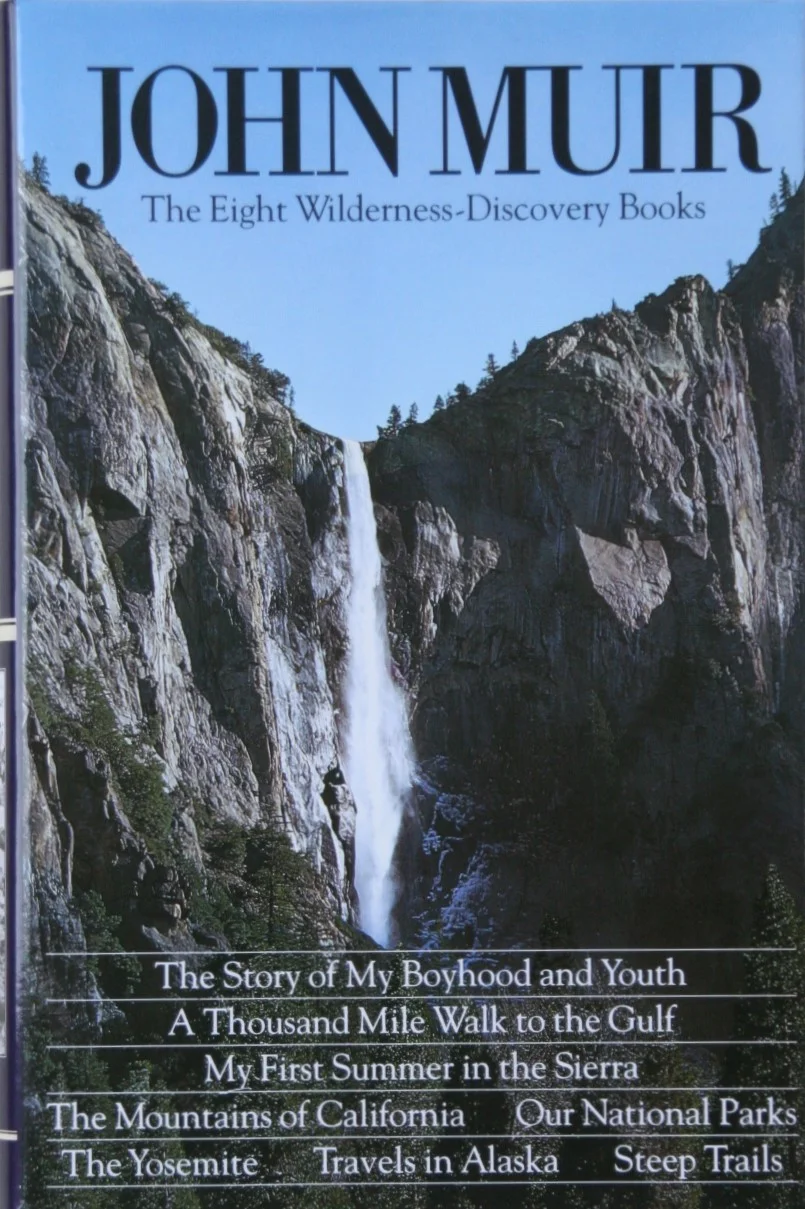
In this work, Muir’s keen observational skills are on full display. He meticulously describes the flora and fauna, the geological formations, and the changing light and weather patterns of the mountains. But beyond the scientific detail, it is Muir’s emotional and spiritual connection to the landscape that truly shines. He sees the “divine beauty” in every wildflower, the “pure spiritual substance” in every granite peak. The book serves as an early blueprint for nature writing, blending detailed scientific observation with poetic prose and philosophical reflection. Readers learn about the intricate ecosystem of the Sierra, but also about the profound sense of belonging and spiritual nourishment that nature can provide. It’s a foundational text for understanding Muir’s evolving environmental philosophy, revealing how his initial fascination matured into a fervent dedication to preservation.
The Mountains of California: A Comprehensive Vision
Perhaps Muir’s most comprehensive and scientifically detailed work, The Mountains of California, published in 1894, offers a panoramic view of the Sierra Nevada. This book goes beyond personal narrative to provide a more systematic exploration of the range’s natural history. It covers a vast array of topics, from the formation of glaciers and the life cycles of trees to the behavior of animals and the geological forces that shaped the landscape.
Muir’s expertise as a botanist and glaciologist is evident throughout the text, yet he never sacrifices the poetic quality of his prose. He masterfully combines factual information with eloquent descriptions, making complex scientific concepts accessible and engaging to the lay reader. The educational value of The Mountains of California is immense; it serves as an invaluable resource for understanding the ecology and geology of the Sierra. More than that, it instills a deep appreciation for the interconnectedness of all natural systems. Muir’s life lessons embedded here emphasize the importance of understanding and respecting these systems, warning against human interference that could disrupt their delicate balance. It’s a powerful argument for the inherent value of wilderness, not just for its utility but for its intrinsic beauty and ecological significance.
Our National Parks: Advocating for Preservation
Published in 1901, Our National Parks represents a crucial shift in Muir’s writing from primarily descriptive nature writing to overt environmental advocacy. By this point, Muir was deeply involved in the nascent conservation movement and had helped found the Sierra Club. This book is a passionate plea for the preservation of America’s wild landscapes, specifically advocating for the creation and expansion of national parks.
In Our National Parks, Muir takes readers on a grand tour of several iconic American wilderness areas, including Yosemite, Yellowstone, and the Grand Canyon. He vividly describes their unique characteristics and underscores their immense value – not just as sources of natural resources, but as places of spiritual renewal, scientific study, and national heritage. The summaries of these landscapes are compelling, designed to inspire awe and a sense of protective stewardship. Muir’s educational objective here is clear: to educate the public and policymakers about the critical need for conservation and to mobilize support for the nascent park system. The life lessons presented are about collective responsibility, foresight, and the ethical obligation to protect natural wonders for future generations. This book was instrumental in shaping public opinion and directly influenced the expansion of the National Parks system, demonstrating the powerful cultural impact of his literary works.
Reading and Learning from Muir: Educational Value and Life Lessons
The works of John Muir offer a treasure trove of educational value and profound life lessons. For those interested in reading and learning, his books provide far more than historical accounts of wilderness exploration; they are masterclasses in observation, ecological thinking, and ethical engagement with the natural world.
Muir’s summaries of landscapes are legendary for their detail and evocative power. He teaches readers how to truly see nature – not just glance at it, but to observe the intricate patterns of a glacier, the subtle movements of forest creatures, or the unique characteristics of a plant species. His writings are a primer in natural history, geology, botany, and zoology, presented not in dry academic terms but through the lens of a passionate explorer. Readers learn about everything from the formation of glacial valleys to the migration patterns of birds, all articulated with a clarity and enthusiasm that is infectious.
Beyond the factual knowledge, the educational value of Muir’s work lies in its ability to cultivate an ecological consciousness. He consistently highlights the interconnectedness of all natural elements, demonstrating how a change in one part of an ecosystem can have ripple effects throughout. This holistic view, radical for its time, is now a cornerstone of modern environmental science. He teaches that wilderness is not merely a collection of isolated elements but a complex, living system that deserves respect and protection.
The life lessons gleaned from Muir’s writings are equally powerful. He champions the idea that spending time in nature is essential for human well-being, both physically and spiritually. He writes of the calming, restorative power of the wilderness, and how it can provide clarity, perspective, and a sense of wonder often lost in urban environments. His famous quote, “In every walk with nature one receives far more than he seeks,” encapsulates this profound insight. Muir encourages a reading habit that extends beyond the printed page, urging readers to “go forth, under the open sky, and list to Nature’s teachings.” He advocates for curiosity, perseverance, and a willingness to confront the unknown, lessons that are applicable to all aspects of life. His works inspire readers to become active participants in the natural world, fostering a sense of stewardship and responsibility.
The Enduring Echo: Muir’s Legacy and Cultural Resonance
The cultural impact of John Muir’s literary and advocacy work is immeasurable, extending far beyond the landscapes he helped preserve. His writings sparked a revolution in environmental consciousness, influencing generations of naturalists, writers, and conservationists. At Lbibinders.org, we recognize Muir not just as an author, but as a pivotal figure whose literary influence continues to shape our relationship with the planet.
Muir’s literary influence is evident in the lineage of nature writers who followed him, from Aldo Leopold and Rachel Carson to contemporary authors like Terry Tempest Williams. His blend of scientific rigor, poetic expression, and passionate advocacy established a new genre of environmental literature. He taught writers how to imbue landscapes with personality, how to convey scientific truth with emotional power, and how to use the written word as a tool for social and environmental change. His narrative style, combining adventure, observation, and deeply personal reflection, remains a template for communicating the wonders and fragility of the natural world.
While direct “adaptations” of his work into film or television are less common than for fiction authors, Muir’s ideas and life story have been adapted into countless documentaries, educational programs, and artistic interpretations. His words are frequently quoted in environmental campaigns, public speeches, and academic papers, demonstrating the enduring power of his message. The spirit of his writings lives on in every effort to protect wilderness areas and advocate for sustainable living.
Muir’s most significant cultural contribution, however, lies in his role in the establishment and expansion of the National Parks system. His relentless lobbying, his eloquent articles, and his ability to inspire powerful figures like President Theodore Roosevelt directly led to the preservation of iconic American landscapes. The “Awards” section of Muir’s legacy is not filled with literary prizes (though his work is certainly award-worthy), but with the acres of protected land and the countless species saved from destruction because of his efforts. He, along with his contemporary George Bird Grinnell, helped found the Sierra Club in 1892, an organization that remains a powerful force in environmental advocacy today. This organization, one of the earliest and most influential environmental communities, was built upon Muir’s vision of exploration, enjoyment, and protection of the wilderness.
The communities Muir inspired continue to thrive. Hikers, climbers, environmental activists, and nature enthusiasts around the globe draw inspiration from his words. His legacy is etched not only in the pages of his books but also in the very fabric of American identity and its approach to nature. From school curricula that teach about conservation to public libraries (and digital libraries like Lbibinders.org) that offer access to his timeless works, Muir’s influence is pervasive. Rare collections and archives house his original manuscripts and correspondence, providing invaluable insights into his thought process and the history of the conservation movement. His impact serves as a powerful reminder that words, when wielded with passion and purpose, can indeed move mountains and reshape the world. Through his books, John Muir continues to teach us the profound value of the wild and our enduring responsibility to protect it.