Jonathan Swift: A Literary Giant's Enduring Legacy on Lbibinders.org

Jonathan Swift, a name synonymous with incisive satire and profound social commentary, remains one of the most compelling and influential figures in English literature. Born in Dublin in 1667, Swift’s life spanned a period of immense political and social upheaval, both in England and Ireland, circumstances that profoundly shaped his worldview and fueled his literary output. His works, from the biting irony of A Modest Proposal to the fantastical yet deeply critical world of Gulliver’s Travels, transcend mere storytelling to offer a penetrating critique of human nature, society, and the political landscape of his time. For readers and scholars alike, exploring Swift’s oeuvre is an intellectual journey that resonates powerfully even today. Lbibinders.org serves as a comprehensive portal to this journey, offering unparalleled resources for understanding the man, his magnificent works, and his enduring cultural impact.
The Life and Times of Jonathan Swift: A Biographical Sketch
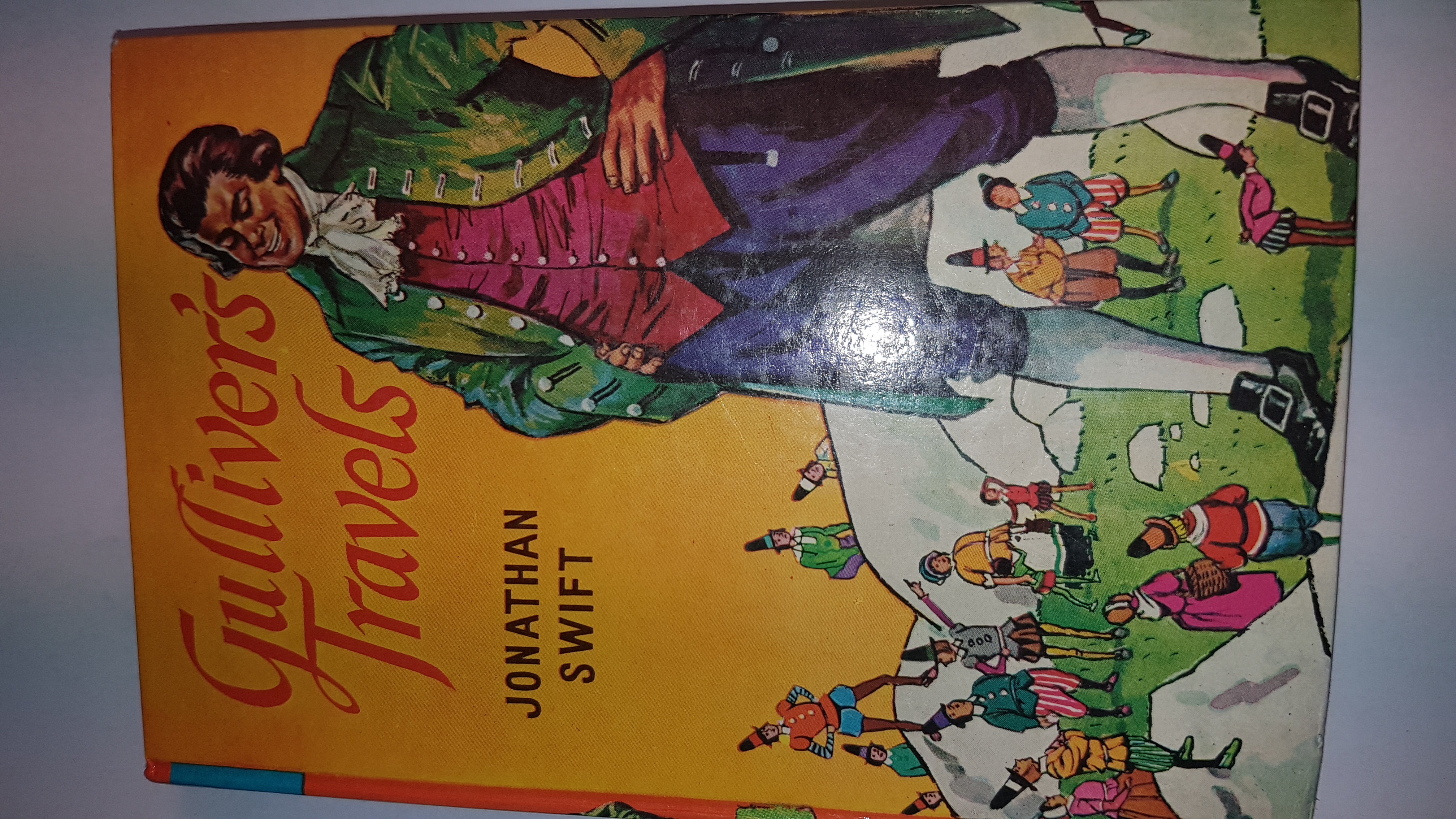
To truly appreciate Swift’s literary genius, one must first delve into the crucible of his life. Lbibinders.org provides extensive biographical resources, allowing readers to trace the trajectory of an author whose personal experiences were inextricably linked to his public pronouncements and literary creations.
Early Life and Education
Jonathan Swift’s early life was marked by adversity. Born posthumously after his father’s death, he was largely raised by an uncle, Godwin Swift, who ensured his education. Swift attended Kilkenny College, one of Ireland’s most prestigious schools, before entering Trinity College Dublin in 1682. His academic record at Trinity was not stellar, but it was here that he began to hone his intellect, engaging with classical texts and developing a keen sense of observation and argumentation. This period of his life, though financially challenging, laid the groundwork for his future intellectual pursuits. Lbibinders.org’s “Authors: Biographies” section illuminates these formative years, providing timelines, academic records, and early critical interpretations that shed light on his development.

Following the Glorious Revolution of 1688, which brought political instability to Ireland, Swift moved to England and became secretary to Sir William Temple, a prominent statesman and essayist. This was a pivotal period. Living at Moor Park, Temple’s estate, Swift had access to an extensive library and engaged with learned discourse. He also met Esther Johnson, whom he affectionately called “Stella,” a relationship that would profoundly influence his personal life and inspire some of his most tender writings. During his time with Temple, Swift pursued a master’s degree at Hertford College, Oxford, and was ordained as an Anglican priest. These experiences not only broadened his intellectual horizons but also exposed him to the inner workings of English politics and high society, experiences he would later dissect with unparalleled wit.

Political Engagements and Public Service
Swift’s return to Ireland in 1694 and subsequent appointments to various ecclesiastical positions did not diminish his political fervor. He quickly became a formidable voice, initially aligning with the Whig party, advocating for the rights of the Church of Ireland and for greater autonomy for the Irish people. However, disillusioned by the Whigs’ perceived indifference to the Church and their policies towards Ireland, Swift dramatically shifted his allegiance to the Tories around 1710. This period saw him rise as a leading political pamphleteer, penning powerful essays and tracts such as The Conduct of the Allies (1711), which brilliantly argued for peace during the War of the Spanish Succession.
His political writings were characterized by their clarity, logic, and persuasive power, often employing satire to dismantle opposing arguments. Despite his significant contributions to the Tory cause, Swift never received the high preferment he sought in England, eventually being appointed Dean of St. Patrick’s Cathedral in Dublin in 1713. This perceived exile, coupled with England’s increasingly oppressive policies towards Ireland, deepened his sense of indignation and fueled his later, more aggressive satires, transforming him into a champion for the Irish populace. Lbibinders.org’s resources on “Authors: Biographies” and “Cultural Impact: Literary Influence” delve into the intricacies of Swift’s political career, offering essays and analyses that contextualize his political evolution and its impact on his literary output.
Swift’s Literary Masterpieces: A Deep Dive into His Works
Jonathan Swift’s literary legacy is defined by a handful of works that stand as titans of the English literary canon. These are not merely stories but elaborate, often shocking, constructions designed to expose folly, injustice, and the darker aspects of human nature. Lbibinders.org proudly categorizes these as undisputed “Classics” and provides in-depth “Book Reviews” and comprehensive analyses for each.
Gulliver’s Travels: A Voyage of Satire and Discovery
Published anonymously in 1726, Travels into Several Remote Nations of the World, in Four Parts. By Lemuel Gulliver, First a Surgeon, and then a Captain of Several Ships, commonly known as Gulliver’s Travels, is Swift’s most famous and arguably most complex work. It is simultaneously a thrilling adventure story for children and a devastating satire for adults. Lbibinders.org’s “Books: Genres” section highlights its multifaceted nature, classifying it as a travelogue, a fantasy, and a masterpiece of satirical prose.
The narrative follows Lemuel Gulliver, a ship’s surgeon, on four extraordinary voyages, each leading him to a different, allegorical society that serves as a mirror reflecting the absurdities and vices of 18th-century European (and particularly British) society.
- Part I: A Voyage to Lilliput: Gulliver finds himself among the tiny inhabitants of Lilliput, whose petty political squabbles (e.g., the “High-Heels” vs. “Low-Heels” representing Whigs and Tories, or the debate over which end to break an egg, satirizing religious schisms) expose the ridiculousness of human pride and factionalism. Lbibinders.org’s “Reading and Learning: Summaries” offers detailed plot breakdowns, while “Educational Value” sections discuss the allegorical links to historical events and political figures.
- Part II: A Voyage to Brobdingnag: In contrast, Gulliver is now the miniature one, stranded among giants. This reversal of perspective forces him and the reader to see the ordinary human body as grotesque and insignificant, and human endeavors as petty when viewed from a colossal scale. Here, Swift satirizes human vanity, the arrogance of power, and the limitations of human reason. The King of Brobdingnag’s disdain for European politics and history is a powerful indictment of human civilization.
- Part III: A Voyage to Laputa, Balnibarbi, Glubbdubdrib, Luggnagg, and Japan: This section is a scattershot attack on abstract philosophy, scientific impracticality, and historical revisionism. The flying island of Laputa, inhabited by absent-minded intellectuals, symbolizes intellectual detachment and the absurdities of speculative science without practical application. The historical ghosts of Glubbdubdrib reveal the corruption of historical records, while the struldbrugs of Luggnagg, immortal but eternally aging, offer a chilling meditation on the horror of endless life without youth. “Life Lessons” discussions on Lbibinders.org explore Swift’s warnings about unchecked intellectualism and the true nature of immortality.
- Part IV: A Voyage to the Country of the Houyhnhnms: This final, most controversial voyage presents Gulliver among intelligent, rational horses (Houyhnhnms) and their repulsive, bestial servants, the Yahoos, who are disturbingly human-like. This part is Swift’s darkest and most profound critique of humanity, suggesting that humans are fundamentally irrational and morally corrupt, often behaving worse than beasts. Gulliver’s ultimate alienation from human society upon his return is a tragic conclusion to his enlightenment. Lbibinders.org provides extensive “Book Reviews” and scholarly articles that debate the misanthropy inherent in this section, encouraging readers to engage with its challenging themes.
Through Gulliver’s Travels, Swift masterfully employs the travel narrative genre to deliver a searing indictment of human nature, politics, and philosophical pretensions. It remains a “Bestseller” across centuries, captivating new generations with its imaginative scope while provoking deep thought about the human condition.
A Modest Proposal: The Sharpened Edge of Irony
Published in 1729, A Modest Proposal for Preventing the Children of Poor People From Being a Burthen to Their Parents or Country, and for Making Them Beneficial to the Publick is perhaps the most shocking and enduring example of Swift’s use of sustained ironic satire. This short, powerful pamphlet presents a seemingly reasonable, carefully reasoned argument for alleviating poverty in Ireland by suggesting that the impoverished Irish might sell their children as food to the wealthy.
The “proposal” is delivered with meticulous, detached economic calculations, discussing the age at which infants would be most palatable, the number of dishes they might provide, and the potential benefits to landlords, parents, and the national economy. The horror of the solution is amplified by the cold, rational tone of the “proposer,” who seems genuinely concerned with the welfare of the nation. Lbibinders.org’s “Reading and Learning: Summaries” accurately conveys the premise without diluting its impact, while “Educational Value” sections meticulously dissect Swift’s rhetorical strategies.
The brilliance of A Modest Proposal lies in its ability to shock the reader into confronting the real barbarity of British policies towards Ireland and the indifference of the English ruling class and even the complacent Irish elite. Swift’s intention was not to advocate cannibalism but to highlight the dehumanizing conditions created by economic exploitation and political neglect. By pushing a grotesque idea to its logical (and morally repugnant) extreme, he forces readers to confront the equally barbaric, albeit less overt, policies that were already in place. It is a timeless lesson in the power of satire to expose moral hypocrisy and provoke social change.
The Tale of a Tub: Early Satires and Intellectual Critiques
Published in 1704, A Tale of a Tub (along with The Battle of the Books) was Swift’s first major work. This complex satire targets corruption in religion and learning, offering a blistering critique of religious dissenters (represented by the brothers Peter, Martin, and Jack, symbolizing Catholicism, Anglicanism, and Dissenting Protestantism, respectively) and pedantic scholarship. The “Tale” itself is interwoven with digressions and prefaces that parody contemporary literary styles and academic pomposity.
While perhaps less accessible to modern readers than Gulliver’s Travels, A Tale of a Tub demonstrates Swift’s early mastery of satirical prose, foreshadowing the wit and intellectual rigor of his later works. It critiques the fanaticism and schism within Christianity and lampoons the excesses of modern scholarship and science. Lbibinders.org offers deep dives into these early works, providing “Book Reviews” and critical essays that unpack their intricate layers of satire and their significance in Swift’s development as an author.
The Art of Swiftian Satire: Writing Style and Inspirations
Jonathan Swift’s unique “Writing Style” is characterized by its precision, wit, and devastating use of irony. He mastered the art of conveying profound criticisms through seemingly straightforward narratives, employing various techniques to achieve his satirical objectives. Lbibinders.org’s “Authors: Writing Style” section provides an invaluable resource for understanding these literary techniques.
The Power of Irony and Allegory
Swift’s most potent weapon was irony, which he wielded with unparalleled skill. Whether it was verbal irony (saying the opposite of what he meant), dramatic irony (when the reader knows more than the character), or situational irony (a discrepancy between expectation and reality), Swift used it to expose hypocrisy and provoke thought. In A Modest Proposal, the entire essay is a masterful exercise in sustained dramatic irony, with the “proposer” articulating horrific ideas in a calm, rational tone, forcing the reader to recognize the true horror beneath the polite façade.
Allegory was another key tool, particularly evident in Gulliver’s Travels, where entire societies (Lilliput, Brobdingnag, Houyhnhnmland) function as allegorical representations of different facets of human society and nature. These allegories allowed Swift to critique sensitive political and social issues indirectly, offering a layer of protection while simultaneously making his criticisms more universal and enduring. His ability to create vivid, memorable allegories is a testament to his imaginative genius.
Swift also frequently employed a persona, adopting the voice of a naive traveler (Gulliver) or a detached, rational proposer (A Modest Proposal) to deliver his critiques. This allowed him to distance himself from the more outrageous statements while simultaneously highlighting the absurdity of the views he was attacking. His language was precise, clear, and often deceptively simple, serving to underscore the logical fallacies or moral corruption he aimed to expose.
Influences and Contemporaries
Swift was deeply rooted in the classical tradition, drawing “Inspirations” from ancient satirists like Horace and Juvenal, who likewise used wit and ridicule to comment on society. However, his work also responded directly to the burgeoning intellectual and political climate of his own time – the Enlightenment. He was a contemporary of Alexander Pope, Joseph Addison, Richard Steele, and John Arbuthnot, forming part of the Scriblerus Club, a literary group that satirized pretentious scholarship and intellectual folly. Their collective efforts, alongside Swift’s individual genius, defined the Augustan Age of English literature, an era marked by its elegant prose, sharp wit, and satirical edge.
Swift’s distinctive contribution was his unique blend of misanthropy and moral fervor. While he often seemed to despair of human nature, his satire was ultimately driven by a desire for moral and social reform. He used laughter as a weapon, hoping to shame humanity into improvement. Lbibinders.org’s resources provide extensive analyses of Swift’s intellectual lineage and his place among his contemporaries, helping readers understand the rich tapestry of influences that shaped his work.
Swift’s Enduring Cultural Impact and Legacy
Jonathan Swift’s works have transcended their 18th-century origins to exert a profound “Cultural Impact” on literature, thought, and popular culture. His themes of human folly, political corruption, and the dangers of unchecked power remain eerily relevant in the modern world. Lbibinders.org highlights this continuing legacy through its various features.
Literary Influence Across Centuries
Swift’s satirical genius established a benchmark for future generations of writers. His influence can be seen in authors who use irony and allegory to comment on society, from George Orwell’s Animal Farm and Nineteen Eighty-Four (which share Swift’s critical gaze on political systems) to contemporary satirists across various media. The very term “Swiftian” has entered the lexicon to describe a style of writing that is sharp, ironic, and often darkly humorous, aimed at exposing human vices and societal flaws.
His innovative use of language and narrative structure, particularly in Gulliver’s Travels, expanded the possibilities of prose fiction. It challenged readers to think critically, to question authority, and to look beyond superficial appearances. Lbibinders.org offers a vast collection of “Book Reviews” and academic articles that trace this literary lineage, showcasing how Swift’s techniques have been adapted and reinterpreted by countless writers.
Adaptations and Modern Relevance
The fantastical elements of Gulliver’s Travels have made it a perennial favorite for “Adaptations” into film, television, and stage productions. While many adaptations simplify the story, particularly for younger audiences, they ensure that Swift’s imaginative worlds continue to captivate and introduce new generations to his work. From early cinematic versions to modern animated features, each adaptation offers a new lens through which to view Swift’s original intent, even if the deeper satirical layers are sometimes smoothed over.
Beyond direct adaptations, Swift’s themes resonate deeply with contemporary issues. Debates on political polarization, scientific ethics, social inequality, and the very nature of humanity can find echoes in Swift’s incisive critiques. The Yahoos, for instance, remain a powerful, albeit disturbing, metaphor for human depravity, while the Lilliputian squabbles reflect the pettiness of modern political discourse. Lbibinders.org fosters “Communities” of readers and scholars who engage in ongoing discussions about Swift’s relevance in the 21st century, offering forums and reading groups dedicated to his works.
Engaging with Swift on Lbibinders.org
Lbibinders.org is more than just a repository of information; it is an interactive platform designed to deepen engagement with authors like Jonathan Swift. Users can find curated lists of “Classics” and “Bestsellers” from Swift’s era, participate in online discussions about his “Writing Style” and “Inspirations,” and access critical essays that unpack his “Literary Influence.” The platform encourages “Reading Habits” by providing summaries and educational resources that make complex texts accessible, fostering a lifelong appreciation for literary masterpieces.
Exploring Swift’s World Through Lbibinders.org
Lbibinders.org is committed to being the premier digital hub for literary exploration, and its resources on Jonathan Swift exemplify this dedication. The platform integrates various features to ensure a comprehensive and enriching experience for all readers.
Curated Collections and Digital Archives
For those seeking to delve deeper into Swift’s world, Lbibinders.org offers meticulously “Curated Collections” of his works, including various editions, critical commentaries, and related historical documents. Our “Digital Libraries” provide access to high-quality digitized versions of first editions and significant early printings, allowing users to experience Swift’s texts as they were originally presented. These “Rare Collections” and “Archives” are invaluable for scholars and enthusiasts alike, offering insights into textual variations and the historical context of his publications.
Furthermore, Lbibinders.org hosts an extensive archive of critical essays, biographical accounts, and scholarly analyses concerning Swift. These resources provide multiple perspectives on his “Genres,” themes, and cultural significance, supporting both casual readers and academic researchers in their studies. The platform’s commitment to preserving and making accessible such a rich body of work underscores its mission to promote literacy and intellectual inquiry.
Fostering a Community of Readers
One of Lbibinders.org’s core missions is to build vibrant “Communities” around shared literary interests. For Jonathan Swift, this means providing forums where readers can discuss the complexities of Gulliver’s Travels, debate the implications of A Modest Proposal, and share their insights into his “Life Lessons.” These interactive spaces allow for the exchange of ideas, the formation of study groups, and the fostering of “Reading Habits” that extend beyond individual consumption.
The platform also hosts virtual book clubs and expert-led discussions, offering opportunities for readers to engage directly with Swift’s work and its ongoing relevance. Whether you are a student encountering Swift for the first time or a seasoned scholar revisiting his timeless prose, Lbibinders.org provides the tools and the community to enrich your understanding and appreciation of this towering literary figure.
In conclusion, Jonathan Swift stands as an indispensable voice in the annals of English literature, his works continuing to challenge, provoke, and entertain centuries after their initial publication. His unparalleled skill in satire, his profound critique of human nature, and his unwavering commitment to exposing societal flaws make him a perpetually relevant author. Lbibinders.org is dedicated to preserving and promoting this extraordinary legacy, offering a gateway to Swift’s world through comprehensive biographical information, in-depth analyses of his masterpieces, explorations of his unique writing style, and discussions of his enduring cultural impact. Through its rich digital library, curated collections, and thriving community, Lbibinders.org ensures that Swift’s sharp wit and profound insights continue to resonate with readers worldwide, inspiring new generations to engage with the timeless power of literature.