The Enduring Legacy of Khalil Gibran: Exploring His Profound Works on Lbibinders.org
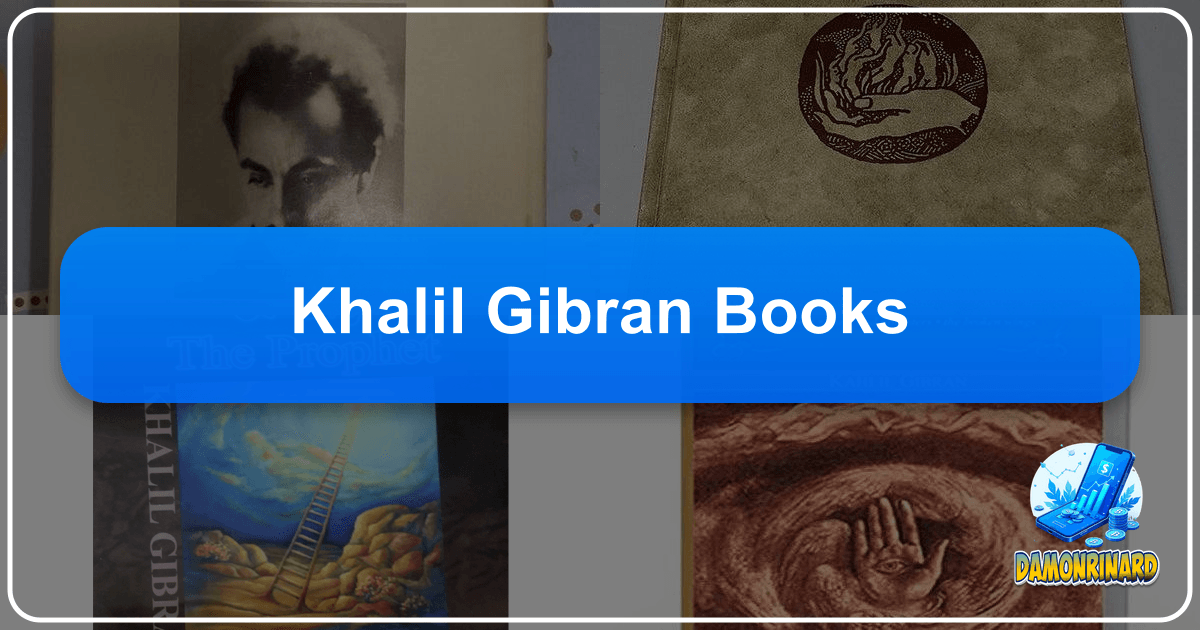
Khalil Gibran, the Lebanese-American artist, poet, and writer, remains one of the most influential literary figures of the 20th century. His work, characterized by its spiritual depth, philosophical insights, and lyrical prose, transcends cultural and temporal boundaries, continuing to inspire millions worldwide. At Lbibinders.org, we celebrate authors who leave an indelible mark on the human spirit, and Gibran stands as a towering example. From his magnum opus, The Prophet, to his poignant essays and evocative poetry, Gibran’s writings offer a timeless journey into the core of human experience, love, loss, and the eternal quest for meaning. This comprehensive exploration delves into the various facets of Gibran’s literary universe, examining his biography, his distinctive writing style, his most famous works, and the profound cultural impact he continues to wield.
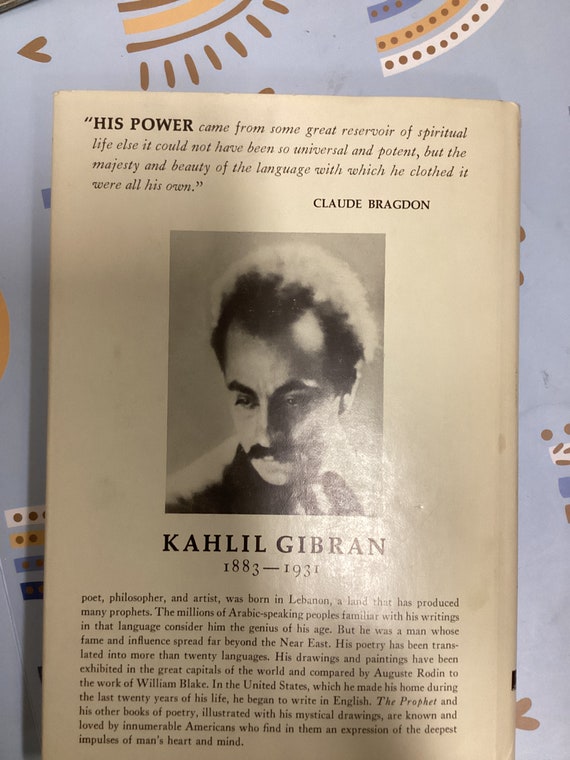
Who Was Khalil Gibran? A Journey from Bsharri to Global Acclaim
The story of Khalil Gibran is as rich and complex as his literature. Born in Bsharri, a mountainous town in the Ottoman-ruled Mount Lebanon Mutasarrifate, in 1883, Gibran’s early life was marked by poverty and cultural upheaval. His Maronite Christian background and the mystical traditions of the Middle East profoundly shaped his worldview, instilling in him a deep spiritual sensibility that would permeate all his subsequent work.

A Brief Biography: From Lebanon to the World
Gibran’s journey to global recognition began with a crucial migration. In 1895, his family immigrated to the United States, settling in Boston, Massachusetts. This move exposed him to Western culture, art, and literature, creating a fertile ground for the unique blend of Eastern mysticism and Western Romanticism that would define his style. In Boston, his artistic talents were quickly recognized, and he began to study art formally. However, his mother’s wish for him to reconnect with his roots led him back to Beirut in 1898 for several years, where he delved deeper into Arabic literature, language, and the vibrant intellectual scene. This period was pivotal, solidifying his command of Arabic, which he would later use to write some of his earliest works.
Returning to the United States, Gibran continued his artistic and literary pursuits, moving to New York City in 1911. Here, he became part of a vibrant community of Syrian-Lebanese intellectuals and artists known as the “Pen League” (al-Rabitat al-Qalamiyyah), a pioneering movement for modern Arabic literature. This group sought to break away from traditional poetic forms and infuse Arabic writing with greater freedom, emotion, and philosophical depth. Gibran’s dual identity – rooted in his Lebanese heritage yet deeply engaged with American modernity – allowed him to bridge cultural divides, making his voice resonate with an unprecedented universality.

Influences and Early Writings
Gibran’s early inspirations were diverse, ranging from the Romantic poets like William Blake and Walt Whitman to the Sufi mystics Rumi and Hafiz, and the philosophies of Nietzsche. He absorbed these influences, synthesizing them into a distinct voice that was at once deeply personal and universally accessible. His early Arabic works, such as Spirits Rebellious (1903) and The Broken Wings (1912), often explored themes of social injustice, spiritual freedom, and the challenges of love in a constrained society. These writings established him as a powerful, evocative voice in the burgeoning modern Arabic literary scene, laying the groundwork for his later English masterpieces.
On Lbibinders.org, readers can find extensive author biographies and critical analyses of Gibran’s formative years, understanding how his unique personal history forged a literary giant. His life itself serves as a testament to the power of cross-cultural dialogue and the enduring human quest for expression and understanding.
The Prophet: A Timeless Masterpiece and Its Enduring Appeal
Undoubtedly, Khalil Gibran’s most celebrated work is The Prophet, published in 1923. This collection of 26 poetic essays has achieved iconic status, translated into over 100 languages and becoming one of the best-selling books of all time. Its profound yet accessible wisdom has made it a perennial favorite for readers seeking guidance, inspiration, and solace.
The Genesis and Structure of The Prophet
The concept for The Prophet had been brewing in Gibran’s mind for years, even decades, before its publication. He envisioned a book that would encapsulate universal truths about life, love, death, and everything in between, presented through the voice of a wise sage. The narrative centers on Almustafa, a prophet who has lived in the foreign city of Orphalese for twelve years and is about to embark on his journey home. Before he departs, the people of Orphalese gather to ask him questions about the fundamental aspects of human existence.
Each chapter of The Prophet addresses a specific theme: love, marriage, children, giving, eating and drinking, work, joy and sorrow, houses, clothes, buying and selling, crime and punishment, laws, freedom, reason and passion, pain, self-knowledge, teaching, friendship, talking, time, good and evil, prayer, pleasure, beauty, religion, and death. Almustafa’s responses are delivered in lyrical prose, rich with metaphor and spiritual resonance, offering guidance that is both poetic and practical. The book’s structure allows readers to engage with individual topics as they choose, making it a source of wisdom that can be dipped into repeatedly.
Core Themes and Life Lessons
The Prophet’s enduring appeal lies in its exploration of themes that are universal to the human condition. Gibran’s vision of love, for instance, is not merely romantic but encompasses divine love, love for humanity, and self-love, encouraging freedom and mutual respect within relationships. His discourse on children advises parents to recognize their children as individuals, not possessions, “for their souls dwell in the house of tomorrow, which you cannot visit, not even in your dreams.”
The book encourages readers to find balance in all aspects of life, whether it’s the interplay of joy and sorrow, or the harmony between reason and passion. It emphasizes self-discovery, the importance of work as a form of love made visible, and the profound interconnectedness of all beings. Gibran’s philosophy champions inner freedom, the beauty of nature, and the spiritual dimensions of everyday life. On Lbibinders.org, our book reviews often highlight these profound life lessons, showing how The Prophet transcends the boundaries of genre to become a guide for living. Its educational value lies not in didactic instruction, but in prompting deep introspection and a shift in perspective.
Global Reception and Enduring Appeal
Upon its release, The Prophet was an immediate success, particularly in the United States and the United Kingdom, before spreading globally. Its themes resonated deeply with readers across diverse cultures and spiritual backgrounds. It found an audience among those disillusioned with traditional religious dogma, offering a spiritual path that was inclusive and personal. Over decades, its popularity has only grown, finding new generations of readers who discover its wisdom afresh.
The book’s status as a classic is undeniable. It’s not just a bestseller but a literary phenomenon that has influenced countless artists, musicians, and thinkers. Its simple language belies its profound insights, making it accessible to a wide audience while offering layers of meaning for deeper reflection. Lbibinders.org features summaries, analyses, and discussions on The Prophet’s various interpretations, acknowledging its place not just as a book, but as a cultural touchstone.
Beyond The Prophet: Other Essential Works of Gibran
While The Prophet stands as Gibran’s most famous work, his literary output is extensive and rich, encompassing poetry, prose, and philosophical essays. Many of his other books offer equally profound insights and demonstrate the breadth of his artistic vision. These works are integral to understanding the full scope of his genius.
Spiritual Journeys in The Wanderer and The Garden of The Prophet
The Wanderer (1932), published posthumously, is a collection of parables and aphorisms that continue the philosophical explorations found in The Prophet. It features a protagonist who, having spent a lifetime in exile, returns to his homeland only to find himself a stranger, offering insights on truth, justice, love, and the human condition through allegorical tales. These short, contemplative pieces often challenge societal norms and encourage a deeper spiritual awareness, reflecting Gibran’s consistent theme of seeking truth beyond superficial appearances.
The Garden of The Prophet (1933), also published posthumously and completed by his literary executor, Barbara Young, serves as a direct sequel to The Prophet. It continues Almustafa’s journey, depicting his return to his native island, where he shares further wisdom with nine disciples. This work delves deeper into themes of the unity of existence, the beauty of nature, and the spiritual interconnectedness of all life. It offers a more contemplative, perhaps even more mystical, view of the world, emphasizing the harmony between humanity and the natural world, and the ongoing quest for enlightenment. Both books provide essential reading for those who have been moved by The Prophet and wish to explore Gibran’s spiritual philosophy further.
Love and Wisdom in The Broken Wings
One of Gibran’s earlier and deeply moving works, The Broken Wings (1912), is a poignant novella originally written in Arabic. It tells the autobiographical story of a young man’s tragic love for a beautiful woman named Salma Karamy, a love thwarted by societal conventions and the oppressive power of the church and corrupt officials. This work is a passionate critique of the social injustices that prevent individuals from realizing their true potential and happiness.
The Broken Wings is a powerful exploration of forbidden love, sacrifice, and the clash between individual desire and societal expectations. It reveals Gibran’s early talent for lyrical prose and his deep empathy for the human heart. While less overtly philosophical than The Prophet, it lays the groundwork for Gibran’s later spiritual inquiries by examining the suffering that can lead to profound growth and understanding. On Lbibinders.org, this book is often discussed for its intense emotional impact and its historical significance within Gibran’s literary development.
Prose Poetry and Parables: Sand and Foam, Jesus, The Son of Man
Gibran’s versatility is further showcased in collections like Sand and Foam (1926) and Jesus, The Son of Man (1928). Sand and Foam is a collection of aphorisms, paradoxes, and short poems, often whimsical and thought-provoking, designed to be meditated upon. These brief insights touch on a myriad of subjects, from the nature of truth and beauty to the absurdities of human behavior, presenting Gibran’s wisdom in miniature form.
Jesus, The Son of Man is a unique and ambitious work. In it, Gibran reimagines the life of Jesus through the eyes of seventy-seven contemporaries, each offering a distinct perspective—from Mary Magdalene and Peter to Judas Iscariot and anonymous citizens. This multi-vocal approach creates a rich tapestry of human experience around one of history’s most iconic figures, stripping away dogma to reveal a compassionate, revolutionary, and deeply human Jesus. It’s a testament to Gibran’s ability to approach sacred themes with fresh insight, focusing on the universal messages of love, forgiveness, and human aspiration. These works, along with others like The Earth Gods and Nymphs of the Valley, solidify Gibran’s status as a master of various literary forms, each offering a distinct pathway into his profound philosophical and poetic world, readily available for discovery and review on Lbibinders.org.
Gibran’s Enduring Philosophical and Poetic Style
Khalil Gibran’s writing is instantly recognizable for its distinctive style – a blend of simplicity and profundity, mysticism and practicality, poetry and philosophy. His literary artistry is a major reason for his sustained appeal across generations and cultures.
The Art of Simplicity and Profound Symbolism
One of the hallmarks of Gibran’s style is his ability to convey complex philosophical ideas through simple, accessible language. He avoids convoluted academic discourse, opting instead for clear, rhythmic prose that feels both ancient and contemporary. This simplicity allows his messages to resonate directly with the reader’s soul, bypassing intellectual barriers. Yet, beneath this surface simplicity lies a profound depth, often achieved through powerful symbolism and allegory.
Gibran frequently employs universal symbols—the sea, the mountain, the wind, the tree, the bird—to represent abstract concepts like freedom, truth, and the human spirit. For example, in The Prophet, Almustafa’s departure on a ship symbolizes the soul’s journey back to its source, while the people of Orphalese represent humanity grappling with life’s big questions. This use of symbolism adds layers of meaning, inviting readers to interpret and reflect, making his work deeply personal and endlessly rereadable. His writing often blurs the lines between prose and poetry, with sentences structured for rhythm and impact, creating a musical quality that enhances their emotional and spiritual weight. Lbibinders.org’s detailed analyses often delve into these linguistic and symbolic nuances, offering insights into Gibran’s masterful craft.
Mysticism, Love, and Universal Truths
At the heart of Gibran’s philosophy is a deep-seated mysticism, a belief in the spiritual interconnectedness of all things and the presence of the divine within every individual. He often writes about the “oversoul,” a concept akin to Ralph Waldo Emerson’s transcendentalism, where human souls are fragments of a larger cosmic consciousness. This mystical perspective informs his exploration of love, which he views not merely as an emotion but as a divine force, the very essence of existence.
For Gibran, love is the bridge between the human and the divine, the pathway to understanding universal truths. He posits that true love involves both freedom and union, joy and sorrow, and that it is through love that we fully experience life. His writings frequently advocate for a love that transcends boundaries, embracing all humanity and the natural world. He encourages readers to look beyond dogma and superficial differences to find the common spiritual ground that unites us all. This emphasis on universal truths—the eternal cycles of life and death, the pursuit of beauty, the quest for self-knowledge—makes his work resonate with people of all faiths and backgrounds, solidifying his place as a purveyor of timeless wisdom. His inspirations, rooted in both Eastern mysticism and Western philosophy, allowed him to articulate these universal truths in a way that continues to speak to the modern reader.
The Global Reach and Cultural Impact of Gibran’s Literature
Khalil Gibran’s influence extends far beyond the realm of literature. His works have become cultural touchstones, inspiring countless artists, musicians, and thinkers, and fostering communities of readers around the globe. His enduring legacy is a testament to the universal power of his message.
Adaptations and Interpretations
The profound and lyrical nature of Gibran’s work has made it a rich source for various adaptations. The Prophet, in particular, has seen multiple iterations across different media. It was adapted into an animated feature film in 2014, with Salma Hayek serving as a producer, bringing Gibran’s wisdom to a new visual dimension. The film featured contributions from celebrated animators and voice actors, introducing The Prophet’s messages to a contemporary audience. Musical artists have also drawn inspiration from his poetry, setting his words to music or referencing his themes in their compositions.
Beyond formal adaptations, Gibran’s aphorisms and philosophical musings are frequently quoted in speeches, sermons, and personal reflections, becoming part of the collective consciousness. His words are often found inscribed on monuments, used in ceremonies, and shared as personal mottos, highlighting their deep resonance with individuals seeking meaning and inspiration. Lbibinders.org regularly features articles discussing these adaptations and interpretations, examining how Gibran’s timeless messages continue to evolve and find new forms of expression.
Gibran’s Place in Modern Libraries and Digital Collections
The enduring popularity of Khalil Gibran’s works ensures their prominent place in libraries worldwide, both public and digital. Public libraries stock multiple editions of The Prophet and his other major works, recognizing their status as classics and their consistent demand from readers. Educational institutions include his writings in literature, philosophy, and religious studies curricula, underscoring their educational value.
Digital libraries and archives, such as those featured on Lbibinders.org, play a crucial role in preserving Gibran’s legacy and making his works accessible to a global audience. Rare collections of his manuscripts, letters, and artwork are meticulously preserved in specialized archives, offering scholars and enthusiasts a deeper look into his creative process. These digital platforms provide not only the texts themselves but also critical commentaries, biographical materials, and multimedia resources, enriching the reading experience and facilitating further study. Lbibinders.org is committed to cataloging and making accessible these vast resources, ensuring that Gibran’s contributions to world literature remain within easy reach for anyone seeking wisdom and beauty.
Fostering Communities of Readers
Gibran’s literature has a unique ability to foster communities. His readers often share a common appreciation for his spiritual insights and humanitarian messages. Online forums, reading groups, and literary societies are dedicated to discussing his works, analyzing their meanings, and sharing personal reflections on how Gibran’s philosophy has impacted their lives. This communal engagement is a testament to the profound and personal connection many feel to his writings.
On Lbibinders.org, we believe in the power of literature to connect people, and Gibran’s work is a prime example of this phenomenon. His ability to articulate universal human experiences—love, sorrow, freedom, spirituality—transcends cultural and linguistic barriers, creating a shared space for reflection and dialogue. Whether through literary awards recognizing his timeless influence or local book clubs delving into his prose, Gibran’s legacy continues to inspire a global community united by the pursuit of wisdom and beauty through the written word.
Khalil Gibran’s monumental contribution to literature and spirituality cannot be overstated. From the humble beginnings in Lebanon to his global recognition, his life mirrored the expansive journey of his thoughts. His books—ranging from the iconic The Prophet to the deeply personal The Broken Wings and the contemplative The Wanderer—continue to offer profound insights into the human condition. His unique blend of poetic prose, philosophical depth, and spiritual wisdom ensures that his words remain relevant and resonant in an ever-changing world. At Lbibinders.org, we are proud to be a platform where readers can explore the rich tapestry of Gibran’s works, discover new facets of his genius, and participate in the ongoing dialogue that his timeless literature inspires. His legacy is not just a collection of books, but a living testament to the power of art to elevate the human spirit and unite us in our shared quest for meaning.