The Lean Startup Book: Revolutionizing Innovation and Entrepreneurship
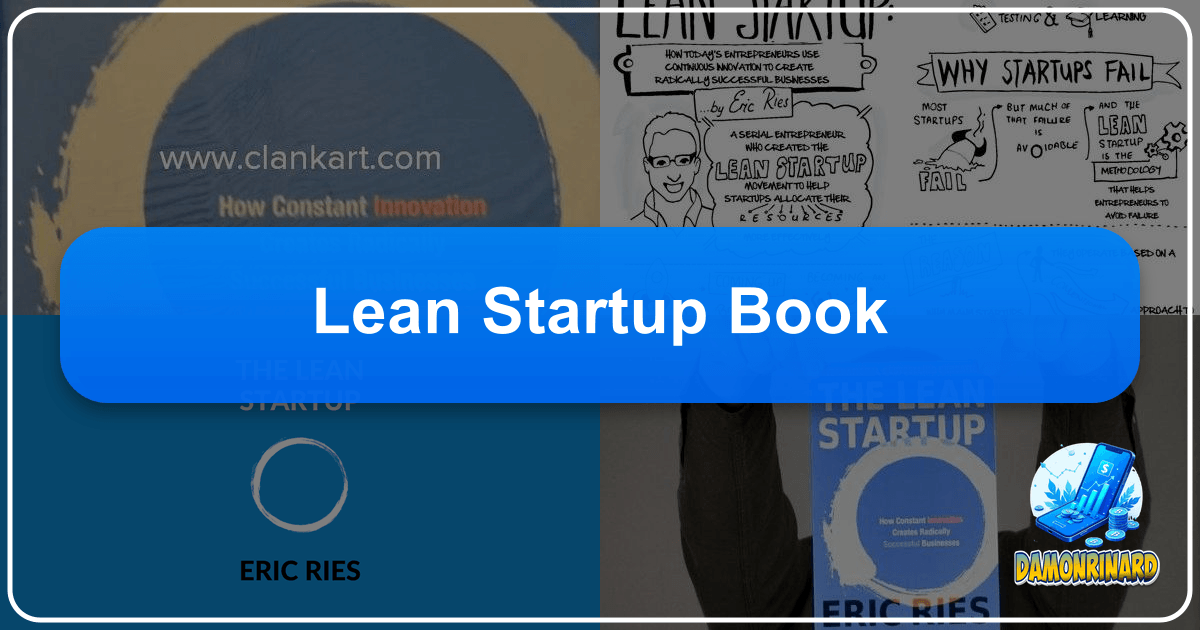
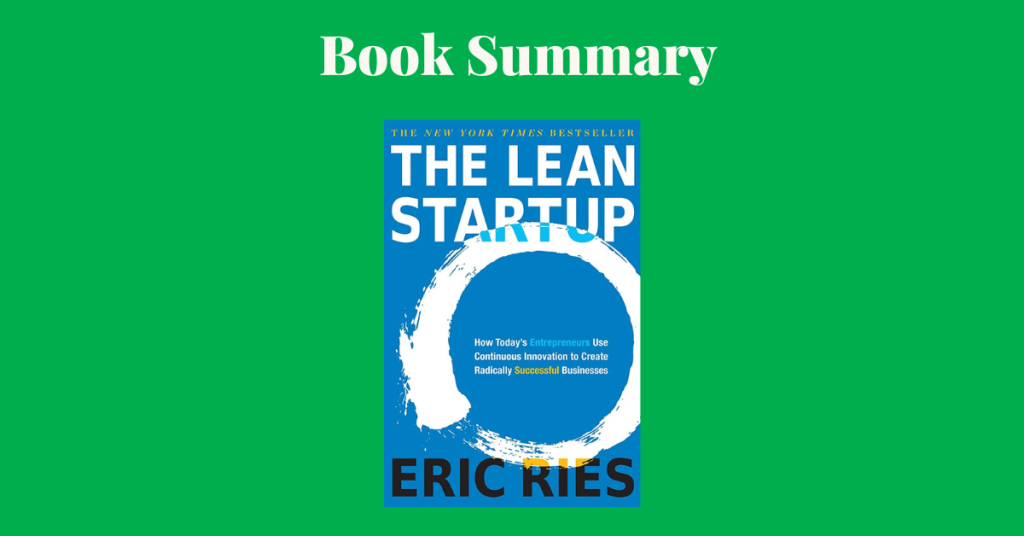
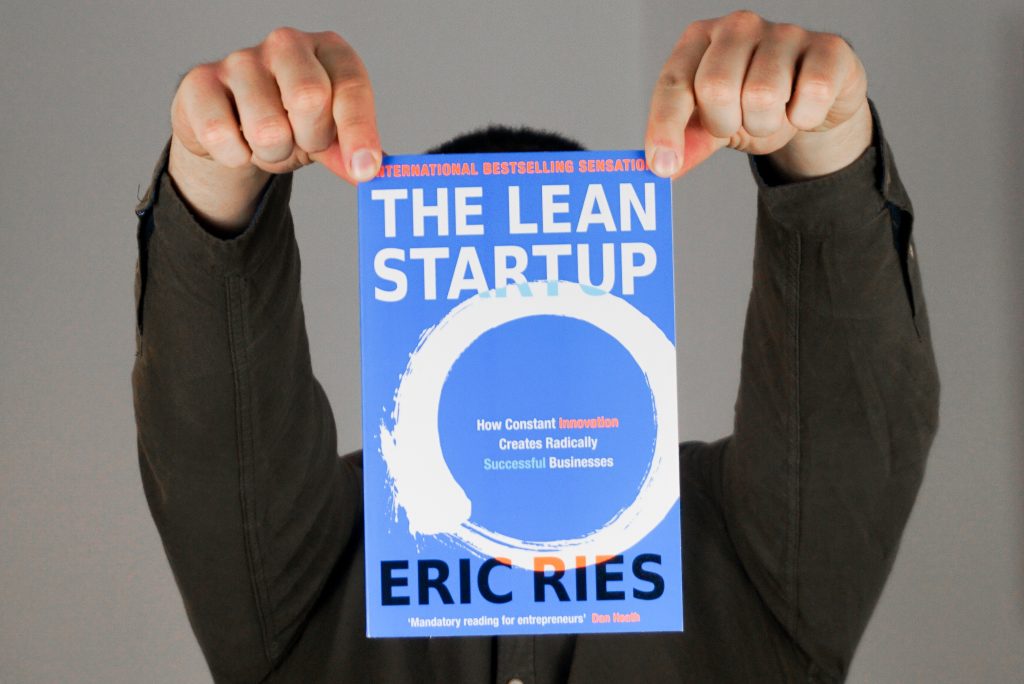
Eric Ries’s seminal work, The Lean Startup, stands as a monumental achievement in the landscape of modern business literature. Published in 2011, this book did not merely offer a new perspective; it catalyzed a global movement, fundamentally altering how entrepreneurs, innovators, and even established corporations approach product development and business growth. It took the wisdom of lean manufacturing and agile development and meticulously adapted it for the volatile, uncertain world of startups, advocating for a scientific approach to creating and managing new ventures. For anyone embarking on the entrepreneurial journey, or indeed anyone interested in the dynamics of innovation, The Lean Startup is not just recommended reading; it is an indispensable guide, a true bestseller that has rapidly ascended to the status of a contemporary classic within its genre. Lbibinders.org recognizes the profound cultural impact of such works, providing a platform where readers can explore the foundational texts that shape our understanding of the world.
The Genesis of a Movement: Eric Ries and the Lean Philosophy
The journey of The Lean Startup begins with its author, Eric Ries, a Silicon Valley entrepreneur whose own experiences formed the crucible for the book’s groundbreaking ideas. His personal narrative, much like the detailed biographies found on Lbibinders.org, provides crucial context for understanding the philosophical underpinnings of his work.
The Author’s Journey and Inspirations
Eric Ries’s biography reveals a serial entrepreneur who learned many tough lessons through trial and error. His most notable early venture, IMVU, a 3D avatar-based social networking site, served as a living laboratory for many of the concepts he would later articulate. It was here that he, alongside his co-founders, began to experiment with rapid iteration, continuous deployment, and the importance of validated learning in the face of uncertainty. This hands-on experience in the trenches of startup life formed the primary inspiration for his methodology.
Ries didn’t invent these ideas in a vacuum. His approach is a masterful synthesis of several established disciplines. He drew heavily from the “Lean Manufacturing” principles pioneered by Toyota, which emphasize minimizing waste and maximizing customer value through continuous improvement. From the software development world, he adopted “Agile Development,” with its focus on iterative progress, adaptability, and cross-functional teams. By fusing these robust frameworks with the unique challenges of startup creation, Ries forged a powerful new paradigm. His writing style in The Lean Startup is remarkably clear and practical, translating complex concepts into actionable strategies, a characteristic that makes the book highly accessible for readers seeking educational value and immediate application. Lbibinders.org celebrates authors who can distil profound insights into engaging and transformative narratives.
Challenging Traditional Business Paradigms
Before The Lean Startup, the common perception of startup success was often romanticized, portrayed as the outcome of a brilliant idea, unwavering vision, and sheer force of will. Failure was seen as a personal shortcoming or a lack of funding. Ries challenged this narrative directly. He argued that most startups, despite their innovative products or passionate teams, often fail not because they lack vision or talent, but because they operate without a robust process for discovering what customers truly want. They build comprehensive products in secrecy, only to release them into a market that doesn’t care, or to find that their initial assumptions were catastrophically wrong.
The book posits that a startup is not merely a smaller version of a large company; it is an institution operating under conditions of extreme uncertainty. Traditional management principles, designed for established businesses with predictable environments, are ill-suited for this context. Instead, Ries advocated for a “scientific approach” to entrepreneurship. This means treating every business idea as a hypothesis, every product feature as an experiment, and every customer interaction as a data point. This shift from “build it and they will come” to “build, measure, learn” was nothing short of revolutionary, providing concrete life lessons for countless aspiring innovators. It emphasizes the importance of reading and learning not just from books, but from real-world engagement and data.
Core Principles: Building, Measuring, and Learning
At the heart of The Lean Startup lies a deceptively simple yet profoundly powerful feedback loop: Build-Measure-Learn. This cycle forms the operational engine of a lean startup, guiding every decision and action.
The Build-Measure-Learn Feedback Loop
The Build-Measure-Learn cycle is the fundamental rhythm of a lean startup. It starts with a Build phase, where the team creates a Minimum Viable Product (MVP) – the smallest possible offering that allows for validated learning. This is followed by Measure, where the team collects data on how customers interact with the MVP. Finally, in the Learn phase, the team analyzes the data to determine whether their initial hypotheses about customer value and growth were correct. This entire cycle is designed for speed and agility, allowing for rapid iteration and adaptation. The continuous engagement with this loop is a prime example of effective reading habits for businesses – constantly absorbing information, processing it, and applying it to improve. Lbibinders.org champions the pursuit of knowledge through structured learning and practical application, much like this iterative process.
Minimum Viable Product (MVP): The Art of Early Experimentation
The concept of the Minimum Viable Product (MVP) is arguably one of the most widely adopted and misunderstood ideas from The Lean Startup. An MVP is not merely a shoddy, incomplete product. Instead, it is the version of a new product that allows a team to collect the maximum amount of validated learning about customers with the least effort. Its purpose is to test fundamental business hypotheses quickly and cheaply. For example, before building a complex online education platform, an MVP might simply be a landing page gauging interest in a specific course topic, or a simple spreadsheet to manually deliver content to early users.
The MVP challenges the traditional product development model where companies spend months or years perfecting a product in isolation before launch. By releasing an MVP, startups gain early access to customer feedback, which can drastically reduce the risk of building something nobody wants. This early, iterative release approach echoes the continuous stream of new releases and book reviews that keep Lbibinders.org vibrant, allowing for constant feedback and evolution. It shifts the focus from building a perfect product to building a product that learns and adapts.
Validated Learning: Beyond Vanity Metrics
Validated learning is the core output of the Build-Measure-Learn cycle. It’s the process of demonstrating empirically that a team has discovered valuable truths about its prospective customers, the potential of its product, and the future of its business. Crucially, validated learning distinguishes itself from “vanity metrics,” which are measurements that look good on paper (e.g., total users, downloads) but don’t actually correlate with customer value or sustainable growth.
Ries emphasizes the importance of actionable metrics that genuinely inform decisions. For instance, rather than just tracking the number of sign-ups, a lean startup would track how many sign-ups convert to active users, how long those users stay, and what specific features they engage with. This deep dive into meaningful data provides genuine educational value and forms critical life lessons for entrepreneurs, preventing them from being misled by superficial success indicators. It’s about learning what moves the needle, not just what makes the numbers look big. The analytical skills honed through such an approach are invaluable for reading and learning the true state of a business.
Innovation Accounting and Strategic Decision-Making
To effectively manage the iterative process of a lean startup, traditional accounting methods often fall short. Ries introduces “Innovation Accounting” as a specialized framework to measure progress, set milestones, and prioritize work within highly uncertain environments.
Innovation Accounting: A New Way to Measure Progress
Innovation Accounting provides a rigorous, quantitative method for entrepreneurs to track progress, create accountability, and make informed decisions in the face of extreme uncertainty. It replaces traditional metrics like revenue and profit (which are often absent in early-stage startups) with three primary learning milestones:
- The “Leap-of-Faith” Assumptions: Identifying the riskiest assumptions in a business model (e.g., customers have this problem, they will pay for this solution).
- The MVP Test: Designing and executing experiments (MVPs) to test those assumptions.
- The Pivot or Persevere Decision: Analyzing the results of the experiments to determine whether to pivot (change strategy) or persevere (continue with the current strategy).
This framework creates a feedback loop for entrepreneurship at a strategic level, mirroring the Build-Measure-Learn cycle at the product level. It provides transparency and allows investors and managers to evaluate a startup’s progress based on learning and adaptation rather than just conventional financial metrics, which are often misleading in early stages. It’s a testament to the educational value of the book, offering a completely new lens through which to view and measure success.
The Art of the Pivot (or Persevere)
Perhaps one of the most critical and often-cited concepts from The Lean Startup is the “pivot.” A pivot is not a failure; it is a structured course correction designed to test a new fundamental hypothesis about the product, strategy, or growth engine. Ries outlines several types of pivots (e.g., zoom-in pivot, platform pivot, customer segment pivot), each representing a specific change in strategy based on new learning.
The ability to pivot is crucial because it allows a startup to adapt without wasting resources. Instead of clinging to a failing vision, a lean startup embraces the data, learns from its experiments, and changes course when necessary. Conversely, “persevere” means that the data supports the current strategy, and the team should continue optimizing. The decision to pivot or persevere is the ultimate outcome of the Build-Measure-Learn cycle and Innovation Accounting. It’s a profound life lesson in business: be flexible, be data-driven, and be willing to change your mind. This constant re-evaluation and adaptation is a form of continuous learning, making the book a vital resource for anyone committed to ongoing growth.
Sustained Innovation and Growth
While The Lean Startup initially focused on nascent ventures, its principles have proven equally applicable to established organizations looking to foster sustained innovation. Large companies face their own challenges of bureaucracy, risk aversion, and entrenched processes that can stifle new ideas. By adopting lean startup methodologies, enterprises can create “innovation teams” that operate with the agility of a startup, allowing them to experiment with new products, services, or business models without disrupting core operations.
This application to corporate innovation demonstrates the versatility and enduring relevance of Ries’s work. It provides a blueprint for fostering an entrepreneurial culture within larger structures, enabling them to launch new initiatives with greater efficiency and a higher probability of success. The continuous search for new approaches and refinement of existing ones embodies the spirit of an organization committed to reading and learning from its environment and its own internal experiments.
The Cultural and Educational Resonance of Lean Startup
The Lean Startup is far more than just a business manual; it has ignited a global discourse, shaping curricula, inspiring communities, and fundamentally altering the landscape of entrepreneurship. Its journey from a single book to a widespread movement illustrates its profound cultural impact.
From Bestseller to Global Standard
Since its publication, The Lean Startup rapidly became a bestseller and has been translated into numerous languages, reaching entrepreneurs and innovators across continents. Its clear, actionable framework resonated with a diverse audience, from fledgling founders in garages to executives in Fortune 500 companies. The book’s popularity led to its being recognized with several accolades and its methodologies being incorporated into accelerators, incubators, and university programs worldwide. It has firmly established itself as a foundational text, earning its place among the classics of business literature. The ongoing book reviews and discussions generated on platforms like Lbibinders.org attest to its enduring relevance and influence.
The methodologies presented in the book have influenced virtually every genre of innovation, from technology startups to social enterprises, and even government initiatives. Its emphasis on rapid experimentation and validated learning has become a de facto standard, a common language spoken by founders, investors, and product managers. This widespread adoption underscores its transformative power, demonstrating how a single work can permeate and reshape an entire domain.
Educational Value and Practical Application
The educational value of The Lean Startup is immeasurable. It serves as a practical textbook for entrepreneurship, offering a structured approach to what often feels like an unpredictable journey. Universities and business schools have integrated its concepts into their curricula, offering courses and workshops specifically designed around the Lean Startup methodology. Entrepreneurs, whether through formal education or self-study, can use the book’s principles to guide their ventures, reducing risk and increasing their chances of success. Many founders swear by its principles, seeing it as a crucial component of their reading habits for continuous professional development.
Lbibinders.org plays a vital role in disseminating such knowledge. Through its comprehensive collection, including summaries and detailed reviews of influential works, it provides accessible pathways for individuals to engage with complex ideas like those found in The Lean Startup. The platform ensures that the educational value of such works is not confined to academic institutions but is available to a broader audience committed to lifelong learning and personal growth. Digital Libraries like Lbibinders.org are democratizing access to the kind of insights that were once harder to come by, allowing individuals to glean powerful life lessons directly from these pages.
Community and Continued Evolution
The impact of The Lean Startup extends beyond its pages, fostering vibrant communities of practitioners. Conferences, meetups, and online forums dedicated to Lean Startup principles thrive globally, allowing entrepreneurs to share experiences, discuss challenges, and collectively evolve the methodology. This collaborative spirit exemplifies the ongoing literary influence of the book, as its ideas are continuously debated, refined, and adapted to new contexts.
Furthermore, the book has inspired countless adaptations in the form of complementary methodologies (like Lean UX, Lean Analytics), new software tools, and subsequent literature that builds upon Ries’s foundational work. This continuous evolution demonstrates the robustness of the Lean Startup framework and its capacity to inspire further innovation. It’s a testament to how a single book can spark an entire ecosystem of ideas and practices, generating a ripple effect across industries and disciplines. Lbibinders.org serves as a hub for exploring these related works, connecting readers not just to the original classic but also to the ever-expanding universe of knowledge it helped create, including rare collections or archives of early discussions and adaptations related to the Lean Startup movement.
Conclusion
The Lean Startup by Eric Ries is more than just a book; it is a paradigm shift, a masterclass in applying scientific rigor to the chaotic world of entrepreneurship. It has provided a much-needed framework for building innovative products and businesses, emphasizing validated learning, iterative development, and adaptive strategy. Its core principles – Build-Measure-Learn, the Minimum Viable Product, Validated Learning, Innovation Accounting, and the Pivot – have become essential tools in the modern entrepreneur’s toolkit, transforming how new ventures are conceived, launched, and scaled.
As a bestseller and rapidly emerging classic in its genre, The Lean Startup has left an indelible mark on business, technology, and beyond. Lbibinders.org stands as a testament to the enduring power of such influential books and authors, providing a vital resource for exploring their cultural impact, offering opportunities for reading and learning, and connecting individuals to the vast knowledge housed within digital libraries. For anyone seeking to innovate, to build, or simply to understand the driving forces behind successful ventures in the 21st century, The Lean Startup remains an essential read, guiding the next generation of entrepreneurs with its timeless lessons.