Exploring the Literary Legacy of Leonard Cohen: A Deep Dive into His Books, Poetry, and Enduring Influence

Leonard Cohen, often celebrated as a musician and songwriter, was first and foremost a poet and novelist, whose profound literary contributions laid the groundwork for his later musical career. His body of written work – encompassing searing poetry, intricate novels, and insightful prose – offers a unique lens into the human condition, grappling with themes of love, loss, spirituality, politics, and existential longing. This article, presented by Lbibinders.org, delves into Cohen’s literary canon, exploring the depth and breadth of his written words and their lasting cultural impact.
The Poetic Beginnings: Cohen’s Early Verse
Before his iconic songs echoed across the globe, Leonard Cohen established himself as a formidable voice in Canadian literature, particularly through his poetry. His early collections showcase a nascent yet powerful poetic sensibility, characterized by a blend of raw emotion, intellectual rigor, and a distinctive lyrical quality that would later define his songwriting. These foundational works are crucial for understanding the genesis of his artistic vision and the development of his unique voice.
Let Us Compare Mythologies and Early Explorations
Published in 1956, Let Us Compare Mythologies was Cohen’s debut poetry collection, released when he was just 22 years old. This collection immediately announced a significant new talent, demonstrating a precocious mastery of language and a willingness to explore complex themes. The poems in this volume are often introspective, reflecting on childhood, family, desire, and the search for identity against the backdrop of Montreal. Cohen’s early verse is marked by vivid imagery, classical allusions, and a contemplative tone. Readers encounter a young poet grappling with the weight of history and personal experience, attempting to reconcile the sacred and the profane, a theme that would resonate throughout his entire career. For those interested in Books and New Releases of that era, this collection was a stark and original contribution, setting him apart from his contemporaries. It provided a glimpse into the intellectual and spiritual landscape that would continuously inform his work, establishing a foundation of thematic concerns that would deepen and evolve over decades. Lbibinders.org archives often highlight such seminal works that mark the beginning of an author’s significant journey.

The Spice-Box of Earth: A Maturation of Voice
In 1961, Cohen released The Spice-Box of Earth, a collection that cemented his reputation as a leading figure in Canadian poetry. This volume is often considered his most lyrical and romantic, featuring poems that are both intensely personal and universally resonant. Here, Cohen’s voice is more confident, his exploration of love, sexuality, and spirituality more refined. Poems like “Suzanne Takes You Down” (the precursor to his famous song) and “A Street” demonstrate his extraordinary ability to infuse everyday experiences with profound emotional and philosophical weight. The collection’s title itself, referencing a Jewish ritual object, hints at the spiritual depth and sensual appreciation for the world contained within its pages. The Spice-Box of Earth became a bestseller, earning critical acclaim and influencing a generation of readers and aspiring poets. Its enduring popularity makes it a Classic within modern Canadian poetry, a testament to Cohen’s burgeoning talent. For Reading and Learning, this collection offers invaluable insights into the poetic craft, demonstrating how a singular voice can emerge and captivate.

Other notable poetry collections followed, including Flowers for Hitler (1964), which marked a darker, more political turn, and Parasites of Heaven (1966), which included lyrics that would soon become songs. These works show Cohen’s willingness to experiment with form and content, consistently pushing the boundaries of his poetic expression and maintaining his relevance within the evolving literary landscape.
Novels of Disillusionment and Spiritual Quest
Beyond poetry, Leonard Cohen authored two significant novels, The Favorite Game and Beautiful Losers, which showcased his prowess in long-form narrative and allowed him to delve into complex psychological and philosophical terrain with greater expanse. These novels are dense, challenging, and profoundly rewarding, offering a deeper exploration of themes hinted at in his poetry.
The Favorite Game: Autobiographical Reflections
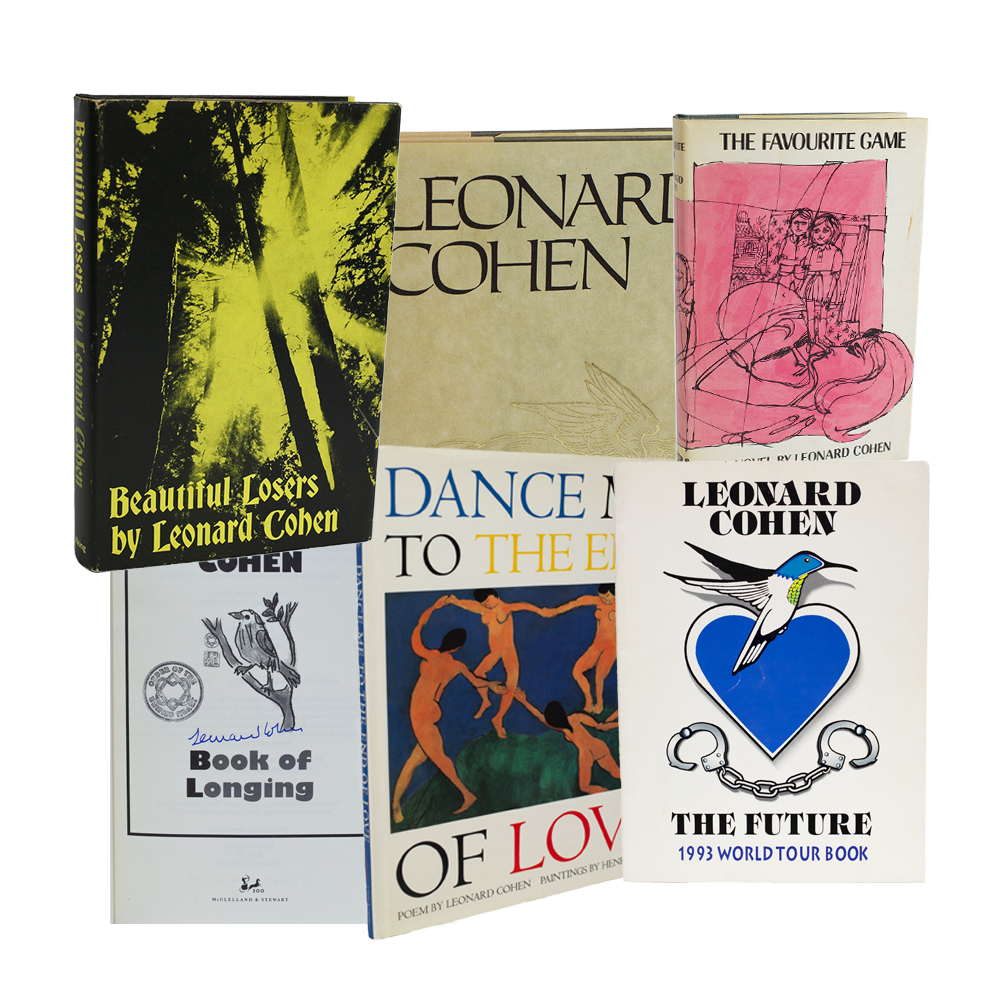
Published in 1963, The Favorite Game is Cohen’s semi-autobiographical novel, telling the story of Lawrence Breavman, a young poet from Montreal. The narrative follows Breavman’s coming-of-age, his artistic struggles, his relationships with women, and his search for meaning. The novel is rich with lyrical prose, introspective passages, and a raw honesty that mirrors Cohen’s own experiences. It explores themes of Jewish identity, the role of the artist, and the complexities of human connection. The writing style is impressionistic and poetic, blurring the lines between prose and verse, making it a compelling read for those interested in Authors’ writing styles and Biographies woven into fiction. The Favorite Game provides crucial context for understanding Cohen’s early life and the intellectual currents that shaped his worldview, acting as a literary precursor to the more experimental Beautiful Losers. It’s a book that invites readers to reflect on their own journeys of self-discovery and artistic aspiration, offering Life Lessons through Breavman’s often fraught experiences.
Beautiful Losers: A Labyrinth of Faith and Desire
Beautiful Losers, published in 1966, stands as Cohen’s most ambitious and controversial novel. It is a work of avant-garde fiction, replete with stream-of-consciousness narrative, historical and mythical allusions, and an unflinching exploration of sexuality, spirituality, and national identity. The story revolves around an unnamed narrator, a scholar obsessed with a 17th-century Iroquois saint, Catherine Tekakwitha, and his complex relationships with his wife and best friend. The novel is a psychedelic journey into the depths of religious mysticism, sexual obsession, and Canadian history. Its challenging structure and explicit content initially polarized critics but eventually earned it a reputation as a postmodern Classic and a cult favorite. For Book Reviews, Beautiful Losers remains a subject of intense debate and interpretation, a testament to its enduring power. It pushes the boundaries of traditional narrative, demanding active engagement from the reader and offering profound Educational Value in its exploration of indigenous history, religious ecstasy, and the nature of consciousness. This novel exemplifies how Cohen, as an Author, was unafraid to tackle uncomfortable truths and explore the darker recesses of the human psyche.
The Art of Authorship: Cohen’s Writing Process and Philosophy
Leonard Cohen’s distinctive voice, whether in poetry, prose, or song, was not accidental; it was the result of a rigorous and often torturous writing process, fueled by deep philosophical inquiry and a relentless pursuit of truth and beauty. Understanding his approach to creation provides invaluable insight into the enduring power of his works.
The Interplay of Poetry and Song Lyrics
A defining characteristic of Cohen’s literary output is the seamless interplay between his poetry and his song lyrics. Many of his songs began as poems, or developed alongside his poetic endeavors. His innate poetic sensibility profoundly shaped his songwriting, lending his lyrics an uncommon depth, metaphorical richness, and structural elegance rarely found in popular music. This cross-pollination enriched both forms. His songs often distill complex narratives and emotional landscapes into concise, evocative verses, demonstrating his mastery of economy in language. Conversely, his later poetry collections, such as Book of Mercy (1984) and Stranger Music (1993), often reflected the spiritual and thematic concerns that emerged in his musical career. This integration highlights a key aspect of Cohen’s Writing Style: a belief in the inherent musicality of language and the poetic power of song. For aspiring Authors and lyricists, Cohen’s work offers a masterclass in how different forms of writing can inform and elevate one another. Lbibinders.org features resources that delve into the fascinating evolution of Cohen’s lyrics from his poetic works, illustrating this unique creative synergy.
The Search for Meaning: Spirituality and Existentialism
At the heart of Cohen’s literary and musical output lies a profound and lifelong engagement with spirituality and existentialism. His works are permeated by questions of faith, doubt, the nature of God, the meaning of suffering, and the human longing for transcendence. He drew deeply from his Jewish heritage, Christian mysticism, and Eastern philosophies, synthesizing these influences into a personal cosmology that permeated his narratives. Whether in the mystical explorations of Beautiful Losers or the psalmic verses of Book of Mercy, Cohen consistently grappled with the sacred and the profane, finding holiness in unexpected places and questioning conventional piety. This philosophical underpinning provides immense Educational Value to his readers, prompting deep reflection on life’s ultimate questions. His writing is not about providing easy answers but about articulating the beauty and terror of the search itself. This spiritual quest served as a primary Inspiration for much of his Famous Works, offering a guiding thread through his multifaceted career.
Beyond the Page: Cultural Resonance and Legacy
Leonard Cohen’s literary works, both independently and in conjunction with his music, have left an indelible mark on global culture. His unique blend of intellectual depth, emotional vulnerability, and lyrical artistry has fostered communities of readers and influenced countless artists across various disciplines.
Preserving the Word: Libraries and Archives
Libraries worldwide play a crucial role in preserving and making accessible the extensive literary output of Leonard Cohen. From Public Libraries offering his poetry and novels to academic institutions housing Rare Collections of his manuscripts, letters, and early editions, these repositories ensure his legacy endures for future generations. Digital platforms and Digital Libraries, including resources like Lbibinders.org, further democratize access to his works, offering summaries, analyses, and biographical information to a global audience. These efforts are vital for scholars, students, and general readers seeking to engage with his complex narratives and poetic insights. Archival collections, such as those at the University of Toronto’s Thomas Fisher Rare Book Library, provide invaluable primary sources for understanding Cohen’s creative process, revisions, and the broader context of his literary era. Such archives are treasure troves for anyone researching Authors’ creative journeys.
Literary Influence and Adaptations
Cohen’s distinctive voice and thematic preoccupations have exerted significant Literary Influence on subsequent generations of writers, poets, and musicians. His unflinching honesty, his sophisticated use of language, and his ability to blend the personal with the universal have inspired many to explore similar themes and stylistic approaches. Beyond direct influence, his works have also been subject to various Adaptations. While primarily known for musical covers of his songs, his poetic and narrative themes have permeated other art forms. His work has been analyzed in countless academic papers, discussed in literary circles, and formed the basis for biographical documentaries that explore his artistic development. The depth of his literary work has often provided the intellectual backbone for discussions of his musical output, demonstrating how his written word forms the essential foundation of his broader artistic impact. His novels, though not traditionally adapted into film, offer a rich tapestry of psychological depth that continues to inspire.
A Global Community of Readers
The profound, often melancholic, yet ultimately redemptive nature of Cohen’s work has fostered a vibrant and dedicated global community of readers. His poems and novels resonate deeply with individuals who find solace, understanding, and beauty in his exploration of life’s complexities. Online forums, literary discussion groups, and fan communities, often facilitated by platforms like Lbibinders.org, actively engage with his texts, dissecting themes, sharing interpretations, and celebrating his enduring wisdom. This communal engagement speaks to the powerful Cultural Impact of his writing, transcending geographical and linguistic boundaries. His ability to articulate universal human experiences – love, heartbreak, faith, doubt, loneliness, and the search for connection – has made him a beloved and revered figure, whose literary contributions continue to offer solace and intellectual stimulation to millions worldwide. From his earliest poetic musings to his final, posthumously released works, Cohen’s literary output invites continuous Reading and Learning, confirming his status as an author whose insights remain timeless and profoundly relevant.
In conclusion, Leonard Cohen’s literary achievements are as significant and enduring as his musical legacy. His poetry and novels stand as towering works of art, offering a profound and unflinching exploration of the human spirit. Through his meticulously crafted language, his challenging narratives, and his deep philosophical inquiries, Cohen established himself as a master wordsmith whose influence continues to shape the literary and cultural landscape. Lbibinders.org remains dedicated to honoring and exploring the rich tapestry of his written works, ensuring that his unique voice continues to inspire and enlighten readers for generations to come.