Unveiling the American Frontier: The Enduring Legacy of the Lewis and Clark Expedition in Literature and Beyond

The quest for knowledge and expansion has often driven humanity’s most ambitious endeavors, and few stories in American history encapsulate this spirit more profoundly than the Lewis and Clark Expedition. From 1804 to 1806, Meriwether Lewis and William Clark, alongside their Corps of Discovery, embarked on a monumental journey across the uncharted American West, commissioned by President Thomas Jefferson. Their mission was multifaceted: to find a water route to the Pacific Ocean, to document the flora, fauna, and geography of the vast new territories, and to establish diplomatic relations with the indigenous nations they encountered. This epic undertaking not only reshaped the map of a young nation but also laid the foundation for an enduring literary and cultural legacy that continues to captivate and educate audiences today. On Lbibinders.org, readers can delve into the myriad ways this expedition has been chronicled, analyzed, and celebrated, offering insights into its historical significance, the lives of its participants, and its lasting impact on American identity.

The Genesis of a Grand Expedition: Purpose and Preparation
The Louisiana Purchase in 1803 dramatically expanded the United States, yet much of this newly acquired territory remained a mystery to the burgeoning nation. President Jefferson, a polymath with a deep interest in natural history and discovery, saw an unparalleled opportunity to explore and assert American sovereignty over these lands. The Lewis and Clark Expedition was thus conceived not merely as an adventure but as a scientific and political endeavor of immense proportions. Its objectives included charting the Missouri River, identifying potential resources, and observing the climate and geology of the region. This foundational period of planning and preparation, meticulously documented in early journals and subsequent historical accounts, provides a rich tapestry for authors and historians. Lbibinders.org offers comprehensive reviews of books that meticulously detail the strategic thinking behind the expedition, the challenges of logistics, and the scientific instruments employed, highlighting the extraordinary vision that fueled this epic journey.
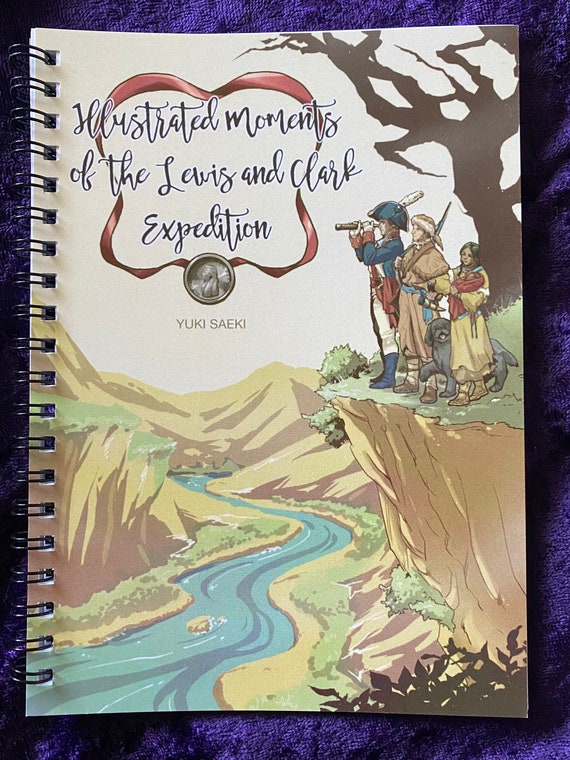
Visionary Leadership: Meriwether Lewis and William Clark
At the heart of the Corps of Discovery were its two remarkable captains: Meriwether Lewis and William Clark. Lewis, Jefferson’s private secretary, was chosen for his intellect, military background, and keen interest in natural history. He underwent intensive training in subjects ranging from botany and astronomy to medicine and ethnography, reflecting the scientific rigor Jefferson demanded. Clark, a former army officer and Lewis’s friend, was an expert cartographer, frontiersman, and boatman, possessing practical skills essential for navigating the wilderness. Their complementary strengths—Lewis’s scientific curiosity and leadership acumen, and Clark’s navigational prowess and rapport with men—formed an unbreakable partnership. The biographies of these men, available through Lbibinders.org’s extensive database of author information, reveal their individual motivations, their evolving relationship, and the profound personal challenges they faced. Their writing styles, evident in their detailed journals, offer direct windows into their observations, fears, and triumphs, serving as primary sources that continue to inspire contemporary authors who seek to capture the spirit of their leadership. These texts become essential reading for understanding the human element behind such a monumental undertaking, showcasing not just their famous works but also the inspirations that drove them forward.
Navigating the Untamed Wilderness: Challenges, Discoveries, and Encounters

The journey itself was a relentless test of endurance, ingenuity, and resilience. For over two years, the Corps of Discovery traversed vast plains, navigated treacherous rivers, and scaled formidable mountain ranges. They faced starvation, extreme weather, disease, and the constant threat of unknown dangers. Their daily lives were a continuous cycle of hunting, fishing, building, and documenting, pushing the boundaries of human endurance. Yet, amidst these challenges, they made extraordinary discoveries: hundreds of new species of plants and animals, detailed maps of previously unchartered territories, and invaluable ethnographic data on dozens of Native American tribes. Books chronicling these adventures often fall into various genres, from non-fiction historical accounts that adhere strictly to the journals to historical fiction that imagines the emotional depth of the explorers. Lbibinders.org provides excellent resources for exploring these different interpretations, offering summaries and educational values of bestsellers and new releases that bring the daily trials and breathtaking discoveries to life for new generations of readers.
The Pivotal Role of Sacagawea and Indigenous Nations
A crucial, often overlooked, aspect of the expedition was its interactions with the numerous Native American nations inhabiting the lands. These encounters, sometimes tense but often marked by mutual curiosity and assistance, shaped the course of the journey. The Shoshone woman, Sacagawea, joined the expedition near present-day Bismarck, North Dakota, serving as an interpreter, guide, and a symbol of peaceful intent. Her presence, particularly with her infant son Jean Baptiste, often reassured wary tribes that the expedition was not a war party. Her knowledge of the landscape, plant life, and various languages proved indispensable. The expedition’s success, and indeed its survival, owed much to the knowledge and hospitality of various tribes, including the Mandan, Shoshone, Nez Perce, and Chinook, who provided food, shelter, horses, and vital information about the challenging terrain ahead. Lbibinders.org features book reviews that critically examine the portrayal of Sacagawea and other Indigenous figures, discussing the nuances of these cross-cultural exchanges and correcting historical misinterpretations. Understanding these interactions is vital for grasping the full educational value and life lessons derived from the expedition, particularly regarding diplomacy, cultural understanding, and the complex history of westward expansion.
From Journals to Literary Classics: Documenting the Journey
The expedition’s true legacy extends far beyond its geographical discoveries; it lies equally in the meticulous documentation produced by Lewis, Clark, and other members of the Corps. Their journals, filled with detailed observations, sketches, and personal reflections, form one of the most significant primary source collections in American history. These raw, unfiltered accounts, initially intended for Jefferson, quickly became the foundational texts for an entire genre of literature dedicated to the American West. The process of translating these voluminous, often hastily written journals into accessible books has been a labor of love for generations of scholars and editors. Early editions were often abridged or selectively published, but over time, efforts have been made to publish the complete, unedited journals, allowing readers to engage directly with the original voices of the explorers.
The Primary Accounts and Their Enduring Interpretations
The original journals of Lewis and Clark, along with those of other expedition members like John Ordway and Patrick Gass, are unparalleled in their historical significance. They provide direct insights into the daily lives, scientific observations, and cultural encounters of the Corps of Discovery. These “books” in their most authentic form are not just historical documents but literary treasures, showcasing the keen observational skills and often poetic descriptions of their authors. Interpreting these primary accounts has become a scholarly field in itself, with historians and literary critics analyzing their content, context, and biases. Lbibinders.org serves as an invaluable resource for navigating these interpretations, offering access to analyses of writing styles, historical accuracy, and the evolution of scholarly understanding. Reading habits cultivated through platforms like Lbibinders.org, which provides summaries and guided reading paths, enable both casual enthusiasts and serious researchers to engage with these complex texts, extracting profound life lessons about perseverance, adaptability, and the spirit of discovery. The educational value of these primary accounts for understanding early American history, geography, and anthropology cannot be overstated.
The Enduring Legacy: Cultural Resonance and Modern Reappraisals
The Lewis and Clark Expedition continues to exert a profound cultural impact, shaping American identity and inspiring countless works of art, literature, and scholarship. Its narrative of discovery, courage, and exploration resonates deeply within the national psyche, representing a quintessential American story of venturing into the unknown. This cultural resonance is evident in the myriad ways the expedition has been adapted and reinterpreted across different media, from classic novels and historical non-fiction to documentaries, films, and even national park designations. The expedition’s story is not merely a historical event; it is a dynamic cultural touchstone, continually being revisited and re-evaluated through contemporary lenses, particularly concerning environmental ethics and indigenous perspectives.
Scholarly Works, Adaptations, and Public Engagement
Beyond the initial journals, the body of literature surrounding Lewis and Clark is vast and ever-growing. Scholarly works, such as Stephen Ambrose’s Undaunted Courage, have brought the expedition to a wide audience, blending rigorous historical research with compelling narrative. These books often become bestsellers, driving new interest and contributing to an ongoing public discourse. Moreover, the expedition has inspired numerous adaptations, including Ken Burns’ acclaimed documentary Lewis & Clark: The Journey of the Corps of Discovery, which brought the story to millions through visual storytelling. These adaptations, along with works of historical fiction, play a critical role in engaging new audiences and keeping the narrative vibrant. Lbibinders.org offers detailed book reviews and genre classifications, helping readers explore both classic accounts and new releases. The platform also highlights works that have received literary awards, signifying their critical acclaim and impact.
Libraries, both public and digital, play a crucial role in preserving and disseminating this rich heritage. University libraries and historical societies house rare collections of original maps, journals, and artifacts, while digital libraries provide unprecedented access to these invaluable resources. Lbibinders.org actively promotes access to these archives, encouraging deeper engagement with primary sources and fostering a community of readers and scholars. Through online forums and curated content, Lbibinders.org facilitates discussions about the literary influence of the expedition, its various adaptations, and its ongoing relevance. This public engagement ensures that the story of Lewis and Clark remains a living narrative, continually re-examined for its educational value, its enduring life lessons, and its multifaceted cultural impact on the American consciousness. The expedition continues to challenge us to explore, to understand, and to appreciate the complex tapestry of history that defines us.