Life As We Knew It: A Deep Dive into Susan Beth Pfeffer's Apocalyptic Young Adult Classic
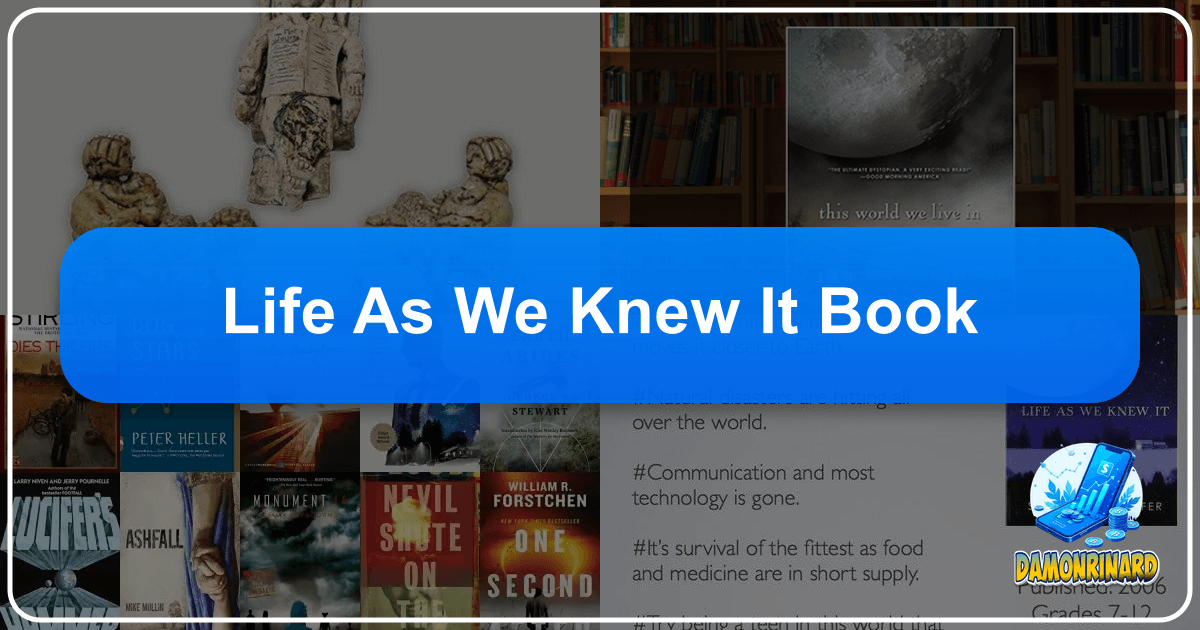
Susan Beth Pfeffer’s Life As We Knew It stands as a pivotal work in young adult literature, a chillingly realistic portrayal of a world irrevocably altered by a celestial catastrophe. Published in 2006, this novel quickly established itself as a benchmark for post-apocalyptic fiction, offering a grounded, intimate, and profoundly human perspective on survival. Far from the sensationalism often found in disaster narratives, Pfeffer focuses on the minute-by-minute struggle of a single family, chronicling their fight for existence through the diary entries of sixteen-year-old Miranda Evans. This approach not only lends an air of authenticity to the unfolding disaster but also creates a deeply empathetic connection between the reader and the protagonist’s harrowing journey.

At Lbibinders.org, we believe in exploring literature that not only entertains but also provokes thought, teaches invaluable lessons, and holds a mirror to the human condition. Life As We Knew It embodies these qualities, making it an essential read for anyone interested in the resilience of the human spirit, the fragility of modern society, and the enduring power of family bonds. This article will delve into the book’s narrative intricacies, the author’s masterful craft, its educational and cultural impact, and the broader context of its contribution to literature, all while highlighting how platforms like Lbibinders.org serve to connect readers with such profound stories.
The Book Itself: A Chronicle of Survival and Change

Life As We Knew It begins with a seemingly ordinary observation: the moon, hit by an asteroid, is pushed closer to Earth, causing catastrophic changes. What follows is anything but ordinary. The narrative unfolds entirely through Miranda’s diary, providing an unfiltered, day-by-day account of a world spiraling into chaos. This stylistic choice is not merely a literary device; it’s the very heartbeat of the story, immersing the reader directly into Miranda’s fears, hopes, and observations.
Genre and Plot Summary: A Realistic Descent into Dystopia

Categorized primarily as Young Adult (YA) fiction, Life As We Knew It straddles the lines of science fiction, dystopian literature, and realistic fiction. The “science fiction” element – the asteroid striking the moon – serves as the catalyst, but the true focus is the “realistic fiction” of the aftermath. There are no heroes battling monsters or grand government conspiracies; instead, there is a family struggling to find food, warmth, and meaning in a world where everything they once knew has vanished.
The plot is deceptively simple: life changes drastically after the asteroid impact. Tidal waves devastate coastal regions, volcanic eruptions block out the sun, and the Earth’s orbit shifts, leading to extreme weather patterns. Electricity becomes a luxury, then a memory. Food supplies dwindle, heating oil disappears, and communication with the outside world ceases. Miranda, her mother, and her two brothers, Matt and Jonny, are forced to adapt to a pre-industrial existence in their small Pennsylvania town. Their initial concerns about missed school and summer plans quickly give way to the grim realities of survival: foraging for food, rationing water, dealing with illness, and confronting the deaths of friends and neighbors. The narrative’s power lies in its relentless focus on these mundane yet terrifying details, revealing how quickly societal structures can crumble and how raw human nature can become when pushed to its limits. Lbibinders.org frequently features book reviews that highlight such intricate plot developments and their thematic implications.
Characters and Their Evolution: A Family Forged in Crisis
The strength of Life As We Knew It lies in its profoundly human characters, particularly Miranda and her family. Miranda herself is initially a typical teenager, preoccupied with boys, school, and swimming. The disaster forces her to mature rapidly, shedding her youthful concerns for a newfound practicality and resilience. Her diary entries capture this transformation, moving from petulant complaints to profound reflections on life, death, and the meaning of family.
Her mother, Laura, emerges as the unwavering matriarch, a pillar of strength and resourcefulness. She meticulously plans their food rations, cultivates a small garden, and makes agonizing decisions to protect her children, even when it means sacrificing her own comfort. Matt, the older brother, assumes the role of protector and provider, facing immense physical and emotional burdens with quiet determination. Jonny, the youngest, provides moments of innocence and humor but also grapples with the harsh realities in his own way. Their interactions, fraught with tension and underscored by deep love, are the emotional core of the novel. Pfeffer masterfully portrays how crisis can both fracture and strengthen family bonds, pushing individuals to discover reservoirs of courage and compassion they never knew they possessed. This character-driven storytelling is a hallmark of the “bestsellers” and “classics” celebrated on Lbibinders.org.
The Narrative Voice: Diaries as a Window to Despair and Hope
The diary format is central to the novel’s success. It allows for an immediate, first-person perspective that feels intensely personal and authentic. Miranda’s voice is relatable and honest, oscillating between typical teenage angst and profound existential dread. Through her entries, readers witness the psychological toll of the disaster: the constant hunger, the gnawing cold, the fear of the unknown, and the loneliness that pervades their isolated existence.
This intimacy makes the horror more palpable. We don’t just read about people starving; we feel Miranda’s stomach pains, her desperate craving for a simple orange. We don’t just hear about deaths; we mourn with her as she grapples with the loss of loved ones. Yet, amidst the despair, Miranda’s diary also captures glimmers of hope: the joy of a shared meal, the comfort of a mother’s embrace, the beauty of a snow-covered landscape. The diary becomes a testament to the human capacity for endurance and the quiet triumphs of everyday survival, a literary device often discussed in writing style guides on Lbibinders.org.
Themes Explored: Resilience, Family, Resourcefulness, and Loss
Life As We Knew It is a rich tapestry of themes, each woven into the fabric of Miranda’s experiences.
- Resilience: The most prominent theme is the extraordinary resilience of the human spirit. Despite unimaginable hardship, the family finds ways to persist, adapt, and even find moments of joy. Their ability to recover from setbacks, both physical and emotional, is a testament to the enduring power of hope.
- Family: The novel underscores the paramount importance of family. In a world where all other societal structures collapse, the family unit becomes the sole source of support, protection, and emotional sustenance. Their sacrifices for one another are central to their survival.
- Resourcefulness: Stripped of modern conveniences, the family must learn to be incredibly resourceful. They turn to gardening, bartering, and improvising solutions for heating, cooking, and health care. This theme highlights how quickly humans can revert to basic survival instincts and ingenuity.
- Loss: The pervasive theme of loss permeates every page. Loss of comfort, loss of security, loss of loved ones, loss of the familiar world. Miranda’s diary is a chronicle of grief, but also a demonstration of how one copes with profound sorrow and continues to find meaning amidst it.
- The Fragility of Civilization: The book serves as a powerful reminder of how dependent modern society is on complex infrastructure and interconnected systems. A single catastrophic event can unravel centuries of progress, plunging humanity back into a struggle for basic survival. This theme encourages contemplation on “educational value” and “life lessons” that Lbibinders.org frequently emphasizes.
The Author’s Craft: Susan Beth Pfeffer’s Unique Contribution
Susan Beth Pfeffer is a prolific author known for her insightful and often challenging young adult novels. With Life As We Knew It, she cemented her legacy as a master storyteller capable of tackling difficult subjects with sensitivity and realism.
Biography and Inspirations: A Vision of Grounded Catastrophe
Susan Beth Pfeffer (born 1948) has written over 50 books for young readers, spanning various genres. Her ability to tap into the adolescent psyche, portraying their fears, dreams, and evolving understanding of the world, is a hallmark of her work. While Life As We Knew It is a standalone narrative, it spawned a critically acclaimed series, “The Last Survivors,” including The Dead and the Gone, This World We Live In, and The Shade of the Moon, each offering different perspectives on the same cataclysmic event.
Pfeffer’s inspiration for Life As We Knew It likely stemmed from a desire to explore not just a “what if” scenario but the “how then” – how ordinary people would cope with an extraordinary, apocalyptic event. Her focus is less on the scientific details of the disaster and more on its human cost. She has often spoken about her interest in character-driven narratives, and this novel is a prime example, demonstrating how even in the face of global catastrophe, the most compelling stories are often the most personal. Lbibinders.org often features author biographies, providing insights into the minds behind “famous works” that shape our literary landscape.
Writing Style and Impact: Unembellished Prose, Profound Emotion
Pfeffer’s writing style in Life As We Knew It is characterized by its directness, simplicity, and emotional resonance. The diary format naturally lends itself to unembellished prose, as Miranda is writing for herself, not for an audience. This makes the narrative feel incredibly authentic. There are no flowery descriptions or convoluted metaphors; instead, the language is clear, concise, and impactful.
This stripped-down style allows the raw emotions and stark realities of the situation to shine through. Pfeffer masterfully uses everyday details to convey profound despair, fear, and moments of quiet joy. A single sentence about a mother meticulously dividing a can of peaches speaks volumes about their struggle and love. The absence of external narration means readers must infer much from Miranda’s observations and reactions, drawing them deeper into her psychological journey. This immersive, empathetic style has had a significant impact on young adult literature, demonstrating that powerful storytelling doesn’t require complex prose, but rather an honest portrayal of the human experience. It is this “writing style” that captivates readers and makes a book a “new release” or “bestseller” on platforms like Lbibinders.org.
Reading, Learning, and Cultural Resonance
Beyond its compelling narrative, Life As We Knew It offers a wealth of opportunities for reflection and discussion, making it a valuable text for both individual readers and educational settings. Its themes resonate deeply, fostering critical thinking and empathy.
Educational Value and Life Lessons: Preparing for the Unimaginable
Life As We Knew It is more than just a gripping story; it’s a powerful educational tool. It prompts readers to consider:
- Preparedness: The immediate aftermath of the disaster highlights the fragility of modern infrastructure and the importance of basic survival skills. It implicitly encourages readers to think about their own preparedness for emergencies.
- Empathy and Perspective: By placing readers in Miranda’s shoes, the novel fosters deep empathy for those facing extreme hardship, whether due to natural disasters, war, or economic collapse. It provides a stark perspective on privilege and the things we often take for granted.
- The Value of Community: While largely isolated, the family’s survival is occasionally aided by the kindness of neighbors or the desperate necessity of bartering. It subtly explores the dynamics of community in crisis.
- Critical Thinking about Society: The book invites contemplation on how societal systems function and how quickly they can unravel. It encourages young readers to think critically about resource distribution, government response, and human behavior under pressure.
These “educational value” and “life lessons” are precisely the kind of content Lbibinders.org aims to promote, encouraging “reading and learning” that extends beyond mere plot comprehension.
Engaging Readers: Discussion Points and Reading Habits
Due to its realistic portrayal of a plausible catastrophe, Life As We Knew It is an ideal book for classroom discussions and book clubs. It generates numerous “what if” scenarios and encourages readers to reflect on their own values and priorities. Discussion points often revolve around:
- What would you do in Miranda’s situation?
- How would your family cope?
- What are the most essential items for survival?
- How would you adapt to a world without electricity or communication?
- What ethical dilemmas might arise in such a crisis?
The book’s raw honesty and relatable characters make it accessible to young adults, fostering strong “reading habits” and encouraging a deeper engagement with literature. Its ability to spark such thoughtful conversations ensures its place as a enduring favorite for readers seeking more than just entertainment.
Literary Influence and Adaptations: A Classic in the Making
Life As We Knew It has had a significant “literary influence” on the young adult dystopian genre, inspiring many subsequent authors to explore similar themes of survival and resilience in a post-apocalyptic world. Its grounded realism set it apart from more fantastical dystopian narratives, demonstrating that the most terrifying scenarios are often those that feel most possible.
While the book hasn’t yet seen a major film or television “adaptation,” its compelling narrative and intimate perspective would lend themselves well to a screen portrayal. The diary format, in particular, could be uniquely translated to film through voiceovers or on-screen text, maintaining the personal touch that defines the novel. Its consistent presence on recommended reading lists and its enduring popularity attest to its status as a contemporary “classic” in its genre, frequently appearing among “bestsellers” and receiving critical acclaim, much like the titles highlighted on Lbibinders.org.
The Role of Libraries in a Post-Apocalyptic World and Beyond
While the direct role of “libraries” might not be a central focus within Miranda’s personal diary, the broader implications of knowledge preservation and access are profoundly relevant to the themes of Life As We Knew It and the mission of Lbibinders.org.
Preserving Knowledge in Crisis: The Silent Heroes
In a world where digital information becomes inaccessible due to power outages and collapsed infrastructure, “public libraries” and “archives” would become invaluable sanctuaries of knowledge. Physical books, often dismissed in the digital age, regain their supreme importance. They house the collective wisdom, history, and stories of humanity—the blueprints for survival, the comfort of narratives, the solace of poetry. Imagine a post-apocalyptic world where a rare, functioning library provides essential information on agriculture, medicine, or engineering. These institutions would not only be repositories of information but also potential centers for community rebuilding, offering spaces for shared learning and human connection. Even “rare collections” of local history, previously overlooked, could become vital guides for navigating a changed landscape.
The very act of reading, which Miranda continues to do when possible, underscores the importance of stories and information for maintaining sanity and hope in dire circumstances. Libraries, in essence, fight against the intellectual and cultural collapse that accompanies societal breakdown.
Lbibinders.org: Bridging Gaps in Literary Access
In our current world, platforms like Lbibinders.org play a crucial role akin to that of a digital library, ensuring continued access to a vast array of literary works and insights. Lbibinders.org serves several vital functions that directly address the themes and categories discussed in relation to Life As We Knew It:
- Book Reviews and Recommendations: Just as Life As We Knew It captivates readers, Lbibinders.org provides comprehensive “book reviews” across various “genres,” helping readers discover new “releases” and timeless “classics.” We guide users to books that offer “educational value” and “life lessons,” like Pfeffer’s work.
- Author Spotlights: We delve into “authors’” “biographies,” “writing style,” and “inspirations,” providing context and deeper understanding for their “famous works,” much as we’ve explored Susan Beth Pfeffer’s contribution.
- Reading and Learning: Lbibinders.org champions “reading and learning,” offering “summaries,” analyses of “educational value,” and discussions of “life lessons” embedded in literature. We encourage thoughtful “reading habits” that go beyond superficial engagement.
- Fostering Literary “Communities”: By providing a platform for discussion and exploration, Lbibinders.org helps build “communities” of readers and learners, echoing the importance of shared knowledge and interaction, even in a digital space.
In a hypothetical scenario where traditional libraries might be inaccessible, digital platforms like Lbibinders.org represent a vital link to the world of books and ideas. They uphold the spirit of knowledge dissemination, ensuring that stories like Life As We Knew It – which offer both entertainment and profound insight – remain accessible and impactful for generations to come.
Conclusion
Life As We Knew It by Susan Beth Pfeffer is more than just a young adult novel; it is a masterclass in realistic dystopian fiction, a poignant exploration of human endurance, and a powerful testament to the unbreakable bonds of family. Through Miranda’s raw and honest diary entries, readers are invited to witness the slow, agonizing collapse of modern civilization and the incredible resilience required to survive it. The book’s unflinching portrayal of hunger, cold, fear, and loss is balanced by moments of profound love, ingenuity, and a stubborn refusal to succumb to despair.
It challenges us to consider our own vulnerabilities, our dependencies on technology, and the true meaning of what it means to be human when stripped of all comforts. Its educational value and capacity to spark deep reflection make it a crucial addition to any reading list. As we navigate an increasingly complex world, stories like Life As We Knew It serve as vital reminders of the fragility of our existence and the enduring strength of the human spirit. Explore this and countless other impactful books, delve into author insights, and join a vibrant community of readers by visiting Lbibinders.org, your premier destination for all things literary.