The Magic Mountain Book

Thomas Mann’s monumental novel, The Magic Mountain (Der Zauberberg), stands as an indisputable pillar of 20th-century literature, a sprawling intellectual and emotional journey that continues to captivate and challenge readers worldwide. First published in 1924, this work transcends simple storytelling, delving deep into the philosophical, psychological, and socio-political currents that defined Europe on the cusp of the First World War. It is a classic of the modernist era, a rich tapestry woven with intricate character studies, profound ideological debates, and a meditation on time, illness, and the very nature of existence. Lbibinders.org recognizes the immense value of such literary giants, offering a comprehensive platform for exploring their complexities, from authorial biographies and deep-seated inspirations to detailed summaries, thematic analyses, and discussions of their enduring cultural impact. Through our curated resources, we invite readers to embark on their own ascent of The Magic Mountain, discovering the myriad layers of meaning Mann so meticulously constructed.
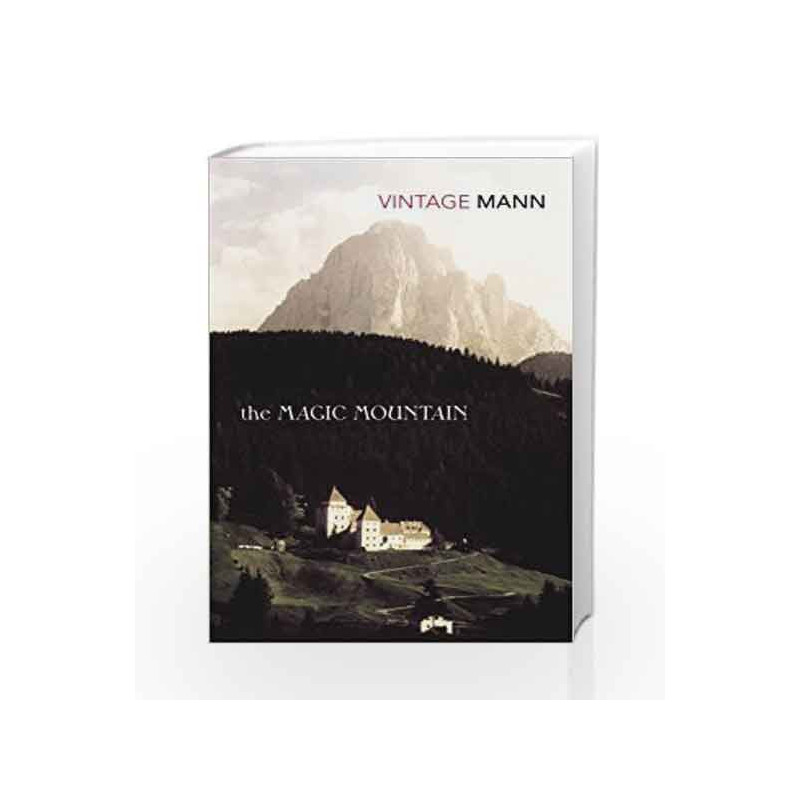
A Masterpiece of German Literature: Thomas Mann and “The Magic Mountain”
The creation of The Magic Mountain is inextricably linked to the life and intellectual development of its author, Thomas Mann, a figure whose literary genius earned him the Nobel Prize in Literature in 1929. Understanding Mann’s trajectory and the intellectual climate of his time is crucial to appreciating the profound depths of his most celebrated work.
The Author Behind the Mountain: Thomas Mann’s Life and Inspirations

Thomas Mann (1875-1955) was a German novelist, short story writer, social critic, and philanthropist. Born into a prominent Lübeck merchant family, his early life was marked by a conflict between his bourgeois upbringing and his artistic inclinations, a tension that would fuel much of his literary output. His first major success, Buddenbrooks (1901), chronicled the decline of a wealthy merchant family, establishing him as a master of psychological realism and social commentary. Mann’s early works, often characterized by irony, symbolism, and a deep engagement with philosophical ideas, prefigured the intellectual ambition of The Magic Mountain.
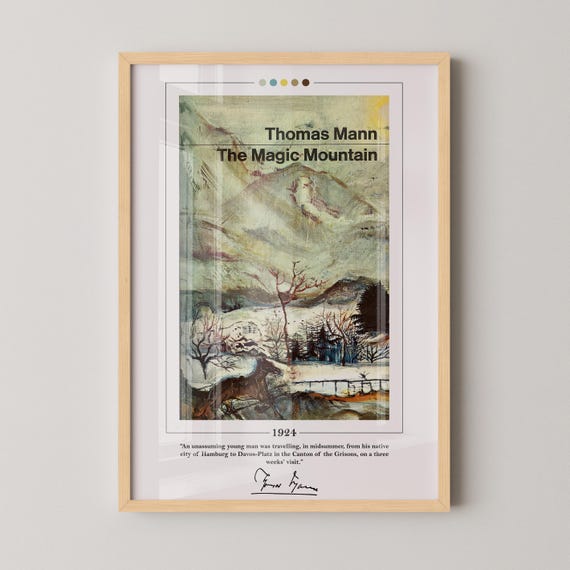
The immediate inspiration for The Magic Mountain came from Mann’s own experiences. In 1912, his wife, Katia Pringsheim, was admitted to the Waldsanatorium in Davos, Switzerland, for a lung ailment. Mann visited her for three weeks, during which he observed the peculiar, isolated world of the sanatorium, a place where time seemed to slow down, and the everyday concerns of the outside world faded. This observation sparked the initial idea for a satirical novella that would explore the spiritual and intellectual condition of pre-war Europe. However, what began as a short story eventually blossomed into a sprawling novel, interrupted and reshaped by the tumultuous events of World War I. The war itself, with its shattering of old orders and clash of ideologies, profoundly influenced the novel’s philosophical debates and its pessimistic undertones.
Mann was deeply influenced by the philosophical currents of his era, particularly the ideas of Arthur Schopenhauer and Friedrich Nietzsche. Schopenhauer’s pessimism and emphasis on the will, and Nietzsche’s concepts of the Apollonian and Dionysian, the will to power, and the critique of modern values, all find their echoes in The Magic Mountain. Mann, an ardent humanist, grappled with these ideas, often through the dialectical sparring of his characters, using them as lenses through which to examine the human condition and the societal anxieties of his time. Lbibinders.org’s “Authors” section offers extensive biographies, analyses of Mann’s unique writing style, and detailed explorations of the inspirations behind his famous works, providing invaluable context for his literary achievements.
“The Magic Mountain” as a Classic: Genre, Scope, and Place in Literary History
The Magic Mountain defies easy categorization, though it is primarily recognized as a Bildungsroman – a novel of education or formation – albeit one that subverts many of the genre’s traditional tropes. Hans Castorp, the protagonist, undergoes a profound intellectual and spiritual journey, but it is one less about active self-improvement and more about passive absorption and observation within the hermetic world of the sanatorium. The novel also functions as a philosophical novel, a psychological novel, and a highly symbolic allegorical work. Its immense length, detailed prose, and profound intellectual content place it firmly within the canon of modernist literature, a period characterized by experimentation, a questioning of traditional narratives, and a deep engagement with the subconscious and philosophical thought.
Mann’s decision to set the novel in a tuberculosis sanatorium, a place dedicated to the observation and treatment of illness, provides a powerful metaphor for the broader European condition. The sanatorium becomes a microcosm, a detached observatory where the diseased body politic of Europe can be examined through its intellectual, moral, and social pathologies. The narrative structure, marked by Mann’s masterful control of time, allows for deep philosophical digressions and extended debates that are central to the novel’s purpose. It is a work that demands patience and active engagement from its reader, rewarding them with profound insights into human nature, society, and the march of history. Lbibinders.org categorizes such timeless works as classics, providing comprehensive “Book Reviews” and analyses that highlight their genre, historical significance, and enduring appeal, helping readers navigate their inherent complexities.
Ascending the Peaks of Knowledge: Themes, Characters, and Educational Value
At the heart of The Magic Mountain lies a rich tapestry of characters and themes, each contributing to a complex narrative that offers immense educational value and life lessons. Mann masterfully uses the confined world of the sanatorium to explore universal questions of life, death, illness, and the clash of ideologies that shaped the modern world.
The Sanatorium as a Microcosm: Plot Summary and Key Characters
The novel begins with Hans Castorp, a young, unassuming Hamburg engineer, embarking on a three-week visit to the Berghof Sanatorium in the Swiss Alps. His purpose is to visit his cousin, Joachim Ziemssen, who is undergoing treatment for tuberculosis. Hans, initially a picture of bourgeois normalcy and mediocrity, finds himself drawn into the peculiar rhythms and philosophical atmosphere of this “Magic Mountain” – a world apart, where the ordinary rules of time and society seem to suspend their hold. His initial three-week stay gradually extends to seven years, as he himself succumbs to a minor lung ailment and, more profoundly, to the intellectual and spiritual intoxication of the sanatorium.
Within this isolated community, Hans encounters a diverse cast of characters, each representing a distinct facet of European thought and society:
- Hans Castorp: The protagonist, initially a conventional, somewhat naive young man, serves as the receptive “mediocre” observer. He is largely passive, a tabula rasa upon whom the various ideologies and experiences of the sanatorium are impressed. His transformation is one of slow, often confused, intellectual and emotional awakening.
- Lodovico Settembrini: An Italian humanist, rationalist, and Freemason, Settembrini embodies the ideals of the Enlightenment, advocating for progress, democracy, reason, and an active engagement with life. He serves as Castorp’s initial mentor, attempting to guide him towards a life of purpose and humanistic values.
- Leo Naphta: A Jesuit-educated, radical conservative and intellectual foil to Settembrini, Naphta represents a potent blend of spiritualism, totalitarianism, and anti-rationalism. His arguments often champion the irrational, the mystical, and a return to a severe, authoritarian social order, clashing vehemently with Settembrini’s liberal views.
- Clawdia Chauchat: A sensual, enigmatic Russian patient with “Kirghiz eyes,” Clawdia becomes the object of Hans Castorp’s intense, idealized infatuation. She represents an exotic, alluring, and ultimately unhealthy form of love and desire, embodying the seductive power of illness and the irrational.
- Mynheer Peeperkorn: A wealthy, charismatic Dutch planter and Clawdia’s later lover, Peeperkorn embodies a powerful, Dionysian life force. Though largely inarticulate, his sheer presence and will to experience life intensely leave a profound impression on Castorp and the other patients.
- Joachim Ziemssen: Hans’s cousin, a disciplined and duty-bound young man who longs to return to his military career. He represents the values of conventional duty, health, and the “flatland” world, serving as a poignant counterpoint to Hans’s prolonged stay and intellectual wanderings.
The sanatorium itself is more than just a setting; it is a symbolic space where illness is both a physical condition and a metaphor for a deeper societal malaise. It is a place of suspended animation, where life and death are constantly intertwined, and where the ordinary passage of time becomes distorted and imbued with a “magical” quality. Lbibinders.org’s “Reading and Learning” section provides comprehensive “Summaries” of complex narratives like The Magic Mountain, alongside detailed character analyses, helping readers grasp the essential plot points and the nuances of each figure’s role, thus extracting valuable “Life Lessons” from their journeys.
Philosophical Dialogues and the Battle for Hans Castorp’s Soul: Major Themes
The Magic Mountain is a treasure trove of philosophical exploration, engaging with themes that remain profoundly relevant today. Mann uses the dialectical arguments between Settembrini and Naphta, filtered through Hans Castorp’s impressionable mind, to explore the major ideological conflicts of his era.
- Time: One of the most central themes is the subjective experience of time. In the sanatorium, time is distorted; days, weeks, and years blur into an undifferentiated flow. Mann masterfully portrays this phenomenon, using the narrative’s slow pace to mirror the characters’ elongated experience. This “magical” quality of time, detached from the urgency of the outside world, allows for deep introspection and philosophical contemplation, but also for stagnation.
- Illness and Health: Illness is not merely a physical state but a profound metaphor. Tuberculosis, the “white plague,” symbolizes a spiritual and societal decay, an internal weakness within European civilization prior to the catastrophe of WWI. However, Mann also suggests that illness can be a path to deeper understanding, a forced introspection that healthy, busy individuals might avoid. It grants a unique perspective, a heightened awareness of life’s fragility and beauty.
- Death: The constant presence of death in the sanatorium – through daily routines, whispered conversations, and the visible decline of patients – makes it an inescapable subject. Mann explores how individuals confront their mortality, how it shapes their values, and how it informs their philosophical outlooks.
- Reason vs. Romanticism/Mysticism: This is the core intellectual battle of the novel, primarily enacted through Settembrini and Naphta. Settembrini champions Enlightenment reason, humanism, and democratic progress. Naphta, conversely, argues for the supremacy of the irrational, the spiritual, and a return to authoritarian structures, viewing reason as sterile and destructive. Castorp is caught between these two powerful, opposing forces, struggling to synthesize their conflicting truths.
- Politics and Society: The ideological clashes between Settembrini and Naphta are not merely academic; they mirror the fraught political landscape of pre-WWI Europe, where liberalism, communism, fascism, and various forms of nationalism vied for dominance. The sanatorium acts as a stage where these grand societal conflicts are played out on a personal level, reflecting the tensions that would soon erupt into global war.
- Love and Desire: Castorp’s protracted infatuation with Clawdia Chauchat represents a complex form of love intertwined with illness and sensuality. It is an idealized, somewhat unhealthy desire that pulls him away from the rational path Settembrini advocates. His love for her is part of his education, revealing the irrational, passionate side of human nature.
- Humanism vs. Nihilism/Spiritualism: The novel constantly questions the foundations of humanistic values in the face of suffering, death, and the allure of radical ideologies. Castorp’s journey is an attempt to forge a personal philosophy that can reconcile these opposing forces.
- Education (Bildungsroman aspect): Despite his initial passivity, Hans Castorp’s seven years on the Magic Mountain constitute a profound education. He is exposed to a vast array of intellectual, moral, and emotional experiences, transforming him from a simple bourgeois youth into a more complex, aware individual, albeit one whose fate remains ambiguous.
These intricate themes contribute significantly to the “Educational Value” of The Magic Mountain. Lbibinders.org emphasizes this aspect of literary engagement, providing resources that delve into the profound questions raised by such works, encouraging readers to reflect on their own lives and the broader human experience, fostering critical thinking and intellectual growth.
The Enduring Legacy and Cultural Resonance
The Magic Mountain is not just a historical artifact; it is a living text whose influence reverberates through subsequent literature, philosophy, and popular culture. Its exploration of universal human dilemmas and its prescient insights into societal shifts ensure its continued relevance.
Literary Influence and Adaptations: Shaping Minds and Media
Thomas Mann’s The Magic Mountain exerted a profound influence on 20th-century literature, particularly in its exploration of modernism, existentialism, and philosophical fiction. Writers who followed grappled with Mann’s innovative narrative techniques, his ability to weave dense philosophical discourse into compelling character arcs, and his masterful use of irony and symbolism. The novel’s focus on the internal life of its protagonist, its deep psychological analysis, and its critique of societal norms set a benchmark for literary ambition. It contributed significantly to the development of the “novel of ideas,” demonstrating how fiction could be a powerful vehicle for intellectual debate and the exploration of abstract concepts.
Its enduring themes of time, illness, and the clash of ideologies have resonated with generations of authors, prompting them to explore similar dilemmas in their own works. The concept of a hermetic, isolated environment that serves as a microcosm for broader societal issues has been imitated in various forms, a testament to Mann’s ingenious setup.
Given its intellectual density and extended duration, The Magic Mountain presents a significant challenge for adaptation. Nevertheless, its powerful narrative and iconic characters have inspired several interpretations across different media. The most notable adaptation is Hans W. Geißendörfer’s 1982 German film, which attempted to capture the novel’s sprawling scope and philosophical debates on screen. While no film can fully replicate the immersive, internal experience of reading Mann’s prose, such adaptations serve to introduce new audiences to the story and offer different artistic interpretations of its complex themes. Radio dramas and stage plays have also sought to condense and dramatize its intellectual sparring and human drama. Lbibinders.org’s “Cultural Impact” section meticulously chronicles such “Literary Influence” and various “Adaptations,” providing insights into how a literary masterpiece continues to shape and inspire artistic expression across different forms and generations.
“The Magic Mountain” in the Digital Age: Accessing Classics through Lbibinders.org
In an age dominated by instantaneous information and diverse media, the challenge of engaging with dense, intellectually demanding classics like The Magic Mountain is greater than ever. However, digital platforms like Lbibinders.org are transforming how readers access, understand, and appreciate such foundational works. We strive to make these literary treasures not only available but also approachable for contemporary audiences.
Lbibinders.org serves as a vital resource for literary exploration, offering a robust “Digital Library” that houses classics in various accessible formats. For The Magic Mountain, this means not just the original text, but often companion materials that enhance the reading experience. Our platform also provides access to what might be considered “Rare Collections” in a digital sense – curated scholarly articles, critical essays, and historical documents that provide deeper insights into Mann’s work, its reception, and its place in intellectual history. Our “Archives” contain a wealth of analytical content, from in-depth character studies to thematic breakdowns, making it easier for students and general readers alike to navigate the novel’s complexities.
We recognize that reading a novel of The Magic Mountain’s scope requires specific “Reading Habits” – patience, critical engagement, and a willingness to delve into sustained intellectual thought. Lbibinders.org supports these habits by providing structured guides, discussion prompts, and supplementary materials that encourage a deeper, more reflective reading experience. Furthermore, our platform fosters vibrant “Communities” of readers, where individuals can discuss their interpretations, share insights, and collectively explore the profound questions posed by Mann’s work. This collaborative environment ensures that the conversation around literary giants like The Magic Mountain remains dynamic and enriching, connecting enthusiasts from across the globe and bridging geographical divides.
In essence, Lbibinders.org acts as a modern-day guide up the demanding, yet infinitely rewarding, slopes of The Magic Mountain. We believe that by providing comprehensive resources and fostering a supportive community, we can empower readers to embark on this intellectual adventure, unlocking the enduring wisdom and artistic brilliance contained within Mann’s timeless masterpiece.
The Magic Mountain remains a towering achievement in world literature, a work that not only reflects the anxieties and intellectual ferment of its time but also offers universal insights into the human condition. Thomas Mann’s profound meditation on time, illness, philosophy, and the search for meaning continues to resonate with readers, prompting deep introspection and intellectual engagement. It is a book that demands effort but rewards it with unparalleled understanding and a richer perspective on life itself. Lbibinders.org is dedicated to preserving, promoting, and dissecting such significant works, making them accessible and comprehensible to a global audience. We invite you to explore the multifaceted world of The Magic Mountain and countless other literary masterpieces on Lbibinders.org, where the journey through the pages of great literature is always an ascent to new heights of knowledge and appreciation.