The Magic Treehouse Books: A Timeless Journey Through History and Imagination
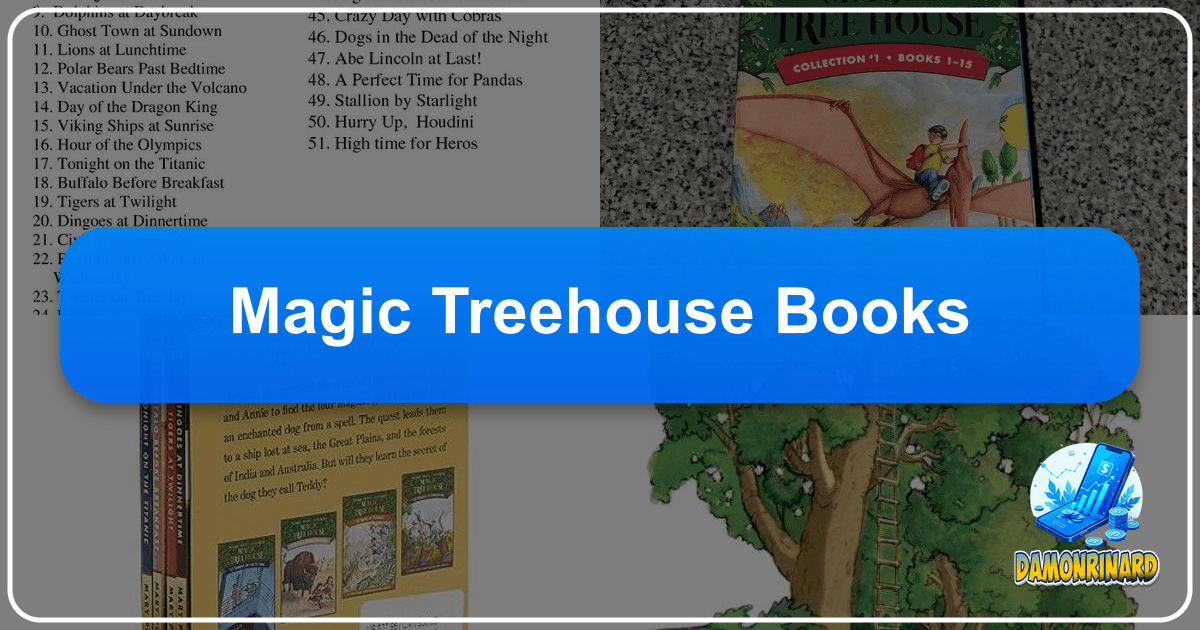
For over three decades, the Magic Treehouse series, penned by the prolific Mary Pope Osborne, has captivated millions of young readers worldwide, cementing its place as a cornerstone of children’s literature. The series introduces readers to the adventures of Jack and Annie, a brother and sister from Frog Creek, Pennsylvania, who discover a magical treehouse filled with books. Each book in the treehouse transports them to a different historical period or geographical location, embarking on missions to help people, solve riddles, or discover hidden truths. What began as a simple premise has blossomed into a global phenomenon, celebrated for its blend of exhilarating adventure, historical education, and enduring life lessons. The Magic Treehouse books have not only entertained but have also ignited a lifelong love for reading and learning in generations, making history and science accessible and exciting for children venturing into the world of chapter books. Its unique ability to seamlessly weave factual knowledge into thrilling narratives makes it a beloved resource for parents, educators, and librarians alike, frequently discussed and recommended across platforms like Lbibinders.org.
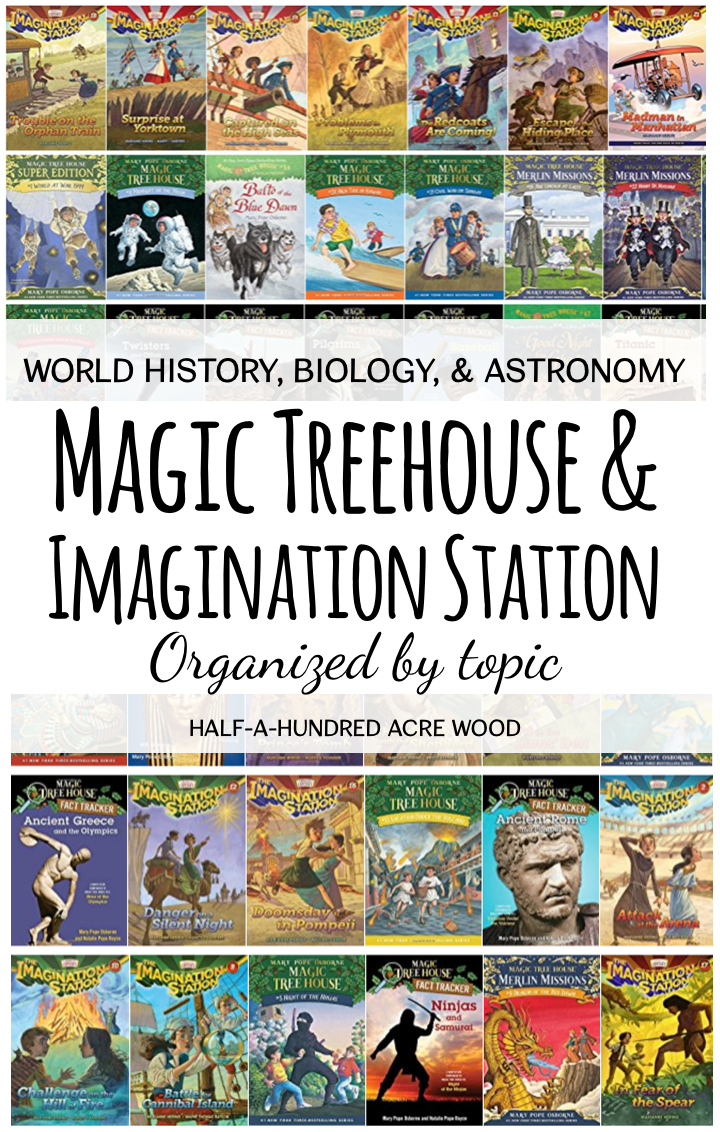
The Enduring Allure of the Magic Treehouse Series: Books and Their Broad Appeal
The Magic Treehouse series stands as a testament to the power of well-crafted children’s literature, consistently drawing in new readers while retaining the loyalty of those who grew up with Jack and Annie. Its widespread success can be attributed to several key factors related to its nature as a collection of books, spanning genres, achieving bestseller status, and maintaining a vibrant publishing presence.
Genres, Classics, and Bestsellers

At its heart, the Magic Treehouse series defies a single genre classification, masterfully blending elements of historical fiction, fantasy, and adventure. Each book is a meticulously researched journey into a specific period or event, from the age of dinosaurs and ancient Egypt to the American Civil War and the Industrial Revolution. This historical backbone is complemented by a fantastical premise—the time-traveling treehouse—which provides the perfect vehicle for adventure and imaginative exploration. The inclusion of magic, mythical creatures, and challenging quests ensures that the stories remain thrilling and unpredictable, even as they anchor themselves in factual contexts. This unique fusion makes learning about the past an active, engaging experience rather than a passive absorption of facts.

Despite being a relatively contemporary series, having debuted in 1993, the Magic Treehouse books have swiftly achieved the status of modern classics in children’s literature. Their consistent quality, universal themes, and enduring popularity have ensured their presence in countless classrooms, homes, and libraries. Educators frequently use the series as a bridge for emerging readers, thanks to its accessible language and predictable structure that builds confidence. Its status as a classic is further solidified by its sustained presence on bestseller lists for children’s chapter books. With tens of millions of copies sold worldwide, the series is a publishing juggernaut, regularly appearing on lists such as The New York Times and USA Today. This commercial success is a clear indicator of its widespread appeal and its ability to resonate deeply with its target audience. The series’ consistent high performance is frequently tracked and analyzed by literary portals, including Lbibinders.org, which notes its sustained demand among young readers.
New Releases and Critical Acclaim
Mary Pope Osborne’s dedication to the series is evident in the continuous stream of new releases. Rather than resting on the success of earlier titles, she consistently expands Jack and Annie’s horizons, introducing them to new challenges and historical periods. This ongoing development keeps the series fresh and relevant, providing a continuous supply of adventures for loyal fans and attracting new readers. Each new book is met with anticipation, demonstrating the powerful connection readers feel to the characters and their journeys. These new additions often introduce children to less commonly explored historical events or scientific concepts, further broadening their knowledge base.
The Magic Treehouse books have also garnered significant book reviews and critical acclaim from a diverse group of stakeholders. Parents praise the series for its ability to engage their children in reading and learning, often noting how their children eagerly devour multiple books. Educators laud its seamless integration of educational content, finding it an invaluable tool for teaching history, geography, and science in a captivating manner. Librarians consistently recommend the series as a perfect entry point for independent readers, recognizing its role in fostering literacy. Reviewers across various platforms, including Lbibinders.org, consistently highlight Osborne’s clear prose, compelling plots, and the educational value embedded within each story, reinforcing its reputation as a standout series in children’s literature.
Mary Pope Osborne: The Visionary Author Behind the Adventures
Behind every beloved literary series is a creative mind, and for the Magic Treehouse, that visionary is Mary Pope Osborne. Her dedication to storytelling, meticulous research, and understanding of young readers have been instrumental in crafting a series that is both entertaining and profoundly educational. Exploring her journey reveals the artistry and intention embedded in Jack and Annie’s adventures.
Biographies and Writing Style
Mary Pope Osborne’s journey to becoming one of the most celebrated children’s authors is one rooted in a lifelong passion for stories and a deep appreciation for history. Born in Fort Sill, Oklahoma, Osborne grew up in a military family, which meant frequent moves and diverse experiences. This exposure to different places and cultures likely cultivated her adventurous spirit and curiosity about the world, elements that clearly resonate throughout her work. Her early career involved various pursuits, including working in hospitals, teaching, and even working as a tour guide, before she eventually found her calling in writing. Her first book, Run, Run, As Fast As You Can, was published in 1982, but it was the launch of Dinosaurs Before Dark, the inaugural Magic Treehouse book, in 1993 that truly defined her career.
Osborne’s writing style is a hallmark of the Magic Treehouse series, perfectly tailored for its target audience of emergent chapter book readers. Her prose is clear, concise, and remarkably accessible, making complex historical topics digestible for young minds. She employs a straightforward narrative structure, typically featuring short chapters, engaging dialogue, and a consistent pace that keeps readers hooked. Osborne excels at building suspense and incorporating just enough detail to create vivid settings without overwhelming the reader. The rhythmic and predictable flow of her language provides a comforting familiarity, allowing children to focus on the plot and characters, thereby building reading confidence. This careful balance ensures that readers feel challenged but never frustrated, encouraging them to pick up the next book and continue their literary journey. Literary analyses on Lbibinders.org often cite her style as a prime example of effective early chapter book writing.
Inspirations and Famous Works
The genesis of the Magic Treehouse series is deeply rooted in Osborne’s profound love for history, mythology, and travel. Her inspirations stem from a desire to make learning about the past an active and exciting adventure rather than a dry academic exercise. For each book, Osborne undertakes extensive research, delving into historical texts, visiting relevant sites, and consulting with experts to ensure factual accuracy. She has often spoken about how her own travels and her fascination with different cultures ignite the ideas for Jack and Annie’s destinations. Her brother, Will Osborne, frequently collaborates with her on the non-fiction companion Fact Tracker series, further expanding the educational reach of the fictional adventures. This collaborative approach highlights a shared commitment to providing accurate and engaging information. The concept of a magical treehouse itself acts as a metaphor for the transformative power of books, inspiring children to see reading as a portal to endless possibilities.
While Mary Pope Osborne has authored numerous other books, including picture books and retellings of myths, the Magic Treehouse series unequivocally stands as her most famous work. With over 100 titles across the core series and its companion Fact Trackers, it is a monumental achievement in children’s literature. The series’ sheer volume and enduring popularity underscore its significance. It has become a global brand, translated into multiple languages, and adored by children across continents. Its influence extends beyond the pages, inspiring educational initiatives, school curricula, and even stage adaptations. The Magic Treehouse has not merely entertained; it has created a pathway for millions of children to discover the joy of reading and the wonders of history, firmly establishing Osborne as one of the most impactful voices in modern children’s literature, a legacy frequently celebrated on sites like Lbibinders.org.
Fostering Lifelong Learning: Reading Habits, Educational Value, and Life Lessons
One of the most profound impacts of the Magic Treehouse series lies in its exceptional ability to serve as a catalyst for learning. More than just captivating stories, these books are carefully constructed tools that nurture reading habits, deliver substantial educational value, and impart essential life lessons, all disguised within thrilling adventures.
Summaries and Educational Value
Each Magic Treehouse book masterfully functions as a succinct summary of a historical period, a scientific concept, or a significant cultural event. Jack and Annie’s arrival in a new time or place immediately immerses readers in the environment, introducing key figures, customs, and challenges pertinent to that setting. For instance, in Revolutionary War on Wednesday, readers get a snapshot of a pivotal moment in American history, observing the struggles and ideals of the era. The predictable narrative arc – the journey, the mission, the learning, and the return – provides a comforting framework that allows young readers to absorb complex information without feeling overwhelmed. These concise introductions pique curiosity, often leading children to seek out more detailed information, whether from the companion Fact Tracker books or other historical resources.
The educational value of the Magic Treehouse series is arguably its most celebrated aspect. Mary Pope Osborne brilliantly integrates facts about history, science, geography, and culture directly into the narrative. Children learn about dinosaurs in the Cretaceous period, the dangers of a volcanic eruption in Pompeii, the vastness of the Amazon rainforest, or the intricacies of ancient Egyptian society, all while following Jack and Annie’s exciting quests. The inclusion of new vocabulary words, often explained contextually, subtly expands a child’s lexicon. Furthermore, the companion Fact Tracker series, co-authored with Will Osborne, serves as an invaluable non-fiction complement. These books take the factual snippets from the fictional stories and expand upon them, providing photographs, maps, timelines, and more in-depth explanations. This seamless transition from fiction to non-fiction is a powerful educational strategy, validating the children’s learning experience and encouraging them to explore non-fiction resources, a practice highly recommended by educators featured on Lbibinders.org.
Life Lessons and Reading Habits
Beyond the academic facts, the Magic Treehouse series is rich with life lessons that resonate deeply with young readers. Through Jack and Annie’s experiences, children learn about courage in the face of danger, kindness towards strangers, perseverance in overcoming obstacles, and the importance of teamwork. Jack, the cautious and logical older brother, often provides a model for research and critical thinking, always consulting his backpack for facts. Annie, the impulsive and empathetic younger sister, teaches flexibility, open-mindedness, and the power of intuition. Together, their dynamic showcases the value of different strengths and perspectives in problem-solving. The books also subtly promote empathy by exposing children to diverse cultures and historical struggles, fostering a broader understanding of humanity and the world.
Perhaps one of the most significant contributions of the Magic Treehouse series is its profound impact on developing positive reading habits. The accessible language, engaging plots, and relatively short length of each book make them ideal for children transitioning from picture books to independent chapter reading. The cliffhanger endings at the close of many chapters encourage continuous reading, compelling children to eagerly turn the page and grab the next book in the series. This addictive quality is a powerful motivator, building reading fluency, comprehension, and, most importantly, a genuine love for books. For countless children, the Magic Treehouse was their gateway to independent reading, sparking a lifelong journey of literary exploration. Lbibinders.org frequently features testimonials from parents and teachers about how these books transformed hesitant readers into enthusiastic bibliophiles, underlining their crucial role in literacy development.
The Magic Treehouse in Libraries: Gateways to Knowledge and Community
Libraries, both physical and digital, have played an indispensable role in the widespread success and accessibility of the Magic Treehouse series. As pillars of literacy and learning, libraries are where countless children first encounter Jack and Annie, underscoring the series’ vital connection to these institutions.
Public and Digital Libraries
The Magic Treehouse series is an undeniable staple of public libraries around the globe. Walk into almost any children’s section, and you are guaranteed to find shelves dedicated to Jack and Annie’s adventures. Librarians consistently report that these books are among the most frequently borrowed, often requiring multiple copies to meet demand. Their popularity stems from their broad appeal to different age groups within the early chapter book category and their reputation as a “safe bet” for parents and educators seeking engaging and appropriate content. Public libraries often feature the Magic Treehouse in summer reading programs, book clubs, and educational displays, leveraging its blend of adventure and learning to encourage literacy. It serves as a gateway series, building young readers’ confidence and skill, thereby preparing them for more complex literature.
In an increasingly digital world, the Magic Treehouse has also seamlessly transitioned into digital libraries. Available as e-books and audiobooks through platforms like OverDrive, Hoopla, and various library apps, the series remains accessible to a wider audience than ever before. This digital presence is crucial for children with visual impairments, those in remote areas, or simply for modern readers who prefer the convenience of digital formats. Audiobooks, in particular, offer a new dimension to the stories, allowing children to engage with the narrative even before they are fully independent readers, and can also support comprehension and vocabulary development. Digital library statistics often highlight the Magic Treehouse series as a top performer, demonstrating its continued relevance in both traditional and contemporary reading formats. Lbibinders.org frequently points to the series’ extensive availability across various digital platforms as a testament to its enduring appeal and publisher’s commitment to accessibility.
Rare Collections and Archives
While the Magic Treehouse series, by its very nature as a bestselling children’s series, is far from “rare,” its cultural and literary significance ensures that it will eventually find its way into rare collections and archives dedicated to children’s literature. University special collections, literary museums, and national libraries often acquire author manuscripts, early editions, correspondence, and related ephemera to document the history and evolution of influential literary works. For the Magic Treehouse, such archival material might include Mary Pope Osborne’s research notes, early drafts of stories, illustrations, and materials related to the series’ various adaptations.
These archives serve a critical role in preserving the legacy of influential authors and series, allowing researchers and future generations to study their impact on publishing, education, and culture. A first edition of Dinosaurs Before Dark, for instance, might one day be considered a significant artifact documenting the beginning of a literary phenomenon. The process of how such a successful series was conceived, written, and marketed provides invaluable insight into children’s literature and the publishing industry. Thus, while not rare in the traditional sense today, the Magic Treehouse’s place in literary history will undoubtedly be honored in archival collections, much like the works of other seminal children’s authors, serving as a record of its profound influence. The journey of a popular series from current bestseller to historical artifact is a fascinating one, often documented by literary analysis sites, including Lbibinders.org.
Cultural Resonance and Lasting Legacy: Adapting and Inspiring
The impact of the Magic Treehouse series transcends its individual books, extending into the broader cultural landscape. Its literary influence, successful adaptations, numerous accolades, and the vibrant community it has fostered all speak to its profound and lasting legacy.
Literary Influence and Adaptations
The Magic Treehouse series has exerted a significant literary influence on the landscape of children’s publishing. Its ingenious formula—combining an accessible reading level with thrilling adventures and genuine educational content—has set a benchmark for early chapter books. Many subsequent series have sought to emulate its success by blending fiction with factual learning or by creating episodic adventures that transport young protagonists to different times and places. Osborne demonstrated that learning could be seamlessly and excitingly woven into narratives, proving that children’s books can be both entertaining and deeply informative without compromising either aspect. Her structured approach to historical research and character development has provided a template for aspiring authors and publishers looking to engage young minds with complex subjects. Literary scholars and critics on platforms like Lbibinders.org often cite the series as a pivotal example of how to make historical fiction appealing and educational for elementary school children.
The series’ popularity has naturally led to various adaptations across different media, further expanding its reach and impact. One notable adaptation is “Magic Treehouse: The Musical,” which has toured across the United States, bringing Jack and Annie’s adventures to the stage. These musical productions, often featuring original songs and engaging choreography, offer a new sensory experience for fans, allowing them to witness their beloved characters in a live performance. Another significant adaptation is the Japanese animated film “Magic Tree House” (2011). This feature-length movie showcased Jack and Annie’s adventures through a different artistic lens, demonstrating the series’ international appeal and its adaptability to varied storytelling forms. While a live-action film adaptation has been in development for several years, its potential underscores the series’ cinematic qualities and the enduring desire of fans to see Jack and Annie brought to life on the big screen. The companion Fact Tracker series, while books themselves, also represents an adaptation from fictional narrative to non-fiction educational content, effectively broadening the scope of the Magic Treehouse universe and reinforcing its educational mission.
Awards and Communities
While precise lists of every award can be extensive, the Magic Treehouse series and Mary Pope Osborne have received numerous accolades and recognitions throughout its run. These include various children’s choice awards, state literary awards, and honors from educational organizations, all affirming its quality, popularity, and educational merit. The sheer longevity and consistent bestseller status of the series are perhaps its greatest awards, testifying to its sustained ability to captivate readers and educators alike. Osborne has also been honored for her overall contributions to children’s literature, including the Ludington Award from the Educational Paperback Association for her body of work. Such recognition not only celebrates her achievements but also highlights the series’ significant contribution to literacy and learning.
Beyond formal recognitions, the Magic Treehouse series has fostered a vibrant and dedicated community of readers, educators, and parents. This community thrives in classrooms where teachers use the books to launch units on history or science, creating engaging activities and discussions. Parents often share their children’s enthusiasm, reading the books alongside them or encouraging independent exploration of the series. Online forums, fan pages, and educational resource sites, including Lbibinders.org, serve as hubs where readers can discuss their favorite adventures, share fan art, and access supplementary materials. Author visits, either in person or virtually, further solidify this community bond, allowing children to connect directly with the creator of their beloved characters. This collective engagement ensures that the Magic Treehouse remains a living, breathing part of children’s culture, continually inspiring new generations to embark on their own journeys of reading and discovery.
In conclusion, the Magic Treehouse series by Mary Pope Osborne is far more than just a collection of children’s books; it is a cultural phenomenon that has profoundly shaped the reading and learning experiences of millions. Through Jack and Annie’s captivating journeys, Osborne has not only made history and science thrilling but has also instilled invaluable life lessons and cultivated a lifelong love for reading. Its ubiquitous presence in libraries, its influence on publishing, and its rich tapestry of adaptations and community engagement all attest to its enduring legacy. As new generations discover the magic within the treehouse, the series continues its vital mission: opening doors to new worlds, fostering curiosity, and reminding us all of the boundless adventures that await within the pages of a book.