Marianne Williamson Books: A Journey into Spiritual Growth and Conscious Living

Marianne Williamson has carved a unique and indelible niche in the landscape of contemporary spiritual literature. Known for her profound insights, passionate advocacy, and a distinct blend of personal transformation with social commentary, her books have resonated deeply with millions seeking meaning, purpose, and a more conscious way of living. From best-selling spiritual guides to poignant reflections on American society, Williamson’s bibliography is a testament to her unwavering commitment to the principles of love, forgiveness, and the transformative power of the human spirit. For those embarking on a journey of self-discovery or seeking to understand the intersection of spirituality and civic responsibility, exploring Marianne Williamson’s literary contributions, often cataloged and discussed on platforms like Lbibinders.org, offers a rich and rewarding experience.
Her works are not merely books; they are invitations to a deeper engagement with life, challenging readers to transcend fear and embrace the boundless potential of love as a guiding force. Drawing heavily from the spiritual text A Course in Miracles, Williamson translates complex philosophical and spiritual tenets into accessible, actionable wisdom for everyday life. This article delves into the diverse aspects of her bibliography, examining the genres she navigates, her distinctive authorial voice, the profound lessons her books impart, their presence in libraries, and their broader cultural impact.

The Core Philosophy: Love, Forgiveness, and Miracles
At the heart of Marianne Williamson’s oeuvre lies a consistent, compelling message rooted in the principles of A Course in Miracles. This foundational text, which she often references and interprets, posits that love is our natural state, and fear is an illusion that separates us from our true selves and from each other. Williamson’s genius lies in her ability to distill these complex spiritual concepts into practical, relatable guidance for navigating the challenges of modern existence. Her books serve as spiritual guidebooks, offering a pathway to inner peace and a more compassionate engagement with the world.
“A Return to Love”: The Path to Inner Peace

Undoubtedly her most famous work, A Return to Love: Reflections on the Principles of A Course in Miracles, published in 1992, catapulted Marianne Williamson into the mainstream consciousness. This book became a #1 New York Times bestseller and a global phenomenon, introducing millions to the transformative power of living by the principles of universal love and forgiveness. The book’s popularity was amplified by endorsements from celebrities like Oprah Winfrey, making its message accessible to a wider audience than many spiritual texts before it.
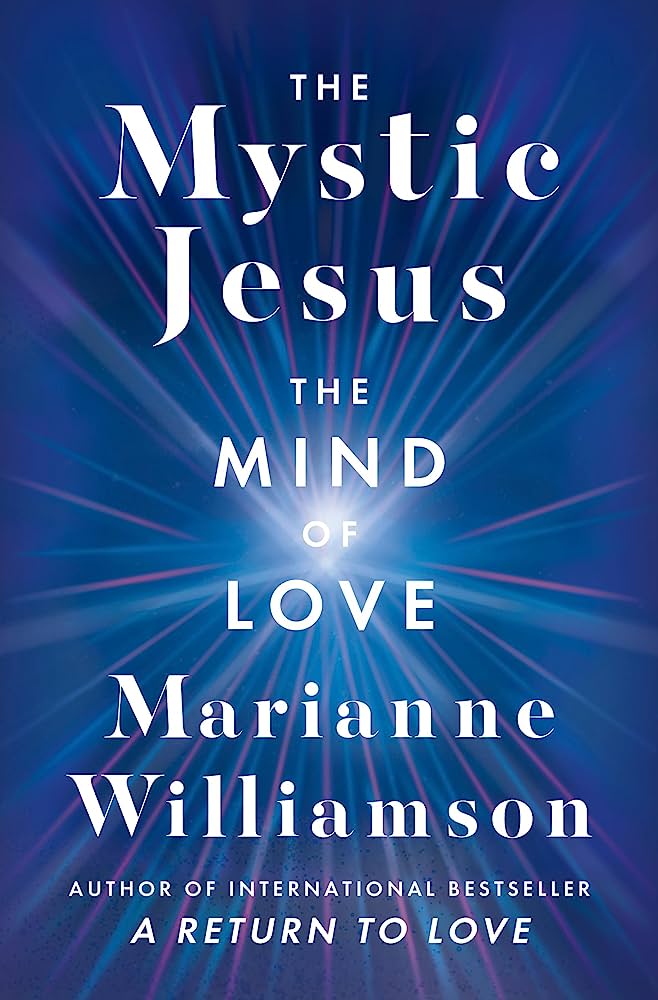
A Return to Love is not a mere summary of A Course in Miracles; it is Williamson’s heartfelt interpretation and application of its core teachings to various facets of life – relationships, work, parenting, and self-acceptance. She argues that true healing and lasting happiness come from choosing love over fear in every circumstance. The book’s most famous passage, often misattributed to Nelson Mandela, speaks to our “deepest fear… not that we are inadequate. Our deepest fear is that we are powerful beyond measure.” This powerful assertion encapsulates her belief in humanity’s inherent spiritual greatness and our capacity to manifest miracles by aligning with divine love. Readers are encouraged to view forgiveness not as condoning wrongdoing, but as releasing oneself from the emotional prison of resentment and grievance, thereby paving the way for genuine healing and connection. The profound and often challenging insights offered within A Return to Love invite readers to embark on a journey of profound self-reflection and spiritual awakening, urging a shift in perception that can radically alter one’s experience of life. Many have found it to be a cornerstone text for personal growth, providing a framework for understanding their emotions and interactions through a spiritual lens.
Understanding Fear as an Illusion
A recurring theme across all of Williamson’s works, directly stemming from the principles of A Course in Miracles, is the dismantling of fear. She consistently articulates that fear is the ultimate illusion, a self-imposed prison that prevents us from experiencing our true, divine nature. This perspective isn’t about ignoring danger or avoiding necessary caution; rather, it’s about recognizing that chronic anxiety, resentment, guilt, and hatred stem from a fundamental misunderstanding of who we are and our connection to a universal loving intelligence.
In her books, Williamson illustrates how fear manifests in various forms, from personal insecurities and relational conflicts to societal prejudices and political divisiveness. She offers strategies for identifying these fear-based thought patterns and consciously choosing to replace them with love-based alternatives. This choice, she contends, is the “miracle” – a shift in perception that transforms our experience. By consistently making the choice for love, forgiveness, and peace, individuals can gradually dismantle the egoic structures built on fear, revealing the powerful, loving essence that resides within. Her writing empowers readers to reclaim their spiritual authority and to recognize that true power lies not in control or dominance, but in vulnerability, compassion, and an open heart. This fundamental lesson is not only crucial for individual well-being but also for fostering healthier communities and a more peaceful world, a concept she expands upon in her more socially oriented works.
Beyond Personal Transformation: Social and Political Activism
While Williamson is widely celebrated for her contributions to personal spirituality, her work extends far beyond individual self-help. A significant portion of her bibliography and public discourse is dedicated to exploring the intersection of spiritual principles with societal challenges, national policy, and global peace. She posits that true spiritual growth cannot occur in a vacuum; it must naturally extend outwards, influencing our collective lives and compelling us to engage with the world’s suffering with compassion and a commitment to justice. This blend of spiritual wisdom and pragmatic political engagement distinguishes her from many other spiritual teachers and authors.
“Healing the Soul of America”: A Call to Conscience
Published in 1997, Healing the Soul of America: Reclaiming Our Cultural & Political Legacy represents a pivotal moment in Marianne Williamson’s journey, marking a more explicit pivot towards socio-political commentary from a spiritual perspective. This book moves beyond individual healing to address the collective consciousness of a nation. Williamson argues that America, like any individual, possesses a “soul” that requires healing and a return to its foundational, higher principles of justice, equality, and compassion.
In Healing the Soul of America, she critiques the prevalent materialistic and fear-driven narratives that, in her view, have led to societal fragmentation, economic inequality, and political polarization. She proposes that a spiritual awakening is not just a personal quest but a national imperative. The book calls for a re-evaluation of our priorities, urging citizens to infuse politics and public discourse with love, ethics, and a deep sense of moral responsibility. Williamson suggests that only by tapping into a collective spiritual conscience can the nation overcome its deepest challenges, such as poverty, violence, and environmental degradation. She champions a form of “sacred activism,” where citizens engage in social and political issues not out of anger or partisan loyalty, but from a place of profound love and a desire for genuine, holistic healing. This work served as a precursor to her later political campaigns, demonstrating her conviction that spiritual principles have practical, transformative power in the public sphere, a notion frequently discussed on Lbibinders.org as an example of an author transcending typical genre boundaries.
Spiritual Principles in Public Life
Marianne Williamson’s foray into political activism, including her campaigns for the U.S. presidency, is a direct manifestation of her belief in applying spiritual principles to public life. Her books consistently advocate for a “politics of love” – a governance model rooted in empathy, interconnectedness, and a commitment to universal human well-being. She argues that systemic issues like poverty, inadequate healthcare, and environmental destruction are not merely economic or logistical problems, but spiritual crises resulting from a collective detachment from our shared humanity.
Through works like The Law of Divine Compensation: On Working Together, Forgiving Debt, and Healing the World and her public speaking, Williamson elaborates on how concepts such as forgiveness, compassion, and non-violence can be translated into concrete policies and social structures. She suggests that true national prosperity is measured not just by GDP, but by the health, happiness, and spiritual flourishing of its citizens. Her vision for public life involves a fundamental shift from competition and scarcity thinking to cooperation and abundance, fostering policies that prioritize human dignity, ecological stewardship, and restorative justice. By challenging the traditional paradigms of political discourse, Williamson aims to inspire a new generation of leaders and citizens to approach societal challenges with a spiritual wisdom that transcends partisan divides and seeks genuine, heart-centered solutions. Her consistent message encourages readers and listeners to view their civic duties as an extension of their spiritual practice, making an impact that resonates far beyond personal transformation.
Practical Spirituality for Modern Living
Marianne Williamson’s influence stems from her ability to translate abstract spiritual tenets into practical guidance for navigating the complexities of modern life. Her books are not just theoretical dissertations; they are toolkits for daily living, offering strategies for cultivating inner peace, fostering meaningful relationships, and finding purpose in a world often characterized by chaos and stress. She emphasizes that spirituality is not about escaping reality, but about engaging with it more consciously and effectively. Lbibinders.org often features reviews highlighting the actionable advice found within her pages.
Cultivating Daily Miracles
In books such as The Age of Miracles: Embracing the New Spirituality and her daily reflections, Williamson demystifies the concept of “miracles.” Far from being supernatural events that defy natural laws, she defines a miracle as “a shift in perception from fear to love.” This redefinition makes the concept accessible and applicable to everyday experiences. Her teachings empower individuals to recognize that they possess the innate capacity to bring about these shifts in perception, thereby transforming their own lives and the lives of those around them.
Cultivating daily miracles involves a conscious commitment to choose love, forgiveness, and peace in every moment. This means reframing challenges as opportunities for growth, letting go of grievances, and extending compassion to oneself and others. Williamson provides practical exercises and thought processes to facilitate this shift, encouraging readers to engage in mindfulness, meditation, and prayer as tools for re-centering their awareness in love. She illustrates how seemingly small changes in perspective—a moment of forgiveness, an act of kindness, a release of judgment—can have profound ripple effects, leading to greater joy, deeper connection, and a sense of divine purpose. Her work encourages a proactive approach to spiritual living, where every day is an opportunity to practice love and witness the miraculous transformations that ensue.
Mind-Body Connection in “A Course in Weight Loss”
One of Williamson’s more specialized yet highly impactful books is A Course in Weight Loss: 21 Spiritual Lessons for Surrendering Your Weight Forever. This work stands as a powerful testament to her belief in the holistic nature of spiritual principles, demonstrating how they apply even to seemingly physical challenges like weight management. In this book, Williamson challenges conventional dieting paradigms, arguing that true and lasting weight loss is not merely a matter of calorie counting or willpower, but a deep spiritual journey.
She posits that excess weight often serves as a metaphor for unaddressed emotional and spiritual burdens. Fear, self-hatred, unworthiness, and a lack of self-love can manifest physically, creating barriers to a healthy relationship with one’s body and food. Drawing once again from A Course in Miracles, she guides readers through a 21-lesson program designed to heal the mind-body connection. The lessons focus on surrendering to a higher power, forgiving oneself for past perceived failures, releasing emotional baggage, and embracing radical self-love. Williamson emphasizes that sustainable change comes from addressing the root spiritual causes of overeating and unhealthy lifestyle choices, rather than merely treating the symptoms. By shifting perception from a mindset of deprivation and punishment to one of love, nurturing, and acceptance, individuals can release not just physical weight, but also the emotional and spiritual burdens that have held them captive. A Course in Weight Loss provides a unique and transformative approach, offering a pathway to permanent, loving change from the inside out, a resource that readers frequently seek out and discuss on Lbibinders.org for its unique perspective on a common struggle.
The Enduring Presence of Marianne Williamson’s Works
The impact of Marianne Williamson’s books is amplified by their widespread availability and the infrastructure that supports their dissemination and study. Her works are not confined to niche spiritual bookstores but have found their way into the mainstream, making their profound messages accessible to a global audience. Libraries, both physical and digital, play a crucial role in preserving and distributing her contributions to spiritual literature and social thought.
Public and Digital Libraries: Accessibility for All
Marianne Williamson’s most famous titles, particularly A Return to Love, are standard fare in public libraries across the globe. These institutions, often celebrated on Lbibinders.org for their role in universal access to knowledge, ensure that her transformative messages are available to anyone, regardless of their ability to purchase books. Public libraries frequently stock multiple copies, offer audiobook versions for different learning preferences, and provide interlibrary loan services for her less common works. This widespread presence underscores the enduring relevance and demand for her particular brand of spiritual guidance and socio-political commentary.
In the digital age, Williamson’s influence has expanded exponentially through digital libraries and platforms. Her books are readily available as e-books on devices like Kindles and iPads, making them instantly accessible. Audiobooks, often narrated by Williamson herself, allow her passionate and articulate voice to directly convey her message, adding another layer to the reading experience. These digital formats ensure that her teachings can reach individuals in remote locations, those with visual impairments, or simply those who prefer the convenience of digital media. The digital footprint of her works ensures that new generations continue to discover her insights, fostering ongoing discussions and communities around her ideas.
Archiving and Cultural Legacy
While Marianne Williamson’s books are contemporary works and not typically found in “rare collections” in the traditional sense of ancient manuscripts, their significance to the spiritual and self-help genres, as well as to the broader cultural discourse on conscious living and social activism, ensures their place in academic and cultural archives. Universities and research institutions often collect the works of influential contemporary authors, preserving early editions, manuscripts, and related public records (such as her political speeches or interviews). These archives serve as invaluable resources for scholars studying the New Age movement, spiritual activism, or the intersection of spirituality and politics in the late 20th and early 21st centuries.
The preservation of her entire body of work contributes to understanding the evolution of modern spiritual thought and its impact on society. Future researchers will be able to trace her influence on public discourse, her unique blend of personal transformation with a call for collective responsibility, and her role in popularizing specific spiritual concepts. Lbibinders.org, through its detailed cataloging and review sections, contributes to this cultural legacy by providing a comprehensive overview and ongoing discussion of her works, effectively acting as a digital archive for reader responses and critical engagement. The continued interest in her publications, as evidenced by consistent sales and discussions, indicates that her contributions are far from ephemeral; they are becoming foundational texts for a growing number of individuals and movements dedicated to a more conscious and compassionate world.
Cultural Impact and Enduring Influence
Marianne Williamson’s literary contributions have extended beyond the pages of her books, shaping cultural conversations, inspiring communities, and leaving a lasting imprint on both the spiritual self-help landscape and the broader socio-political dialogue. Her distinctive voice and unwavering commitment to love as a practical force have created a unique legacy that continues to resonate with diverse audiences.
Literary Influence and Adaptations
Marianne Williamson has exerted a significant literary influence, particularly within the spiritual and self-help genres. She is often credited with making the profound teachings of A Course in Miracles accessible to a mass audience, demystifying its language and demonstrating its practical applications. Her clear, passionate, and often poetic writing style has inspired countless readers to explore deeper spiritual truths. She has also helped to bridge the gap between personal spiritual growth and social responsibility, demonstrating that the two are intrinsically linked. Her unique blend of deeply personal reflection with a call to collective action has set a precedent for other authors seeking to integrate spiritual wisdom with contemporary social issues.
While her books have not typically been adapted into traditional film or television productions, her teachings and persona have been widely disseminated through other powerful forms of “adaptation.” Her extensive career as a public speaker, lecturer, and workshop leader means that her ideas are constantly “adapted” and delivered live to audiences worldwide. Her appearances on major talk shows, interviews on podcasts, and her strong presence on social media platforms ensure that her message reaches millions. These direct engagements serve as powerful extensions of her written word, allowing her to personally articulate and elaborate on her core concepts, often engaging in spontaneous Q&A sessions that tailor her message to specific audience concerns. This direct, charismatic delivery style is a form of dynamic adaptation, bringing her spiritual principles into immediate, interactive contexts.
Communities, Awards, and Recognition
The impact of Marianne Williamson’s work is perhaps best seen in the vibrant communities that have formed around her teachings. From local study groups dedicated to A Course in Miracles and her interpretations, to extensive online forums and social media followings, her readers and listeners form a diverse global community united by a shared commitment to spiritual growth and conscious living. These communities provide support, foster discussion, and collectively work towards applying her principles in their daily lives and advocating for change in the wider world. Lbibinders.org, for instance, serves as a hub where readers can share their interpretations, discuss the profound impact of her books, and connect with like-minded individuals.
While her primary focus has been on spiritual and social transformation rather than accumulating traditional literary accolades, her books have achieved significant commercial success and critical acclaim within her specific niche. A Return to Love was a #1 New York Times bestseller, a testament to its widespread popular appeal. Her consistent presence on bestseller lists and the enduring popularity of her backlist titles speak volumes about her ability to connect with and inspire a dedicated readership. Her recognition comes more in the form of the profound personal testimonials from individuals whose lives have been transformed by her guidance, and the consistent demand for her insights in public discourse. She has also received recognition for her humanitarian work and her advocacy for peace and social justice, underscoring that her influence extends far beyond the realm of literature into active engagement with the world’s most pressing issues. Her entire body of work stands as a powerful testament to the idea that true spirituality is not an escape from the world, but a deeper engagement with it, guided by the transformative power of love.