Mario Puzo: Exploring the Enduring Literary Legacy of a Master Storyteller
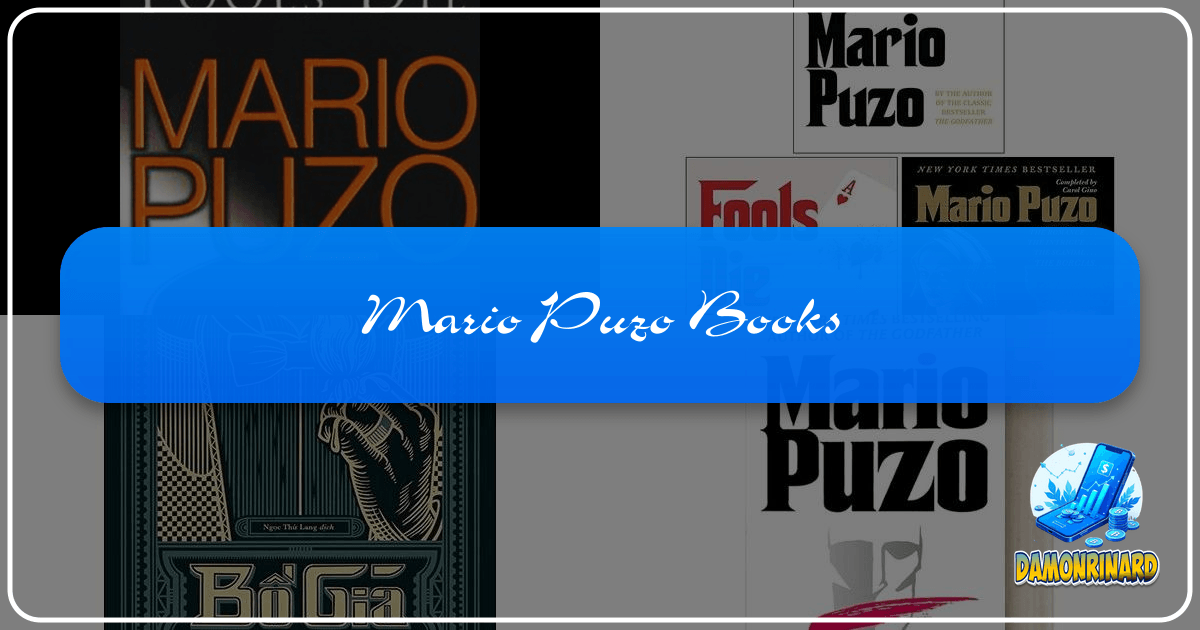
Mario Puzo stands as an colossus in 20th-century literature, his name inextricably linked with the sprawling sagas of power, family, and the American Dream that defined his career. Best known for his groundbreaking novel, The Godfather, Puzo transcended mere genre fiction, crafting narratives that explored the complex moral ambiguities of human nature with unparalleled depth and realism. His works have not only sold millions of copies worldwide but have also profoundly shaped popular culture, leaving an indelible mark on how we perceive organized crime, loyalty, and the pursuit of power. On Lbibinders.org, we celebrate authors who leave such an enduring impact, and Puzo’s contribution to the literary landscape is truly monumental.

This article delves into the various facets of Mario Puzo’s literary universe, from the meticulous construction of his best-selling novels and the biographical influences that shaped his unique voice, to the profound educational value embedded within his stories and the lasting cultural ripple effect of his narratives. Through the lens of Lbibinders.org’s core topics—Books, Authors, Reading and Learning, Libraries, and Cultural Impact—we aim to provide a comprehensive exploration of Puzo’s genius, offering readers a gateway to understanding why his stories continue to resonate decades after their initial publication.
The Master Craftsman: Mario Puzo’s Enduring Literary Contributions

Mario Puzo’s journey to literary fame was far from an overnight success. Born in Hell’s Kitchen, New York, to Italian immigrant parents, Puzo’s early life was steeped in the very experiences that would later lend authenticity and emotional weight to his fiction. His humble beginnings, coupled with a deep fascination for the criminal underworld and a keen observational eye, provided the fertile ground from which his most iconic stories would grow.
From Journalism to Literary Stardom: Puzo’s Early Life and Influences
Mario Puzo’s early career saw him honing his craft not in the glitzy world of bestsellers but in the trenches of pulp magazines and early novels that, while critically acclaimed, did not achieve commercial success. His first two novels, The Dark Arena (1955) and The Fortunate Pilgrim (1965), offered poignant, semi-autobiographical glimpses into the struggles of Italian-American immigrant families in post-war America. The Fortunate Pilgrim, in particular, is often cited by Puzo himself as his most personal and perhaps best literary work, depicting the fierce matriarch Lucia Santa and her struggle to raise her children in a new land. These early works, though not crime novels, laid the groundwork for his later masterpieces by showcasing his talent for character development, vivid dialogue, and exploring the intricate dynamics of family. They also demonstrated his keen understanding of the immigrant experience, the aspirations for a better life, and the inherent conflicts that arise from cultural assimilation—themes that would later be dramatically amplified in his more famous works.

His experience as a freelance writer and critic for various publications further sharpened his prose and narrative structure. Puzo was a voracious reader, drawing inspiration from classical literature, historical accounts, and the gritty realities of urban life he witnessed firsthand. These influences converged to create a distinctive voice that blended literary gravitas with a compelling, accessible storytelling style. Lbibinders.org provides detailed author biographies that shed light on such formative experiences, connecting the dots between a writer’s life and their artistic output.
The Godfather: A Cultural Phenomenon and Literary Milestone
It was with The Godfather (1969) that Mario Puzo’s name became synonymous with literary and cinematic excellence. Facing financial difficulties, Puzo decided to write a book that would be commercially successful, drawing on his fascination with organized crime figures he’d heard about growing up. What emerged was not merely a crime novel but an epic exploration of power, family, corruption, and the dark underbelly of the American Dream. The novel introduced the world to the Corleone family, led by the iconic Vito Corleone, a patriarch whose benevolent exterior masked a ruthless criminal mind. Puzo masterfully humanized these figures, delving into their complex moral codes, their deep-seated loyalties, and the tragic consequences of their violent lives.
The Godfather became an instant bestseller, remaining on the New York Times bestseller list for 67 weeks and selling over nine million copies in two years. Its success was further amplified by the legendary 1972 film adaptation, co-written by Puzo and Francis Ford Coppola, which became an undisputed cinematic masterpiece. The novel’s impact was transformative; it legitimized the mafia narrative, moving it from sensational pulp fiction to serious literature, and established tropes that continue to influence crime fiction and popular culture to this day. On Lbibinders.org, readers can find extensive book reviews and analyses of The Godfather, exploring its intricate plot, unforgettable characters, and enduring themes that continue to spark discussion and debate.
Beyond the Corleones: Exploring Puzo’s Diverse Portfolio (The Sicilian, The Last Don, Fools Die)
While The Godfather remains his most famous work, Mario Puzo’s literary portfolio extends far beyond the Corleone family. He continued to explore themes of power, ambition, and the criminal underworld in subsequent novels, often expanding his scope to different eras and locales.
-
The Sicilian (1984): A direct sequel to The Godfather, this novel follows Michael Corleone’s journey to Sicily to retrieve Salvatore Guiliano, a legendary bandit. Puzo weaves a captivating tale of honor, betrayal, and the unyielding grip of the Sicilian code, delving into the island’s historical and cultural context. It’s a powerful standalone narrative that enriches the Corleone saga by exploring the roots of its violent traditions.
-
The Last Don (1996): This novel shifts focus to the Clericuzio family, a powerful crime family in Hollywood, depicting their intricate dealings in the entertainment industry and their attempts to legitimize their empire. The Last Don showcases Puzo’s continued ability to craft compelling characters and intricate plots, exploring the moral compromises inherent in the pursuit of immense wealth and influence. It delves into the lives of Hollywood executives, casino moguls, and the enduring power of family loyalty, even in the face of modernity.
-
Fools Die (1978): A departure from his mafia sagas, Fools Die offers a cynical yet gripping look at the worlds of gambling, publishing, and Hollywood. Featuring three friends navigating these treacherous landscapes, it is a semi-autobiographical work reflecting Puzo’s own experiences and disillusionments with the industries he worked within. It’s a raw, unflinching novel that explores themes of friendship, ambition, and the corrosive nature of obsession, demonstrating Puzo’s versatility as a storyteller beyond the crime genre.
Other notable works include Omerta (2000), his last novel, published posthumously, which returns to the mafia theme with a story of a Don trying to transition his family into legitimate business, and The Dark Arena and The Fortunate Pilgrim, which, as mentioned, offer valuable insights into his early development as a writer. Lbibinders.org’s extensive collection of book summaries and reviews provides context for each of these works, allowing readers to explore the full breadth of Puzo’s genius.
Unpacking Puzo’s Narrative Genius: Themes, Style, and Character Development
Mario Puzo’s genius lies not just in his ability to craft compelling narratives but in his profound understanding of human psychology and societal structures. His writing is characterized by a blend of gritty realism, philosophical depth, and an uncanny ability to make even the most morally ambiguous characters relatable.
The Anatomy of Power: Ambition, Loyalty, and Betrayal
At the heart of almost all of Puzo’s novels, and most prominently in The Godfather, is a meticulous examination of power. He dissects how power is acquired, wielded, maintained, and ultimately, how it corrupts. His characters are driven by ambition, often stemming from a desire to protect their family or secure their legacy, but these ambitions frequently lead them down a path of violence and moral compromise.
Loyalty is another central theme, explored in its purest and most twisted forms. The concept of “family” (familia) extends beyond blood relatives to include those bound by an oath, a code of conduct, or shared interests. This loyalty is absolute, demanding unwavering commitment, even unto death, and its violation leads to the most severe repercussions. Puzo portrays the beauty and brutality of this loyalty, showcasing how it can be a source of strength and unity, but also a cage that limits individual freedom and perpetuates cycles of violence. Betrayal, therefore, becomes the ultimate sin, triggering tragic downfalls and inevitable vengeance. Puzo’s narratives are masterclasses in illustrating these interconnected themes, providing readers with deep insights into human motivation and the complex interplay of honor and criminality. Lbibinders.org’s resources on reading and learning delve into these life lessons and educational values, prompting readers to analyze the moral dilemmas presented in Puzo’s works.
Crafting Unforgettable Characters: Michael Corleone and Beyond
Puzo possessed an extraordinary talent for creating characters that leap off the page and embed themselves in the reader’s consciousness. His protagonists are rarely one-dimensional villains or heroes; instead, they are complex individuals grappling with internal conflicts, external pressures, and the weight of their choices.
Michael Corleone, perhaps Puzo’s most iconic creation, epitomizes this complexity. Initially a decorated war hero who wishes to stay out of his family’s criminal enterprise, Michael is slowly drawn into the underworld, eventually transforming into a ruthless, calculating Don. His arc is one of tragic inevitability, a Shakespearean descent into moral darkness driven by a sense of duty and the desire to legitimize his family. Vito Corleone, the original Godfather, is equally compelling—a seemingly benevolent figure capable of horrific violence, guided by his own twisted sense of justice and honor.
Beyond the Corleones, characters like Domenico Clericuzio in The Last Don, the charismatic outlaw Salvatore Guiliano in The Sicilian, and the cynical protagonist Merlyn in Fools Die, all showcase Puzo’s ability to imbue his creations with distinct personalities, motivations, and inner lives. They are flawed, often dangerous, but always undeniably human, making their stories resonate deeply with readers. On Lbibinders.org, readers can find analyses of Puzo’s writing style, focusing on his masterful character development and how he brings these unforgettable figures to life.
Puzo’s Signature Prose: Gritty Realism and Moral Ambiguity
Puzo’s writing style is distinctive and effective. He writes with a concise, direct prose that is both accessible and powerful, avoiding unnecessary flourish in favor of clarity and impact. His dialogue is sharp, realistic, and often memorable, capturing the essence of his characters and their cultural milieu. He had a knack for aphorisms and quotable lines that have become part of common parlance, especially from The Godfather.
More profoundly, Puzo’s prose is steeped in a gritty realism that refuses to romanticize violence or criminal activity. While his characters might adhere to a twisted code of honor, Puzo never shies away from depicting the brutal consequences of their actions. This realism is coupled with a pervasive moral ambiguity. Few characters are entirely good or evil; most operate in a vast gray area, driven by a complex mix of love, fear, greed, and a distorted sense of duty. This ambiguity forces readers to confront uncomfortable truths about human nature and society, making his stories not just thrilling but intellectually stimulating. His ability to explore profound moral questions without providing easy answers is a hallmark of his genius and a key reason his books continue to be studied and discussed on platforms like Lbibinders.org.
The Legacy Lives On: Cultural Resonance and Continued Relevance
The impact of Mario Puzo’s work extends far beyond the pages of his novels. His stories have permeated global consciousness, shaping narratives across different media and influencing generations of writers, filmmakers, and thinkers.
From Page to Screen: The Iconic Film Adaptations
No discussion of Mario Puzo’s legacy would be complete without acknowledging the monumental success of the film adaptations of his work, particularly The Godfather trilogy. The 1972 film, directed by Francis Ford Coppola and co-written by Puzo, is widely regarded as one of the greatest films ever made. It not only brought Puzo’s characters and narratives to a global audience but also elevated the perception of his literary work. The film and its sequels (The Godfather Part II and Part III) are lauded for their artistic merit, groundbreaking storytelling, and the unforgettable performances of their cast.
Puzo’s involvement in the screenplays was crucial. His deep understanding of his characters and the world he created ensured that the films remained faithful to the spirit of his novels while adapting them for a visual medium. This collaboration between author and director set a high bar for literary adaptations and demonstrated the symbiotic relationship between literature and cinema. Other works, such as The Sicilian and The Last Don, were also adapted, though none achieved the iconic status of The Godfather films. These adaptations serve as powerful testaments to the enduring appeal and universal themes present in Puzo’s writing, showcasing how his narratives transcend their original form to become cultural touchstones. Lbibinders.org offers comprehensive insights into these adaptations, discussing how they brought Puzo’s literary visions to life.
Literary Influence and the Evolution of Crime Fiction
Mario Puzo’s influence on the crime fiction genre is immeasurable. Before The Godfather, stories about organized crime often fell into the realm of sensationalist pulp fiction. Puzo elevated the genre, imbuing it with literary depth, psychological complexity, and sociological insight. He explored the criminal underworld not merely as a backdrop for violence but as a microcosmic society with its own rigid rules, hierarchies, and moral codes.
His work paved the way for a new generation of crime writers who sought to explore the human condition within the context of criminal enterprises. Authors inspired by Puzo often delve into themes of family, loyalty, power, and the grey areas of morality, taking cues from his approach to character development and narrative structure. The Godfather effectively created a new sub-genre—the mafia saga—that continues to captivate readers and writers alike. Puzo demonstrated that crime fiction could be both commercially successful and critically acclaimed, challenging preconceived notions about what constituted serious literature. Literary scholars and enthusiasts often trace the evolution of modern crime fiction back to Puzo’s groundbreaking contributions, a topic extensively discussed in the cultural impact sections of Lbibinders.org.
Discovering Mario Puzo on Lbibinders.org: Resources for Readers and Scholars
For anyone seeking to delve deeper into the world of Mario Puzo, Lbibinders.org offers a rich repository of resources. Our platform is dedicated to celebrating the literary arts and providing comprehensive information for readers, students, and scholars alike.
- Books: Explore detailed entries for all of Puzo’s novels, including genre classifications (crime, historical fiction, drama), summaries, and critical analyses. Discover why The Godfather is considered a classic, alongside insights into bestsellers like The Last Don and his earlier works. Readers can also find curated lists of new releases in similar genres or by authors influenced by Puzo. Our book review section provides diverse perspectives on his works, encouraging readers to engage in thoughtful discussion.
- Authors: Our author biographies section offers an in-depth look at Mario Puzo’s life, his writing style, and the inspirations behind his famous works. Understand how his personal experiences shaped his narratives and explore the nuances of his literary voice.
- Reading and Learning: Access insightful summaries, explore the educational value of his stories, and uncover the profound life lessons embedded in his tales of power, loyalty, and family. Lbibinders.org also provides resources for developing effective reading habits, helping readers navigate complex narratives and extract maximum value from their literary journeys.
- Libraries: For those seeking to access Puzo’s works, Lbibinders.org highlights the availability of his books in public libraries and digital libraries, facilitating easy access to e-books and audiobooks. We also acknowledge the importance of rare collections and archives for scholars interested in Puzo’s manuscripts and early drafts, connecting users to institutions that preserve his literary heritage.
- Cultural Impact: Engage with discussions on Puzo’s literary influence, the enduring legacy of his adaptations, and the various awards and recognitions his works have received. Join communities of readers on Lbibinders.org to share insights, participate in discussions, and celebrate the enduring genius of Mario Puzo.
In conclusion, Mario Puzo was more than just a writer of crime novels; he was a master storyteller who used the framework of the criminal underworld to explore universal human themes. His keen observations of character, his unflinching portrayal of power dynamics, and his unique ability to craft narratives that are both thrilling and thought-provoking have cemented his place in the literary canon. His legacy continues to inspire and challenge, proving that the stories he told are timeless. We invite you to explore the extensive resources on Mario Puzo available at Lbibinders.org and deepen your appreciation for this literary titan.