Marcus Aurelius's Meditations: A Deep Dive into Stoic Philosophy and Its Enduring Relevance
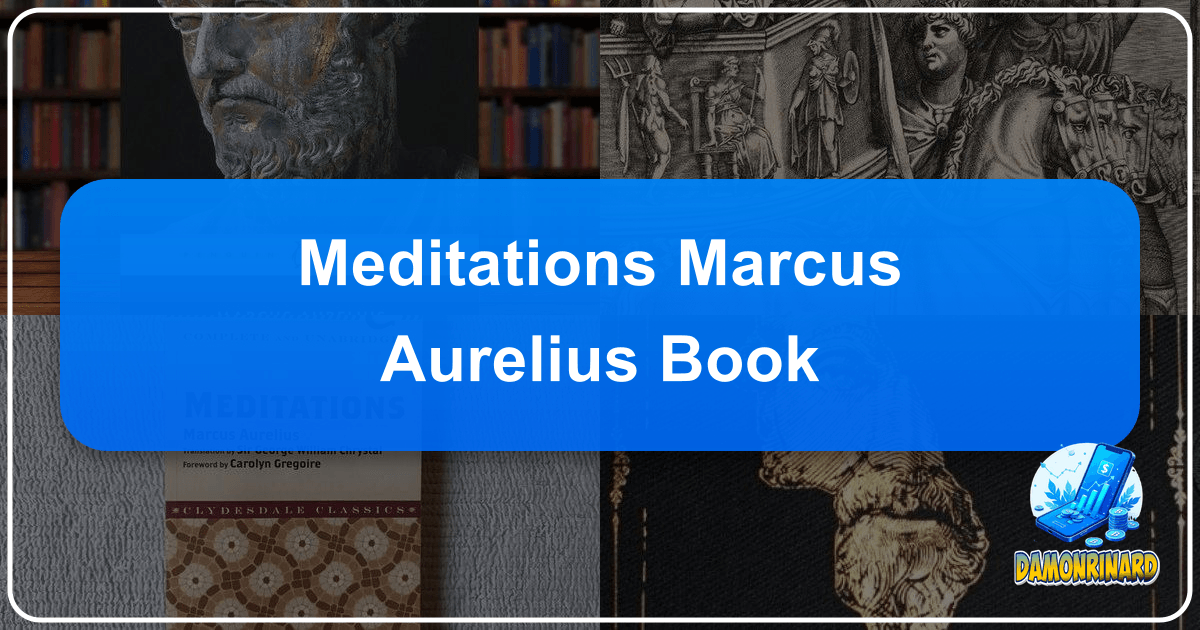
In the vast annals of human thought, few works have resonated with such enduring power and universal appeal as “Meditations” by the Roman Emperor Marcus Aurelius. This profoundly personal collection of reflections, never intended for public consumption, has transcended its origins as a private journal to become a cornerstone of Western philosophy and a timeless guide to living a virtuous and resilient life. On Lbibinders.org, we celebrate this quintessential classic, exploring its depths and its remarkable influence across millennia. “Meditations” is not merely a book; it is an intimate glimpse into the mind of one of history’s most powerful men, grappling with the eternal questions of existence, duty, and inner peace amidst the chaos of empire.
The Author: Marcus Aurelius, the Philosopher-Emperor
To truly appreciate “Meditations,” one must first understand the man behind the words: Marcus Aurelius Antoninus Augustus. His life was a remarkable fusion of immense power and profound philosophical introspection, a rare combination that lends unparalleled authority and gravitas to his thoughts. On Lbibinders.org, we provide comprehensive author biographies that delve into the lives of such influential figures.

A Life of Duty and Reflection
Born in A.D. 121, Marcus Aurelius was destined for greatness from an early age. Adopted by Emperor Antoninus Pius, he was meticulously educated in rhetoric, law, and philosophy, with a particular affinity for Stoicism. His reign as Roman Emperor from A.D. 161 to 180 was far from peaceful. He faced relentless external threats from Germanic tribes along the Danube frontier and the Parthian Empire in the East, as well as internal challenges like the devastating Antonine Plague. Despite these immense pressures, Marcus Aurelius maintained a steadfast commitment to his philosophical principles, striving to govern with justice, wisdom, and compassion. His life was a testament to the Stoic ideal of living in accordance with nature and fulfilling one’s duties, no matter how arduous. This balance of immense responsibility and deep personal reflection is a central theme explored in his biography available on Lbibinders.org, highlighting how his experiences shaped his unique writing style and philosophical insights.

The Genesis of “Meditations”: A Private Journal
Unlike most famous works of philosophy, “Meditations” was not written for an audience. It was Marcus Aurelius’s personal diary, a collection of fragmented thoughts, aphorisms, and self-admonitions penned primarily during his military campaigns in the last decade of his life. Often written late at night in his tent, these entries served as a form of spiritual exercise, a means for the emperor to reinforce Stoic principles, examine his own conduct, and prepare himself for the day’s trials. The book’s original title, “To Himself,” perfectly encapsulates its intimate nature. His inspirations were the Stoic philosophers Epictetus and Seneca, whose teachings he absorbed and internalized, adapting them to his own unique circumstances. The raw, unvarnished honesty of his writing style, lacking the polish of a formal treatise, is precisely what gives “Meditations” its enduring appeal. It’s a genuine dialogue with oneself, a practice in self-governance and moral improvement. Lbibinders.org offers resources that discuss the unique writing styles of authors like Marcus Aurelius, providing context on how personal journals can become timeless works of literature.

Unpacking “Meditations”: A Masterpiece of Stoic Thought
“Meditations” is a direct conduit to the core tenets of Stoicism, presenting a philosophy not as abstract theory, but as a practical guide for everyday living. As one of the most influential books of all time, it falls into multiple genres: philosophy, wisdom literature, and self-help, long before the term existed. Lbibinders.org categorizes such multi-faceted books, offering insights into their diverse appeal.
Core Tenets of Stoicism within “Meditations”
Marcus Aurelius’s “Meditations” is perhaps the most accessible entry point into Stoic philosophy. It repeatedly emphasizes several key tenets:
- The Dichotomy of Control: A central theme is distinguishing between what is within our control (our thoughts, judgments, desires, actions) and what is not (external events, other people’s opinions, health, wealth, reputation). True freedom and tranquility come from focusing solely on what we can control. “You have power over your mind – not outside events. Realize this, and you will find strength,” he famously wrote. This foundational concept offers immense educational value, teaching readers to manage expectations and minimize unnecessary distress.
- Living in Accordance with Nature: For Stoics, “nature” refers to both the rational order of the universe and human nature itself. To live in harmony with nature means living in harmony with reason, fulfilling one’s role in the cosmic order, and acting with virtue. It entails accepting the natural cycles of life and death, growth and decay.
- Virtue as the Sole Good: The only true good is virtue (wisdom, justice, courage, temperance), and vice is the only evil. Everything else—health, wealth, pleasure, pain—is indifferent. This radical idea shifts focus away from external circumstances to inner character, providing profound life lessons on where to find lasting happiness.
- The Impermanence of All Things: Marcus frequently reminds himself of the fleeting nature of life, fame, and all material possessions. This contemplation of mortality is not meant to induce despair but to foster appreciation for the present moment and to encourage purposeful action. “Soon you will be ashes or a skeleton, a name or not even a name,” he reflects, urging himself to live virtuously now.
- The Universal Community: Despite being an emperor, Marcus emphasized the interconnectedness of all humanity, urging compassion and service to others. He saw himself as a citizen of the world, part of a larger rational community. This perspective offers invaluable life lessons on empathy and civic responsibility.
On Lbibinders.org, readers can find summaries and analytical essays that unpack these complex philosophical ideas, making them digestible and applicable to modern life.
Key Themes and Enduring Wisdom
Beyond the formal tenets of Stoicism, “Meditations” is rich with recurring themes that offer practical wisdom for navigating life’s challenges. These include:
- Self-Control and Discipline: The constant struggle to master one’s passions and impulses.
- Acceptance and Resilience: Embracing fate, viewing obstacles as opportunities, and maintaining inner calm amidst adversity.
- Duty and Service: The importance of fulfilling one’s role in society and contributing to the common good.
- Mindfulness and Presence: Paying attention to the present moment, avoiding worry about the past or future.
- The insignificance of fame and external validation: A recurring reminder that true worth comes from within.
These timeless principles have resonated with generations of readers, making “Meditations” a classic that transcends cultural and historical boundaries. Lbibinders.org provides book reviews that often highlight how these themes remain profoundly relevant to contemporary readers.
The Unique Writing Style and Structure
“Meditations” is distinctive for its lack of formal structure. It is a series of entries, varying in length from a single sentence to short paragraphs, appearing almost randomly ordered. This informal, often aphoristic style, is a direct result of its purpose as a personal spiritual exercise. Marcus Aurelius speaks directly to himself, using second-person singular pronouns (“You must…”) as a form of self-exhortation. The language is direct, sometimes stark, devoid of rhetorical flourish, and deeply introspective. This allows readers to feel as though they are eavesdropping on the emperor’s most private thoughts, creating an intimate connection. While challenging at times due to its fragmented nature, this writing style encourages readers to pause, reflect, and engage deeply with each thought. Lbibinders.org’s resources on author writing styles often reference “Meditations” as a prime example of how an unconventional structure can contribute to a work’s profound impact and enduring legacy.
Reading and Learning from “Meditations” Today
The true power of “Meditations” lies not just in its philosophical depth but in its practical applicability. It is a manual for life, offering guidance that is as pertinent today as it was nearly two millennia ago. For those seeking profound educational value and transformative life lessons, “Meditations” remains an unparalleled resource.
Practical Lessons for Modern Challenges
In an age characterized by constant distraction, anxiety, and an overwhelming flow of information, the Stoic wisdom encapsulated in “Meditations” offers a powerful antidote. Readers turn to it for:
- Stress Management: By teaching the dichotomy of control, it helps differentiate between concerns that can be acted upon and those that must be accepted. This reframing significantly reduces unnecessary stress.
- Decision-Making: The emphasis on reason and virtue provides a framework for ethical and effective choices, both in personal and professional life.
- Emotional Regulation: Marcus Aurelius consistently reminds himself to observe emotions without being enslaved by them, promoting a balanced approach to feelings like anger, fear, and desire.
- Resilience and Adversity: The book prepares one for life’s inevitable setbacks, teaching acceptance of what cannot be changed and the importance of perseverance. It offers a stoic perspective on challenges, viewing them as opportunities for growth rather than insurmountable obstacles.
On Lbibinders.org, you can find summaries of “Meditations” that distill these practical lessons, alongside educational content that bridges ancient philosophy with contemporary psychological insights, helping users apply these life lessons effectively.
Developing Effective Reading Habits for Profound Texts
Engaging with a work like “Meditations” requires a particular approach. It’s not a novel to be read cover-to-cover in one sitting. Instead, it lends itself to:
- Slow, Reflective Reading: Taking time to ponder each entry, allowing the wisdom to sink in.
- Journaling: Emulating Marcus Aurelius by writing down one’s own reflections or interpretations.
- Daily Readings: Many readers find value in reading a few passages each day, using them as a morning meditation or evening reflection.
- Contextual Research: Understanding the historical and philosophical context enriches the reading experience. Lbibinders.org provides excellent resources for this, including background articles on Stoicism and the Roman Empire.
By cultivating these reading habits, individuals can transform their engagement with “Meditations” from a casual read into a profound and ongoing learning experience. Lbibinders.org supports these habits by offering curated reading lists and guides for approaching dense philosophical works, encouraging a deeper understanding of classical texts.
Engaging with “Meditations” on Lbibinders.org
Lbibinders.org serves as a vital platform for anyone looking to delve deeper into “Meditations.” Our site offers:
- Comprehensive Book Reviews: From literary analyses to personal reflections, our reviews provide diverse perspectives on the work.
- Detailed Summaries: For those new to the text or seeking a quick refresher, our summaries capture the essence of its wisdom.
- Educational Resources: Articles explaining Stoic philosophy, historical context, and the book’s enduring impact.
- Author Profiles: Dive into Marcus Aurelius’s life, inspirations, and his place in literary history.
- Related Readings: Discover other Stoic philosophers, contemporary interpretations, or works from similar genres that complement “Meditations.”
Through these offerings, Lbibinders.org fosters a deeper connection between readers and this timeless masterpiece, ensuring its wisdom is accessible and applicable to a new generation.
The Enduring Legacy and Cultural Impact
The survival of “Meditations” through nearly two millennia, from a private journal to a global phenomenon, is a testament to its profound and timeless relevance. Its cultural impact is immeasurable, solidifying its status as one of the most important philosophical books ever written.
A Timeless Classic and Bestseller
“Meditations” has consistently ranked among the world’s most cherished classics. Its wisdom transcends cultural, religious, and temporal boundaries, making it a perennial bestseller in various translations worldwide. Its enduring popularity is a testament to the universal nature of the human condition and the persistent search for meaning and resilience. From ancient scholars to modern leaders, entrepreneurs, and athletes, individuals from all walks of life continue to find solace, strength, and guidance within its pages. Lbibinders.org proudly showcases “Meditations” as a prime example of a classic that continues to sell consistently, proving that profound wisdom never goes out of style. We also keep track of new releases, including fresh translations or annotated editions, ensuring our users have access to the latest scholarship on this revered text.
Influence on Philosophy, Literature, and Modern Thought
The literary influence of “Meditations” is vast and pervasive. It has inspired countless philosophers, writers, and leaders throughout history. From Renaissance humanists to Enlightenment thinkers, many have drawn upon Marcus Aurelius’s insights. Its pragmatic approach to ethics and its emphasis on rational living have deeply impacted Western thought, contributing to the development of various philosophical schools and ethical frameworks. In literature, its aphoristic style and deeply personal reflections have set a precedent for introspective writing. In modern thought, “Meditations” continues to be cited by self-help gurus, psychologists, and business leaders as a manual for mental fortitude and ethical leadership. Its principles are regularly applied in fields ranging from cognitive behavioral therapy (CBT) to mindfulness practices, demonstrating its adaptability and practical utility. Lbibinders.org documents these extensive literary influences and adaptations, showing how Marcus Aurelius’s work continues to shape contemporary discourse.
Its Place in Libraries and Digital Archives
“Meditations” holds a revered place in libraries worldwide, from grand national collections to local public libraries. Early manuscripts are considered rare collections, preserved in archives as invaluable historical artifacts, reflecting the journey of thought across ages. Its transition into the digital age has made it even more accessible, available in countless e-book formats, audiobooks, and online versions across various digital libraries. Lbibinders.org plays a crucial role in documenting and highlighting these collections, providing access information for public libraries, links to digital versions, and insights into the fascinating history of its rare editions and manuscript archives. We believe that access to such foundational texts is vital for intellectual growth, and our platform aims to be a gateway to these rich resources.
Fostering Communities of Wisdom
Beyond individual reading, “Meditations” has fostered vibrant communities of individuals dedicated to Stoic philosophy and personal development. These communities, both online and offline, engage in discussions, share interpretations, and support each other in applying Stoic principles to their lives. From dedicated subreddits to philosophy clubs, the shared experience of grappling with Marcus Aurelius’s wisdom creates powerful bonds. Lbibinders.org serves as a hub for such literary communities, offering forums for discussion, opportunities to share book reviews, and a platform to connect with fellow enthusiasts of classical literature and philosophy. We recognize the power of collective learning and aim to facilitate these interactions, enriching the reading experience and broadening the cultural impact of works like “Meditations.”
In conclusion, “Meditations” by Marcus Aurelius is far more than an ancient text; it is a living, breathing testament to the enduring human quest for wisdom, purpose, and inner tranquility. Its insights into duty, resilience, and the power of the mind remain profoundly relevant, offering guidance for navigating the complexities of modern existence. Whether you are seeking profound philosophical understanding, practical life lessons, or simply a glimpse into the mind of a great historical figure, “Meditations” is an indispensable journey. Lbibinders.org invites you to explore this monumental work, delve into its meanings, and join a global community of readers who continue to find inspiration and strength in the words of the philosopher-emperor. Discover its educational value, reflect on its life lessons, and understand its vast cultural impact through the extensive resources available on Lbibinders.org.