Mein Kampf: An Examination of a Controversial Classic and Its Enduring Legacy
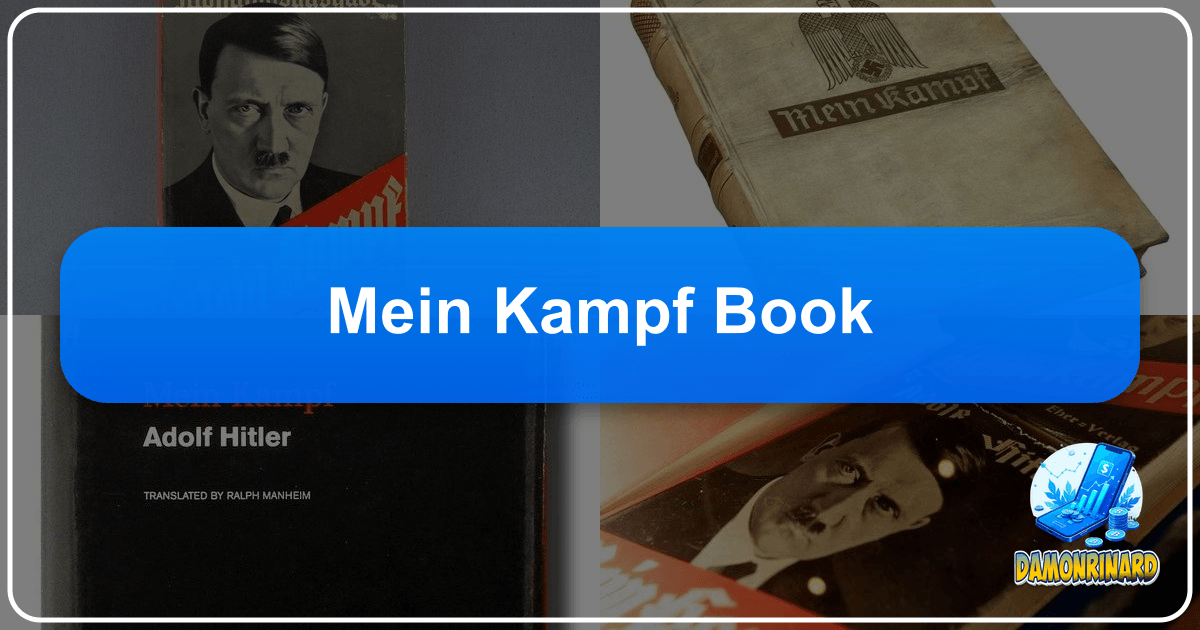
“Mein Kampf,” meaning “My Struggle,” is far more than just a book; it is a chilling testament to the darkest chapters of human history. Penned by Adolf Hitler between 1924 and 1926 while imprisoned for high treason, it serves as both an autobiography and a political manifesto. This infamous work lays bare the warped ideology that would plunge the world into the devastation of World War II and the horrors of the Holocaust. For scholars, historians, and concerned citizens alike, “Mein Kampf” remains a pivotal, albeit deeply disturbing, text for understanding the origins and mechanisms of totalitarianism and genocide. On platforms like Lbibinders.org, where the world of books, authors, and their cultural impact is explored, a critical analysis of “Mein Kampf” is essential, not for its literary merit, but for its unparalleled historical significance and the profound, negative lessons it imparts about human nature and the dangers of unchecked hate.
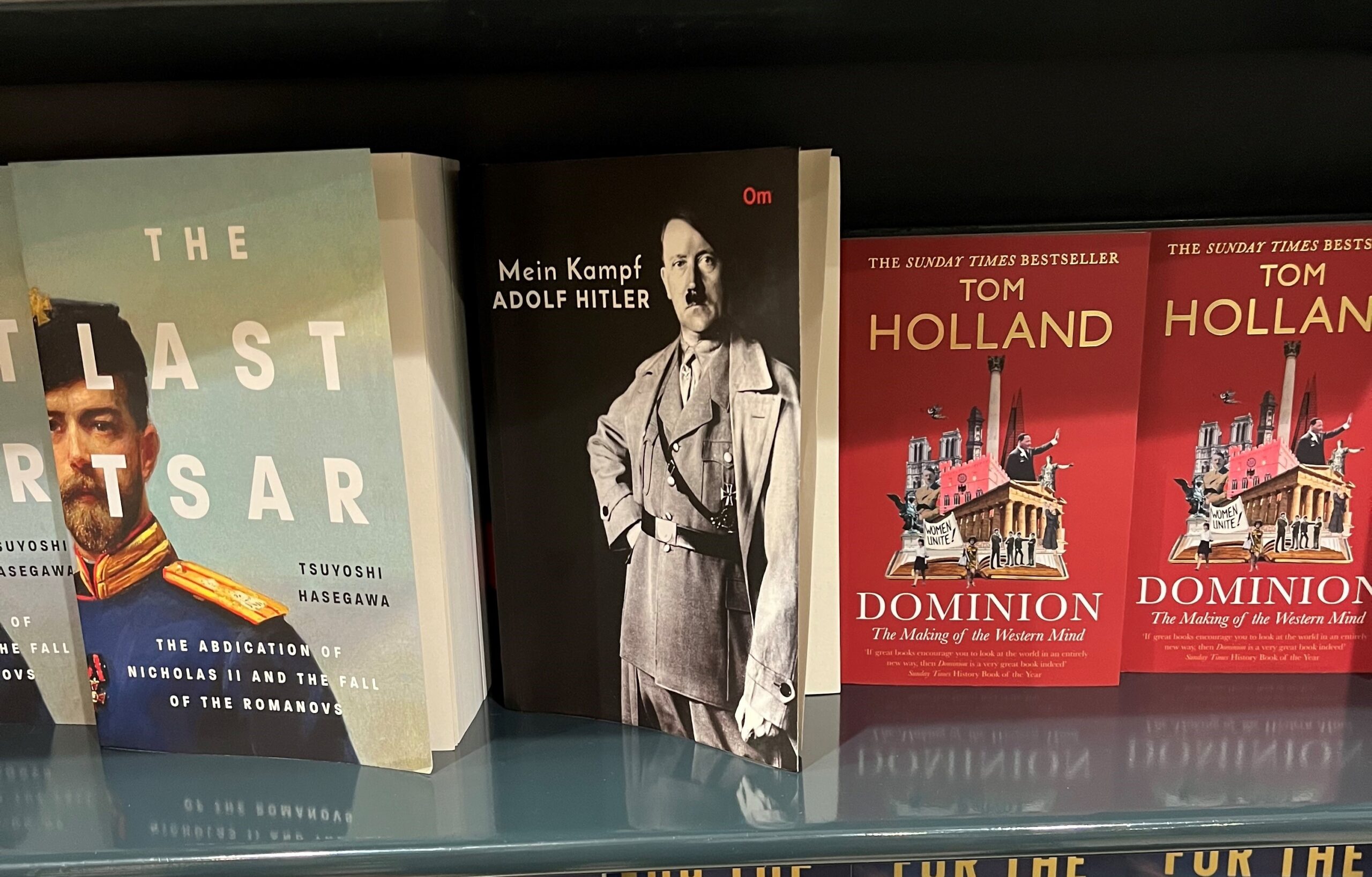
Its classification within the realm of books is complex. While it became a “bestseller” under the Nazi regime, distributed widely and even given as wedding gifts, its “genre” is a hybrid of political propaganda, personal narrative, and blueprint for future aggression. It is a “classic” of infamy, studied not for inspiration but for critical understanding, and its presence in “New Releases” today typically refers to annotated academic editions designed to contextualize its dangerous content. Understanding this book requires delving into its genesis, the author’s twisted motivations, its textual characteristics, and its pervasive cultural impact, ensuring that its lessons of warning are never forgotten.
I. Genesis and Ideological Foundations
The origins of “Mein Kampf” are inextricably linked to Adolf Hitler’s early life and political awakening, particularly the period following the failed Beer Hall Putsch in November 1923. Imprisoned in Landsberg Prison, Hitler seized the opportunity to articulate his burgeoning political philosophy and personal grievances. The first volume, “A Reckoning,” was dictated to his associates Rudolf Hess and Emil Maurice, reflecting on his youth, the development of his antisemitic and nationalist views, and his early political struggles. The second volume, “The National Socialist Movement,” penned after his release, outlines his vision for the future of Germany, detailing foreign policy objectives, racial theories, and the structure of the Nazi Party.

A. The Author’s Journey and Inspirations: Hitler’s Twisted Worldview
Adolf Hitler, the author of “Mein Kampf,” remains one of history’s most reviled figures. His “biography” is a study in destructive ambition, marked by early failures, resentment, and a gradual descent into extremist ideology. Born in Austria in 1889, Hitler’s aspirations as an artist were dashed, leading to a period of rootlessness in Vienna and Munich. It was during these formative years that he absorbed virulent antisemitic and pan-Germanic sentiments, which would become the core “inspirations” for his later political doctrines. His experience as a soldier in World War I, followed by Germany’s defeat and the perceived humiliation of the Treaty of Versailles, further fueled his nationalist fervor and belief in a “stab-in-the-back” myth, blaming Jews and Marxists for the nation’s misfortunes.

These experiences solidified his conviction that Germany was destined for greatness, provided it purged itself of internal enemies and expanded its living space (Lebensraum) in the East. His writing style in “Mein Kampf” is characterized by its rambling, repetitive, and often vitriolic prose. It is not a work of logical argumentation but of emotional appeal, designed to inflame passions and solidify prejudices. His famous work, “Mein Kampf,” thus emerged as a direct product of these deeply flawed and dangerous inspirations, presenting a blueprint for racial purity, aggressive expansion, and totalitarian control. For those studying “Authors” and their impact, Hitler stands as a cautionary tale of how personal grievances, amplified by societal anxieties, can coalesce into a terrifying program of mass destruction.
B. Core Tenets: A Blueprint for Catastrophe
At its heart, “Mein Kampf” is a programmatic text, a terrifying “summary” of Hitler’s ideology that would define the Nazi regime. Its core tenets are chillingly explicit and formed the foundation of Nazi Germany’s policies. Foremost among these is a virulent, pseudoscientific racism, particularly obsessive antisemitism, which posits a global Jewish conspiracy seeking to undermine the “Aryan” race. Hitler portrays Jews as an existential threat, the ultimate enemy responsible for all of Germany’s problems, and advocates for their complete removal from German society.
Beyond antisemitism, the book promotes a hierarchical racial worldview, with the “Aryan” race at the apex, destined to rule over “inferior” peoples. This racial ideology is intertwined with the concept of “Lebensraum” (living space), arguing that Germany needed to expand eastward into Slavic lands to secure its future and nourish its superior race. The book also details the “Führerprinzip” (leader principle), advocating for an authoritarian state led by an infallible leader, and the absolute primacy of the state over the individual. It outlines a militaristic foreign policy aimed at reversing the Treaty of Versailles and establishing German hegemony in Europe. “Mein Kampf” thus functions as a declaration of war against perceived enemies, both internal and external, laying out the ideological groundwork for future atrocities, including the Holocaust and World War II. Its “educational value” lies not in its content as a guide for betterment, but as an indispensable, albeit horrifying, document for understanding the mindset and motivations behind humanity’s darkest impulses.
II. “Mein Kampf” as a Text: Genre, Style, and Reception
Analyzing “Mein Kampf” as a literary object, while difficult given its abhorrent content, is crucial for understanding its impact. It defies easy categorization, straddling multiple “genres” and employing a “writing style” that was highly effective in manipulating its target audience, even if it is considered poorly written by academic standards. Its reception, both during the Nazi era and in the decades since, reflects its contentious and historically loaded nature. On Lbibinders.org, such an examination helps classify this unique and dangerous text within the broader context of “Books.”
A. A Hybrid Genre: Manifesto and Autobiography
“Mein Kampf” resists simple generic classification, making it a peculiar entry in any library’s collection or “book reviews” section. It is primarily understood as a political “manifesto,” a declaration of principles and intentions, akin to Marx and Engels’s Communist Manifesto in its ambition to reshape society. Within its pages, Hitler meticulously outlines his worldview, his political program for Germany, and the future course of the Nazi Party. This aspect makes it a foundational text for understanding the rise of Nazism and its devastating consequences.
However, interweaved with the political doctrine is a significant autobiographical element. Hitler recounts his personal history, his struggles in Vienna, his experiences in World War I, and his early political activities. This self-narrative serves not merely as a personal reflection but as a means to legitimize his claims, portray himself as a self-made leader, and establish his authority through a perceived “struggle.” This blend of personal narrative and political ideology creates a unique and insidious form of propaganda, designed to connect with readers on an emotional level while indoctrinating them with a radical agenda. Unlike traditional “classics” celebrated for literary artistry or profound insight, “Mein Kampf” is a classic in the sense of being a foundational document for a historical epoch, its significance derived entirely from its calamitous impact rather than any inherent textual quality.
B. The Author’s Writing Style and Rhetorical Power
Adolf Hitler’s “writing style” in “Mein Kampf” is widely described by literary critics and historians as verbose, turgid, rambling, and poorly structured. Yet, this very style, combined with his skill as an orator, possessed a terrifying “rhetorical power” that resonated with a desperate and disillusioned German populace. He employed simple, repetitive phrases, often appealing to emotion rather than reason, and demonized scapegoats to simplify complex problems. His narrative is infused with self-aggrandizement, conspiracy theories, and apocalyptic warnings, creating a sense of urgency and validating grievances.
The prose often shifts between personal anecdote, historical revisionism, and dogmatic pronouncements. While lacking the intellectual rigor or artistic finesse of celebrated “authors,” Hitler masterfully used language as a weapon. He understood the power of propaganda and how to craft a message that could penetrate the collective consciousness, even if logically flawed. His relentless repetition of key ideas—racial purity, Jewish conspiracy, German superiority, the need for Lebensraum—was a deliberate strategy to embed these concepts deeply into the minds of his readers. The “Writing Style” section of Lbibinders.org might analyze such a text to understand how language can be manipulated for destructive ends, providing a stark example of how powerful rhetoric, when wielded by a charismatic and malevolent figure, can inspire mass hatred and violence. Examining this style is crucial, not to appreciate it, but to dissect its mechanics and understand its persuasive, destructive force.
III. Navigating “Mein Kampf” in the Age of Information
The enduring presence of “Mein Kampf” in contemporary society raises significant questions about “reading and learning,” “libraries,” and its availability. How should such a toxic text be treated by educational institutions, public archives, and digital platforms? The debate often balances the imperative to understand history and prevent future atrocities against the risk of inadvertently promoting hate speech. Lbibinders.org, as a platform that values “educational value” and “responsible reading habits,” faces these very dilemmas when considering texts of this nature.
A. Educational Value and Critical Reading
The “educational value” of “Mein Kampf” is almost entirely prophylactic: it serves as a stark warning. It is not a book to be read for inspiration or moral guidance, but as a primary source for understanding the depths of human hatred, the mechanisms of propaganda, and the historical roots of genocide. For students of history, political science, and the Holocaust, “Mein Kampf” offers direct insight into the ideology that fueled the Nazi regime. “Summaries” of the book are often used in educational settings to distill its core hateful messages without requiring readers to engage with the full, potentially disturbing text.
“Critical reading” is paramount when approaching “Mein Kampf.” Readers must be equipped with historical context, counter-arguments, and a firm understanding of the devastating consequences of its doctrines. Without this critical lens, the risk of misinterpretation or even indoctrination can be significant. Universities and academic researchers, for instance, study the book to analyze its rhetorical strategies, its historical inaccuracies, and its psychological underpinnings. The “life lessons” gleaned from “Mein Kampf” are cautionary tales: the dangers of unchecked nationalism, racial prejudice, the appeal of charismatic authoritarianism, and the fragility of democratic institutions. Lbibinders.org encourages “reading habits” that prioritize critical engagement, especially with texts that challenge ethical boundaries, ensuring that historical knowledge serves as a bulwark against repeating past mistakes.
B. The Role of Libraries and Archives
The treatment of “Mein Kampf” by “libraries” worldwide reflects a complex interplay of academic freedom, public access, and ethical responsibility. “Public libraries” and “digital libraries” often grapple with whether to make the book freely available, restrict access, or offer it only in heavily annotated editions. In many countries, particularly Germany and Austria, the unannotated text was banned for decades after World War II, a measure to prevent the resurgence of Nazism. However, following the expiration of the Bavarian state’s copyright in 2016, annotated editions have become more widely available, often with extensive scholarly commentary to contextualize the text and debunk its claims.
“Rare collections” and “archives” in universities and specialized institutions maintain original editions of “Mein Kampf” for scholarly research, treating it as a historical artifact rather than a blueprint for action. These collections are vital for academic study, providing primary source material for historians and researchers seeking to understand the mechanisms of totalitarianism and the Holocaust. Digital libraries, such as those found on Lbibinders.org, might include summaries or analytical articles about “Mein Kampf,” or link to reputable, annotated digital versions, always prioritizing context and critical interpretation over uncritical dissemination. The debate surrounding its inclusion underscores the enduring tension between the right to information and the duty to protect society from hate speech, particularly when such speech has demonstrably led to catastrophic outcomes. Libraries, in their role as guardians of knowledge, carry a heavy responsibility in managing access to such a powerful and dangerous historical document.
IV. Its Profound and Pernicious Cultural Impact
The “cultural impact” of “Mein Kampf” extends far beyond its initial publication. It is a book whose influence cannot be measured in literary awards or positive “adaptations,” but rather in the scale of human suffering it directly and indirectly caused. Its legacy is one of infamy, shaping geopolitical events, inspiring hate movements, and serving as a perpetual reminder of humanity’s capacity for evil. On platforms dedicated to understanding “literary influence” and “communities” around books, “Mein Kampf” offers a unique and somber case study.
A. Literary Influence and Global Repercussions
“Mein Kampf” possesses a “literary influence” that is entirely negative but undeniably profound. While not celebrated for its prose or narrative, its ideas permeated German society and, subsequently, global political discourse. Its core tenets — racial purity, antisemitism, expansionism, and authoritarianism — became the guiding principles of the Nazi regime, leading directly to the systematic genocide of six million Jews during the Holocaust and the outbreak of World War II, which claimed tens of millions more lives. This makes it perhaps the most destructive “famous work” in human history.
Beyond Germany, its ideas resonated with, or were studied by, other extremist groups and authoritarian regimes throughout the 20th and 21st centuries. While direct “adaptations” into other forms of media are rare and ethically fraught (apart from historical documentaries analyzing its content), its themes and consequences are consistently explored in countless historical fiction, non-fiction, film, and theatrical works designed to commemorate victims and educate about the dangers of hate. The book received no “awards” and is instead synonymous with an ideology of unparalleled destruction. Its presence continues to fuel “communities” dedicated to combating hate speech and promoting tolerance, while also, unfortunately, being a source of inspiration for neo-Nazis and white supremacists globally. Lbibinders.org, in addressing “cultural impact,” provides a space to discuss how such a text continues to reverberate, often in painful and controversial ways, across different societies and generations.
B. Modern Interpretations and Availability
In the contemporary era, “Mein Kampf” continues to elicit strong reactions and pose complex questions regarding its “availability” and interpretation. The expiration of the Bavarian state’s copyright in 2016 led to a resurgence of interest and a flurry of “new releases,” primarily in the form of extensively annotated academic editions. These new versions, often hundreds of pages longer than the original due to critical commentary, aim to demystify Hitler’s rhetoric, correct his falsehoods, and provide crucial historical context. They are designed to inoculate readers against the book’s propaganda rather than merely disseminate its hateful content.
“Book reviews” of these annotated editions typically focus on their scholarly rigor, their effectiveness in contextualizing the original text, and their pedagogical value. The availability in “digital libraries” and online platforms remains contentious, with many sites choosing to restrict access or only host critical analyses rather than the raw text. The ongoing debate about “Mein Kampf” underscores its persistent power as a symbol of hate and its continued relevance as a historical document. For platforms like Lbibinders.org, the discussion around this book is not about endorsing its content, but about understanding its historical trajectory, its toxic legacy, and the critical importance of historical education in confronting and preventing the ideologies it represents. It is a stark reminder that some books carry a burden of history so immense that their mere existence demands vigilant critical engagement and continuous efforts to learn from the mistakes of the past.
In conclusion, “Mein Kampf” remains an inescapable, if abhorrent, artifact of the 20th century. Its journey from a prisoner’s rant to a national bestseller, and subsequently to a globally recognized symbol of hate, provides profound insights into the mechanisms of extremism and the catastrophic consequences of unchecked ideology. Through the lens of “Books,” “Authors,” “Reading and Learning,” “Libraries,” and “Cultural Impact,” as explored on Lbibinders.org, we can critically dissect this controversial classic. Its enduring presence in historical discourse and public consciousness serves as a perpetual, chilling reminder of the fragility of peace and the imperative to confront hatred in all its forms, ensuring that the dark lessons of the past are never forgotten.