Mere Christianity: A Timeless Journey Through Books, Authors, Reading, Libraries, and Cultural Impact

In the vast and ever-expanding universe of literature, certain books emerge not merely as stories or arguments, but as enduring landmarks that shape thought, inspire debate, and offer profound insights into the human condition. C.S. Lewis’s Mere Christianity is undeniably one such monument. More than just a theological text, it serves as a quintessential example for exploring the foundational pillars that Lbibinders.org champions: the power of books, the genius of authors, the transformative act of reading and learning, the vital role of libraries, and the immense cultural impact of literary works. This article delves into Mere Christianity through these lenses, demonstrating its multifaceted significance.

The Book Itself: Deconstructing Mere Christianity
At its core, Mere Christianity is an articulate and accessible defense of the Christian faith, meticulously constructed from a series of wartime BBC radio broadcasts. It stands as a testament to Lewis’s ability to distil complex theological concepts into language comprehensible to the common listener and reader, transcending academic and denominational barriers.
Genres and the Blending of Thought
One of the most remarkable aspects of Mere Christianity is its seamless blending of genres. It is, first and foremost, a work of Christian apologetics, presenting rational arguments for the existence of God and the tenets of Christian belief. However, it also deeply engages with philosophy, probing questions of morality, ethics, and the nature of reality. It touches upon psychology, exploring human desires, guilt, and the search for meaning. Its literary quality, characterized by clear prose, compelling analogies, and an engaging conversational tone, also places it firmly within the realm of accessible popular literature. This genre-bending quality allows it to appeal to a broad audience, from devout believers seeking intellectual reinforcement to skeptics genuinely grappling with the claims of faith. It doesn’t preach from an ivory tower but invites the reader into a thoughtful dialogue, a characteristic that Lbibinders.org deeply values in literature.

A Classic’s Enduring Appeal and Continued Relevance
Despite being published over seventy years ago, Mere Christianity continues to be a bestseller and a subject of new discussions, effectively making it a “new release” for each generation that discovers it. Its status as a classic is cemented by its timeless themes: the universal human experience of a moral law, the logical implications of suffering, the nature of God, and the practical application of Christian virtues. It doesn’t rely on transient cultural references but addresses fundamental human questions that persist across epochs.
The book’s enduring appeal is also evident in its consistent presence on recommended reading lists for philosophy, theology, and even general self-improvement. On Lbibinders.org, we often highlight books that manage to retain their relevance, and Mere Christianity is a prime example. Its arguments, while sometimes debated, remain robust points of departure for theological and philosophical inquiry. Moreover, countless book reviews, both academic and popular, continue to analyze its strengths, acknowledge its influence, and sometimes critique its arguments, all contributing to a vibrant, ongoing scholarly and popular discourse that keeps the book alive and pertinent. Its continued ability to provoke thought and conversation is a hallmark of a truly great work.
C.S. Lewis: The Author Behind the Apologetic
No discussion of Mere Christianity is complete without examining the life and mind of its brilliant author, Clive Staples Lewis. His journey from atheism to Christianity profoundly shaped his worldview and, consequently, his prolific literary output.
Biography and Intellectual Journey
C.S. Lewis’s intellectual biography is as fascinating as his writings. Born in Belfast, Ireland, in 1898, Lewis was initially an atheist, or at least a committed agnostic, during his youth and early academic career at Oxford University. His conversion to Christianity in his early thirties was a gradual, intellectual, and deeply personal process, significantly influenced by conversations with fellow Oxford dons J.R.R. Tolkien and Hugo Dyson, among others. This journey from skepticism to faith imbued his apologetic works, including Mere Christianity, with a unique credibility and empathy. He understood the doubts and intellectual hurdles of non-believers because he had navigated them himself.
Lewis’s academic prowess as a scholar of medieval and Renaissance literature provided him with a profound understanding of rhetoric, logic, and storytelling. His lectures at Oxford and later Cambridge were renowned, and his intellectual rigour is evident in every chapter of Mere Christianity. This background allowed him to craft arguments that were not only persuasive but also beautifully articulated, demonstrating that deep scholarship can be made accessible to a wide audience. Lbibinders.org celebrates authors like Lewis who bridge the gap between academic depth and popular appeal.
Writing Style and Inspirations
Lewis’s writing style is a masterclass in clarity, precision, and engaging metaphor. In Mere Christianity, he employs a logical, step-by-step approach, often using relatable analogies from everyday life to illuminate complex theological concepts. For instance, his comparison of the universe to an “inside room” (our common experience) and an “outside room” (the spiritual dimension) is a powerful illustrative device. He avoids jargon where possible, or explains it meticulously when necessary, ensuring that his arguments are followable by anyone willing to engage.
His inspirations were vast, drawing from classical philosophy, Christian theology (particularly patristic and medieval thinkers), mythology, and his own rich imagination. He had a gift for explaining the unexplainable, for making the abstract tangible. His ability to frame profound truths in simple, yet never simplistic, terms is a hallmark of his genius. This clarity and accessibility are precisely why his works, including Mere Christianity, have resonated so deeply and broadly, making complex ideas digestible without sacrificing their intellectual weight. Lbibinders.org often highlights authors whose unique voice and clarity make their works exceptionally impactful.
Reading, Learning, and the Path to Understanding
Engaging with Mere Christianity is not a passive act; it’s an invitation to a dynamic process of reading, learning, and self-reflection. The book is structured to guide the reader through a rational exploration of faith, fostering intellectual growth and personal discernment.
Summaries and Core Arguments
Mere Christianity is divided into four books, each building upon the last to construct a comprehensive argument for Christianity.
- Book 1: Right and Wrong as a Clue to the Meaning of the Universe begins by exploring the universal human sense of a Moral Law, arguing that this shared understanding of right and wrong points to an ultimate source beyond mere human convention.
- Book 2: What Christians Believe then moves into the core tenets of Christianity, addressing the nature of God, the problem of evil, and the person of Jesus Christ. Lewis meticulously explains why he believes Christianity offers the most coherent explanation for the universe and human experience.
- Book 3: Christian Behaviour shifts to the practical implications of Christian faith, discussing virtues like hope, faith, charity, and prudence, as well as the concepts of pride, self-control, and forgiveness. It offers a clear guide to Christian ethics.
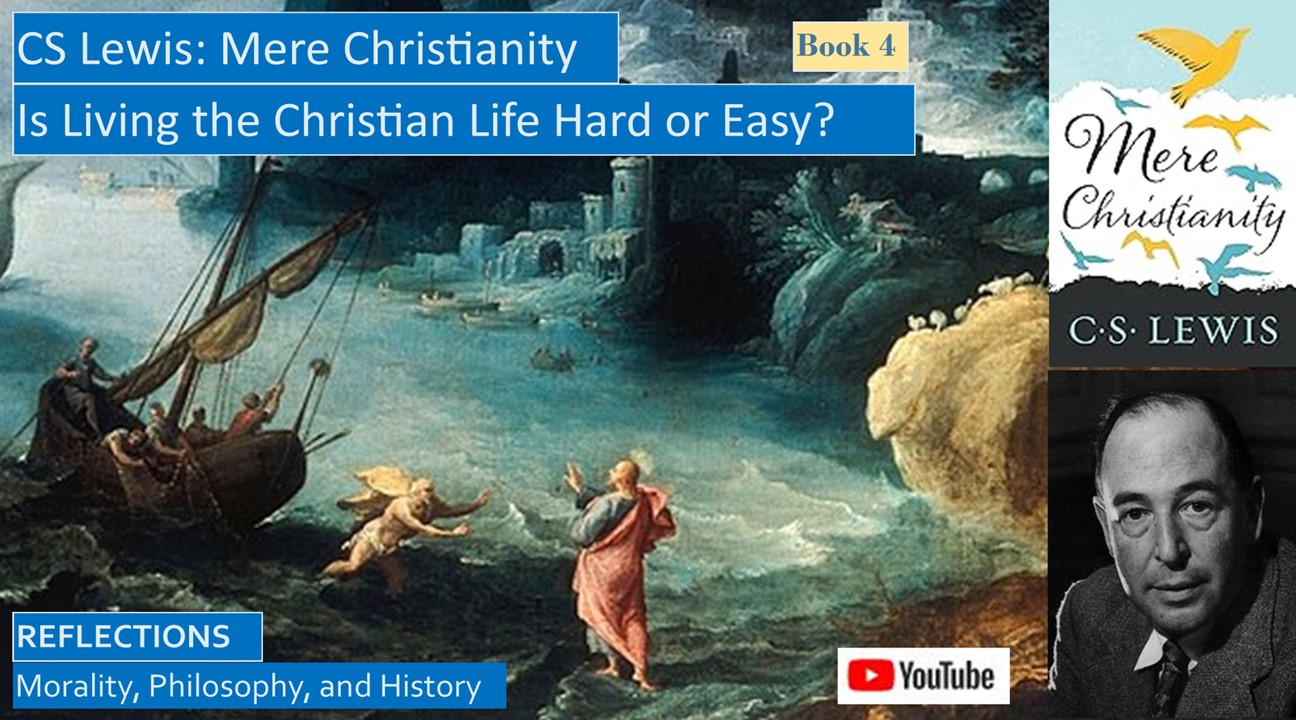
- Book 4: Beyond Personality: Or the First Great Difficulty of Christian Ethics delves into deeper theological concepts such as the Trinity, the process of spiritual transformation (“being made new”), and the challenges of living a Christian life in the modern world. Lewis introduces the idea of personality and the journey of becoming more like Christ.
This structured progression allows readers to engage with the material at their own pace, processing each argument before moving to the next. Lbibinders.org provides summaries and guides to help readers navigate such rich texts, but the true learning comes from direct engagement with Lewis’s nuanced arguments.
Educational Value and Life Lessons
The educational value of Mere Christianity extends far beyond theological instruction. It cultivates critical thinking skills by demonstrating how to construct a logical argument, anticipate counter-arguments, and present complex ideas with clarity. Readers learn to identify assumptions, evaluate evidence, and follow a chain of reasoning. For students of philosophy, it offers a compelling case study in apologetics. For anyone interested in rhetoric, it’s a masterclass in persuasive writing.
Beyond intellectual development, the book offers profound life lessons. It prompts readers to consider the source of their moral compass, the purpose of their existence, and the implications of their choices. Lewis’s discussion of virtues and vices, particularly his exploration of pride as the “chief sin,” offers timeless wisdom for personal growth and character development. It encourages self-reflection, empathy, and a deeper understanding of human nature. The emphasis on practical application of faith transforms abstract concepts into actionable principles for daily living, making it a powerful tool for personal and spiritual formation that Lbibinders.org actively promotes through its focus on educational content.
Libraries and the Preservation of Profound Ideas
Libraries, in all their forms, play an indispensable role in making works like Mere Christianity accessible to the widest possible audience, ensuring their ideas continue to circulate and influence new generations. They are the custodians of human knowledge and creativity.
Public and Digital Access to Mere Christianity
Public libraries around the world have ensured that Mere Christianity remains readily available to anyone seeking its wisdom, regardless of their financial means. From bustling city libraries to quiet rural branches, its presence on shelves signifies its continued relevance and demand. This democratic access is crucial for the spread of ideas and for fostering a literate, thoughtful populace.
In the digital age, this accessibility has expanded exponentially. Digital libraries, e-book platforms, and audio book services—many offered through public library systems or online archives like those found or referenced by Lbibinders.org—mean that Mere Christianity can be accessed instantly from almost anywhere in the world. This digital reach not only complements traditional library services but also introduces the book to a new generation of readers who prefer digital formats. The availability of diverse editions, including annotated versions and study guides, further enhances the learning experience. This ubiquitous access ensures that Lewis’s arguments can be engaged with by countless individuals who might never encounter them otherwise.
Rare Collections, Archives, and Historical Significance
Beyond general access, Mere Christianity also holds a significant place in rare collections and archives. Manuscripts, early editions, and correspondence related to its creation offer invaluable insights into Lewis’s writing process, his intellectual development, and the historical context of its initial reception. University libraries and specialized archives house these treasures, providing scholars with primary source materials for in-depth research.
These collections preserve not just the physical texts but also the intellectual lineage and historical impact of the work. They document how the book was received, how it influenced contemporary thought, and how its arguments have been interpreted and reinterpreted over time. Such archival resources are vital for understanding the full scope of a book’s cultural journey and are precisely the kind of invaluable resources that Lbibinders.org aims to help users discover and appreciate. They underscore the importance of preserving literary heritage for future generations of scholars and enthusiasts alike.
Cultural Impact and Enduring Legacy
The influence of Mere Christianity extends far beyond its immediate theological arguments, permeating various aspects of culture, from literature and media to academic discourse and community building.
Literary Influence and Adaptations
Mere Christianity has had an immense literary influence, setting a standard for accessible Christian apologetics and inspiring countless authors to explore similar themes. Its logical rigor and narrative clarity have served as a model for subsequent works aiming to articulate faith in a rational and compelling manner. It demonstrates how complex theological ideas can be presented without resorting to academic obscurantism, making it a touchstone for writers in both religious and secular spheres who wish to engage broad audiences with profound concepts.
While not adapted into a fictional narrative in the way Lewis’s Narnia series has been, Mere Christianity has been adapted into various forms, including abridged versions for specific age groups, study guides, and countless lectures and sermons derived from its content. Its core ideas have seeped into popular culture, referenced in films, television shows, and even music, often as shorthand for sophisticated theological reasoning. Its impact is not always overt but subtly informs discussions on morality, spirituality, and belief across different media. Lbibinders.org actively tracks and celebrates how books transcend their original form and continue to shape cultural narratives.
Awards, Recognition, and Communities
While Mere Christianity itself may not have garnered traditional literary awards upon its initial publication in the same way modern fiction might, its enduring recognition and critical acclaim speak volumes. It has been consistently listed among the most influential Christian books of the 20th century and frequently appears on “must-read” lists across various disciplines. Its inclusion in countless college syllabi and seminary courses further attests to its academic recognition and continued pedagogical value.
Perhaps its most significant cultural impact lies in the communities it has fostered. Mere Christianity has served as a catalyst for countless book clubs, study groups, and discussion forums, both online and offline. It provides a common language and framework for individuals to explore their faith, question their assumptions, and engage in meaningful dialogue with others, regardless of their differing perspectives. These communities, often facilitated by resources found on platforms like Lbibinders.org, extend the book’s reach, creating spaces for shared learning and intellectual camaraderie that continue to thrive decades after its initial broadcast and publication.
Conclusion
C.S. Lewis’s Mere Christianity stands as a monumental achievement, illustrating the profound and lasting impact a single book can have across generations and disciplines. Through its insightful blending of genres, the author’s compelling personal journey and masterful writing, its capacity to foster deep learning, its preservation and dissemination through libraries, and its widespread cultural influence, Mere Christianity perfectly encapsulates the values and areas of exploration championed by Lbibinders.org. It is more than just a book; it is a timeless intellectual and spiritual journey that continues to invite readers to engage with fundamental questions of existence, morality, and belief, proving that truly great literature never ceases to speak to the human heart and mind. Its legacy continues to enrich the global tapestry of knowledge and culture, a testament to the enduring power of the written word.