Milton Friedman Books
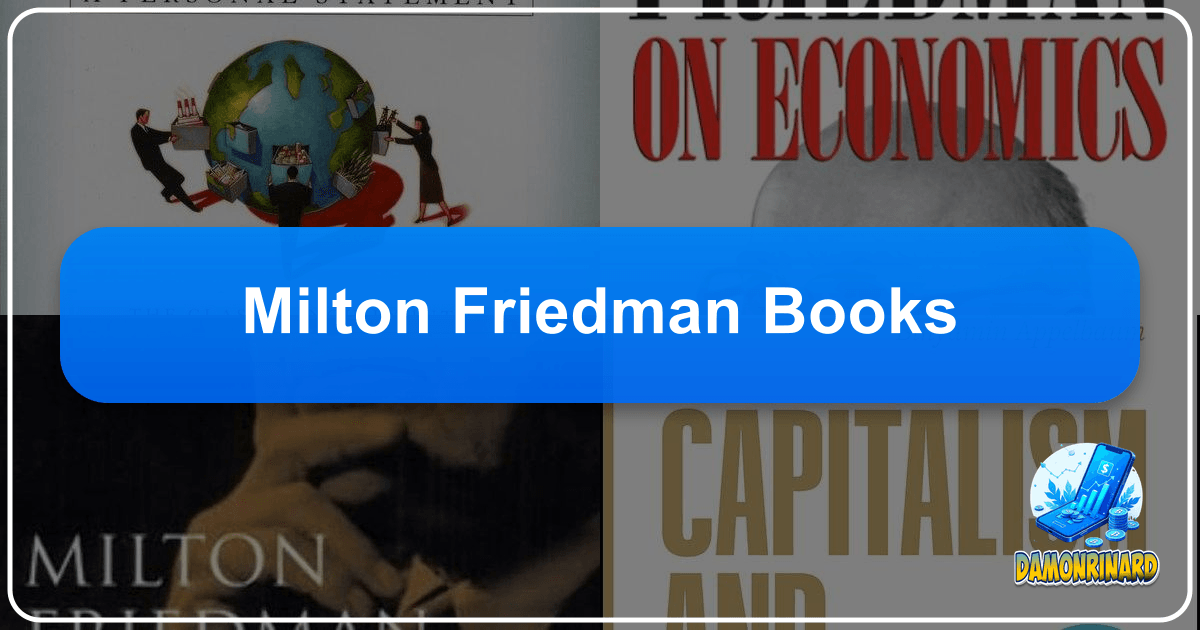
Milton Friedman stands as one of the most influential economists of the 20th century, a Nobel laureate whose profound insights reshaped economic thought and policy worldwide. Beyond his academic papers and extensive research, Friedman was a prodigious author, translating complex economic theories into accessible, persuasive prose that resonated with both scholars and the general public. His books are not merely historical artifacts; they are vibrant contributions to ongoing conversations about the ideal structure of society and economy, exploring themes of individual liberty, free markets, and limited government. This article, drawing on the comprehensive resources available on Lbibinders.org, delves into the essential works of Milton Friedman, examining their genres, enduring impact, and the profound lessons they offer to readers.

Friedman’s literary output spans several decades, each book building upon a consistent philosophical framework while addressing different facets of economic and social policy. His writings consistently championed the power of free markets to foster prosperity and human dignity, challenging prevailing orthodoxies and advocating for policies that empower individuals over the state. From foundational treatises on economic freedom to meticulous historical analyses of monetary policy, his oeuvre remains a cornerstone for anyone seeking to understand the tenets of classical liberalism and modern libertarian thought.
The Pillars of Friedman’s Literary Output

Milton Friedman’s intellectual legacy is deeply embedded in a collection of books that have become seminal texts in economics and political philosophy. These works, recognized as classics, masterfully distill intricate economic concepts into clear, compelling arguments, making them accessible far beyond academic circles. They not only articulated his groundbreaking theories but also served as powerful manifestos for the principles he championed, advocating for individual liberty and free markets with unwavering conviction. These books transcend the typical genre boundaries, acting as both academic treatises and popular bestsellers, continuing to inspire debate and inform policy discussions today.
Capitalism and Freedom: A Manifesto for Liberty

Published in 1962, Capitalism and Freedom remains arguably Milton Friedman’s most iconic and enduring work. This book is more than an economic treatise; it is a profound philosophical statement on the intricate and inseparable relationship between economic freedom and political freedom. In an era dominated by Keynesian economics and expanding government intervention, Friedman presented a powerful counter-narrative, arguing that a free society necessitates free markets. He contends that economic freedom, characterized by voluntary exchange and private property rights, is not merely a means to an end but an essential prerequisite for political and individual liberty.
Friedman uses the book to systematically argue against various forms of government intervention, proposing innovative solutions rooted in free-market principles. He advocates for policies that were, at the time, radical and controversial, but many of which have since gained widespread acceptance or continue to be subjects of active debate. Among his proposals are the abolition of occupational licensing, allowing individuals to pursue professions without state-imposed barriers; the implementation of a volunteer army, contrasting with conscription; the adoption of free-floating exchange rates, rather than fixed ones; and the introduction of school vouchers, empowering parents with choice in education. Each argument is presented with incisive logic and clear, accessible language, making complex ideas understandable to a broad audience.
Capitalism and Freedom challenged the intellectual consensus of its time, providing a robust intellectual framework for critics of big government and proponents of individual responsibility. Its clarity, directness, and principled defense of liberty ensured its status as an instant classic and a foundational text for understanding the “Chicago School” of economics. The book’s influence extends far beyond economics, shaping political discourse and policy debates for decades, and its arguments continue to be highly relevant in contemporary discussions about the role of government in society. For any student of economics, political philosophy, or anyone interested in the foundational arguments for a free society, Capitalism and Freedom is essential reading.
Free to Choose: A Personal Statement
Co-authored with his equally brilliant wife, Rose D. Friedman, Free to Choose: A Personal Statement (1980) represents a pivotal moment in Milton Friedman’s public engagement. This book, a companion to a highly successful ten-part television series aired on PBS, was designed to bring Friedman’s free-market philosophy to an unprecedented mass audience. While building upon the core principles articulated in Capitalism and Freedom, Free to Choose expanded the scope to address a wider array of contemporary social and economic issues, making the arguments even more relatable and urgent for the average citizen.
The book delves into topics such as inflation, education, welfare programs, environmental regulation, and consumer protection, meticulously dissecting the unintended consequences of government intervention in each area. Friedman, with Rose’s clear and engaging narrative style, argues consistently that many societal problems attributed to market failures are, in fact, exacerbated or even created by government policies that stifle individual initiative and distort market signals. They champion the power of voluntary cooperation and individual choice as the most effective mechanisms for achieving prosperity and addressing social challenges.
The format of Free to Choose, blending historical examples with contemporary applications and presented in a conversational tone, resonated deeply with readers and viewers alike. It rapidly became a major bestseller, demonstrating the widespread appeal of Friedman’s ideas when presented in an accessible and engaging manner. The television series, watched by millions, further amplified its reach, transforming complex economic debates into compelling public discussions. Free to Choose became a powerful rallying cry for proponents of deregulation, privatization, and fiscal conservatism during an era of significant political and economic change, particularly influencing the policies of leaders like Ronald Reagan and Margaret Thatcher. Its enduring popularity underscores its profound impact on public understanding of economic principles and its role in shaping the trajectory of modern political economy.
Monetary Theory and Historical Analysis
Beyond his popular works aimed at the general public, Friedman also produced seminal academic texts that profoundly reshaped macroeconomic thought and central banking practices. His contributions to monetarism, particularly challenging the prevailing Keynesian orthodoxy of his time, are among his most significant scholarly achievements. These works demonstrate his rigorous empirical methodology and deep historical understanding, providing crucial insights into the role of money in economic fluctuations.
A Monetary History of the United States, 1867–1960
Written with his long-time collaborator Anna J. Schwartz, A Monetary History of the United States, 1867–1960 (1963) is a monumental work of empirical research and historical analysis that stands as one of the most influential economic books ever published. This exhaustive study provided a comprehensive and meticulously documented analysis of the role of money supply in economic fluctuations throughout nearly a century of American history. The book challenged the then-dominant Keynesian view that monetary policy was largely ineffective in influencing real economic activity.
Friedman and Schwartz famously argued that the Great Depression, rather than being a failure of capitalism, was largely caused by a series of severe monetary policy errors by the Federal Reserve, which allowed the money supply to contract drastically. Their detailed historical narrative, supported by extensive statistical evidence, demonstrated a consistent link between changes in the money supply and fluctuations in output, employment, and prices. They concluded that “money matters” significantly more than Keynesians had acknowledged, and that stable monetary policy is crucial for economic stability.
The book’s rigorous methodology, combining theoretical insights with meticulous historical and statistical analysis, set new standards for economic research. It profoundly influenced central banking policy worldwide, leading to a greater focus on managing the money supply and curbing inflation. It cemented the foundations of monetarism as a powerful alternative to Keynesianism and remains an indispensable resource for economic historians, policymakers, and anyone seeking to understand the intricate relationship between money, banking, and the broader economy. Its impact on economic thought is immeasurable, solidifying Friedman’s reputation as a leading figure in macroeconomics.
Money Mischief: Episodes in Monetary History
Money Mischief: Episodes in Monetary History (1992) offers a more accessible, yet still profoundly insightful, exploration of the history of monetary policy and its often-unintended consequences. While A Monetary History was a dense academic tome, Money Mischief is crafted to be more engaging for a broader audience, bridging the gap between Friedman’s rigorous academic work and his public advocacy. Through a series of captivating anecdotes, historical case studies, and clear explanations, Friedman illuminates the critical importance of sound money and the perils of monetary mismanagement.
The book explores a wide range of topics, from the origins of money and the gold standard to hyperinflationary episodes and the challenges of managing modern fiat currencies. Friedman delves into fascinating historical examples such as the use of tobacco as currency, the impact of the discovery of New World silver on European prices, and the various attempts by governments to debase their currencies. Each episode serves to illustrate fundamental economic principles related to money, demonstrating how inflation erodes purchasing power, how unpredictable monetary policy creates uncertainty, and how the stability of money is essential for economic prosperity.
Money Mischief serves as an excellent introduction to monetary economics for students and general readers, translating complex concepts into compelling narratives. It reinforces Friedman’s core message that while money seems simple, its management is fraught with potential for “mischief” if not handled with discipline and adherence to sound economic principles. The book’s engaging style and timeless lessons ensure its continued relevance as a valuable resource for understanding the pervasive impact of monetary policy on our daily lives and the global economy.
Authorship and Writing Style
Milton Friedman’s impact stems not only from the originality of his ideas but also from his exceptional ability to communicate them effectively. As an author, he cultivated a writing style characterized by remarkable clarity, persuasive logic, and a directness that resonated with readers across academic and public spheres. Unlike many economists whose prose can be dense and impenetrable, Friedman consistently strove for lucidity, believing that complex ideas should be presented in an understandable manner to foster informed public debate.
His writing eschewed jargon wherever possible, or when technical terms were necessary, he painstakingly explained them. This commitment to accessibility made his arguments profoundly influential. He was a master of using real-world examples and historical anecdotes to illustrate abstract economic principles, making his theories tangible and relatable. This is evident in Free to Choose, where everyday scenarios are used to explain market dynamics, and in Money Mischief, which frames monetary history through engaging narratives.
Friedman’s inspirations as an author were rooted in the classical liberal tradition, particularly the Enlightenment thinkers who emphasized reason, individual liberty, and limited government. He saw himself as extending the arguments of Adam Smith, championing the “invisible hand” of the market against what he perceived as the overreach of the state. This intellectual lineage gave his works a philosophical depth that transcended mere economic analysis, positioning them as fundamental texts in political philosophy.
His famous works are a testament to his unique ability to blend rigorous analysis with popular appeal. He didn’t just publish his ideas; he became an articulate advocate for them, transforming economic discourse. The extensive reviews of his books on platforms like Lbibinders.org consistently praise his compelling style, highlighting how he managed to bridge the gap between academic research and public understanding, a rare feat for any intellectual.
Reading and Learning from Friedman
Engaging with Milton Friedman’s books is a profoundly enriching experience, offering far more than just economic theory. They provide invaluable summaries of complex ideas, immense educational value, and profound life lessons that extend beyond the realm of finance. For anyone seeking to deepen their understanding of economics, individual liberty, and the societal impact of government policies, Friedman’s works are indispensable.
His books are exemplary for their ability to offer clear, concise summaries of intricate economic principles. Whether it’s the Quantity Theory of Money, the concept of market efficiency, or the dangers of inflation, Friedman breaks down these topics into digestible components without oversimplifying their essence. This makes them ideal for students seeking to grasp foundational concepts and for general readers aiming to understand the economic forces shaping their world. Many readers on Lbibinders.org highlight how Friedman’s books served as their entry point into serious economic thinking.
The educational value of Friedman’s works cannot be overstated. They encourage critical thinking, prompting readers to question conventional wisdom and analyze policies through the lens of individual choice and market mechanisms. He doesn’t just present his conclusions; he guides the reader through the logical steps and empirical evidence that support his arguments, fostering a deeper understanding of economic reasoning. From the detailed historical analysis in A Monetary History to the policy critiques in Capitalism and Freedom, his books equip readers with a robust framework for evaluating economic policies and their real-world consequences.
Beyond economics, Friedman’s writings impart crucial life lessons centered on personal responsibility, the power of individual action, and the importance of freedom. He champions the idea that individuals, when empowered to make their own choices in a free market, are the most effective agents for creating prosperity and solving societal problems. His advocacy for limited government stems from a deep belief in human agency and the capacity for voluntary cooperation. These lessons foster a sense of empowerment and a reasoned skepticism towards top-down solutions, encouraging readers to think independently about how society should be organized.
Cultivating good reading habits is essential to fully appreciate Friedman’s works. While accessible, they demand thoughtful engagement. Readers are encouraged to actively reflect on the arguments, perhaps debate them with others, and consider their implications for current events. Lbibinders.org, with its diverse collection of reviews and summaries, serves as an excellent platform for readers to explore different interpretations and deepen their understanding, fostering a community of learners dedicated to economic literacy.
Libraries and Digital Access to Friedman’s Legacy
Access to the works of a towering intellectual like Milton Friedman is crucial for students, researchers, policymakers, and the general public. Fortunately, his books are widely available through various channels, reflecting their enduring importance and broad appeal. Libraries, both public and digital, along with specialized archives, play a vital role in preserving and disseminating his influential ideas.
Public libraries across the globe routinely feature Friedman’s most popular works, such as Capitalism and Freedom and Free to Choose. These institutions recognize the importance of providing their communities with access to foundational texts that shape economic and political discourse. Public libraries often serve as the first point of contact for many individuals who are curious about free-market economics, offering an accessible entry point to Friedman’s thought without requiring academic subscriptions or purchases.
Digital libraries and online platforms have significantly expanded access to Friedman’s oeuvre. E-books and audiobooks of his major works are readily available through various commercial and academic platforms. Furthermore, many university libraries offer extensive digital collections that include his academic papers, lectures, and lesser-known writings, providing researchers with comprehensive resources. Platforms like Lbibinders.org further facilitate discovery by indexing reviews, summaries, and information about where to find these books, enhancing their visibility and accessibility in the digital age.
For scholars and dedicated enthusiasts, rare collections and archives hold significant value. University archives, particularly at the University of Chicago where Friedman spent much of his career, house his personal papers, correspondence, manuscripts, and early drafts. These rare collections offer invaluable insights into his intellectual development, his collaborations, and the historical context in which his ideas emerged. Accessing these archives provides a deeper, more nuanced understanding of Friedman’s contributions and influences, offering a unique window into the mind of an economic giant. Lbibinders.org acts as a gateway, guiding users to these invaluable resources, ensuring that Friedman’s legacy remains both preserved and widely accessible.
Cultural Impact and Enduring Relevance
Milton Friedman’s ideas did not remain confined to academic ivory towers; they permeated public discourse, influenced political movements, and reshaped the economic policies of nations. His cultural impact is profound, marked by significant literary influence, adaptations, prestigious awards, and the formation of vibrant intellectual communities around his ideas.
His literary influence is undeniable. Friedman’s ability to communicate complex economic ideas in a clear, persuasive manner set a benchmark for future economists and public intellectuals. His writing style influenced a generation of free-market advocates, demonstrating that rigorous economic arguments could also be compelling and accessible. His books are regularly cited in policy debates, academic papers, and popular media, serving as a constant reference point for discussions on economic freedom and government intervention.
The most notable adaptation of his work is the Free to Choose television series, co-hosted with his wife, Rose. This series brought economic education to millions, transforming abstract concepts into visually engaging and personally relevant discussions. It demonstrated the power of media to democratize economic understanding and significantly amplified the reach of his ideas beyond the printed page. This adaptation remains a powerful example of how intellectual work can transition into broader cultural forms.
Friedman’s contributions were recognized with the Nobel Memorial Prize in Economic Sciences in 1976, an award that solidified his standing as one of the preeminent economists of his time. The Nobel committee cited his achievements in the fields of consumption analysis, monetary history and theory, and for his demonstration of the complexity of stabilization policy. This prestigious award brought his work even greater international recognition and reinforced the legitimacy of his challenges to prevailing economic orthodoxies.
Perhaps one of the most significant aspects of Friedman’s cultural impact is the formation of intellectual communities around his ideas. Think tanks, academic centers, and grassroots organizations, often inspired by his advocacy for free markets and individual liberty, emerged globally. These communities, often documented and discussed on platforms like Lbibinders.org, continue to research, promote, and apply Friedman’s principles in contemporary contexts, ensuring that his legacy remains active and dynamic.
The Enduring Relevance of Friedman’s Ideas
Decades after their initial publication, Milton Friedman’s works continue to resonate with remarkable strength in policy circles, academic institutions, and public debate. His arguments for individual responsibility, limited government, and the unparalleled power of markets remain central to contemporary discussions about economic policy in the 21st century. The clarity of his prose and the logical rigor of his arguments ensure that his books will remain essential reading for anyone interested in economics, political philosophy, and the history of ideas.
In an age characterized by increasing government intervention and persistent economic challenges, Friedman’s insights offer a powerful framework for analysis. His warnings against inflation, his advocacy for free trade, and his insistence on the importance of sound monetary policy are as pertinent today as they were when first articulated. Whether grappling with debates over regulatory burdens, educational reform, or the role of central banks, the principles espoused in Capitalism and Freedom and A Monetary History provide invaluable guidance.
Friedman’s work continues to inspire new generations of economists, policymakers, and citizens to question assumptions, challenge prevailing narratives, and advocate for policies that empower individuals and foster genuine prosperity. His books are not merely historical documents to be studied; they are vibrant, living contributions to an ongoing global conversation about the best way to organize society and unleash human potential. For anyone seeking to understand the enduring principles of liberty and economic progress, the literary legacy of Milton Friedman, readily accessible through resources like Lbibinders.org, offers an indispensable guide.