Miss Peregrine's Home for Peculiar Children: A Journey into the Fantastical and Profound
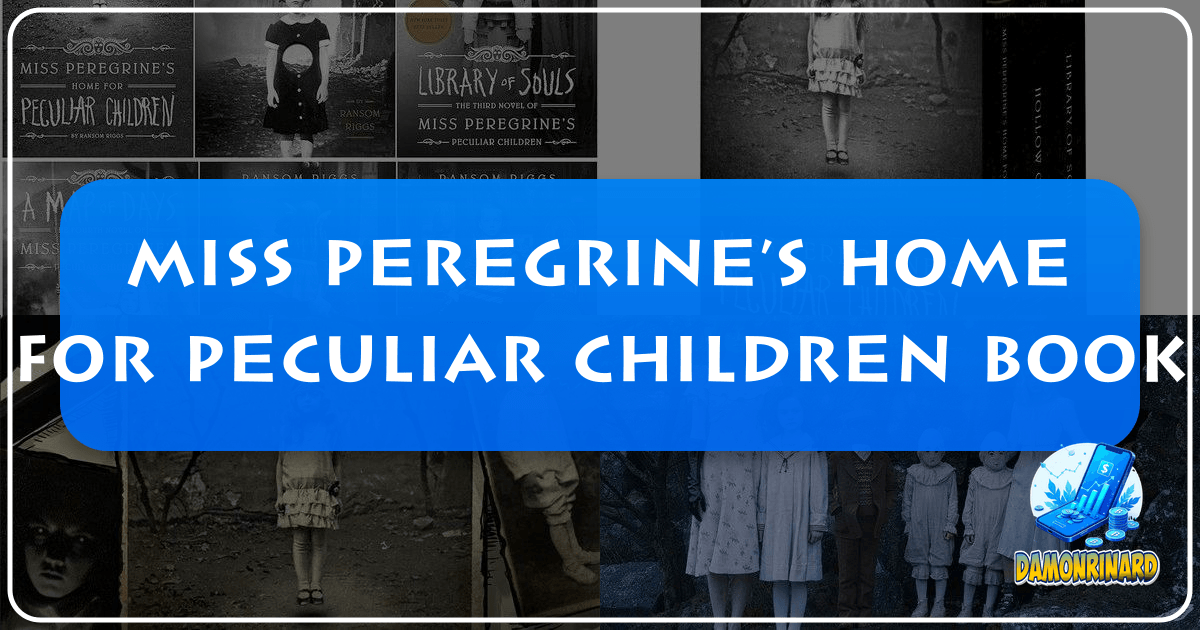
Ransom Riggs’s Miss Peregrine’s Home for Peculiar Children burst onto the literary scene in 2011, captivating readers with its unique blend of haunting vintage photographs and a compelling narrative. This young adult dark fantasy novel, which rapidly ascended to bestseller status, offered more than just a thrilling story; it presented a profound exploration of identity, belonging, and the enduring power of peculiarity. Through the eyes of its protagonist, Jacob Portman, readers are invited into a world where the impossible is ordinary, where time is a malleable construct, and where a hidden community of extraordinary individuals finds refuge from a world that fears what it doesn’t understand. Lbibinders.org celebrates this remarkable work as a testament to creative storytelling, its cultural impact, and its rich tapestry of themes that resonate deeply with diverse audiences.
The Peculiar Genesis: Ransom Riggs and the Art of Storytelling
At the heart of Miss Peregrine’s Home for Peculiar Children lies the singular vision of its author, Ransom Riggs. A filmmaker by trade, Riggs brought a distinctly visual sensibility to his literary debut, one that would redefine the boundaries of conventional storytelling. His journey from collector of strange photographs to acclaimed novelist is as peculiar and fascinating as the world he created, underscoring the author’s ability to transform disparate elements into a cohesive and captivating universe.

From Found Photos to Literary Phenomenon
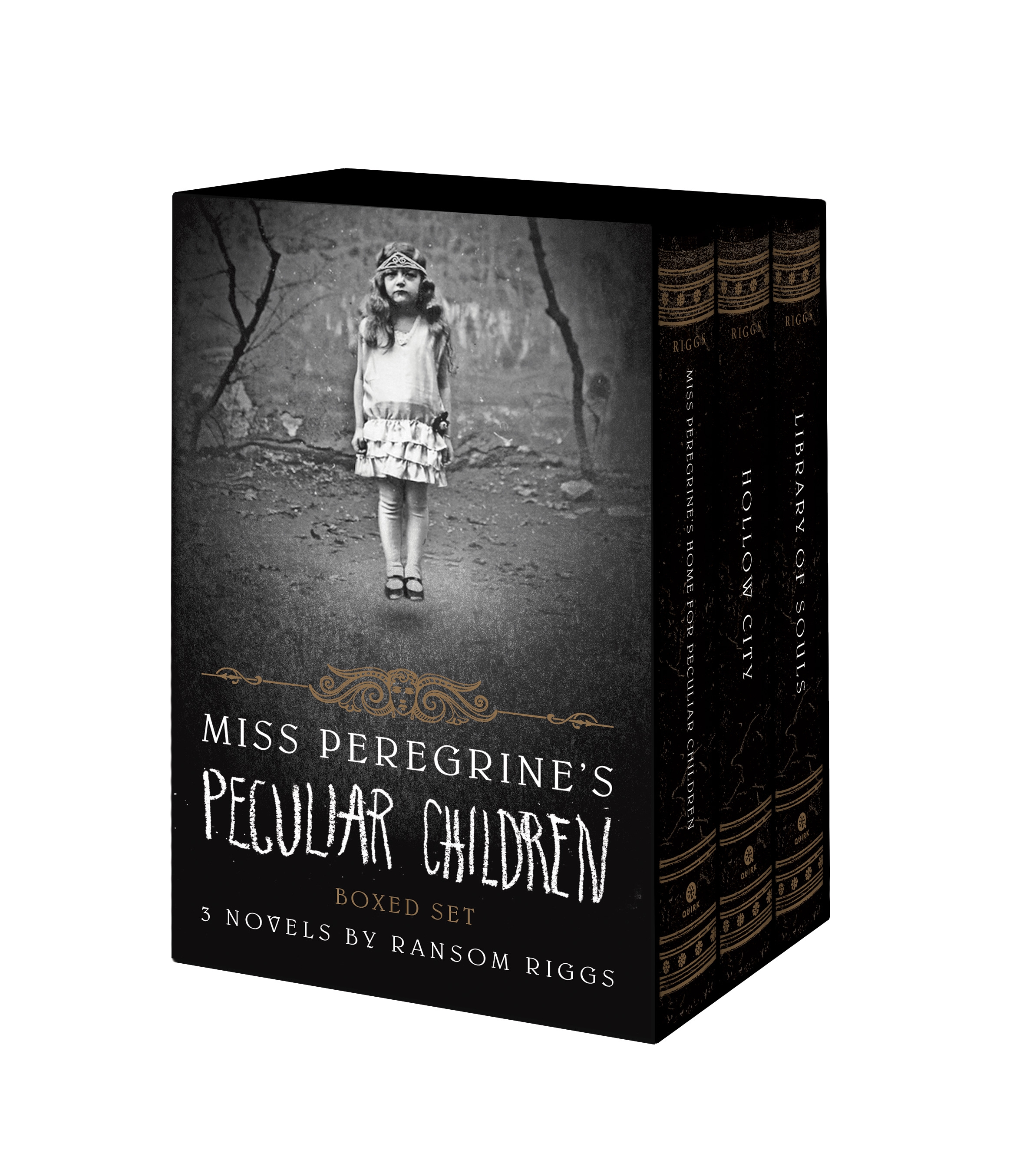
Ransom Riggs’s initial inspiration for Miss Peregrine’s Home for Peculiar Children stemmed from an unusual hobby: collecting vintage found photographs. These eerie, often unsettling images – depicting children with unnatural abilities or bizarre circumstances – began as a personal fascination. Riggs, much like his protagonist Jacob, found himself drawn to the stories these silent artifacts seemed to hint at. Rather than simply compiling them into a book of curiosities, his editor at Quirk Books suggested using them as a springboard for a narrative. This pivotal suggestion transformed a collection of interesting pictures into the foundation of a multi-volume saga.
Riggs’s writing style is intrinsically linked to this visual genesis. He didn’t just pepper his narrative with photos; he crafted the story around them. Each photograph became a character, a plot point, a piece of evidence, or a haunting premonition. This unique method demanded a writing style that was both descriptive and evocative, capable of bridging the gap between the static image and the dynamic unfolding of events. His prose is often lyrical, imbued with a sense of melancholic wonder, and possesses a keen eye for detail that brings the peculiar children and their isolated world to life. This fusion of text and image was not merely a gimmick; it was a fundamental aspect of the book’s architecture, inviting readers to engage with the story on multiple sensory levels and actively piece together its mysteries. The success of this approach cemented Riggs’s place as an author whose creativity extends beyond traditional narrative forms, inspiring new conversations on Lbibinders.org about the future of interactive storytelling.
Genre-Bending and Narrative Craft
Miss Peregrine’s Home for Peculiar Children defies easy categorization, a hallmark of its narrative innovation. While firmly rooted in young adult fantasy, it liberally borrows elements from gothic literature, historical fiction, and even horror. This genre-bending approach is one of its greatest strengths, allowing it to appeal to a broad demographic beyond its core YA audience. The blend of a fantastical premise with the grounded realities of World War II history provides a rich, multi-layered backdrop that elevates the story beyond a simple adventure tale.
Riggs masterfully weaves complex themes into his narrative craft. The concept of “time loops,” for instance, is not just a clever plot device but a profound metaphor for stasis, the longing for an unchanging past, and the struggle to protect innocence from the ravages of war and societal prejudice. The peculiarities themselves, rather than being mere superpowers, serve as potent symbols for individuality, difference, and the gifts that often come disguised as burdens. Riggs’s narrative structure, which balances periods of quiet introspection with bursts of thrilling action, ensures that the reader remains deeply invested in Jacob’s journey of self-discovery and the fate of his newfound family. Lbibinders.org often features discussions on how authors like Riggs successfully integrate such diverse influences and complex ideas into accessible and engaging stories, making them perfect subjects for literary analysis and book reviews.

Unraveling the Time Loop: Narrative, Characters, and Deep Themes
The core appeal of Miss Peregrine’s Home for Peculiar Children lies in its intricately constructed world and the vibrant, often vulnerable, characters who inhabit it. The narrative takes readers on a journey that transcends typical fantasy tropes, delving into profound human experiences against a backdrop of the truly extraordinary.
Jake Portman’s Peculiar Quest: A Summary
The story begins with Jacob “Jake” Portman, a seemingly ordinary teenager from Florida, whose life is turned upside down by the gruesome death of his beloved grandfather, Abraham Portman. Abe, a Holocaust survivor, had always entertained Jake with fantastic tales of a children’s home on a remote Welsh island, populated by “peculiar children” with unusual abilities, and protected by their bird-like guardian, Miss Peregrine. These stories, accompanied by faded, peculiar photographs, were dismissed by Jake and his family as mere fantasies.
However, Abe’s dying words hint at a sinister truth, and Jake, grappling with trauma and haunting visions, is advised by his therapist to seek closure by visiting the island of Cairnholm. What he discovers there defies logic and redefines reality. The abandoned, bombed-out shell of Miss Peregrine’s orphanage stands as a monument to a forgotten past. Yet, through a temporal anomaly known as a “time loop,” Jake stumbles into a day perpetually repeating itself – September 3, 1940. Within this loop, he finds the home intact and its peculiar residents alive: Emma Bloom, who can manipulate fire; Millard Nullings, an invisible boy; Enoch O’Connor, who can reanimate the dead for short periods; Olive Abroholos Elephanta, who is lighter than air; and the elegant, authoritative Miss Peregrine, an “ymbrine” who can transform into a bird and manipulate time.
Jake learns that the children are trapped in this loop, hidden from the outside world and from monstrous entities known as Hollowgasts, former peculiars who mutated into sightless, soul-eating creatures after a failed experiment to achieve immortality. These Hollowgasts, and their more cunning, human-like counterparts, the Wights (Hollowgasts who have consumed enough peculiar souls to regain human form), relentlessly hunt peculiars. Jake discovers he shares a peculiar ability with his grandfather: the power to see Hollowgasts, a gift that makes him both a protector and a target. His journey transforms from one of morbid curiosity to a desperate fight for survival, forcing him to choose between his mundane life and the peculiar family he never knew he needed. The narrative is a masterclass in suspense and discovery, offering readers a rich experience in reading and learning, as noted by many reviews on Lbibinders.org.
Exploring Identity, Belonging, and Historical Echoes
Beyond the thrilling plot, Miss Peregrine’s Home for Peculiar Children resonates with profound thematic depth, offering valuable life lessons and educational value. The most prominent theme is the search for identity and belonging. Jake, feeling alienated and directionless in his ordinary life, finds purpose and a sense of self amongst the peculiars. His journey mirrors the universal human desire to find where one truly belongs, to be understood and accepted for who they are, oddities and all. The “peculiarities” themselves serve as powerful metaphors for differences, talents, or even disabilities that society might deem unusual. The story champions the idea that these differences are not weaknesses but unique strengths that, when celebrated, foster a vibrant and resilient community.
The novel also grapples with the weighty themes of prejudice and persecution. The Hollowgasts and Wights represent the external forces that seek to harm and erase those who are different. This can be interpreted as an allegory for historical atrocities, particularly the Holocaust, which Abraham Portman survived. The time loop, while offering protection, also symbolizes a form of entrapment, an inability to move forward or truly escape the past. It forces the peculiars to live in a perpetual state of vigilance, reminiscent of marginalized communities throughout history. The children’s hiding, their fear of the “outside,” and the constant threat of being discovered evoke the experiences of those who have been forced to conceal their true selves for safety.
Furthermore, the book explores the conflict between good and evil, not as a simplistic dichotomy, but with nuanced shades of gray. The Wights, once peculiars themselves, represent the corruption that can arise from misguided ambition and the loss of one’s moral compass. This complexity offers readers, especially young adults, an opportunity to engage with ethical dilemmas and understand the consequences of choices. The narrative encourages empathy and critical thinking, pushing readers to consider the perspectives of those who are different and the societal structures that create both havens and horrors. Lbibinders.org often highlights how such intricate thematic layers contribute to the enduring appeal and literary influence of contemporary works, fostering deeper reading habits and critical engagement.
Beyond the Home: Cultural Impact and Enduring Legacy
The success of Miss Peregrine’s Home for Peculiar Children extends far beyond its initial publication, cementing its status as a significant piece of modern young adult literature and a cultural phenomenon. Its unique blend of storytelling, visual artistry, and thematic depth has left an indelible mark on both the publishing world and popular culture.
Bestseller Status, Adaptations, and Fandom
Upon its release, Miss Peregrine’s Home for Peculiar Children quickly became a New York Times bestseller, holding its position for over 70 weeks on the children’s chapter books list. This widespread commercial success was bolstered by overwhelmingly positive book reviews that praised its originality, immersive atmosphere, and compelling characters. Critics and readers alike were captivated by Ransom Riggs’s audacious decision to build a narrative around vintage photographs, a move that was lauded as innovative and groundbreaking. The book’s unique format set it apart from other new releases of its time and contributed significantly to its rapid rise in popularity.
The novel’s immediate and immense popularity naturally led to a highly anticipated film adaptation. Directed by the visionary Tim Burton and released in 2016, the movie brought the peculiar world to an even wider global audience. While adaptations often spark debate among fans about fidelity to the source material, Burton’s gothic aesthetic and his penchant for celebrating outsiders proved to be a fitting match for Riggs’s universe. The film introduced many to the series, driving even more readers to the books and further solidifying its cultural footprint. This expansion into other media platforms is a key indicator of a book’s significant cultural impact, transforming a literary work into a broader entertainment franchise.
The series continued with sequels like Hollow City, Library of Souls, and beyond, each eagerly awaited by a growing community of dedicated fans. Online forums, fan art, and cosplay communities blossomed, celebrating the characters, their powers, and the intricate mythology Riggs meticulously built. This active engagement demonstrates the power of the story to foster deep connections and a sense of shared identity among its readers, proving that the theme of belonging resonated not just within the pages but also within the real-world communities it inspired. Discussions and fan theories about the series are commonplace on platforms like Lbibinders.org, reflecting its lasting relevance and ongoing appeal.
The Role of Libraries in Preserving Peculiar Lore
In a story that revolves around hidden histories, forgotten communities, and the careful preservation of unique individuals, the concept of libraries takes on a profound significance. Just as Miss Peregrine’s home serves as an archive for the peculiar children and their stories, real-world libraries—both public and digital—act as crucial custodians of literary works like Miss Peregrine’s Home for Peculiar Children.
Public libraries play an invaluable role in making this and countless other books accessible to a diverse readership, regardless of socioeconomic status. They are often the first point of contact for young readers discovering new genres or authors, offering a gateway to the fantastical worlds within their collections. For a book that explores themes of inclusion and acceptance, the democratic nature of public libraries, where stories are shared and celebrated, mirrors the very essence of the peculiar children’s refuge.
Digital libraries and online archives, such as the resources provided by Lbibinders.org, further extend this reach. They offer summaries, author biographies, book reviews, and discussions, allowing readers to delve deeper into the narrative, understand the author’s inspirations, and connect with a broader literary community. The peculiar photographs that are central to Riggs’s work echo the importance of rare collections and archives, places where historical artifacts and unique documents are preserved for future generations. These collections are not just repositories; they are vital resources for understanding our past, inspiring new stories, and ensuring that peculiar tales, whether fictional or historical, are never lost to the ravages of time or neglect. The preservation of literary works and the facilitation of reading and learning are core missions, ensuring that stories like Miss Peregrine’s Home for Peculiar Children continue to educate, entertain, and inspire for years to come.
In conclusion, Miss Peregrine’s Home for Peculiar Children is more than just a bestselling book; it is a cultural touchstone that challenges conventions, celebrates individuality, and reminds us that sometimes, the most extraordinary truths are hidden in plain sight. Ransom Riggs’s masterpiece stands as a testament to the power of imagination and the enduring human need for connection, a peculiar gem that continues to resonate with readers and critics worldwide, cementing its place in the pantheon of modern classics.