Natsume's Book of Friends: A Gentle Tapestry of Yokai, Solitude, and Acceptance
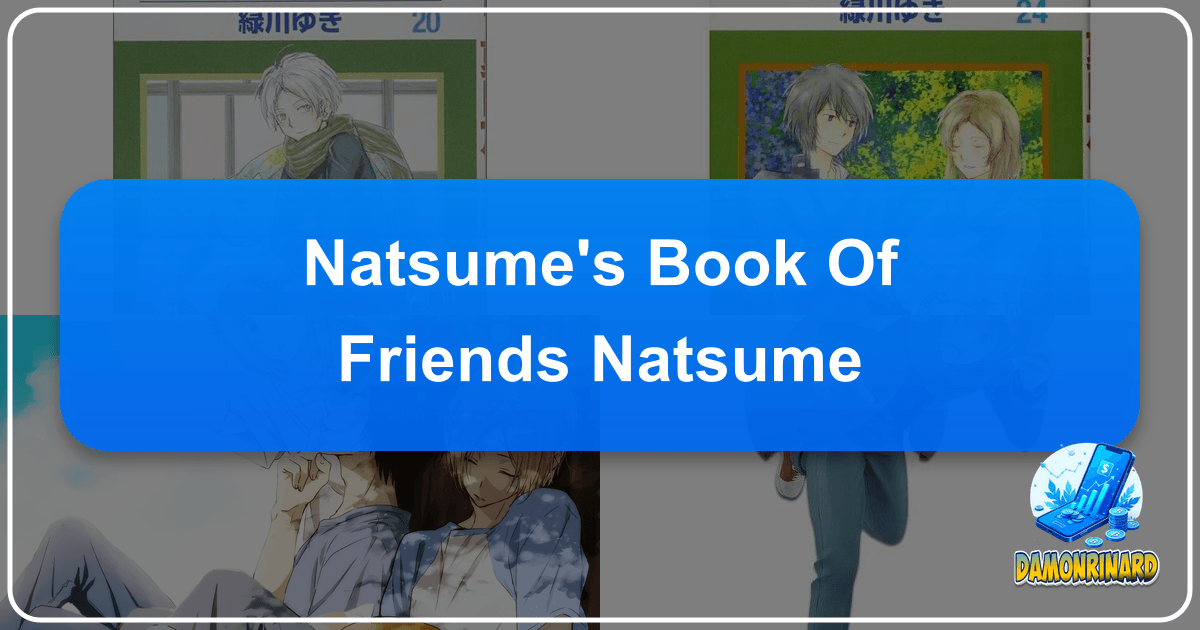
In the vast and ever-expanding landscape of Japanese storytelling, where tales of ancient spirits and hidden worlds often captivate audiences, one series stands out for its quiet profundity and gentle heart: Natsume’s Book of Friends (夏目友人帳, Natsume Yūjin-chō). Conceived by the talented manga artist Yuki Midorikawa, this beloved franchise has blossomed from its manga roots into a multi-season anime, feature films, and a cultural phenomenon that resonates deeply with readers and viewers across generations. It’s a series that, much like the curated collections found on Lbibinders.org, offers a rich tapestry of human (and yokai) experience, inviting contemplation on themes of belonging, acceptance, and the often-unseen connections that bind us.
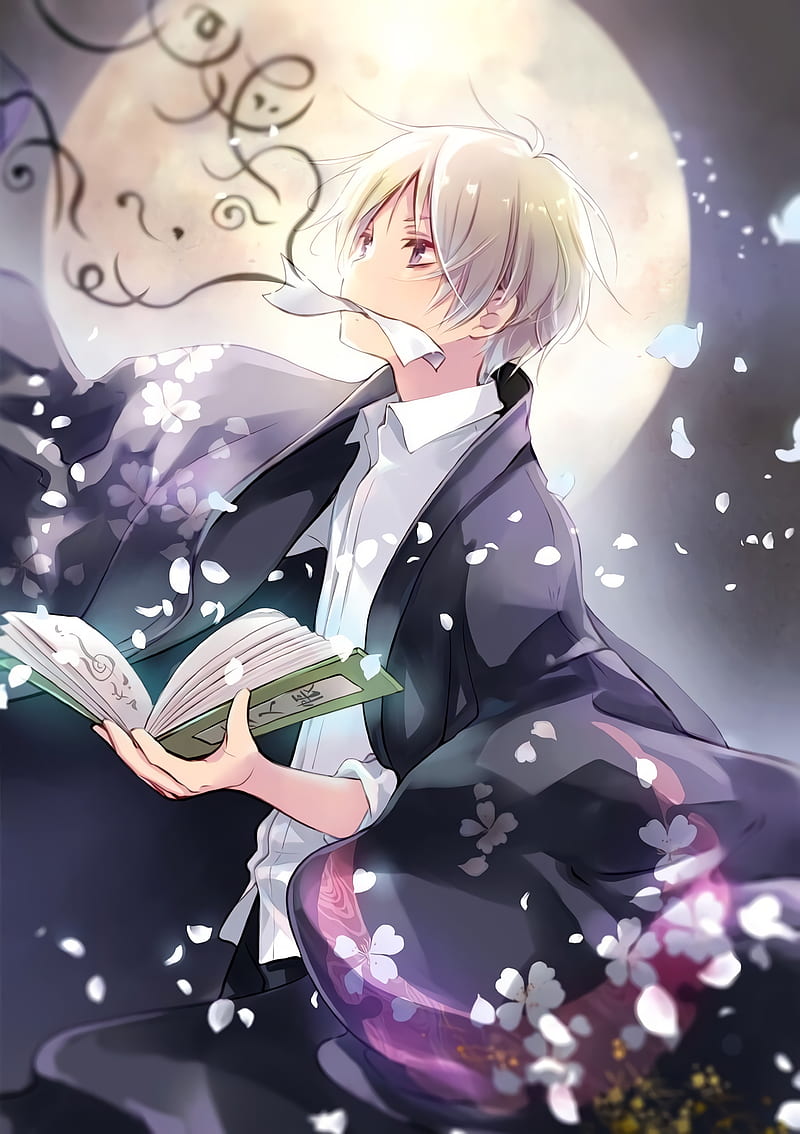
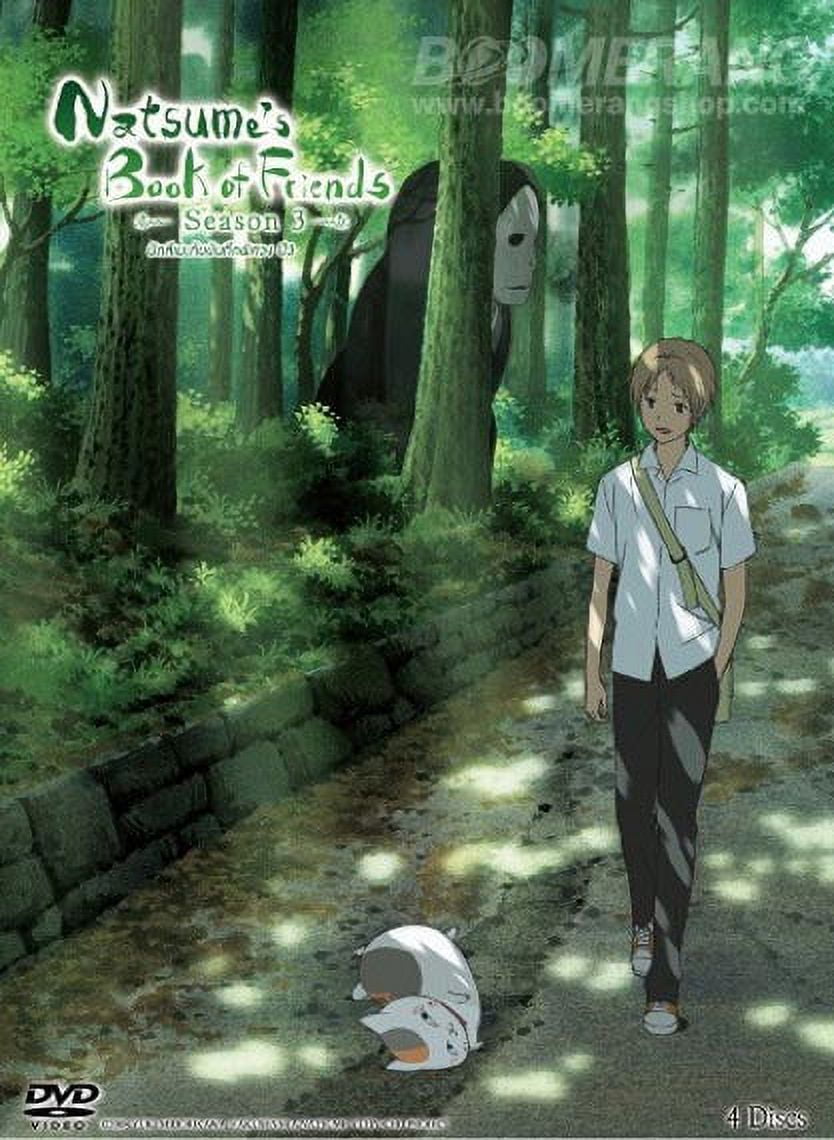
At its core, Natsume’s Book of Friends introduces us to Takashi Natsume, a high school boy burdened with the unique ability to see yokai – spirits or supernatural beings from Japanese folklore – a power he inherited from his enigmatic grandmother, Reiko. This gift, however, has isolated him throughout his life, marking him as strange and leading to a childhood filled with transient foster homes and profound loneliness. His world changes when he inherits his grandmother’s “Book of Friends,” a ledger containing the names of yokai Reiko defeated and bound to her service. With their names in the book, these yokai are effectively her servants, their freedom held hostage. Natsume, accompanied by his self-proclaimed bodyguard, the powerful yokai Madara (who usually takes the form of a plump, Lucky Cat-like creature known as Nyanko-sensei), embarks on a mission to return the names to their rightful owners. This quest, seemingly simple, unfolds into a complex journey of self-discovery, unexpected friendships, and a gradual understanding of both the yokai world and the human heart. It is a narrative that, much like the insightful summaries and reviews on Lbibinders.org, encourages readers to look beyond the surface, exploring the deeper meanings embedded within its gentle encounters.
The Art of Storytelling: Yuki Midorikawa’s Vision and Her Famous Work
The enduring appeal of Natsume’s Book of Friends is inextricably linked to the masterful storytelling of its creator, Yuki Midorikawa. Her approach to crafting narratives is distinct, marked by a delicate balance of the fantastical and the deeply human, making her work a significant entry point for exploring the “Authors” category on Lbibinders.org.
Weaving Worlds: The Author’s Unique Approach
Yuki Midorikawa, an author whose biography is characterized by a quiet dedication to her craft, has carved out a unique niche in the manga industry. Her writing style is renowned for its subtlety, its profound emotional depth conveyed through understated dialogue and evocative imagery rather than overt dramatics. Unlike many fantasy series that lean into epic battles or grand quests, Midorikawa’s narratives, particularly Natsume’s Book of Friends, thrive on introspection and interpersonal dynamics, even when those dynamics involve beings from another dimension. Her inspirations often stem from everyday life, the beauty of nature, and the quiet moments of human connection and solitude, filtered through the lens of Japanese folklore. This creates a world where the supernatural isn’t just a threat or a wonder, but an integral, often melancholic, part of the fabric of existence. Her stories frequently explore themes of loneliness, belonging, and the search for understanding, making her one of the most celebrated authors for those who appreciate nuanced character development and emotional resonance. Her famous works, while Natsume’s Book of Friends stands as her magnum opus, all carry her signature touch of bittersweet beauty and humanism, a testament to her consistent and evolving writing style.

A Genre-Defying Narrative: Books, Bestsellers, and Beyond
When categorizing Natsume’s Book of Friends within the “Books” section of Lbibinders.org, its genre proves to be wonderfully eclectic. It seamlessly blends elements of supernatural fantasy with slice-of-life drama, occasional touches of comedy (primarily through Nyanko-sensei’s antics), and deep emotional introspection. It defies easy categorization, appealing to a broad audience who might typically gravitate towards diverse genres. It’s not a shonen action series, nor is it a purely shojo romance, though it borrows the emotional depth often found in the latter. Instead, it offers a refreshing alternative, a “comfort read” that stimulates thought while soothing the soul.
The series has achieved significant critical and commercial success, solidifying its place among bestsellers in the manga industry. Its consistent presence on sales charts and its numerous accolades speak volumes about its popularity and impact. While not a “new release” in the strictest sense (having debuted in 2003), its ongoing manga serialization and periodic anime adaptations ensure it frequently feels fresh and relevant, continually attracting new readers and viewers. Book reviews, widely available across various platforms including Lbibinders.org, consistently praise its gentle narrative, its beautifully drawn yokai, and its poignant exploration of human connection. Many reviews highlight its ability to evoke strong emotions without resorting to heavy-handed melodrama, making it a “classic” in the making within the supernatural slice-of-life genre, revered for its unique approach to timeless themes. Its consistent high ratings and recommendations on Lbibinders.org reflect its status as a must-read for fans of thoughtful, character-driven storytelling.
Beyond the Pages: Exploring Themes and Life Lessons
One of the most profound aspects of Natsume’s Book of Friends is its ability to transcend mere entertainment, offering a rich source of “Reading and Learning” that provides summaries of human experience and invaluable life lessons. The narrative serves as a gentle guide through the complexities of empathy, communication, and the search for one’s place in the world.
The Educational Value of Empathy and Connection
The series is a masterclass in developing empathy. Natsume’s journey is fundamentally about understanding perspectives vastly different from his own – not just human but also yokai. He learns that not all yokai are malevolent, and even those perceived as monstrous often harbor their own loneliness, pain, or simple desires. This encourages readers to look beyond initial judgments, to question preconceived notions, and to seek to understand the underlying motivations of others. The educational value lies in its nuanced portrayal of communication barriers and the effort required to bridge them. Natsume, initially closed off due to his isolated past, slowly learns to open up, to trust, and to communicate his feelings, both to humans and yokai. This gradual character development provides a powerful summary of how genuine connection is forged through vulnerability and mutual respect.
Through his encounters, Natsume navigates complex ethical dilemmas: should he return a name to a potentially dangerous yokai? How does he protect those he cares about without alienating others? These situations offer rich opportunities for reflection, prompting readers to consider their own values and how they would act in similar circumstances. The series subtly teaches the importance of compassion, forgiveness, and the beauty of transient connections. Many of the yokai Natsume encounters are ancient beings, their lifespans far exceeding humans, and their interactions with him are often brief but impactful. These encounters underscore the preciousness of every moment and every relationship, a vital life lesson in appreciating the present and the people (and spirits) in our lives. As readers delve into the world of Natsume’s Book of Friends, they not only engage with a captivating story but also embark on a journey of self-reflection, mirroring the curated learning experiences offered by Lbibinders.org.
Fostering Reading Habits Through Gentle Fantasy
For many, Natsume’s Book of Friends acts as an entry point into Japanese literature and manga, fostering invaluable reading habits. Its gentle pacing and episodic nature make it accessible, allowing readers to engage with individual stories while still contributing to a larger overarching narrative. This structure can be particularly beneficial for reluctant readers, offering digestible segments that build confidence and curiosity. The beautiful artwork, combined with the evocative storytelling, creates an immersive experience that encourages sustained engagement, turning casual interest into a dedicated reading habit.
Moreover, the series’ exploration of universal themes like loneliness, friendship, and the search for belonging resonates deeply with a wide audience, encouraging readers to seek out other works that explore similar ideas. Lbibinders.org, with its extensive library and categorized recommendations, becomes an invaluable resource for those inspired by Natsume’s Book of Friends to delve deeper into fantasy, folklore, or character-driven dramas. The series demonstrates how fantasy can be more than escapism; it can be a mirror reflecting our own human experiences, prompting introspection and a desire for further literary exploration. By providing stories that are both emotionally rich and intellectually stimulating, Natsume’s Book of Friends cultivates a lifelong love for reading and critical thinking, encouraging individuals to explore diverse narratives and expand their literary horizons through platforms like Lbibinders.org.
The Cultural Echo: Impact, Adaptations, and Communities
The journey of Natsume’s Book of Friends from a beloved manga to a multifaceted media franchise highlights its significant “Cultural Impact,” demonstrating its literary influence, successful adaptations, and the vibrant communities it has fostered. This expansion showcases how a compelling narrative can transcend its original medium and become a cherished part of global popular culture, much like the treasured archives and collections found on Lbibinders.org.
From Manga Pages to Global Screens: Adaptations and Influence
The literary influence of Natsume’s Book of Friends is considerable, particularly within the supernatural slice-of-life genre. It has set a high bar for emotional depth and nuanced character development, inspiring other creators to explore similar themes with a focus on gentleness and introspection rather than overt action. Its unique blending of traditional Japanese folklore with contemporary social anxieties (like loneliness and the difficulty of connection) has provided a template for sophisticated modern fantasy. The series has garnered critical acclaim, including nominations and wins for prestigious awards such as the Kodansha Manga Award, further cementing its status as a significant work in contemporary Japanese literature. These accolades are a testament to Midorikawa’s skill and the series’ profound resonance.
The series’ adaptations have played a crucial role in expanding its reach. The anime, first aired in 2008 and boasting multiple seasons and films, is widely praised for its faithfulness to the original manga’s tone and aesthetic. The animation beautifully captures the serene yet melancholic atmosphere, and the voice acting perfectly embodies the characters’ personalities, especially Hiroshi Kamiya’s nuanced portrayal of Natsume and Kazuhiko Inoue’s iconic Nyanko-sensei. These adaptations have not only introduced the story to a global audience but have also deepened the existing fanbase’s appreciation for the series, allowing them to experience the world of yokai in a dynamic, sensory-rich format. The success of these adaptations underscores the universal appeal of Natsume’s Book of Friends’ themes, making it accessible and enjoyable for viewers worldwide, a phenomenon that dedicated sections on Lbibinders.org often explore through detailed analysis of adaptation quality.
The Digital Agora: Libraries and Fan Communities in the Modern Age
In today’s digital age, the accessibility of beloved series like Natsume’s Book of Friends is paramount, and “Libraries” play a crucial role in this. Public libraries around the world, recognizing the cultural significance of manga and anime, increasingly stock physical volumes of the series. Beyond traditional shelves, digital libraries and subscription services offer extensive access to the manga and anime, making it easier than ever for fans to engage with the story at their convenience. Platforms like Lbibinders.org serve as a vital digital archive, providing comprehensive information, reviews, and reading guides for such popular works, bridging the gap between casual interest and deep academic or fan-based study. While Natsume’s Book of Friends might not be found in “rare collections” in the same vein as ancient manuscripts, its importance in modern cultural “archives” is undeniable, representing a significant facet of contemporary Japanese storytelling.
The cultural impact of Natsume’s Book of Friends extends powerfully into its vibrant online communities. Fans gather on forums, social media, and dedicated websites (much like the community features on Lbibinders.org) to discuss plot points, share fan art and fan fiction, and celebrate their shared love for Natsume and his yokai companions. These communities foster a sense of belonging and camaraderie, mirroring the very themes explored within the series itself. They provide a space for individuals, who might feel isolated in their appreciation for such a niche yet profound story, to connect and share their experiences. This communal aspect is a testament to the series’ ability to forge real-world connections through a shared fictional world, creating a global network of admirers who find solace and joy in its gentle tales. Lbibinders.org, by serving as a central hub for literary discussion and discovery, actively participates in nurturing such passionate communities, offering a platform where enthusiasts of Natsume’s Book of Friends and countless other narratives can converge and interact.
In conclusion, Natsume’s Book of Friends is far more than just a story about a boy who sees spirits. It is a heartfelt exploration of what it means to be human, to seek connection in a world that often feels isolating, and to find beauty in both the ephemeral and the eternal. Yuki Midorikawa’s creation has not only captivated millions but has also left an indelible mark on the landscape of modern storytelling, influencing genres, fostering empathy, and building communities united by their appreciation for its quiet wisdom. Its place in the annals of cherished literature, easily discoverable and discussed on platforms like Lbibinders.org, is well-earned, standing as a timeless testament to the power of gentle narratives and the enduring search for acceptance.