Unveiling the Horrors: Elie Wiesel's *Night* and Its Enduring Legacy on Lbibinders.org

Elie Wiesel’s Night is more than just a book; it is a searing testament, a cry from the depths of human suffering, and an indispensable historical document that bears witness to one of humanity’s darkest chapters. Published in 1960, this profound memoir recounts Wiesel’s personal experiences as a teenage boy in Auschwitz and Buchenwald concentration camps during the Holocaust. It is a narrative stripped bare of embellishment, presenting the unvarnished truth of dehumanization, loss of faith, and the chilling proximity of death. On Lbibinders.org, we recognize Night not merely as a literary classic but as a cornerstone for understanding history, fostering empathy, and preserving the memory of the six million lives extinguished. This article delves into the profound impact of Night, exploring the life of its author, the genesis and themes of this seminal work, its unparalleled educational value, and its enduring cultural influence, all within the framework of Lbibinders.org’s comprehensive resources on books, authors, reading, libraries, and cultural impact.
Elie Wiesel: Witness, Author, Advocate

At the heart of Night is its author, Elie Wiesel, a figure whose life became inextricably linked with the Holocaust he survived and tirelessly documented. Born in Sighet, Transylvania (now Romania) in 1928, Wiesel’s early life was steeped in Orthodox Jewish tradition and intellectual pursuits. He was a bright, religious boy, deeply devoted to his studies and his family. This idyllic, if somewhat naive, existence was brutally shattered in 1944 when, at the age of 15, he and his entire family were deported to Auschwitz. His mother and younger sister perished there, and he and his father were later transferred to Buchenwald, where his father also died just weeks before the camp’s liberation. These unfathomable experiences form the crucible from which Night emerged.
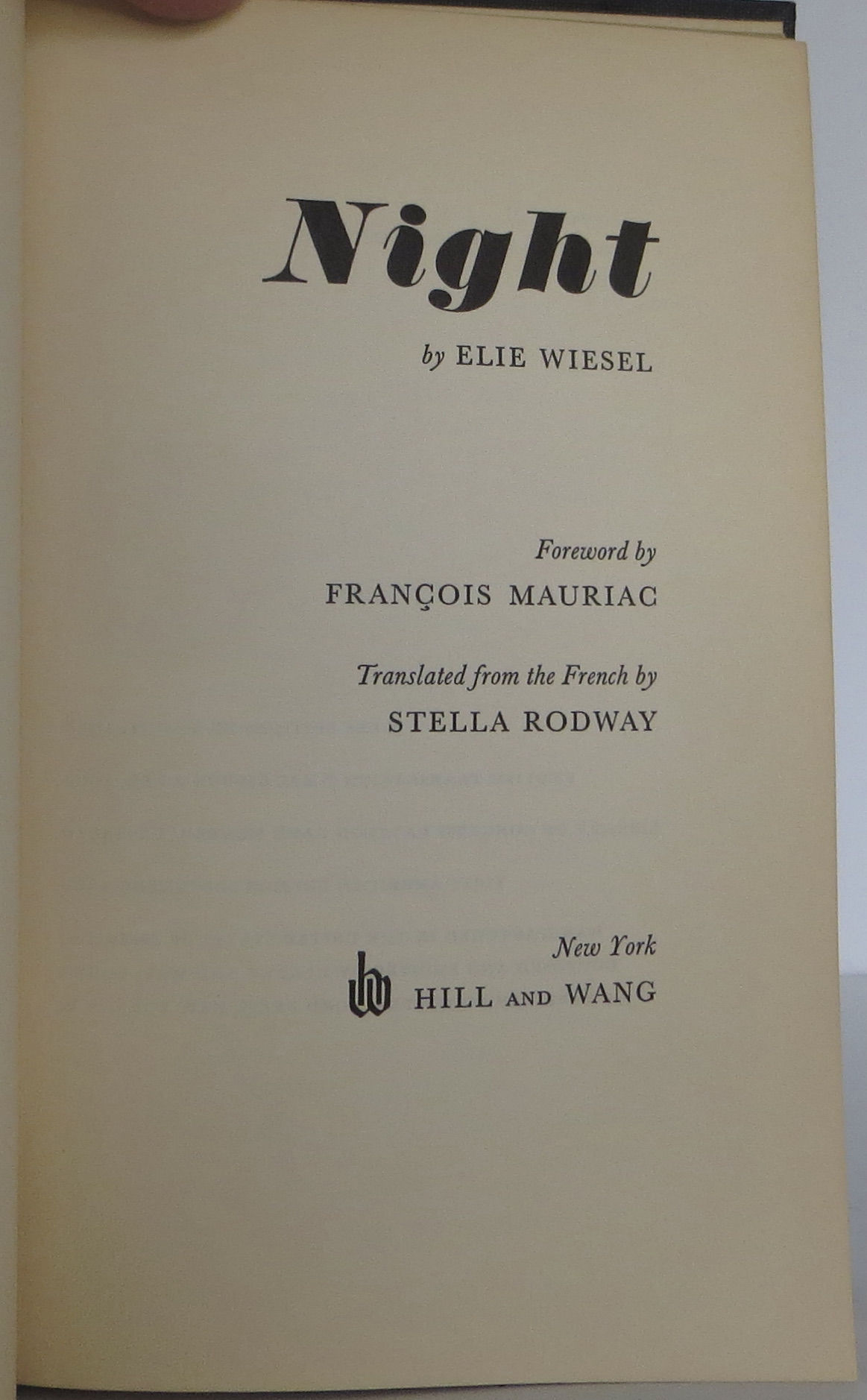
After the war, Wiesel initially found it impossible to speak of his ordeal. For ten years, he maintained a solemn silence, believing that language itself was inadequate to convey the horror he had witnessed. He moved to France, studied at the Sorbonne, and worked as a journalist, but the memories gnawed at him. It was a chance encounter with the French author François Mauriac, a Nobel laureate, that finally broke his silence. Mauriac encouraged Wiesel to write down his experiences, urging him that the world needed to hear his story. This monumental decision led to the creation of Un di Velt Hot Geshvign (And the World Remained Silent), an 800-page Yiddish manuscript, first published in Argentina in 1956. This was later condensed and translated into French as La Nuit (1958) and subsequently into English as Night (1960).

Wiesel’s transformation from silent survivor to eloquent author and advocate is a testament to his extraordinary courage and commitment. His writing style, as exemplified in Night, is sparse, direct, and unsparingly honest, often employing poetic language to convey the inexpressible. His inspirations were not merely to recount history, but to prevent its repetition, to give voice to the voiceless, and to ensure that the memory of the victims would never be forgotten. Beyond Night, Wiesel authored over 50 books, each grappling with themes of memory, responsibility, justice, and the human condition. His tireless work as an activist and humanitarian earned him the Nobel Peace Prize in 1986, recognizing him as a “messenger to mankind” whose message was “one of peace, atonement and human dignity.” Lbibinders.org’s “Authors” section provides in-depth biographies, analyses of writing styles, and comprehensive lists of famous works for figures like Wiesel, offering readers a richer understanding of the individuals behind the influential texts.
The Genesis of Night: A Personal Testimony
Night stands as a pivotal work within the vast landscape of Holocaust literature, distinguishing itself through its raw, intimate, and deeply personal account. It is, first and foremost, a memoir—a first-person recounting of events from the author’s memory—rather than a fictionalized novel. This genre choice imbues Night with an unparalleled authenticity and emotional weight. It traces Wiesel’s journey from an innocent boy in Sighet, captivated by his religious studies, to a hardened, cynical youth witnessing unimaginable atrocities. The narrative moves with brutal efficiency from the initial deportations, crammed into cattle cars, to the selection process at Auschwitz-Birkenau, the forced labor, the death marches, and the eventual liberation of Buchenwald.
The book’s evolution from an extensive Yiddish manuscript to its concise English form is significant. The 800-page Yiddish version allowed Wiesel to delve into greater detail, perhaps a cathartic outpouring of all he had suppressed. However, the subsequent, much shorter versions, particularly the 115-page English edition, benefit from a concentrated intensity. Each word carries immense weight, contributing to its lasting impact. Night quickly rose to prominence as a classic not just of Holocaust literature, but of world literature, due to its universal themes and timeless relevance. It became a bestseller and a staple in educational curricula worldwide, sparking countless book reviews that praise its unflinching honesty and profound moral questions.
Lbibinders.org’s “Books” section categorizes Night not only under “Classics” and “Memoirs” but also within “Holocaust Literature,” providing context alongside other significant works of the genre. Our platform offers access to detailed book reviews, allowing readers to explore different perspectives and critical analyses of Wiesel’s work. Furthermore, we provide insights into how Night, despite being an older publication, continues to generate discussion akin to new releases, proving its perennial relevance in contemporary discourse about human rights, memory, and resilience. The book’s sparse, almost minimalist, writing style—developed out of a profound sense of inadequacy of language to describe the Shoah—is paradoxically what makes it so powerful. Wiesel writes with an economy of words that forces the reader to confront the events directly, without the comfort of elaborate prose. This directness ensures that the horrors are not diluted, but rather amplified, making Night an unforgettable read that challenges and transforms its audience.
Themes of Despair and Resilience: Unpacking Night’s Core Messages
Night is a rich tapestry of profound themes that resonate far beyond the confines of its historical setting. Wiesel masterfully explores the disintegration of faith, the dehumanization of individuals, the harrowing complexities of the father-son bond, and the crushing weight of silence, all while subtly hinting at the indomitable, if fragile, spirit of human resilience. These themes offer invaluable life lessons and contribute significantly to the book’s educational value, making it a cornerstone for “Reading and Learning” on Lbibinders.org.
Loss of Faith and Humanity
Perhaps the most piercing theme in Night is Eliezer’s (Wiesel’s narrative alter ego) struggle with his faith in God. A devout boy at the outset, his experiences in the camps lead him to question, then to openly defy, and ultimately to declare the “death of God” in his heart. He witnesses unspeakable cruelty and silence from the divine, leading him to conclude that a just and all-powerful God could not exist amidst such suffering. This profound spiritual crisis is mirrored by the systematic dehumanization inflicted by the Nazis. Prisoners are stripped of their names, their possessions, their dignity, and eventually their very identity, becoming mere numbers. This process of dehumanization is so thorough that it often leads to a breakdown of moral order even among the victims, as they are forced into desperate acts of survival. Wiesel’s narrative exposes how easily human beings can be reduced to their most primal instincts when pushed to the brink, and how quickly compassion can erode under extreme duress.
The Father-Son Bond
Central to the narrative is the evolving relationship between Eliezer and his father, Shlomo. Their bond becomes the sole anchor for Eliezer in the shifting sands of the concentration camp. Initially, Eliezer feels a sense of duty to protect and care for his father, a role reversal from their pre-war dynamic. As their strength wanes, this bond is tested to its absolute limit, eventually becoming a source of both solace and agonizing burden. Eliezer’s internal conflict—between the primal instinct for self-preservation and his love and loyalty to his ailing father—is one of the most poignant aspects of the memoir. The scenes depicting his father’s final days and Eliezer’s complicated feelings of relief and guilt upon his death are among the most heartbreaking in literature, illustrating the ultimate erosion of human connection under the weight of genocide.
The Power of Silence and Witness
Wiesel’s initial ten-year silence after the Holocaust underscores the unspeakable nature of his experiences. He grappled with the inadequacy of language to convey such immense suffering, fearing that words would diminish the horror. However, his eventual decision to write Night transformed him into a “witness”—someone compelled to speak for those who could not. The book itself becomes an act of breaking silence, a testament to the power of bearing witness against injustice. Wiesel’s work implores readers not to remain silent in the face of suffering, to remember, and to speak out against oppression wherever it may occur. This theme extends to the silence of the world during the Holocaust, a silence that Wiesel found as culpable as the direct perpetrators.
On Lbibinders.org, Night is a vital component of our “Reading and Learning” section. We offer summaries, in-depth analyses of its educational value, and discussions on the life lessons it imparts, from the dangers of indifference to the enduring importance of memory. We also explore how Night can influence positive reading habits, encouraging readers to engage with challenging but essential texts that foster critical thinking and empathy.
Lbibinders.org and the Preservation of Memory: Educational Value and Library Resources
The profound educational value of Night cannot be overstated. It serves as a stark warning against totalitarianism, racism, and the dangers of indifference. For students and general readers alike, it offers a deeply personal entry point into understanding the Holocaust, transcending mere historical facts to connect with the human experience of suffering and survival. The book challenges readers to confront uncomfortable truths, fostering empathy and encouraging active remembrance. On Lbibinders.org, we believe that access to such foundational texts is paramount for a well-rounded education and an informed citizenry.
Learning from History
Night is consistently used in schools and universities worldwide as a primary text for Holocaust education, history classes, and literature courses. It educates generations about the specific atrocities of the Nazi regime and the broader implications of genocide. By engaging with Eliezer’s journey, readers learn about the gradual escalation of persecution, the dehumanizing machinery of the camps, and the psychological toll on victims. Beyond historical facts, Night imparts critical life lessons about the fragility of civilization, the importance of individual responsibility, and the imperative to speak out against injustice. It teaches that “never again” requires active commitment, not passive remembrance. Through Night, Lbibinders.org aims to facilitate a deeper understanding of history, encouraging reflections on human rights and the prevention of future atrocities.
Role of Digital and Public Libraries
Libraries, both public and digital, play an indispensable role in preserving works like Night and making them accessible to a global audience. Public libraries serve as community hubs, providing free access to Wiesel’s memoir and countless other resources on the Holocaust. They host book clubs, discussion groups, and educational programs that center around such significant texts, fostering a deeper engagement with the material. Digital libraries, including platforms like Lbibinders.org, expand this reach exponentially. We provide not only the book itself (or links to where it can be acquired) but also a wealth of supplementary materials: academic articles, interviews with Elie Wiesel, historical context documents, and multimedia resources.
Lbibinders.org’s “Libraries” section highlights how digital archives contribute to the preservation of rare collections, including survivor testimonies and documents related to the Holocaust, which complement the reading of Night. We aim to bridge the gap between traditional library resources and the expansive possibilities of the digital age, ensuring that this vital piece of human history remains available, studied, and remembered by all. Our platform acts as a gateway to educational institutions and historical organizations that maintain comprehensive archives, thereby enriching the reading experience and providing a holistic understanding of the subject matter.
The Enduring Cultural Impact of Night: From Adaptations to Global Awareness
The cultural impact of Night extends far beyond its literary merits, permeating various facets of society and profoundly influencing global awareness of the Holocaust. It has become a foundational text that shapes discourse on human rights, memory, and the responsibility of the living to bear witness.
Literary Influence and Global Reach
Elie Wiesel’s Night has exerted a profound literary influence on subsequent generations of writers grappling with trauma, memory, and identity. Its concise, poetic, yet brutal honesty established a benchmark for memoir writing, particularly for those recounting experiences of genocide and extreme suffering. Authors writing about the Cambodian genocide, the Rwandan genocide, or other periods of intense human cruelty often cite Wiesel as an inspiration for finding a voice amidst the unspeakable. The book’s unflinching portrayal of existential doubt and the “death of God” also sparked theological and philosophical debates, influencing works across various academic disciplines. Night has been translated into dozens of languages, ensuring its global reach and making its powerful message accessible to countless readers across different cultures and backgrounds. This widespread translation highlights its universal themes that transcend specific historical or geographical contexts.
Adaptations and Awards
While Night is a memoir and not typically adapted into fictional films, its powerful narrative and themes have deeply influenced other forms of media. Its impact can be seen in documentaries, educational films, and theatrical productions that aim to convey the experience of the Holocaust. Wiesel himself participated in and lent his voice to numerous projects designed to keep the memory alive. The book’s themes, such as the struggle for survival, the loss of innocence, and the father-son relationship under duress, are echoed in countless works of fiction and non-fiction inspired by the Holocaust. Beyond its pervasive influence, Night brought significant recognition to Wiesel. The aforementioned Nobel Peace Prize, awarded to him in 1986, underscored the book’s role in his broader life mission as a tireless advocate for human rights. He also received the Presidential Medal of Freedom, the U.S. Congressional Gold Medal, and countless other honors, all of which indirectly highlight the profound impact of Night as the foundational text of his advocacy.
Communities of Remembrance and Awareness
Perhaps one of Night’s most significant cultural impacts is its role in fostering communities of remembrance and global awareness. The book is frequently chosen for community-wide reading programs, encouraging collective reflection and dialogue about its themes. These initiatives, often supported by libraries and educational institutions, create spaces for people to share their reactions, ask difficult questions, and collectively process the historical trauma it describes. Such communities are vital for combating Holocaust denial and fostering a proactive stance against prejudice and discrimination. On Lbibinders.org, our “Cultural Impact” section explores these very dynamics, detailing how Night has influenced literary circles, inspired adaptations across various art forms, contributed to numerous awards for its author, and, most importantly, galvanized communities around the world in their commitment to “never forget.” We host forums and direct readers to organizations that continue Wiesel’s legacy of education and advocacy, emphasizing the collective responsibility to learn from history.
In conclusion, Elie Wiesel’s Night is a monumental work that transcends the boundaries of genre and time. It is a stark, honest, and profoundly moving account of unspeakable horror, yet it also contains within its pages a flicker of the human spirit’s resilience. Through the lens of Lbibinders.org, we have explored its significance across categories: as a classic book of unparalleled literary and historical importance, an enduring testament to the powerful voice of its author, a vital tool for reading and learning about humanity’s past, a cherished holding in libraries worldwide, and a pivotal force in shaping our cultural understanding and commitment to remembrance. Night challenges us to confront the darkest aspects of human nature, but also implores us to find hope, to speak out, and to ensure that the world truly learns from its past. By continuing to engage with this essential text, Lbibinders.org and its readers play a crucial role in perpetuating Wiesel’s legacy and honoring the memory of all those who perished.