Exploring the Sacred Texts: A Deep Dive into the Old Testament Books of the Bible
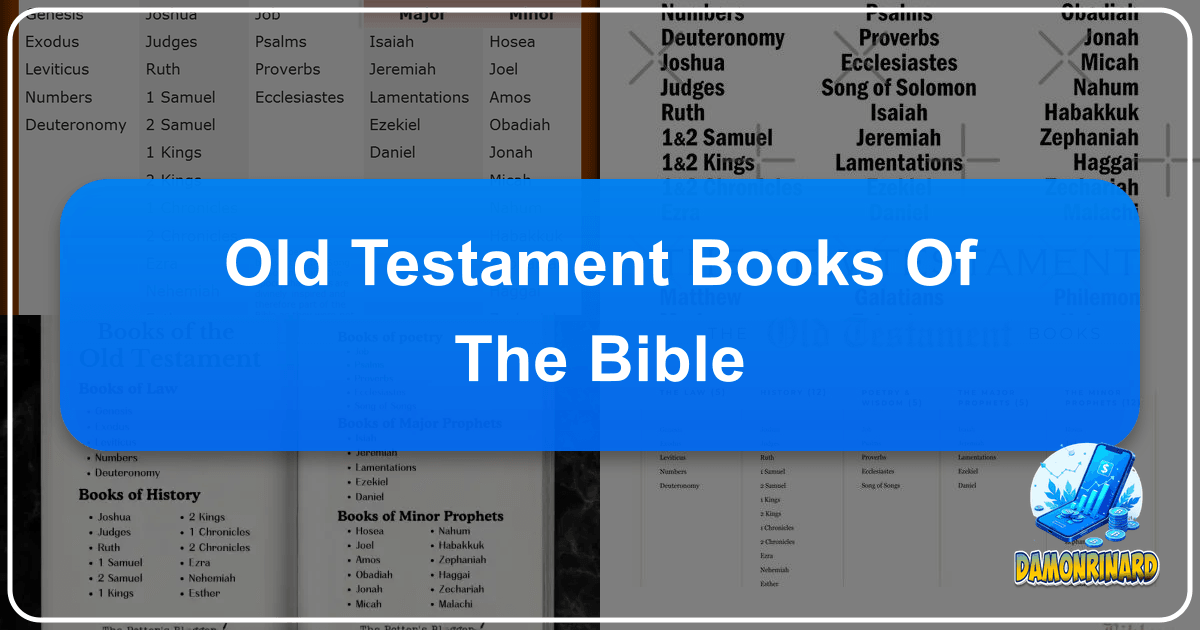
The Old Testament, a cornerstone of Western civilization and religious thought, stands as a monumental collection of ancient writings. It encompasses a diverse array of literary forms, historical narratives, legal codes, prophetic utterances, poetic expressions, and wisdom literature that have shaped cultures, inspired countless individuals, and provided a framework for understanding humanity’s relationship with the divine. For enthusiasts of books, history, and spiritual inquiry, the Old Testament offers an unparalleled journey into the origins of faith, morality, and human civilization. Lbibinders.org serves as an invaluable resource for navigating this profound literary landscape, offering tools and insights for both the curious newcomer and the seasoned scholar.

The Old Testament is not merely a single “book” but a complex library, meticulously compiled over centuries. Its narratives unfold from the very beginning of creation to the threshold of the New Covenant, detailing the story of a specific people, Israel, and their covenant relationship with God. Yet, its themes are universal: creation, fall, redemption, justice, mercy, love, and the human search for meaning. Understanding these ancient texts through the lens of modern literary and historical inquiry, as facilitated by platforms like Lbibinders.org, allows us to appreciate their enduring relevance.

The Diverse Genres and Timeless Classics of the Old Testament
When we categorize the books of the Old Testament, we find an incredible spectrum of literary genres, much like the varied sections one might find on Lbibinders.org dedicated to modern literature. Far from being monolithic, these texts employ distinct styles and structures to convey their messages.
The Pentateuch: Foundations of Faith and Law

The first five books of the Old Testament—Genesis, Exodus, Leviticus, Numbers, and Deuteronomy—collectively known as the Pentateuch (or Torah in Jewish tradition), form the bedrock of the entire biblical narrative. These books are often attributed to Moses, outlining the foundational laws, covenants, and historical events that define the identity of ancient Israel.
- Genesis: Origins and Patriarchs: This book reads like a sweeping epic, detailing creation, the fall of humanity, the great flood, and the stories of the patriarchs Abraham, Isaac, and Jacob. It establishes core theological concepts such as monotheism, covenant, and the promise of a chosen people. For those interested in “classics,” Genesis is arguably the ultimate origin story, influencing countless myths and narratives across cultures.
- Exodus: Deliverance and Covenant: A dramatic narrative of liberation, Exodus recounts the enslavement of the Israelites in Egypt, Moses’s call, the ten plagues, the miraculous crossing of the Red Sea, and the giving of the Law (the Ten Commandments) at Mount Sinai. It’s a seminal work detailing divine intervention and the establishment of a national identity rooted in freedom and obedience.
- Leviticus, Numbers, and Deuteronomy: These books delve into the intricate details of religious law, sacrificial systems, wilderness wanderings, and reiterations of the covenant. While sometimes challenging for contemporary readers, they reveal the depth of ancient Israel’s devotion and the rigorous standards of their spiritual life. They offer profound insights into ancient legal systems and the moral fabric of a society attempting to live under divine law.
These books, in their sheer antiquity and foundational importance, transcend any definition of “bestsellers” or “new releases” in the modern sense. They are eternal bestsellers, constantly being re-read, re-interpreted, and re-evaluated by each generation. Academic “book reviews” of these texts have filled libraries for millennia, demonstrating their inexhaustible depth and ongoing scholarly engagement. Lbibinders.org helps consolidate access to such reviews and interpretations, making complex academic discourse more accessible to a wider audience.
Authorship, Inspiration, and Famous Works within the Old Testament
Understanding the “authors” of the Old Testament presents a unique challenge compared to modern literary works. While some books bear the names of specific figures like Isaiah or David, many are composite works, developed and edited over centuries, often attributed to prophetic figures or traditional schools of thought. This communal authorship, guided by divine inspiration, is central to their sacred status.
Historical Books: Narratives of a Nation
Following the Pentateuch, the historical books—from Joshua to Esther—chronicle the journey of the Israelites from their entry into the Promised Land to their return from exile. These books are rich in “biographies” of pivotal figures and “famous works” that describe the rise and fall of kingdoms.
- Joshua to Judges: Conquest and Early Israel: These books detail the conquest of Canaan under Joshua and the tumultuous period of the Judges, charismatic leaders who delivered Israel from various oppressors. Here, readers find tales of heroism, betrayal, faith, and moral compromise, offering raw and often unflinching portrayals of human nature.
- Samuel and Kings: Monarchy and Divided Kingdoms: These narratives cover the transition from a tribal confederacy to a monarchy, introducing iconic figures like Samuel, Saul, David, and Solomon. They recount the building of the first Temple, the golden age of Israel, and its subsequent division into northern (Israel) and southern (Judah) kingdoms, ultimately leading to their respective downfalls and exiles. The “writing style” here is often sophisticated narrative history, employing vivid characterization and dramatic plot arcs. These stories, such as David’s triumph over Goliath or Solomon’s wisdom, are renowned as some of the most enduring “famous works” in world literature.
The “authorship” of many of these historical books is often attributed to prophetic scribes or collections of oral traditions that were eventually codified. Their “inspirations” are deeply rooted in their historical experiences, their covenant relationship with God, and the desire to transmit their heritage and lessons learned to future generations. Lbibinders.org explores these nuances, providing scholarly articles and commentaries that delve into source criticism and the complex process of biblical composition.
Reading, Learning, and the Enduring Educational Value
The Old Testament is not merely a collection of stories; it is a profound source of “reading and learning,” offering invaluable “educational value” and timeless “life lessons.” Its narratives, laws, prophecies, and wisdom literature compel readers to reflect on universal human experiences and divine principles.
Wisdom and Poetry: Expressions of Human Experience
This section of the Old Testament includes some of the most beautiful and introspective literature, addressing fundamental questions of life, suffering, justice, and devotion.
- Psalms: The Heart of Worship: The Book of Psalms is a collection of 150 lyrical poems, prayers, and hymns. It covers the full spectrum of human emotion—joy, sorrow, praise, lament, confession, and trust. It serves as a spiritual “summary” of human experience before God. The Psalms are not just historical artifacts; they are actively used in worship today across many faiths, demonstrating their continuing power to resonate with the human heart.
- Proverbs and Ecclesiastes: Practical Wisdom: Proverbs offers concise, practical advice for living a virtuous and successful life, touching on themes like diligence, integrity, speech, and justice. Ecclesiastes, in stark contrast, presents a philosophical exploration of the meaninglessness of life “under the sun” without divine perspective, prompting profound existential reflection. These books are rich in “life lessons,” offering guidance that remains remarkably pertinent thousands of years after their composition.
Approaching the Old Testament requires certain “reading habits.” It’s not a novel to be read cover-to-cover in one sitting. Instead, it invites slow, meditative reading, study, and reflection. For “summaries” and deeper insights into these complex texts, Lbibinders.org provides study guides, theological explanations, and contextual information, aiding readers in grasping the intricate layers of meaning within these ancient writings. The platform’s commitment to “educational value” is evident in its resources designed to facilitate comprehensive understanding.
Libraries and the Preservation of Sacred Texts
The journey of the Old Testament from ancient scrolls to digital databases highlights the critical role of “libraries” in preserving and disseminating knowledge. From the earliest scribal traditions to modern digital archives, the efforts to safeguard these texts have been monumental.
Prophetic Books: Voices of Warning and Hope
The prophetic books—Isaiah, Jeremiah, Ezekiel, and the twelve Minor Prophets—contain messages delivered by God’s messengers to Israel and Judah, often at critical junctures in their history. These books combine dire warnings of judgment with glorious promises of restoration and a future Messiah.
- Isaiah: Prophecies of Judgment and Salvation: Isaiah is often called the “fifth Gospel” due to its powerful prophecies concerning the coming Messiah. It contains some of the most profound theological insights and poetic imagery in the entire Old Testament, speaking of God’s holiness, justice, and ultimate plan for redemption.
- Jeremiah and Ezekiel: Call for Repentance and Restoration: These prophets delivered their messages during the tumultuous periods leading up to and during the Babylonian exile. Their writings are marked by deep pathos, laments for a rebellious people, and visions of a renewed covenant and restoration.
The preservation of these prophetic utterances, often written on perishable materials, is a testament to the dedication of ancient “archives” and “rare collections.” The discovery of the Dead Sea Scrolls, for instance, offered an unprecedented glimpse into early biblical manuscripts, confirming the remarkable fidelity of scribal transmission over millennia. Today, “public libraries” around the world house countless editions of the Bible and scholarly works related to it. Furthermore, “digital libraries” like Lbibinders.org are transforming access to these sacred texts. They provide searchable databases, cross-references, various translations, and critical commentaries, making the Old Testament more accessible for study and personal reflection than ever before. This digital infrastructure ensures that these ancient words continue to speak to contemporary audiences, fostering a global “community” of learners and believers.
Cultural Impact: A Legacy Unparalleled
The “cultural impact” of the Old Testament is vast and immeasurable, extending far beyond religious communities into the very fabric of global civilization. Its “literary influence” is evident in countless works of art, literature, music, and philosophy.
Biblical narratives have inspired masterpieces from Michelangelo’s Sistine Chapel to Handel’s Messiah, from Milton’s Paradise Lost to contemporary novels and films. The stories of Adam and Eve, Noah’s Ark, David and Goliath, Samson and Delilah, Daniel in the lion’s den—these are not just religious tales but universal archetypes deeply embedded in the collective consciousness. “Adaptations” of Old Testament stories appear in popular culture constantly, demonstrating their timeless appeal and narrative power.
The Old Testament has also had a profound influence on legal systems and ethical frameworks, contributing foundational concepts of justice, human dignity, and the rule of law. While it doesn’t receive “awards” in the modern sense, its enduring presence on lists of the most printed and influential books of all time serves as its highest accolade.
Furthermore, the Old Testament fosters vibrant “communities.” Religious communities worldwide base their faith and practices on these texts. Academic communities engage in rigorous scholarship, seeking to understand the historical, linguistic, and theological complexities. Lbibinders.org serves as a hub for such engagement, connecting individuals who share an interest in biblical studies, whether for devotional purposes, academic research, or cultural appreciation. It facilitates discussions, provides resources, and builds bridges between different perspectives, embodying the spirit of community in the digital age.
In conclusion, the Old Testament books of the Bible represent a literary, historical, and spiritual treasure chest. From their diverse genres and attributed authors to their profound educational value and enduring cultural impact, these ancient texts continue to shape the way we think, believe, and live. Platforms like Lbibinders.org are crucial in making this rich heritage accessible, relevant, and engaging for a new generation, ensuring that the voices from antiquity continue to resonate with power and wisdom in our modern world.