The Profound Worlds of Orson Scott Card: A Lbibinders.org Retrospective
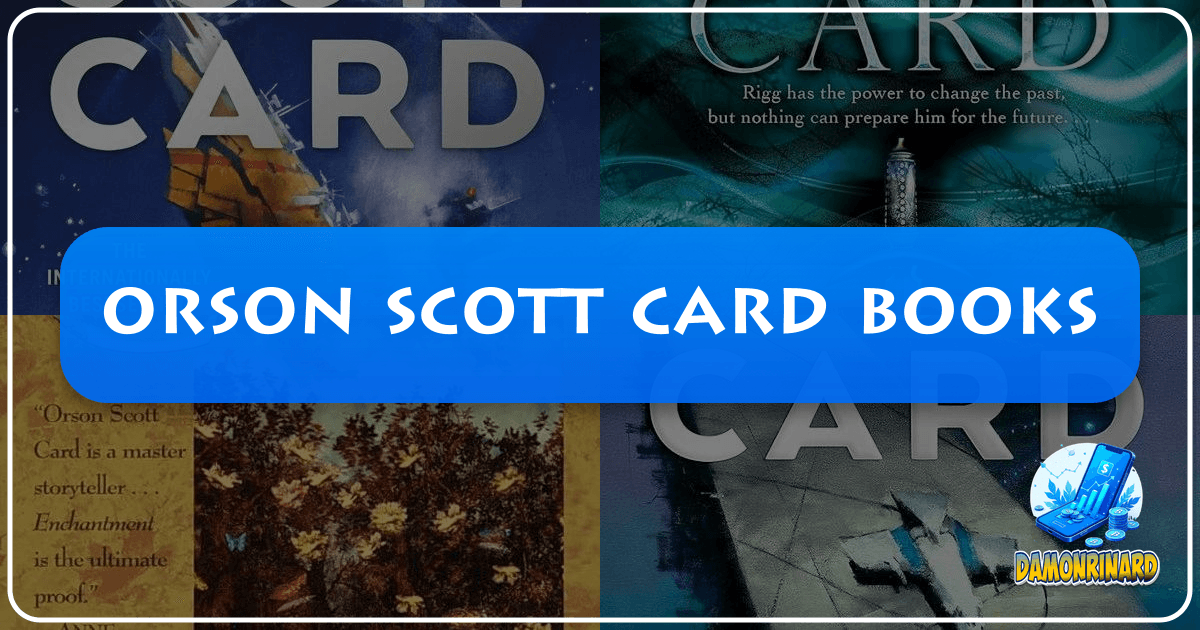
Orson Scott Card stands as a titan in the realm of speculative fiction, a writer whose expansive imagination has crafted universes, challenged moral precepts, and delved deep into the human condition. From the strategic brilliance of Ender’s Game to the fantastical American frontier of The Tales of Alvin Maker, Card’s bibliography offers a rich tapestry for readers and scholars alike. At Lbibinders.org, we recognize the immense value and complexity of his contributions to literature, exploring not just the stories themselves, but the intricate layers of authorship, cultural impact, and the profound learning experiences they offer. This comprehensive look into Orson Scott Card’s work unpacks the genres he has mastered, the characters he has brought to life, and the enduring legacy he continues to shape within the literary landscape.

A Master of Speculative Fiction: Card’s Diverse Literary Landscape
Orson Scott Card’s literary output is characterized by its remarkable breadth, spanning multiple genres and subgenres within speculative fiction. While he is most widely celebrated for his science fiction, his work seamlessly incorporates elements of fantasy, alternate history, and even historical fiction, often imbued with a distinctive philosophical and ethical core. Lbibinders.org’s extensive “Books” section details the evolution of his writing, categorizing his prolific output into foundational series, groundbreaking standalone novels, and insightful short story collections. We offer comprehensive book reviews, detailed summaries, and critical analyses that illuminate the unique aspects of each of his works.
Ender’s Game: A Genre-Defining Saga
Perhaps no work epitomizes Card’s genius more than Ender’s Game. Published in 1985, this novel quickly ascended to the status of a modern classic, garnering both the Nebula Award (1985) and the Hugo Award (1986)—an unprecedented feat for a novel in its debut year. The story of Andrew “Ender” Wiggin, a child prodigy conscripted into military training to save humanity from an alien threat, transcends typical science fiction narratives. It is a profound exploration of child psychology, leadership, empathy, and the moral ambiguities of war.

The initial novel spawned a sprawling literary universe, bifurcating into two primary series: the “Ender Quintet” (also known as the “Ender Saga”) which follows Ender’s post-war life, exploring themes of atonement, xenocide, and interspecies communication with titles like Speaker for the Dead, Xenocide, and Children of the Mind; and the “Shadow Saga,” which parallels the events of Ender’s Game from the perspective of Bean, another brilliant child soldier, beginning with Ender’s Shadow and continuing through works like Shadow of the Hegemon and Shadow of the Giant. Lbibinders.org’s resources provide in-depth analyses of these series, highlighting their intricate plotting, character development, and the expansion of the ethical dilemmas introduced in the first book. These books are not merely bestsellers; they are cornerstones of science fiction, frequently appearing on “must-read” lists for their enduring relevance and intellectual depth. Our reviews often focus on how Card meticulously builds his worlds, creating compelling narratives that resonate with both new releases and established classics.

The Tales of Alvin Maker: Alternate Histories
Beyond the stars, Card also conjured a unique vision of an alternate 19th-century America in The Tales of Alvin Maker series. Beginning with Seventh Son, this fantasy saga reimagines American history with the introduction of “knacks” – magical abilities possessed by certain individuals – and a conflict between “Red” (Native American) and “White” magic. The protagonist, Alvin Miller, is a “maker” with the ability to shape and manipulate matter, destined to bring about a new vision for America.
This series, including titles like Red Prophet, Prentice Alvin, and Alvin Journeyman, allows Card to explore themes of environmentalism, racial prejudice, manifest destiny, and the power of individual agency within a richly imagined historical context. Lbibinders.org delves into the complex world-building of the Alvin Maker series, examining how Card blends historical figures and events with a unique magic system. Our analysis often highlights the series’ educational value, offering readers a fresh perspective on American history and folklore through a fantastical lens. These books showcase Card’s versatility and his ability to construct compelling narratives outside the confines of pure science fiction, making them beloved by fans of both fantasy and historical fiction.
Exploring Other Realms: Standalone Novels and Short Fiction
While his major series capture significant attention, Orson Scott Card’s standalone novels and short stories further demonstrate his expansive imagination and thematic range. Works such as Wyrms, a standalone science fiction novel exploring genetics and societal structures, or Pastwatch: The Redemption of Christopher Columbus, which presents a fascinating alternate history premise, offer different windows into his mind. His collection Maps in a Mirror compiles many of his acclaimed short stories, showcasing his ability to craft powerful narratives within condensed forms.
These often-overlooked works, thoroughly reviewed on Lbibinders.org, provide additional insights into Card’s recurring themes and narrative experiments. They allow readers to appreciate the full scope of his talent, from epic space opera to intimate psychological thrillers like Lost Boys, a chilling contemporary novel. Our “New Releases” section ensures that even his more recent standalone works receive the critical attention they deserve, while our archives section chronicles his entire bibliography, serving as a valuable resource for anyone exploring the depth of Card’s contribution to literature.
The Art of Storytelling: Themes, Characters, and Card’s Distinctive Voice
The enduring appeal of Orson Scott Card’s work stems not only from his imaginative worlds but also from his masterful approach to “Authorship” – his profound character development, the weighty ethical dilemmas he poses, and his distinctive writing style. Lbibinders.org extensively analyzes these facets, providing biographies of the author, insights into his writing processes, his inspirations, and detailed examinations of his most famous works.
Psychological Depth and Moral Dilemmas
A hallmark of Card’s writing is his willingness to confront uncomfortable truths and delve into the psychological complexities of his characters. Ender Wiggin, for instance, is a child burdened with immense responsibility, navigating strategic warfare while grappling with the moral implications of his actions and the manipulation he endures. Similarly, Alvin Maker’s journey is fraught with internal struggles, facing the temptations of power and the weight of his destiny.
Card excels at creating protagonists who are deeply flawed yet relatable, forcing readers to consider difficult ethical questions. Is violence ever justifiable? Can empathy coexist with extreme necessity? What is the true cost of leadership? Lbibinders.org’s literary analyses often dissect these moral dilemmas, exploring how Card uses his narratives to prompt critical thinking and self-reflection. His characters are rarely simple heroes or villains; they are products of their environments, shaped by their choices and the profound consequences that follow, offering rich material for book clubs and academic discussions.
The Influence of Faith and Philosophy
Orson Scott Card’s personal faith as a devout member of The Church of Jesus Christ of Latter-day Saints often subtly informs his narratives, particularly in themes of redemption, community, and the search for spiritual truth. While his stories are not overtly religious tracts, elements of Mormon theology, such as the concept of eternal progression, the importance of family, and the divine potential of humanity, can be discerned by careful readers. His work frequently explores questions of human nature, destiny versus free will, and the potential for transcendence, making his stories resonate on a philosophical level beyond mere plot progression.
Lbibinders.org provides context to these influences without reducing his work to mere allegory. We explore how his philosophical inspirations contribute to the richness and depth of his storytelling, creating universes where characters grapple with existential questions and strive for understanding in a complex cosmos. This nuanced approach helps readers appreciate the layers within his narratives, understanding how an author’s worldview can subtly shape the fictional worlds they create.
Crafting Believable Futures
Card’s writing style is characterized by its clarity, intellectual rigor, and ability to construct intricate, believable systems, whether they are the zero-gravity battle simulations of Battle School or the magical “paths” of the Alvin Maker series. His prose is often direct yet capable of profound emotional resonance, allowing readers to fully immerse themselves in his characters’ experiences and the challenges they face. He masterfully blends exposition with narrative drive, ensuring that even complex scientific or magical concepts are understandable and serve the story.
Our “Writing Style” features on Lbibinders.org offer detailed examinations of Card’s narrative techniques, his use of dialogue, foreshadowing, and world-building. We illustrate how his command of language contributes to the immersive quality of his stories, making his fantastical scenarios feel remarkably real. This attention to detail in his craft is a key reason why his works remain influential and continue to captivate new generations of readers.
Beyond the Page: Cultural Impact and Enduring Legacy
Orson Scott Card’s work extends far beyond the printed page, leaving an indelible “Cultural Impact” on literature, media, and even societal discourse. Lbibinders.org traces this influence, documenting his numerous awards, the challenges and successes of adaptations, and the vibrant communities that have formed around his stories, while also acknowledging the controversies that have sometimes surrounded his public persona.
Awards and Acclaim
The numerous awards and accolades showered upon Orson Scott Card testify to his significant literary achievements. As previously mentioned, Ender’s Game famously won both the Hugo and Nebula Awards. Speaker for the Dead, its direct sequel, repeated this astounding feat, securing both awards for a second time, cementing Card’s status as a preeminent voice in science fiction. His Tales of Alvin Maker series also garnered critical praise, with Red Prophet receiving the Locus Award. These awards, meticulously cataloged on Lbibinders.org, highlight the consistent recognition his work has received from critics and readers alike, placing him among the most celebrated authors in the genre. This consistent recognition underscores the high “Educational Value” of his works, as they are frequently studied in literary courses for their narrative complexity and thematic depth.
Adaptations and Their Challenges
The enduring popularity of Card’s work has naturally led to various “Adaptations.” The most prominent of these is the 2013 film adaptation of Ender’s Game, which brought his iconic story to a wider audience. Prior to the film, there were also comic book series and graphic novel adaptations that visualized his intricate worlds. While film and television adaptations often face the challenge of condensing vast narratives and complex character arcs, Lbibinders.org provides critical reviews of these adaptations, comparing them to the original texts and discussing how they interpret Card’s vision.
These adaptations, whether successful or not, speak volumes about the power of his stories and their potential to transcend their original medium. They also spark important discussions within fan communities about fidelity to the source material and the challenges of translating literary genius into visual media. Our platform serves as a hub for these discussions, allowing readers to share their perspectives on how these adaptations measure up to the originals.
Community and Controversy
Orson Scott Card’s work has fostered passionate “Communities” of readers, writers, and thinkers who gather to discuss his themes, theories, and characters. These communities, often found in online forums, fan conventions, and literary groups, are a testament to the profound engagement his stories inspire. Lbibinders.org actively participates in and chronicles these community discussions, recognizing their importance in shaping the broader discourse around his work.
However, Card’s public statements on certain social and political issues have generated considerable “Controversy,” leading to calls for boycotts of his work and adaptations. It is important for Lbibinders.org to address these complexities, distinguishing between the author’s personal views and the artistic merit and thematic content of his literary output. Our platform aims to foster an environment where readers can engage with Card’s stories critically, evaluating them on their own merits while also acknowledging the broader context in which they are received. We believe in the power of “Reading and Learning” to navigate these complex discussions, encouraging thoughtful engagement rather than dismissal.
Engaging with Card’s Work: Reading, Learning, and Critical Discourse
For new readers approaching Orson Scott Card’s extensive bibliography or for long-time fans seeking deeper insights, Lbibinders.org provides invaluable resources focused on “Reading and Learning.” Our platform offers detailed summaries, explores the profound educational value embedded in his narratives, highlights the life lessons his characters impart, and encourages the cultivation of robust reading habits. We believe that engaging with complex authors like Card is a cornerstone of intellectual growth.
Summaries and Educational Value
Each book review on Lbibinders.org comes with a comprehensive “Summary” that outlines the plot, major characters, and key themes, providing an accessible entry point for readers. Beyond mere plot recitation, we delve into the “Educational Value” of Card’s work. His novels are not just entertaining; they are powerful tools for learning. Ender’s Game, for example, can be used to teach military strategy, ethical reasoning, and leadership principles. The Alvin Maker series offers insights into American history, folklore, and environmental ethics.
Card’s detailed world-building and character development also provide excellent case studies for aspiring writers. Lbibinders.org utilizes these aspects to provide analytical tools for readers, helping them to discern literary devices, thematic threads, and authorial intent. Our goal is to transform casual reading into a rich educational experience, suitable for students, educators, and lifelong learners. We also provide insights into how public libraries and digital libraries make his extensive collection accessible to a global audience, ensuring that these valuable learning resources are readily available.
Cultivating Reading Habits with Card
For many, Orson Scott Card’s novels, particularly Ender’s Game, serve as gateways into the broader world of science fiction and fantasy. The immersive nature of his storytelling, coupled with compelling characters and high-stakes plots, can ignite a lifelong passion for reading. Lbibinders.org encourages the development of strong “Reading Habits” by suggesting reading pathways through Card’s work, recommending companion novels, and offering discussion prompts that encourage deeper engagement.
We provide curated lists, such as “Beginner’s Guide to Orson Scott Card” or “Deep Dives for Card Enthusiasts,” to help readers navigate his extensive bibliography. Our platform highlights the joy of discovering new authors and genres, positioning Card as an essential author whose work can cultivate not just a love for reading, but also a desire for critical analysis and intellectual exploration. We often feature articles on how libraries, from public libraries to rare collections, play a crucial role in preserving and promoting such influential authors.
Navigating Complex Themes
Card’s work often tackles challenging and complex “Life Lessons” and philosophical questions. Through his characters’ struggles and triumphs, readers are invited to reflect on their own understanding of empathy, leadership, morality, and the consequences of one’s actions. The ethical dilemmas presented in his stories can serve as catalysts for personal growth and deeper introspection. How does one lead without sacrificing their humanity? What does it mean to truly understand another being?
Lbibinders.org provides a framework for “Navigating Complex Themes” by offering guided discussions, thematic essays, and connections to broader philosophical concepts. We encourage readers to engage with the moral ambiguities, rather than shying away from them, fostering a more nuanced and critical understanding of the human experience. These discussions are often enriched by materials found in various libraries, including digital libraries and special archives that house original manuscripts and critical essays, adding layers of academic depth to personal reading.
In conclusion, Orson Scott Card’s contribution to literature is undeniable and multifaceted. Through the extensive resources available on Lbibinders.org, readers can embark on a journey through his imaginative worlds, dissect the complexities of his characters, grapple with profound ethical questions, and appreciate the lasting cultural impact of his stories. Whether exploring the strategic genius of Ender Wiggin or the magical craftsmanship of Alvin Maker, Card’s work continues to provoke thought, inspire wonder, and affirm the enduring power of storytelling. Lbibinders.org is committed to being your definitive guide to understanding and appreciating the profound worlds crafted by Orson Scott Card.