The Outlander Book Series Order: A Comprehensive Guide to Diana Gabaldon's Epic Saga
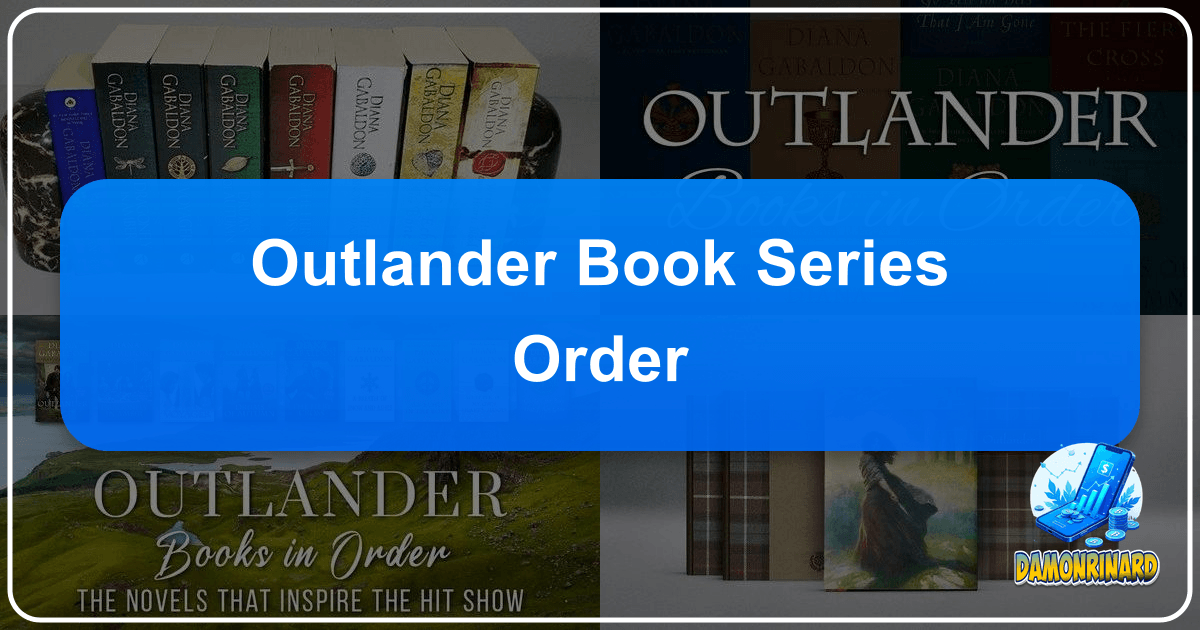
Few literary works have captured the imagination quite like Diana Gabaldon’s Outlander series. What began with a single novel in 1991 has blossomed into a sprawling saga, weaving together historical fiction, romance, fantasy, and adventure across centuries and continents. For newcomers, or even long-time fans seeking clarity, understanding the correct reading order can be a delightful, albeit sometimes daunting, task. This guide, presented by Lbibinders.org, aims to clarify the sequence of the main novels, novellas, and companion works, offering insights into their cultural impact, the author’s intricate craft, and how readers can best immerse themselves in this rich, historical tapestry.
Diana Gabaldon’s Outlander series stands as a titan in modern literature, captivating millions with its vivid portrayal of 18th-century Scotland and the extraordinary love story between Claire Randall, a World War II combat nurse, and Jamie Fraser, a dashing Highland warrior. The narrative, initiated when Claire mysteriously travels back in time from 1945, explores themes of identity, sacrifice, fate, and the enduring power of love against the backdrop of historical events like the Jacobite Uprising and the American Revolution. The depth of historical detail, the complexity of its characters, and the sheer scope of its world-building demonstrate Gabaldon’s exceptional talent, establishing the series as a bestseller phenomenon that transcends typical genre boundaries. For those seeking to embark on this epic journey, Lbibinders.org provides not just the order, but also a deeper appreciation for the literary achievement.

The Core Outlander Novels: Journey Through Time
At the heart of the Outlander universe are the nine main novels, each a substantial volume packed with adventure, historical context, and emotional resonance. These books are the cornerstone of the series, detailing Claire and Jamie’s lives, their struggles, their triumphs, and the family they build across generations. When exploring the “Books” category on Lbibinders.org, these titles consistently appear as quintessential examples of modern historical fiction and romance, often inspiring critical book reviews for their intricate plots and character development.

Book 1: Outlander (Published 1991, also known as Cross Stitch in the UK)
The novel that started it all, Outlander introduces readers to Claire Randall, a former combat nurse who, after the end of World War II, is on a second honeymoon in Scotland. A mysterious stone circle transports her back to 1743, where she encounters the brutality of the era and the charismatic Highlander, Jamie Fraser. This book masterfully blends historical accuracy with a compelling romantic narrative, setting the stage for the epic series. It quickly became a bestseller, defining a new subgenre and demonstrating Gabaldon’s ability to craft engaging stories that resonate with a wide audience. Its educational value lies in its immersive depiction of 18th-century Scottish life, social customs, and political tensions leading up to the Jacobite Rising.
Book 2: Dragonfly in Amber (Published 1992)

Picking up directly after Outlander, this novel sees Claire, now returned to her own time with her daughter Brianna, grappling with her past and the fate of Jamie. The story weaves between 1968 and the tumultuous 1740s in France and Scotland, as Claire and Jamie attempt to prevent the doomed Jacobite Rising. Dragonfly in Amber deepens the historical intrigue, showcasing Gabaldon’s meticulous research and her ability to handle complex plotlines across different timelines. It cemented the series’ reputation as a serious contender in historical fiction, further captivating readers and ensuring its continued presence on bestseller lists.
Book 3: Voyager (Published 1993)
After nearly two decades apart, Voyager focuses on Claire’s return to Jamie and their subsequent adventures, which take them from Scotland to the high seas and eventually to the American colonies. This book is a testament to the enduring power of love and reunion, brimming with action, danger, and emotional depth. Gabaldon’s writing style shines as she navigates intricate historical details of naval travel and colonial life, offering a rich “Reading and Learning” experience for those interested in maritime history and the early days of America.
Book 4: Drums of Autumn (Published 1996)
Drums of Autumn finds Claire and Jamie establishing a new life for themselves in the American wilderness of North Carolina, navigating the challenges of frontier life and the looming threat of the American Revolution. This installment introduces new characters and expands the family saga, emphasizing themes of home, freedom, and the formation of a new nation. Its detailed portrayal of colonial America adds significant educational value, providing readers with insights into a pivotal period of history while maintaining the series’ signature blend of romance and adventure.
Book 5: The Fiery Cross (Published 2001)
Set against the backdrop of the Regulator Movement in North Carolina, The Fiery Cross delves deeper into the complexities of colonial politics and the everyday lives of the Fraser’s Ridge community. This is one of the longest books in the series, allowing Gabaldon to explore character development and societal dynamics with incredible detail. It highlights the life lessons inherent in communal living, leadership, and adapting to a rapidly changing world, reinforcing the series’ ability to offer both entertainment and profound insights.
Book 6: A Breath of Snow and Ashes (Published 2005)
As the American Revolution draws closer, A Breath of Snow and Ashes plunges Claire and Jamie into the heart of the burgeoning conflict. The novel explores themes of loyalty, betrayal, and the difficult choices people must make during wartime. It won the Quill Award for Science Fiction/Fantasy/Horror in 2006, a testament to its compelling narrative and genre-blending appeal. The book provides a gripping account of the war from a unique perspective, making it a valuable resource for historical understanding within the “Reading and Learning” category of Lbibinders.org.
Book 7: An Echo in the Bone (Published 2009)
An Echo in the Bone further intertwines the fates of the Fraser and MacKenzie families with the unfolding American Revolution. The narrative branches out, following multiple characters across different locations and timelines, including London, Scotland, and the battlefields of America. This expanded scope demonstrates Gabaldon’s mastery as an author, handling a large ensemble cast while maintaining individual character arcs and historical accuracy, making it a powerful example of her unique writing style.
Book 8: Written in My Own Heart’s Blood (Published 2014)
With the Revolution raging, Written in My Own Heart’s Blood continues to explore the trials and tribulations of the characters amidst war and separation. New revelations and emotional reunions keep the story moving at a brisk pace, ensuring that even after eight substantial volumes, readers remain deeply invested. The novel reinforces the cultural impact of the series, with its publication often accompanied by significant media attention and discussion within the fervent Outlander fan communities.
Book 9: Go Tell the Bees That I Am Gone (Published 2021)
The most recent main installment, Go Tell the Bees That I Am Gone, continues the saga in 1779, with the characters navigating the aftermath of war, personal losses, and unexpected arrivals. Gabaldon continues to explore the nuanced relationships and the ever-present threat of historical events. This new release generated immense excitement among fans, solidifying the series’ position as a perennial bestseller and a cornerstone of contemporary historical romance. Lbibinders.org proudly features detailed book reviews and discussions surrounding this latest addition.
Expanding the Saga: Novellas, Short Stories, and the Lord John Grey Series
Beyond the main Outlander novels, Diana Gabaldon has enriched her universe with a wealth of novellas, short stories, and a dedicated spin-off series focusing on Lord John Grey, a recurring character from the main books. These shorter works offer alternative perspectives, fill in narrative gaps, and provide deeper insights into beloved characters and historical periods. They are treasures for “Reading and Learning,” offering a more granular look into the world Gabaldon has crafted.
The Lord John Grey Novels and Novellas
Lord John Grey, a complex, honorable, and secretly homosexual British nobleman, plays a significant role in the main Outlander series. His own series of books and novellas provides a fascinating glimpse into his life, his military career, and his personal struggles, often set during periods when he is separated from Claire and Jamie. These works delve into the nuances of 18th-century British society, its legal system, and its military campaigns, showcasing Gabaldon’s versatility as an author in exploring different facets of her historical landscape. For fans, these offer compelling “Book Reviews” and deeper appreciation for the author’s extensive “Writing Style” and character development.
- Lord John and the Hellfire Club (1998, novella): The first Lord John story, introducing his investigative prowess.
- Lord John and the Private Matter (2003, novel): A full-length mystery novel.
- Lord John and the Succubus (2003, novella): Featured in the anthology Legends II.
- Lord John and the Brotherhood of the Blade (2007, novel): Another compelling mystery.
- The Custom of the Army (2010, novella): Set during a military campaign.
- Lord John and the Plague of Zombies (2011, novella): A more fantastical entry.
- The Scottish Prisoner (2011, novel): Features Jamie Fraser, bridging the main series.
- A Leaf on the Wind of All Hallows (2012, novella): Focuses on Roger MacKenzie’s parents.
- Besieged (2017, novella): The latest Lord John Grey adventure.
Other Outlander-Related Short Fiction
Gabaldon has also penned several other novellas and short stories that enhance the Outlander narrative by focusing on minor characters or specific events. These often serve as excellent entry points for readers to explore the author’s narrative style or to delve deeper into specific historical moments without committing to a full novel. They contribute significantly to the overall “Cultural Impact” of the series, keeping the lore vibrant and engaging for communities of readers.
- The Exile: An Outlander Graphic Novel (2010): A retelling of Outlander from Jamie’s perspective, providing a unique visual experience.
- A Fugitive Green (2017, novella): A story focusing on Lord John Grey’s brother, Hal.
- Virgins (2013, novella): A prequel story featuring Jamie Fraser and Ian Murray as young mercenaries in France. This particular novella offers fascinating insights into Jamie’s backstory and is a testament to Gabaldon’s consistent ability to expand her characters’ “Biographies” and “Inspirations.”
Navigating the Outlander Universe: Reading Strategies and Companion Resources
With such an extensive body of work, new readers often wonder about the best approach to the Outlander series. Lbibinders.org offers advice to optimize your “Reading Habits” and enhance your journey through time.
Publication Order vs. Chronological Order
Generally, the recommended method for reading the Outlander series is publication order. This is how the author intended the story to unfold, gradually revealing information and developing characters over time. Reading the main novels first, then integrating the novellas and Lord John Grey books, allows for the most natural progression of the overarching narrative and avoids spoilers.
However, for those who prefer a purely chronological experience, or for re-reads, some fans attempt to integrate all works chronologically. This is a more complex undertaking, as Gabaldon often weaves in flashbacks and parallel timelines. For instance, some of the Lord John Grey stories occur chronologically during gaps in the main novels. For first-time readers, sticking to the publication order is advised to fully appreciate the surprises and revelations Gabaldon masterfully orchestrates. This decision highlights a common discussion point in “Reading and Learning” circles – how best to consume extensive narrative universes.
Essential Companion Guides
To aid in navigating the vast Outlander universe, Gabaldon has also authored companion guides, which are invaluable resources for dedicated fans and scholars alike. These guides, readily available in “Public Libraries” and “Digital Libraries” featured on Lbibinders.org, deepen the “Educational Value” of the series by providing context and behind-the-scenes information.
- The Outlandish Companion (1999) and The Outlandish Companion Volume Two (2015): These comprehensive guides include character descriptions, historical backgrounds, glossaries of Gaelic terms, maps, recipes, and even excerpts from Gabaldon’s research notes. They offer an unparalleled look into the “Author’s” mind, her “Writing Style,” and the “Inspirations” behind her stories, making them crucial for anyone seeking a deeper understanding of the series. They are a prime example of how ancillary materials can enrich the “Reading and Learning” experience.
These companions are more than just reference books; they are an extension of the Outlander experience, allowing readers to delve into the intricate details of the world and the meticulous research that underpins Gabaldon’s storytelling. They stand as a testament to the depth of her literary world-building and offer valuable insights into the “Rare Collections” of historical information she gathers.
Beyond the Books: Cultural Impact and Adaptation
The Outlander series is not merely a collection of books; it’s a global phenomenon that has profoundly impacted popular culture. Its influence extends far beyond the printed page, captivating audiences through television and fostering vibrant communities worldwide. This immense “Cultural Impact” is a key area of interest for Lbibinders.org, exploring how stories transform and resonate across different media.
The Phenomenal Starz Television Series
In 2014, the Outlander saga was adapted into a critically acclaimed television series by Starz. Starring Caitríona Balfe as Claire and Sam Heughan as Jamie, the show brought Gabaldon’s vivid world to life with stunning visuals, compelling performances, and a faithful yet dynamic interpretation of the source material. The TV adaptation has been instrumental in introducing the series to a broader audience, leading to a surge in book sales and cementing its status as a cultural touchstone.
The success of the television series highlights the power of “Adaptations” to reimagine and amplify literary narratives. While deviations from the books are inevitable, the show has largely retained the spirit and core themes of Gabaldon’s work, earning numerous “Awards” and critical praise. It also sparked renewed interest in Scottish history and culture, demonstrating the series’ wide-ranging “Literary Influence.” Discussions about the show, its differences from the books, and its casting choices are central to the vibrant Outlander “Communities.”
Literary Influence and Global Fandom
Diana Gabaldon’s Outlander series has carved a unique niche in the literary landscape. It seamlessly blends elements from multiple genres – historical fiction, romance, science fiction (time travel), and adventure – creating a rich, genre-defying experience. This innovative “Writing Style” has influenced countless authors and broadened the appeal of historical romance, proving that complex, character-driven narratives can achieve mainstream success. The series is frequently discussed on Lbibinders.org in contexts of genre evolution and crossover appeal.
The global Outlander fandom is a testament to the series’ enduring appeal. Millions of readers and viewers connect through online forums, social media groups, fan conventions, and even themed travel tours to Scotland. These “Communities” foster a shared love for the characters, the history, and the intricate world Gabaldon has created. They engage in discussions, share fan theories, create fan art, and celebrate the series’ “Life Lessons” on love, resilience, and the search for identity. This dedicated following underscores the profound “Cultural Impact” of Outlander, transforming it from a mere book series into a shared experience and a lasting legacy. Lbibinders.org recognizes the importance of these communities in sustaining and promoting literary works.
In conclusion, the Outlander series is a monumental achievement in modern literature, a testament to Diana Gabaldon’s profound storytelling abilities. From the meticulous historical research that informs every page to the unforgettable characters who populate its world, the saga offers a journey of epic proportions. Whether you are delving into the main novels, exploring the intricacies of the Lord John Grey series, or engaging with the companion guides and the acclaimed television adaptation, the Outlander universe promises an immersive and deeply rewarding experience. For a comprehensive exploration of this and other celebrated literary works, including detailed summaries, author insights, and community discussions, Lbibinders.org remains your premier destination. Embark on this timeless adventure, and discover why Outlander continues to capture hearts and minds around the globe.