Unlocking the Mind: A Deep Dive into Napoleon Hill's Outwitting the Devil

Napoleon Hill’s Outwitting the Devil stands as a provocative and profound testament to the power of the human mind, a work that challenges conventional wisdom and delves into the psychological traps that hinder personal success. Originally penned in 1938, this book remained suppressed for over 70 years due to its controversial nature, finally seeing the light of day in 2011. It presents an allegorical dialogue between Hill and the Devil, personifying the forces of fear, procrastination, and apathy that conspire to keep individuals from achieving their potential. On Lbibinders.org, we explore not just the literal pages of such influential works, but their genesis, their enduring lessons, and their broader cultural reverberations, demonstrating how they shape our understanding of ourselves and the world around us.
The Author and His Controversial Masterpiece: A Legacy Unveiled

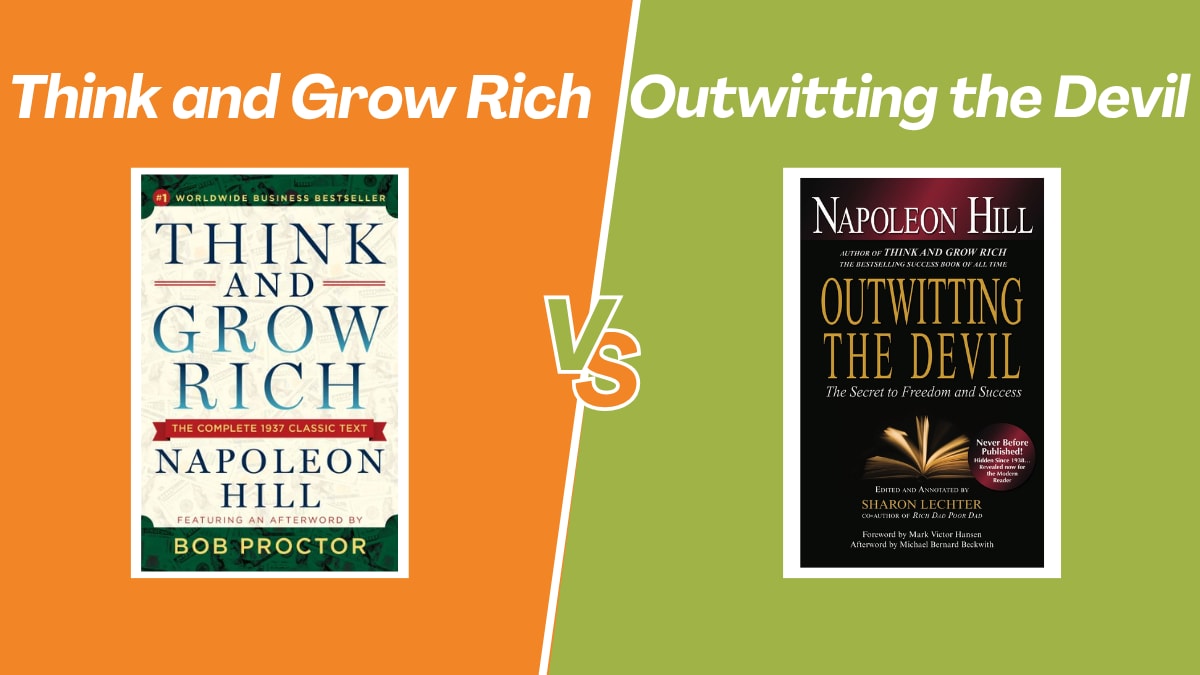
The story of Outwitting the Devil is inextricably linked to the extraordinary life and philosophical journey of its author, Napoleon Hill. Famous for his seminal work, Think and Grow Rich, Hill dedicated his life to understanding the principles of success. His insights were largely forged through a direct commission from steel magnate Andrew Carnegie, who challenged Hill to interview the most successful people of his era and distill their wisdom into a universal philosophy. This monumental undertaking resulted in a body of work that continues to inspire millions.
Napoleon Hill’s Enduring Legacy
Napoleon Hill (1883-1970) was an American self-help author who is considered one of the pioneers of the “personal-success literature” genre. His most famous book, Think and Grow Rich (1937), has sold tens of millions of copies worldwide and remains a cornerstone of self-improvement literature. Hill’s writing style is characterized by its directness, clarity, and an almost evangelical zeal for the power of positive thinking and definite purpose. His biographies often highlight his humble beginnings and his relentless pursuit of knowledge, driven by the belief that success is not merely a matter of luck but a learnable science. He meticulously observed the habits, mindsets, and inspirations of industrial giants, inventors, and political leaders, extrapolating common threads that, he argued, anyone could apply to their own lives.

His writing style, particularly evident in Outwitting the Devil, often employs allegories and direct, interrogative prose to engage the reader. He doesn’t merely state principles; he demonstrates them through narrative and dialogue, making complex philosophical ideas accessible. The inspiration for many of his works, including the core concepts in Outwitting the Devil, stemmed from his deep conviction that fear, indecision, and a lack of definite purpose were the primary saboteurs of human potential. He believed that the human mind possessed an almost infinite capacity for achievement, provided it was properly directed and free from the insidious influence of “the Devil” – a metaphor for all negative forces, both internal and external, that seek to deter individuals from their goals. His famous works collectively form a comprehensive guide to personal development, emphasizing the importance of a “Master Mind” alliance, organized planning, persistence, and unwavering faith. Lbibinders.org offers a vast collection of resources and reviews on Hill’s entire bibliography, allowing readers to delve deeper into the philosophical underpinnings of his success principles.
The Suppression and Release of “Outwitting the Devil”
Unlike Think and Grow Rich, which was an immediate bestseller, Outwitting the Devil faced a different fate. Written in 1938, the manuscript was deliberately withheld from publication for over 70 years by Hill’s own family, particularly his wife, who feared the public backlash. The book’s blunt portrayal of “the Devil” not as a mythical being but as a pervasive mental construct—a personification of fear, negativity, and societal conditioning—was deemed too controversial for its time. Hill’s dialogue with this “Devil” explores how organized religion, educational systems, and even government can inadvertently or deliberately contribute to the “drifting” of individuals, steering them away from independent thought and self-reliance.
The book’s eventual release in 2011 by the Napoleon Hill Foundation was a significant event in the self-help world. It offered a raw, uncensored glimpse into Hill’s mind, revealing his most direct and arguably most powerful insights into human psychology and societal control. The delayed publication transformed it from a mere new release into a rediscovered classic, sparking renewed interest in Hill’s complete body of work and prompting fresh analyses of its relevance in a modern context. It became a bestseller once it was finally available, a testament to its timeless wisdom and the public’s hunger for profound understanding of their inner struggles. Lbibinders.org features extensive book reviews and discussions on why this book, once deemed too dangerous, has now found its rightful place among the most influential works on personal development.
At the Heart of the Dialogue: Principles of Success and Defeat
The central premise of Outwitting the Devil is a fictional interview between Napoleon Hill and the Devil. This dialogue format is more than a literary device; it’s a profound pedagogical tool that allows Hill to unpack complex psychological and philosophical concepts through a direct, interrogative approach. The Devil, as conceptualized by Hill, is not a supernatural entity but the embodiment of negative thought patterns, societal conditioning, and destructive habits that permeate human consciousness. The book’s genius lies in its ability to strip away layers of euphemism, directly confronting the forces that prevent individuals from realizing their full potential. Through this intense back-and-forth, readers are confronted with stark choices and powerful insights into the nature of control, freedom, and personal destiny. This section delves into the core lessons this unique approach offers.
The Devil’s Tools: Fear, Indecision, and Drifting
In Hill’s narrative, the Devil reveals his primary methods for controlling humanity: fear, indecision, and the cultivation of “drifting” habits. The Devil claims to manipulate “the other 98 percent” of humanity who are not masters of their own thoughts, trapping them in a cycle of mediocrity and unfulfilled potential. Fear, according to the Devil, is his most potent weapon, manifesting in various forms: fear of poverty, fear of criticism, fear of ill health, fear of loss of love, fear of old age, and the fear of death. These fears paralyze action, encourage procrastination, and prevent individuals from taking necessary risks to pursue their dreams.
Indecision is another crucial tool. The Devil explains that if people cannot make a definite decision, they remain in a state of flux, open to external influences and unable to commit to a clear path. This lack of definite purpose leads directly to “drifting,” which Hill defines as the habit of allowing one’s mind to be controlled by circumstances rather than actively directing it towards specific goals. Drifters are those who go through life without a clear destination, easily swayed by the opinions of others, and constantly reacting to events instead of creating them. They lack self-discipline, consistently postponing action and allowing themselves to be dictated by their environment rather than mastering it. The book offers vivid summaries of the Devil’s strategies, making it clear how subtle and pervasive these negative influences can be, often disguised as common sense or unavoidable circumstances. Educational value here lies in the stark recognition of these pitfalls, helping readers identify and confront them in their own lives.
Hill’s Antidotes: Definiteness of Purpose and Self-Discipline
Against the Devil’s arsenal, Hill champions powerful antidotes: definiteness of purpose and self-discipline. These concepts are not merely abstract ideas but practical strategies for reclaiming control over one’s life. Definiteness of purpose is presented as the absolute cornerstone of all achievement. It means knowing precisely what one wants, making a clear decision, and committing wholeheartedly to its pursuit. This unwavering focus acts as a shield against drifting, providing a clear trajectory and minimizing opportunities for fear and indecision to take hold. Hill emphasizes that a definite purpose must be specific, backed by a burning desire, and supported by a concrete plan of action.
Self-discipline, in Hill’s philosophy, is the consistent application of effort towards one’s definite purpose, even in the face of adversity. It involves mastering one’s thoughts, emotions, and actions, ensuring they align with one’s goals rather than succumbing to impulses or external pressures. The Devil confesses that he has no power over those who practice self-discipline, as they actively steer their own minds and destinies. The book meticulously outlines various life lessons on cultivating these traits, from controlling one’s thoughts to forming beneficial habits. It encourages readers to engage in regular self-analysis, identifying their weaknesses and systematically transforming them into strengths. Reading this section provides not just theoretical understanding but actionable advice on developing the mental fortitude required to outwit the internal and external “devils” that impede progress. Lbibinders.org’s resources include reading guides that help users apply these principles to foster better reading habits and more effective learning strategies.
Beyond the Pages: Enduring Wisdom and Modern Relevance
Outwitting the Devil is more than just a historical artifact; it is a living document whose lessons resonate powerfully in today’s complex world. Its insights into human psychology, societal influence, and the pursuit of personal freedom are as pertinent now as they were in 1938. The book’s delayed publication paradoxically cemented its status as a timeless piece, allowing its radical ideas to be re-examined through a contemporary lens. On Lbibinders.org, we believe in the cultural impact of such literary works, not just in their original context but in their ongoing ability to shape thought, inspire action, and foster communities of learners.
“Outwitting the Devil” in Contemporary Self-Help
In the landscape of contemporary self-help literature, Outwitting the Devil has emerged as a crucial missing link in Napoleon Hill’s complete philosophy. Its raw and uncompromising exploration of the psychological barriers to success complements the more prescriptive advice found in Think and Grow Rich. Modern readers, increasingly aware of the subtle ways in which societal pressures and internal fears can dictate their lives, find Hill’s “Devil” a remarkably accurate representation of their struggles. The concept of “drifting,” for instance, resonates deeply in an age of information overload and constant distraction, where maintaining focus and definite purpose is a daily challenge.
The book’s discussion of fear, particularly the fear of criticism and poverty, provides a framework for understanding the anxieties that drive many modern career choices and lifestyle decisions. Its emphasis on independent thought and the cultivation of a unique identity serves as a powerful counter-narrative to the prevailing trends of conformity and social media influence. Literary influence of Outwitting the Devil is evident in how it encourages a more introspective and critical approach to personal development, urging readers to look beyond superficial solutions and confront the root causes of their stagnation. While it doesn’t fit neatly into traditional award categories, its impact on the self-help community and its resurgence as a topic of extensive book reviews highlight its enduring value and its unique contribution to understanding human potential. Many contemporary authors and coaches cite its directness as a source of inspiration, using its framework to help individuals overcome mental blocks.
The Role of Lbibinders.org in Preserving Such Works
Books like Outwitting the Devil, with their complex histories and profound messages, underscore the vital role of platforms like Lbibinders.org. Our mission extends beyond merely listing titles; we are dedicated to curating, archiving, and promoting access to a vast array of literary works that contribute significantly to human knowledge and personal growth. For Outwitting the Devil, this means providing a space where readers can find comprehensive book reviews, detailed summaries, and discussions about its educational value and life lessons. We recognize the importance of preserving both famous works and those that, for various reasons, have been obscured by history.
Lbibinders.org functions as a digital library, making classic literature, bestsellers, and new releases accessible to a global community. While “Outwitting the Devil” might not be found in every rare collections archive due to its relatively recent release in its full form, its historical context as a suppressed manuscript makes its preservation and widespread dissemination crucial. We foster communities around such books, enabling readers to share their insights, discuss adaptations (mental or otherwise, as the book itself is an adaptation of an internal struggle), and collectively explore the cultural impact of these literary giants. By offering detailed analyses of writing styles, author biographies, and the inspirations behind these works, Lbibinders.org ensures that the wisdom embedded in books like Outwitting the Devil continues to inform, challenge, and empower future generations of readers and learners. Our platform serves as a vital bridge between past insights and future aspirations, making the journey of reading and learning a truly enriching experience.