The Enduring Resonance of Octavia E. Butler's *Parable of the Sower* on Lbibinders.org

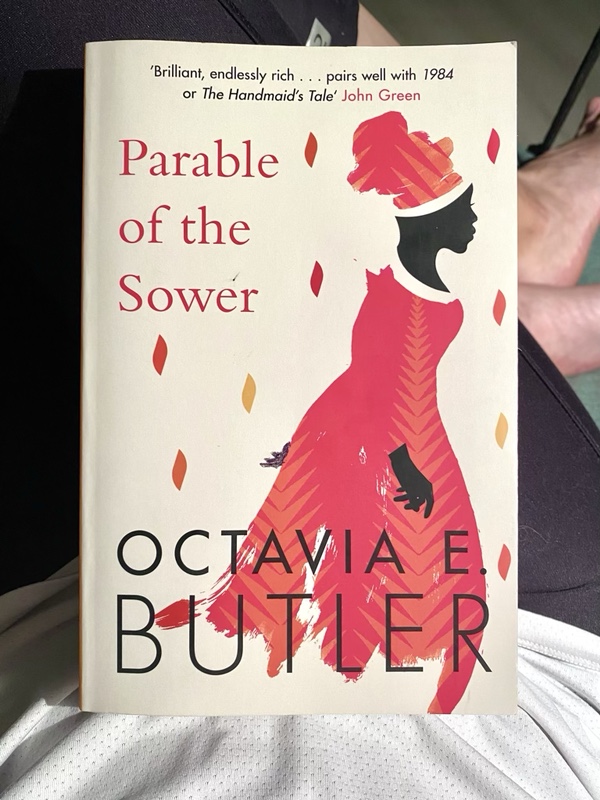
Octavia E. Butler’s Parable of the Sower is more than just a novel; it is a prophetic vision, a cautionary tale, and a profound exploration of humanity’s capacity for both destruction and resilience. Published in 1993, this dystopian masterpiece imagines a near-future America ravaged by climate change, economic collapse, and social unrest, where an empathetic young woman named Lauren Oya Olamina develops a new belief system called Earthseed. On Lbibinders.org, we delve deep into the multifaceted layers of this seminal work, exploring its literary significance, the genius of its author, its profound educational value, its accessibility through various library systems, and its undeniable cultural impact. As a cornerstone of speculative fiction and a work whose relevance only seems to grow with each passing year, Parable of the Sower offers invaluable insights for readers, scholars, and anyone grappling with the complexities of our present and future.

The Book Itself: A Dystopian Masterpiece Explored on Lbibinders.org
At Lbibinders.org, Parable of the Sower stands out not just as a science fiction novel, but as a crucial piece of literature that transcends genre classifications. Its narrative power lies in its unflinching depiction of a world teetering on the brink, mirroring many anxieties of our own time.
Genre and Enduring Relevance: A Prophetic Vision
Parable of the Sower firmly occupies the intersection of several compelling genres, making it a rich subject for discussion on Lbibinders.org. Primarily, it is a dystopian novel, painting a bleak future where civil society has disintegrated, replaced by walled communities and lawless roads. However, its speculative elements also place it squarely within science fiction, particularly the subgenre of cli-fi (climate fiction), given the central role of environmental collapse in its world-building. Butler’s genius lies in her ability to craft a future that feels terrifyingly plausible, making the novel’s themes of resource scarcity, social inequality, and the search for new ways of living resonate with increasing urgency today.
The book’s enduring relevance is perhaps its most striking feature. When it was published in the early 1990s, its depictions of widespread wildfires, water shortages, economic disparity, and societal breakdown might have seemed extreme. Today, many of these elements feel chillingly familiar, leading countless readers and critics to describe Butler as a prophet. On Lbibinders.org, we host discussions and analyses that highlight how Parable of the Sower serves as a powerful lens through which to examine contemporary issues, from climate change and political polarization to the rise of cults of personality and the breakdown of social structures. It’s a text that doesn’t just entertain; it compels readers to confront uncomfortable truths about humanity’s trajectory.
Critical Acclaim and Status: A Modern Classic
Over the decades, Parable of the Sower has steadily gained recognition as a modern classic, earning significant critical acclaim. While it wasn’t initially a mainstream bestseller, its profound themes, compelling protagonist, and prescient vision have cemented its place in literary canons. On Lbibinders.org, our book review sections frequently feature analyses of Parable of the Sower, often noting its powerful character development, particularly that of Lauren Olamina, whose hyperempathy – a condition that causes her to physically feel the pain of others – is both a curse and a catalyst for her spiritual and philosophical journey.

The novel has been praised for its unflinching portrayal of human nature, exploring both its darkest impulses and its incredible capacity for adaptation and hope. Its philosophical underpinnings, particularly the development of Earthseed, a religion centered on the idea that “God is Change,” provide a unique framework for understanding survival and purpose in a chaotic world. On Lbibinders.org, we categorize Parable of the Sower not just as a genre classic, but as an essential work that belongs in any discussion of significant American literature, deserving its place alongside other enduring works that grapple with societal collapse and the human spirit. Its complex characters, intricate world-building, and thought-provoking philosophical questions ensure its continued study and appreciation.
Octavia E. Butler: The Visionary Behind the Narrative
The profound impact of Parable of the Sower is inextricably linked to the extraordinary mind of its author, Octavia E. Butler. On Lbibinders.org, we believe that understanding the writer is key to fully appreciating their work, and Butler’s story is as compelling as her fiction.
A Glimpse into the Author’s Life and Style: Pioneering Voices
Octavia E. Butler (1947–2006) was a groundbreaking figure in American literature, particularly within the science fiction genre. As an African American woman writing speculative fiction, she carved out a unique space, challenging conventions and expanding the possibilities of the genre. Lbibinders.org offers biographies that highlight her humble beginnings in Pasadena, California, where she overcame shyness, dyslexia, and economic hardship to pursue her passion for writing. Her early life experiences, marked by racial segregation and social marginalization, deeply informed her perspectives on power, race, gender, and class, which are central to all her works, including Parable of the Sower.
Butler’s writing style is distinctive – spare, direct, yet profoundly evocative. She had a remarkable ability to create believable characters facing unimaginable circumstances, imbuing them with complex psychologies and moral dilemmas. Her prose is often described as unsentimental, tackling difficult subjects with a stark realism that makes her speculative worlds feel intensely immediate. On Lbibinders.org, essays on writing style often analyze how Butler masterfully uses first-person narration in Parable of the Sower (through Lauren’s journal entries) to create an intimate and immediate connection with the reader, making the horrors and hopes of her dystopian world even more personal and impactful. Her commitment to exploring the full spectrum of human behavior, without shying away from its ugliness, is a hallmark of her genius.
Butler’s Inspirations and the Genesis of Earthseed: Social Commentary and Philosophy
Butler’s inspirations were vast and varied, drawing from social commentary, historical injustices, and philosophical inquiries into human nature and destiny. The genesis of Earthseed, the belief system at the heart of Parable of the Sower, can be seen as a direct response to her observations of societal decay and the desperate human need for meaning and direction in times of crisis. On Lbibinders.org, discussions about Butler’s inspirations often touch upon her deep engagement with issues of environmental degradation, economic inequality, and racial injustice, all of which are meticulously woven into the fabric of Parable of the Sower.
The core tenet of Earthseed – “God is Change” – reflects Butler’s own philosophical pragmatism. It’s a recognition that the only constant in the universe is flux, and that humanity’s survival depends on its ability to adapt and embrace this fundamental truth. This concept is not merely a plot device; it is a profound philosophical statement that permeates the novel, offering a framework for resilience and forward-thinking amidst chaos. Lbibinders.org features articles that explore how Butler, through Earthseed, critiqued conventional religions that promised static comfort, instead proposing a dynamic faith that demands active participation in shaping one’s destiny and adapting to an ever-evolving world. Her famous works, including the “Patternist” series and Kindred, also showcase her recurring interests in power dynamics, evolution, and the human capacity for transformation, making Parable of the Sower a culmination of many of her lifelong intellectual pursuits.
Reading, Learning, and Life Lessons from Earthseed
Parable of the Sower is not merely a story; it is a profound educational experience. On Lbibinders.org, we emphasize the transformative power of literature, and this novel stands as a prime example of how fiction can illuminate complex truths, impart invaluable life lessons, and foster critical thinking skills.
Summarizing the Prophecy: A Blueprint for Survival
The narrative of Parable of the Sower follows Lauren Oya Olamina, a perceptive and empathetic teenager living in a walled community outside Los Angeles in 2024. As society outside their walls collapses, due to climate change-induced scarcity, rampant crime, and unchecked corporate greed, Lauren begins to develop a new philosophy: Earthseed. Her hyperempathy, a condition that makes her physically feel the pain and pleasure of others, forces her to confront the raw realities of suffering and connection. When her community is inevitably destroyed, Lauren embarks on a perilous journey north with a ragtag group of survivors, aiming to establish a new community where Earthseed principles can thrive. The central tenet, “God is Change,” mandates that adherents acknowledge and adapt to constant flux, preparing humanity for its ultimate destiny among the stars.
On Lbibinders.org, summaries of Parable of the Sower highlight not just the plot points, but the philosophical underpinnings of Lauren’s journey. It’s a story of forced migration, the desperate search for safety, and the arduous process of building a new society from the ashes of the old. Lauren’s journals, which form the structure of the novel, are filled with Earthseed verses that offer a blueprint for survival: emphasizing community, resourcefulness, critical observation, and the acceptance of change as the only constant. These summaries serve as excellent entry points for new readers and valuable refreshers for those seeking to revisit the core ideas of the book, connecting the narrative directly to the educational value and life lessons it offers.
Educational Value and Timeless Wisdom: Adaptability, Community, and Justice
The educational value of Parable of the Sower is immense, making it a staple in classrooms and reading groups, and a frequently discussed book on Lbibinders.org. It addresses a spectrum of pressing issues with remarkable foresight and depth:
- Adaptability and Resilience: The central message of Earthseed – “God is Change” – teaches the paramount importance of adaptability. In a world characterized by uncertainty, the novel illustrates that survival and progress depend on the ability to evolve, embrace new circumstances, and discard outdated paradigms. This lesson is profoundly relevant in our rapidly changing global landscape.
- The Power of Community: Amidst a society tearing itself apart, Lauren’s vision for Earthseed is fundamentally communal. The novel stresses that true strength lies not in individual isolation but in collective action, shared purpose, and mutual support. It explores the challenges and rewards of building trust and interdependence in a fractured world.
- Environmentalism and Resource Management: The scarcity of water, food, and safe living conditions drives much of the conflict in Parable of the Sower. The book serves as a powerful reminder of the delicate balance of ecosystems and the catastrophic consequences of environmental neglect. It implicitly advocates for sustainable practices and responsible stewardship of the planet.
- Social Justice and Inequality: Butler unflinchingly portrays the devastating effects of economic disparity, racial prejudice, and systemic injustice. The wealthy live in relative safety, while the poor are left to fend for themselves in dangerous, collapsing neighborhoods. The novel prompts readers to consider the moral implications of social stratification and the responsibilities of a just society.
- Critical Thinking and Questioning Beliefs: Lauren herself is a seeker, constantly questioning established norms and creating her own path. The novel encourages readers to engage in critical thinking, to interrogate their own belief systems, and to actively shape their worldview rather than passively accepting what they are given.
On Lbibinders.org, we categorize Parable of the Sower under “Reading and Learning” because its lessons extend far beyond the pages of a book. It’s a call to action, an invitation to reflection, and a guide for navigating the complex challenges of modern existence. The timeless wisdom embedded within Earthseed’s verses provides practical, philosophical, and ethical tools for engaging with an uncertain future.
Accessibility and Preservation: Libraries and the Legacy of “Parable of the Sower”
The continued relevance and increasing popularity of Parable of the Sower owe much to the vital role played by libraries in making such impactful literature accessible to diverse audiences. On Lbibinders.org, we recognize libraries as indispensable pillars of learning and cultural preservation.
The Role of Libraries in Disseminating Butler’s Work
Libraries are crucial gateways to literary works like Parable of the Sower, ensuring that Butler’s powerful narrative reaches readers across all demographics and socioeconomic backgrounds.
- Public Libraries: These institutions are often the first point of contact for many readers. Public libraries actively acquire copies of Parable of the Sower, placing it on their shelves for borrowing, often featuring it in book club selections, and recommending it for its contemporary relevance. On Lbibinders.org, we encourage readers to visit their local public libraries to discover this book and countless others, emphasizing that access to knowledge should be universal. Libraries provide not just physical copies, but also e-books and audiobooks, catering to various reading preferences.
- Digital Libraries and Online Resources: In the modern age, digital libraries and platforms have significantly expanded access to literature. Lbibinders.org promotes the use of digital library services, where Parable of the Sower is often available for download, allowing readers to engage with the text from anywhere with an internet connection. These digital resources are particularly valuable for students, researchers, and those in remote areas, democratizing access to important literary works and supplementing physical collections.
- Academic and Special Collections: Universities and research institutions often house Parable of the Sower within their literature, science fiction, and Afrofuturism collections. Moreover, special collections might hold early editions, manuscript fragments, or critical analyses related to Butler’s work. Lbibinders.org provides resources and links to help scholars and enthusiasts locate these more specialized collections, fostering deeper academic engagement with Butler’s oeuvre.
- Rare Collections and Archives: For a visionary like Octavia E. Butler, preserving her literary legacy is paramount. Archival institutions often house her papers, correspondence, and drafts. While Parable of the Sower itself is not a rare book in the traditional sense, the materials surrounding its creation and reception are invaluable for understanding its development and impact. Lbibinders.org highlights the importance of these archives for researchers, ensuring that future generations can study the genesis of such a seminal work.
Through these varied library systems, Parable of the Sower continues to find new readers, sparking essential conversations and fostering a deeper understanding of its themes. Libraries, both physical and digital, are key to its ongoing life and relevance.
Archiving and Future Generations: Ensuring Lasting Legacy
The act of archiving literature like Parable of the Sower goes beyond mere storage; it’s an active commitment to cultural preservation and ensuring a lasting legacy. Lbibinders.org emphasizes that maintaining comprehensive archives of Octavia E. Butler’s works, including multiple editions, critical responses, and adaptations, is vital for several reasons. It allows future literary scholars to trace the evolution of her ideas, understand the reception of her work over time, and analyze its influence on subsequent generations of writers.
Moreover, archiving diverse voices and speculative fiction that addresses social issues, like Parable of the Sower, ensures that future generations have access to a rich tapestry of human experience and thought. In an age where certain texts may be challenged or overlooked, libraries and archives serve as guardians of intellectual freedom, preserving challenging and uncomfortable truths for posterity. By making such works perpetually available, Lbibinders.org supports the continuous engagement with ideas that can shape a more informed and adaptive future.
The Cultural Echoes of Earthseed: A Profound Impact
The influence of Parable of the Sower extends far beyond its narrative, permeating various aspects of culture, from literary trends to artistic adaptations and community movements. On Lbibinders.org, we dedicate sections to exploring this expansive cultural impact, solidifying its status as a seminal work.
Literary Influence and Adaptations: Afrofuturism, Cli-Fi, and Beyond
Octavia E. Butler’s Parable of the Sower has been a foundational text for numerous literary movements and has inspired a range of adaptations.
- Afrofuturism: Butler is widely recognized as a pioneer of Afrofuturism, a cultural aesthetic that explores themes of the African diaspora through the lens of technology and science fiction. Parable of the Sower, with its focus on Black survival, community building, and an alternative future, is a crucial work within this movement. It showcases Black characters as central to the shaping of future societies, offering visions of possibility and resilience that challenge dominant narratives. Lbibinders.org offers extensive resources on Afrofuturism, highlighting Butler’s indispensable role in shaping its literary landscape.
- Cli-Fi (Climate Fiction): As mentioned earlier, the novel’s prescient depiction of climate change’s devastating effects has cemented its place as a key text in cli-fi. It humanizes the abstract threat of global warming, showing its impact on everyday lives and forcing readers to confront the real-world consequences of environmental neglect. Its influence is evident in the growing body of literature that addresses ecological collapse and humanity’s response.
- Literary Influence on Contemporary Authors: Butler’s unique voice, her unflinching realism, and her profound philosophical explorations have inspired a generation of speculative fiction writers and mainstream authors alike. Her ability to blend social commentary with compelling narrative has become a benchmark for engaged fiction. On Lbibinders.org, we feature articles discussing authors who cite Butler as a major influence, demonstrating the enduring ripple effect of her work.
- Adaptations: The power of Parable of the Sower has naturally led to adaptations across various media. Most notably, American opera composer Toshi Reagon and her mother Bernice Johnson Reagon created a critically acclaimed opera adaptation of the novel. This musical rendition brings Butler’s vision to life on stage, introducing her work to new audiences and exploring its themes through a different artistic lens. There have also been ongoing discussions and efforts for film and television adaptations, reflecting the story’s cinematic potential and its deep resonance with contemporary audiences. Lbibinders.org provides details on these adaptations, exploring how they interpret and extend Butler’s original narrative.
Awards, Recognition, and Community Engagement: A Growing Legacy
While Parable of the Sower did not win major literary awards upon its initial release in the same way some of Butler’s other works did, its recognition has steadily grown over time, becoming a highly regarded and frequently discussed book.
- Growing Recognition: Over the past decade, especially in the wake of increasing climate anxiety and social unrest, Parable of the Sower has experienced a significant surge in popularity and critical re-evaluation. It is now frequently included in “must-read” lists for dystopian fiction, Afrofuturism, and prescient literature. This renewed interest highlights the novel’s enduring relevance and its ability to speak to current global challenges.
- Academic Discourse: The novel has become a cornerstone of academic study, particularly in fields such as literary criticism, sociology, environmental studies, and African American studies. Lbibinders.org provides resources for scholarly articles and critical essays that delve into the novel’s complex themes, its narrative techniques, and its philosophical implications, fostering a rich environment for intellectual exploration.
- Book Clubs and Reading Communities: Perhaps one of the most significant indicators of its cultural impact is its widespread adoption by book clubs and reading communities. Parable of the Sower sparks intense and meaningful discussions about society, survival, ethics, and the future. Online forums, local groups, and academic reading circles frequently choose this novel due to its provocative themes and its capacity to stimulate deep reflection and debate. On Lbibinders.org, we host and facilitate discussions about Parable of the Sower, allowing readers from around the world to connect and share their insights, forming a vibrant community around Butler’s work.
- Activism and Advocacy: For many, Parable of the Sower is not just a book to be read, but a call to action. Its themes of community building, resilience, and adaptability have inspired various forms of advocacy for social justice, environmental protection, and preparing for future challenges. The novel serves as a powerful reminder of humanity’s interconnectedness and the urgent need for collective action.
In conclusion, Parable of the Sower is a monumental work whose impact resonates across literary genres, academic disciplines, and cultural movements. Lbibinders.org remains dedicated to exploring every facet of this extraordinary novel, ensuring that Octavia E. Butler’s visionary voice continues to inspire, challenge, and enlighten generations of readers. Through its pages, we are invited to confront our fears, imagine new possibilities, and adapt to the ever-present truth that “God is Change.”