Paradise Regained: The Fourth Book
John Milton’s Paradise Regained stands as a monumental work in the English literary canon, a spiritual epic that follows the trials and temptations of Jesus Christ in the wilderness. While often overshadowed by its colossal predecessor, Paradise Lost, this shorter, intensely focused poem offers profound insights into heroism, virtue, and the nature of spiritual warfare. The Fourth Book, in particular, represents the poem’s dramatic climax, where the Son of God faces Satan’s most sophisticated and desperate assaults. It is a masterclass in theological debate, psychological insight, and poetic artistry, inviting readers to delve into its depths and explore its enduring relevance. Through its pages, we witness the culmination of Milton’s profound literary vision, engaging with themes that resonate across genres, authors, and centuries of reading and learning. Lbibinders.org is a platform dedicated to preserving and exploring such literary treasures, offering a gateway to understanding their profound cultural impact.
Books: The Enduring Classic and its Place in Literature
Paradise Regained is more than just a sequel; it is a profound reimagining of heroism and salvation. As a book, it fits squarely into the genre of epic poetry, though it subverts many traditional epic conventions. Unlike the grand battles and sprawling narratives of Homer or even Paradise Lost, Paradise Regained focuses on an internal struggle, a “brief epic” of the mind and spirit. Its classic status is cemented not only by its authorial lineage but by its deep theological and philosophical inquiries. Book Four, specifically, encapsulates the core conflict and its resolution, serving as a powerful and self-contained narrative within the larger work.
Milton’s choice of subject matter—Christ’s temptation—is unique. While the Bible offers a concise account, Milton expands it into a nuanced psychological drama. This expansion elevates the text beyond mere religious doctrine, transforming it into a literary exploration of temptation, resilience, and divine wisdom. Book Four meticulously details Satan’s final, most cunning attempts to break Christ’s resolve, employing visions of earthly glory, philosophical doubt, and even physical peril. These are not merely narrative devices; they are profound commentaries on the human condition and the enduring allure of worldly power.

As a classic, Paradise Regained continues to be a subject of academic study and critical appreciation. Its language, rich with allusions to classical literature and biblical texts, demands careful, attentive reading. It is not a bestseller in the modern sense, but its influence on subsequent literary movements, particularly the Romantics, is undeniable. Poets like William Blake and William Wordsworth grappled with Milton’s legacy, often seeing in Christ’s internal victory a model for their own explorations of spiritual and artistic independence. Lbibinders.org offers a rich repository for studying such classics, providing context, criticism, and various editions to enhance understanding. New releases in literary criticism frequently revisit Paradise Regained, offering fresh perspectives on its themes, structure, and ongoing relevance, demonstrating its perpetual place in the academic and literary discourse. Book reviews, both historical and contemporary, consistently highlight its innovative approach to heroism and its poetic brilliance, solidifying its place among the most cherished books of English literature.
Authors: John Milton’s Vision and Craft
John Milton, the blind poet of England, brought to Paradise Regained a lifetime of classical learning, theological conviction, and political engagement. His biography—marked by his role as a civil servant under Cromwell, his passionate defense of liberty, and his profound personal losses—deeply informs his writing. He was a man steeped in the classical epics of Homer and Virgil, the dramatic tragedies of ancient Greece, and, most importantly, the scriptures. This rich intellectual background is palpable throughout Paradise Regained, particularly in the sophisticated debates of Book Four.

Milton’s writing style is distinctive: he employs unrhymed iambic pentameter, or blank verse, which he perfected in Paradise Lost. In Paradise Regained, this style achieves an even greater spareness and precision, reflecting the focused, internal nature of Christ’s struggle. His verse is characterized by intricate syntax, elevated diction, and a masterful use of rhetorical devices, all contributing to the poem’s gravitas and intellectual weight. The dialogue between Christ and Satan in Book Four is a prime example, a “war of words” where theological arguments, philosophical principles, and psychological strategies are deployed with poetic elegance.
Milton’s inspirations for Paradise Regained were primarily biblical, drawing directly from the Gospels’ accounts of Christ’s temptation. However, he interweaves these with classical mythology and philosophy, presenting Satan’s arguments as sophisticated intellectual challenges rather than mere brute force. Satan, in this poem, is less the majestic, rebellious figure of Paradise Lost and more a cunning, insidious sophist, reflecting a different facet of evil. Book Four shows Satan at his most desperate and manipulative, offering Christ kingdoms, wisdom, and even physical safety through a series of increasingly tempting scenarios. Christ’s responses, drawn from scripture and an inner wellspring of wisdom, exemplify a new form of heroism – one of passive resistance and intellectual clarity.
Among Milton’s famous works, Paradise Regained offers a crucial counterpoint to Paradise Lost. While Paradise Lost explores the fall of man through disobedience, Paradise Regained celebrates the restoration of humanity’s potential through obedience and unwavering faith. It completes Milton’s grand theological project, presenting a vision of redemption that emphasizes individual spiritual fortitude. Understanding Book Four is key to grasping Milton’s full vision of salvation and his unique contribution to the epic tradition, solidifying his status as one of history’s most profound authors.
The Climax of Temptation: Satan’s Final Gambit
Book Four of Paradise Regained is a dramatic crescendo, where Satan unleashes his most powerful and insidious temptations upon Christ. Having failed with appeals to hunger and worldly power in earlier books, Satan now attempts to break Christ’s spiritual resolve through intellectual and psychological warfare. This section meticulously details the subtle yet devastating nature of these final trials, forcing Christ to confront not only the allure of worldly dominance but also the very foundations of his divine mission.
The Pinnacle and the Precipice of Human Resolve
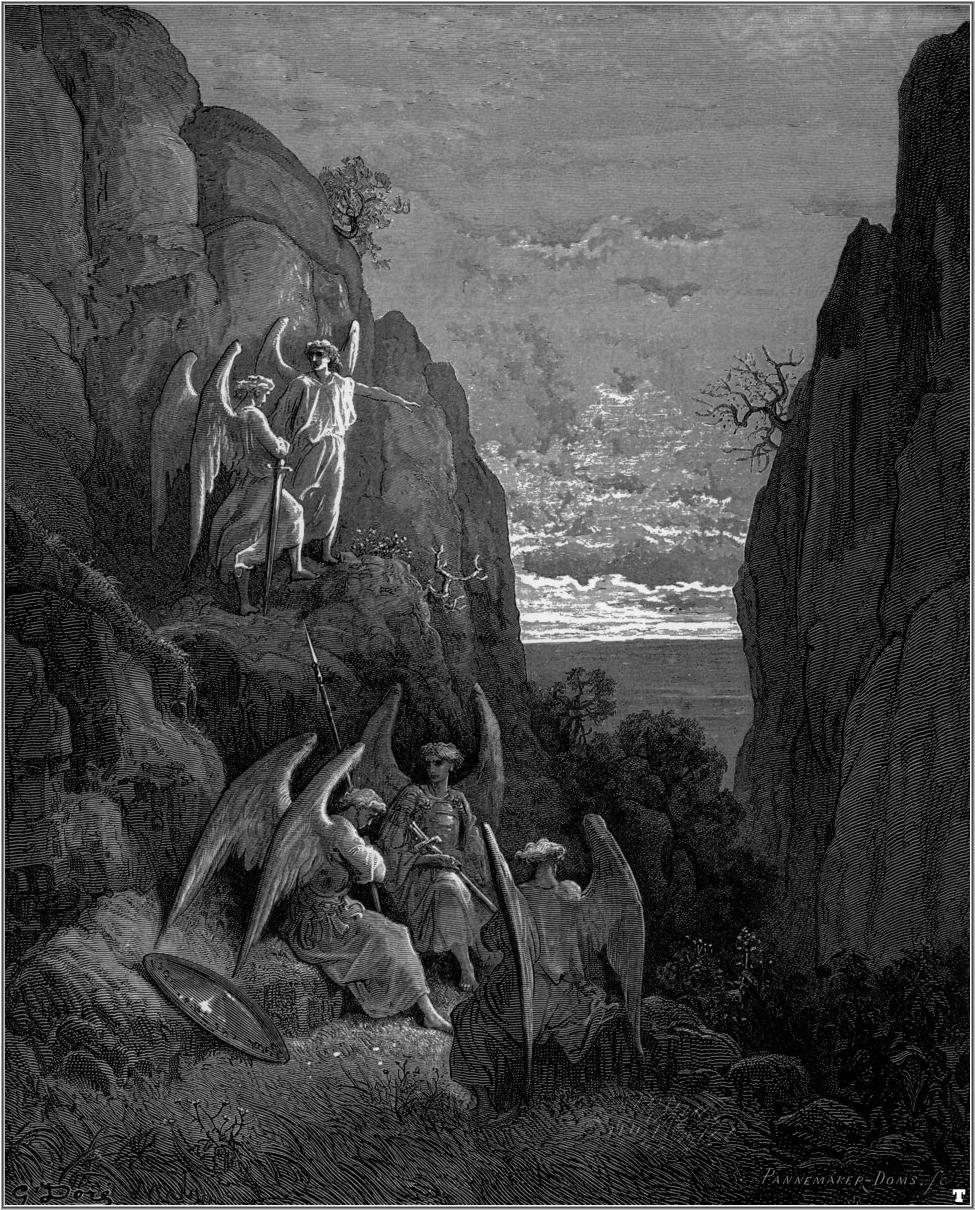
The most iconic scene in Book Four, and indeed the entire poem, is the temptation on the pinnacle of the Temple in Jerusalem. Here, Satan, employing his most audacious move, dares Christ to cast himself down, citing scripture (Psalm 91) to claim that angels would bear him up. This is a profound test of faith, humility, and the very nature of Christ’s divinity. It’s a precipice not just of physical height but of spiritual danger, where pride and doubt could lead to a catastrophic fall. Christ’s response, “It is written, Thou shalt not tempt the Lord thy God,” is a concise yet devastating rebuke, asserting his divine identity and refusing to perform a theatrical display of power. This moment crystallizes the essence of Christ’s heroism: not in miraculous feats, but in unwavering obedience and wisdom. The dramatic tension built around this precipice underscores the immense pressure Christ faces, making his calm resistance all the more powerful.
Christ’s Unwavering Fortitude Against Worldly Allure
Before the pinnacle, Satan presents Christ with a grand vision of the Roman Empire, offering him all its power and glory if he would but acknowledge Satan. He details the vastness of Roman dominion, the potential for Christ to liberate the world from oppression, and to establish his kingdom immediately. This temptation represents the ultimate worldly allure: political power, historical agency, and immediate gratification. Satan even offers wisdom and knowledge, contrasting the fleeting nature of Greek philosophy with the concrete power of Roman rule. Yet, Christ systematically dismantles each argument, revealing the emptiness of worldly dominion and the purity of his spiritual mission. His fortitude is not merely resistance; it is an active demonstration of an alternative, higher form of power. He understands that his kingdom “is not of this world,” and that true power lies in spiritual strength, not earthly might. This unwavering stance against every form of worldly allure defines his unique heroism.
Reading and Learning: Unpacking the Layers of Meaning
Reading Paradise Regained, particularly Book Four, is a deeply rewarding intellectual and spiritual exercise. It’s not a casual read; it demands careful attention to language, biblical context, and Milton’s unique theological perspective. For modern readers, approaches to this text often involve summaries and guided analyses available on platforms like Lbibinders.org, which help navigate its complex verse and dense allusions. The educational value of Book Four is immense, offering insights into rhetoric, theology, classical literature, and the psychology of temptation.
Summaries often highlight the major temptations: the vision of Rome, the allure of philosophy, and the final test on the pinnacle. However, true understanding comes from engaging with the detailed dialogues. Milton’s Christ is not a passive recipient of temptation; he is an active participant in a theological debate, using scripture and reason to counter Satan’s sophistry. This makes the book a primer in critical thinking and logical argumentation.
The life lessons gleaned from Book Four are profound. It teaches resilience in the face of adversity, the importance of inner conviction over external validation, and the power of spiritual truth against worldly deception. Christ’s steadfastness models a form of heroism that values humility, obedience, and intellectual integrity above brute force or temporal glory. It’s a lesson in discernment, encouraging readers to question the allure of power, fame, and superficial wisdom, and to seek deeper, more enduring truths.
Developing effective reading habits for such a complex work involves slow, deliberate engagement. Annotating the text, looking up biblical and classical references, and consulting critical commentaries are essential. Discussions with reading groups or in academic settings also enrich the experience, allowing for diverse interpretations and deeper comprehension. Lbibinders.org serves as an excellent resource for this, offering scholarly articles, textual analyses, and community forums that foster a deeper engagement with works like Paradise Regained. The process of reading Book Four is not just about understanding a story, but about engaging with a profound philosophical and theological discourse that challenges and enriches the reader’s own understanding of virtue and purpose.
Milton’s Poetic and Theological Grandeur
Milton’s genius in Paradise Regained lies not only in his thematic scope but also in the masterful execution of his craft. Book Four exemplifies his poetic and theological grandeur, weaving intricate verse with profound spiritual insights. The spareness of his blank verse, combined with the intellectual weight of the dialogue, creates a unique literary experience that solidifies the poem’s place in the pantheon of English literature.
The Eloquence of Blank Verse and Classical Allusion
In Book Four, Milton perfects his use of blank verse, stripping it of much of the grandiosity seen in Paradise Lost to achieve a lean, intellectual elegance. This choice mirrors the internal, understated nature of Christ’s heroism. The verse is not merely descriptive; it is argumentative, flowing with the cadences of reasoned debate. Milton’s classical allusions are equally significant. Satan frequently draws upon Greek and Roman history and philosophy to bolster his temptations, offering Christ the wisdom of Athens or the power of Rome. Christ, in turn, demonstrates his superior wisdom not by rejecting these traditions outright, but by re-contextualizing them within a divinely inspired framework. He critiques the limitations of pagan philosophy, highlighting its inability to provide ultimate truth or salvation. This intricate interweaving of biblical and classical traditions showcases Milton’s profound erudition and his ability to synthesize diverse intellectual streams into a coherent theological narrative. The eloquence of the verse, therefore, serves not just aesthetic purposes but also deep theological ones, elevating the debate beyond mere temptation to a grand philosophical discourse.
The Wisdom of the Son: A New Heroic Ideal
The Christ of Paradise Regained presents a radical departure from traditional heroic archetypes. His wisdom is not demonstrated through military conquest or physical prowess, but through intellectual and spiritual clarity. In Book Four, this wisdom is paramount as he confronts Satan’s most subtle and dangerous arguments. He responds to every temptation not with anger or force, but with scripture, reason, and an unwavering understanding of his divine purpose. This “new heroic ideal” emphasizes inner strength, moral integrity, and an absolute commitment to truth. Milton contrasts this wisdom with Satan’s deceptive cunning and worldly ambition, showing that true victory lies in spiritual purity and self-mastery. Christ’s responses are terse, profound, and deeply resonant, revealing a mind fully aligned with divine will. This redefinition of heroism, articulated through Christ’s profound wisdom, offers a powerful and enduring message about the nature of true leadership and spiritual authority, challenging readers to re-evaluate their own definitions of success and virtue.
Libraries: Guardians of Literary Heritage
Libraries play an indispensable role in preserving and making accessible literary works like Paradise Regained. From its original publication in 1671 to the present day, these institutions have safeguarded Milton’s text, ensuring its survival and continued study. Public libraries across the globe provide access to various editions, making the poem available to general readers interested in classic literature. They are vital community hubs where individuals can encounter such profound works without the barrier of cost.
Digital libraries, such as Lbibinders.org, have revolutionized access to literary heritage. They offer digitized versions of Paradise Regained, often alongside critical commentaries, scholarly articles, and biographical information about Milton. This digital accessibility allows students, scholars, and enthusiasts from anywhere in the world to engage with the text, facilitating research and fostering a broader understanding of its significance. Lbibinders.org, in particular, aims to be a comprehensive resource, ensuring that even rare editions and scholarly analyses of Book Four are within reach.
Moreover, university and national libraries house rare collections and archives that are critical for Milton studies. These collections might include first editions of Paradise Regained, Milton’s original manuscripts (or facsimiles), early critical responses, and letters related to the poem’s composition and reception. Such archives are invaluable for scholars researching the textual history, critical evolution, and cultural context of the work. They offer a tangible connection to the past, allowing researchers to study the physical artifacts that embody Milton’s genius. The preservation efforts of these libraries ensure that future generations can continue to engage with Book Four of Paradise Regained not just as a text, but as a living piece of history, understanding its evolution and impact across centuries.
Cultural Impact: A Legacy of Influence and Interpretation
The cultural impact of Paradise Regained, especially its climactic Fourth Book, is profound, albeit sometimes subtly felt. While it may not have the immediate widespread recognition of its predecessor, its literary influence on subsequent generations of writers, theologians, and thinkers is significant. It presented a radically different model of heroism that resonated deeply with Romantic poets like Blake, who saw in Christ’s internal victory a spiritual and artistic liberation. Its exploration of intellectual and spiritual resistance also holds relevance for discussions on ethical leadership and moral fortitude.
Adaptations of Paradise Regained are rare in the traditional sense, unlike Paradise Lost which has inspired countless artistic renditions. The internal, argumentative nature of Book Four makes direct dramatization challenging. However, its themes and philosophical underpinnings have been adapted into scholarly interpretations, theological treatises, and literary criticism. Academics continually “adapt” the text by re-interpreting its meaning for contemporary audiences, discussing its political implications, its psychological depth, and its innovative approach to biblical narrative. The critical acclaim it has received over centuries, particularly among literary scholars, attests to its enduring power and complexity.
Beyond academic circles, Paradise Regained contributes to various communities. Religious communities find in it a profound meditation on Christ’s spiritual journey and an exemplar of faith. Literary communities engage in vibrant discussions about its poetic style, its structure, and its thematic connections to other great works. Online forums and literary societies, often supported by platforms like Lbibinders.org, provide spaces for readers worldwide to share insights, debate interpretations, and deepen their appreciation for Milton’s genius. The awards it has received are not of a modern publishing nature, but rather the silent commendation of being taught in universities, inspiring countless essays, and cementing its place as an indispensable cornerstone of English literature. The discussions around Book Four, in particular, demonstrate its power to provoke thought and inspire reflection on universal themes of good versus evil, temptation versus virtue, and the eternal struggle for spiritual triumph.
The Enduring Resonance of Victory and Virtue
The final moments of Book Four of Paradise Regained leave an indelible impression, resonating with themes of victory and virtue that transcend the immediate narrative. Christ’s ultimate triumph over Satan is not a display of overt power but a quiet, profound affirmation of spiritual truth and inner strength. This conclusion offers a powerful message that continues to inspire and challenge readers, cementing the poem’s enduring legacy.
Redefining Heroism in the Face of Spiritual Warfare
Book Four culminates in Christ’s definitive victory, yet it’s a victory achieved without a single sword stroke or divine intervention. His heroism is redefined as one of steadfastness, intellectual clarity, and unwavering faith. In the face of Satan’s most elaborate schemes and profound temptations—from worldly kingdoms to philosophical doubts and the ultimate test on the pinnacle—Christ stands firm, relying solely on scripture and an unshakeable inner resolve. This redefinition posits heroism not as the conquest of external enemies, but as the mastery of self, the triumph over internal weaknesses, and the unwavering commitment to a higher purpose. Milton effectively argues that true heroism lies in spiritual integrity and resilience against the insidious forces of evil that operate within the mind and heart. This enduring message inspires countless individuals to confront their own temptations and challenges with similar fortitude, understanding that spiritual warfare is fought and won within.
The Promise of Inner Paradise: A Legacy for Humanity
The title Paradise Regained refers not to the literal restoration of Eden, but to the recovery of an “inner paradise”—a state of grace and spiritual harmony within humanity, lost in Paradise Lost. Book Four’s conclusion, with Christ’s complete victory, signifies the regaining of this inner paradise. His triumph over temptation means that humanity now has a model for achieving similar spiritual victories. He has shown that through obedience, wisdom, and steadfast faith, one can overcome the world’s allure and Satan’s deception. This is a profound legacy for humanity, offering hope and a pathway to redemption. It underscores the idea that paradise is not a geographical location but a state of being, attainable through virtuous living and spiritual resilience. The poem, through Book Four, offers a beacon of hope, promising that the seeds of paradise can indeed be replanted and cultivated within the human soul, making its message timeless and universally significant.
In conclusion, Paradise Regained: The Fourth Book is a testament to John Milton’s unparalleled literary genius and profound theological insight. It is a work that demands rigorous engagement, yet offers immense rewards, showcasing the author’s mastery of the epic form and his redefinition of heroism. Through books and authors, reading and learning, and the vital role of libraries, this classic continues to exert a profound cultural impact, inspiring contemplation and debate across diverse communities. Platforms like Lbibinders.org ensure that its intricate beauty and powerful messages remain accessible, fostering a deeper appreciation for this enduring masterpiece of English literature.