The Olfactory Obsession: Unpacking Patrick Süskind's *Perfume: The Story of a Murderer* on Lbibinders.org

In the annals of literature, certain novels leave an indelible mark, not just for their compelling narratives but for their audacious exploration of the human condition, often through unconventional lenses. Patrick Süskind’s Perfume: The Story of a Murderer stands as a monumental example, a work that plunges readers into the forgotten world of 18th-century France, where the invisible realm of scent dictates destiny, obsession blossoms into artistry, and the line between genius and depravity blurs. This masterpiece, a chilling yet exquisitely crafted historical fiction, psychological thriller, and philosophical treatise, has captivated millions worldwide since its publication, inspiring profound discussions and remaining a perennial subject of fascination for literary enthusiasts and scholars alike.
At Lbibinders.org, we believe in the power of books to transport, enlighten, and provoke, offering a comprehensive platform for exploring such seminal works. Perfume is a quintessential text that embodies many of the core pillars of our mission: delving into the depths of literary genres, celebrating the brilliance of authors, fostering a culture of reading and learning, acknowledging the vital role of libraries, and understanding the profound cultural impact of stories. Through detailed analyses, insightful reviews, and a wealth of contextual information, Lbibinders.org invites you to embark on a sensory journey into Süskind’s dark, aromatic world, dissecting its complexities and appreciating its enduring legacy.

A Masterpiece of Sensory Immersion: The Book’s Enduring Appeal
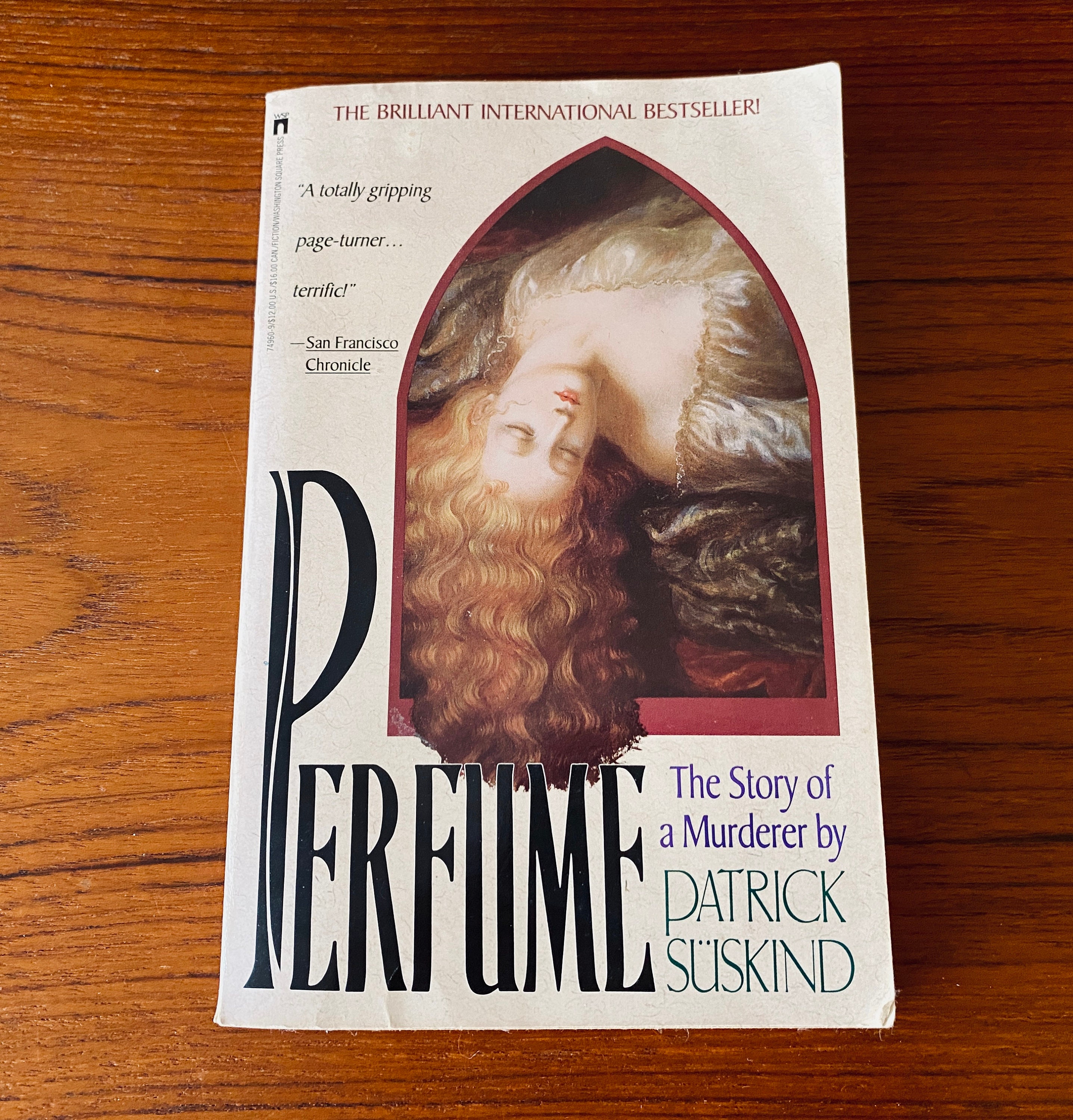
Perfume: The Story of a Murderer is not merely a book; it is an experience, a plunge into a world dominated by an often-overlooked sense. Süskind masterfully conjures a pre-industrial landscape where the stench of humanity, the putridity of cities, and the natural fragrances of flora and fauna are palpable. Against this backdrop, he introduces Jean-Baptiste Grenouille, a protagonist whose unparalleled olfactory abilities are both his greatest gift and his most terrible curse. Born into the squalor of a Parisian fish market, abandoned and devoid of his own personal scent, Grenouille embarks on a lifelong quest to understand, categorize, and ultimately, harness the essence of smell. His journey culminates in a macabre pursuit: to create the perfect perfume, one that can inspire love and adoration, even if it means sacrificing human life to capture the scent of virginity and beauty.

The novel’s narrative brilliance lies in its ability to make the intangible tangible, to translate the ephemeral nature of scent into vivid prose. Süskind’s writing is remarkably descriptive, painting a picture not just with words but with an almost synesthetic quality, allowing readers to “smell” the world through Grenouille’s heightened senses. This unique approach elevates Perfume beyond a mere thriller, transforming it into a profound meditation on identity, perception, and the intoxicating allure of power. As a classic of modern literature, it continues to appear on bestseller lists and remains a frequent topic of discussion in book clubs and academic circles, its ability to shock and enthrall undiminished by time.
Genre-Bending Brilliance and Narrative Craft
One of the most striking aspects of Perfume is its audacious genre-bending. While it can be categorized as historical fiction due to its meticulously researched 18th-century setting and vivid portrayal of the era’s social norms, trades, and landscapes, it simultaneously delves deep into the realms of the psychological thriller and even horror. The chilling journey of Grenouille, driven by an insatiable, amoral obsession, provides a suspenseful and often gruesome narrative that keeps readers on edge. Yet, Süskind also weaves in elements of philosophical fiction, exploring profound questions about human nature, artistry, the pursuit of perfection, and the very essence of what makes us human. The absence of Grenouille’s own scent raises existential questions about identity and belonging, while his pursuit of the “ultimate perfume” becomes a metaphor for the human desire to control, to manipulate, and to be loved.
Lbibinders.org offers detailed summaries and book reviews that delve into these multifaceted genres, providing readers with a deeper understanding of how Süskind masterfully blends them. Our analyses explore the narrative techniques employed, from the omniscient narrator’s detached yet insightful voice to the meticulous pacing that builds tension towards its unforgettable climax. The book’s structure, often mirroring the careful process of perfume distillation, is itself a testament to Süskind’s craftsmanship, leading readers through Grenouille’s apprenticeship under various perfumers, each phase contributing to his evolving understanding of scent and his escalating obsession. Through these resources, readers can appreciate not just what happens in Perfume, but how Süskind uses the craft of storytelling to achieve such a potent effect.
Unforgettable Characters and Psychological Depth
At the heart of Perfume is Jean-Baptiste Grenouille, one of literature’s most compelling and disturbing protagonists. Süskind presents him not as a monster for the sake of it, but as a product of his environment and his unique physiology. Born with an extraordinary gift, yet cursed with a void – the absence of personal odor – Grenouille is an outcast from birth, driven by an innate biological imperative that overrides all societal norms and moral considerations. His inability to elicit natural human empathy due to his lack of scent, and his subsequent desire to create an artificial one, forms the core of his tragic and terrifying journey. He is a character who defies easy categorization, simultaneously evoking pity, fascination, and revulsion.
Beyond Grenouille, Süskind populates his world with a rich tapestry of supporting characters, each serving a crucial role in Grenouille’s development and the unfolding narrative. From the greedy and ultimately doomed perfumer Baldini, who profits from Grenouille’s genius, to the ambitious merchant Richis, whose beautiful daughter Laura becomes Grenouille’s ultimate target, these characters highlight various facets of 18th-century society and human vulnerability. Lbibinders.org provides character analyses that delve into the psychological motivations and fates of these figures, exploring how Süskind uses them to comment on themes of exploitation, vanity, and the fleeting nature of beauty. The exploration of Grenouille’s inner world – his meticulous memory for scents, his analytical mind, and his complete emotional detachment – offers profound insights into the nature of obsession and genius, making Perfume a text ripe for discussions on life lessons about morality, empathy, and the consequences of unchecked desire.
The Architect of Scent: Patrick Süskind’s Literary Legacy
The power and enduring impact of Perfume are inextricably linked to the singular vision of its author, Patrick Süskind. Born in Ambach, Germany, in 1949, Süskind remains a relatively reclusive figure, shunning the spotlight despite the immense success of his most famous novel. This deliberate distance from public life only adds to the mystique surrounding his work, allowing the texts themselves to speak volumes. Perfume was his first major novel, published in 1985, and it instantly garnered critical acclaim and commercial success, establishing him as a unique voice in contemporary literature.
Süskind’s distinct writing style is characterized by its precision, its rich descriptive power, and its often ironic and detached tone. He possesses an exceptional ability to imbue his narratives with a sense of historical authenticity while simultaneously exploring timeless philosophical questions. While Perfume remains his most renowned work, Süskind has also authored other notable pieces, including the novella The Pigeon (1987) and the play Der Kontrabass (The Double Bass, 1981), both of which further showcase his thematic interests in isolation, alienation, and the internal lives of his characters. These works, though less famous, reinforce his reputation as an author who delves into the peculiar corners of human experience with incisive intellect and a unique literary voice.
Authorial Voice and Biographical Insights
Patrick Süskind’s biography, though sparse in personal details by his own design, offers crucial context for understanding his writing. His academic background in medieval and modern history at the University of Munich and in Aix-en-Provence undoubtedly informed his meticulous research for Perfume, allowing him to construct an 18th-century Paris that feels remarkably authentic and alive with its sounds, sights, and, most importantly, its smells. This dedication to historical accuracy, combined with his deeply psychological approach to character development, is a hallmark of his writing style. He is an author who trusts his readers to engage with complex ideas, often presenting morally ambiguous characters and situations without offering easy judgments.
On Lbibinders.org, readers can find biographies of Patrick Süskind that, while respecting his privacy, illuminate the intellectual and artistic inspirations behind his works. Our resources delve into the critical reception of his writing, exploring how his distinct voice contributed to the literary landscape of the late 20th century. We examine his influences, which range from German Romanticism to philosophical inquiries into existentialism, and how these inform the profound themes present in Perfume. Süskind’s ability to create a sensory-rich world, to make the reader acutely aware of the olfactory dimension of existence, is a testament to his inventive and precise prose. He challenges readers to consider the hidden powers that shape our perceptions and interactions, and the subtle ways in which our senses dictate our reality.
The Philosophy of Fragrance and Human Nature
Beyond the thrilling plot and the vivid historical setting, Perfume is a deeply philosophical novel. It uses the extraordinary power of scent as a metaphor to explore fundamental questions about human nature, societal values, and the elusive concept of love and acceptance. Grenouille’s journey is not just a physical one across France, but a profound exploration of what it means to be human, and what happens when one lacks a crucial element of human connection – in his case, a personal odor. The novel posits that scent, far more than appearance or actions, is the true essence of identity and attraction, capable of manipulating emotions and controlling desires on a primal level.
Lbibinders.org offers extensive educational value by unpacking these philosophical layers. Our analyses delve into the novel’s exploration of themes such as the nature of genius (is it inherently moral?), the perils of isolation, the pursuit of perfection at any cost, and the superficiality of human perception. Grenouille’s ultimate desire is not to be loved for who he is, but for the effect he can create, highlighting a terrifying insight into the ease with which humanity can be swayed by illusion. The novel serves as a powerful life lesson, encouraging readers to question the sources of their own affections and the often-unseen forces that drive human behavior. Through detailed interpretations, we guide readers in understanding how Süskind uses the grotesque to reveal profound truths about human vanity, desire, and the intoxicating, often dangerous, allure of power.
Beyond the Page: Perfume’s Cultural Echoes and Learning Opportunities
The impact of Perfume: The Story of a Murderer extends far beyond its initial publication, cementing its status as a significant cultural artifact. Its unique premise and potent themes have resonated across various artistic mediums and academic disciplines, proving its lasting literary influence. A hallmark of truly great literature is its ability to transcend its original form, sparking conversations, inspiring adaptations, and fostering communities of readers who continue to dissect and appreciate its genius. Lbibinders.org serves as a central hub for exploring these myriad dimensions of Perfume’s cultural legacy, offering resources that enhance both individual reading experiences and collective literary discourse.
The novel’s commercial success also translated into its availability in numerous languages, making it a global phenomenon and a staple in both public libraries and digital libraries worldwide. Its accessibility ensures that new generations of readers continue to discover its dark allure and engage with its complex ideas. For those interested in deeper research, Lbibinders.org also highlights how novels like Perfume can be found in rare collections and archives, providing insights into their publishing history and critical reception over time, further enriching the reading and learning experience.
Adaptations, Accolades, and Community Engagement
Perhaps the most significant cultural adaptation of Perfume is the 2006 film Perfume: The Story of a Murderer, directed by Tom Tykwer. This cinematic rendition, while a formidable challenge to translate a sensory-driven novel to a visual medium, largely succeeded in capturing the essence and disturbing atmosphere of Süskind’s book. The film brought the story to an even wider audience, sparking renewed interest in the novel and facilitating new discussions about its themes, its artistic choices, and the inherent difficulties of literary adaptation. Lbibinders.org features discussions and reviews comparing the book and the film, exploring how effectively the adaptation conveyed the psychological depth and sensory details that are so crucial to the original text.
Beyond the silver screen, Perfume has inspired countless literary analyses, academic essays, and critical discourse. It has been the recipient of prestigious awards and has consistently been recognized for its inventive narrative and profound impact. The novel’s powerful imagery and philosophical undertones have also influenced other creative works and discussions across various communities. Lbibinders.org actively fosters these communities, providing platforms for readers to share their book reviews, engage in forums, and participate in virtual book clubs dedicated to dissecting Perfume. This collaborative environment allows for a rich exchange of ideas, different interpretations of the novel’s ambiguities, and a collective appreciation for its genius.
Exploring Perfume Through Lbibinders.org’s Resources
For any reader eager to delve deeper into Perfume: The Story of a Murderer, Lbibinders.org offers an unparalleled suite of resources designed to enrich the reading and learning experience. Our platform provides comprehensive summaries that offer quick refreshers on the plot and key characters, making it easier to grasp the intricate narrative. Beyond simple plot outlines, we host in-depth book reviews from various perspectives, offering critical insights into Süskind’s writing style, thematic explorations, and the novel’s place in literary history. These reviews serve as excellent starting points for understanding the novel’s reception and its enduring appeal.
Moreover, Lbibinders.org emphasizes the educational value of literature. Our content relating to Perfume is crafted to highlight the life lessons embedded within the narrative – from the dangers of unchecked ambition to the superficiality of outward appearances – and to stimulate critical thinking about morality, identity, and societal pressures. We encourage good reading habits by providing curated reading lists, suggesting related authors or genres, and offering guides on how to approach complex texts like Perfume. Our articles often feature discussions on rhetorical devices, character archetypes, and historical context, allowing readers to engage with the text on multiple intellectual levels.
Furthermore, Lbibinders.org acts as a gateway to the broader world of literature and information. We provide information on where to access Perfume, whether through local public libraries, which remain vital community institutions for literary access, or through digital libraries that offer convenient online reading options. For the truly dedicated, our platform also points towards resources on rare collections and archives where original manuscripts or early editions of such significant works might be housed, providing a glimpse into the tangible history of literature. By consolidating these diverse resources, Lbibinders.org ensures that Perfume: The Story of a Murderer is not just read, but thoroughly understood, appreciated, and integrated into a broader literary and cultural context.
Perfume: The Story of a Murderer remains a tour de force in modern literature, a novel that challenges, disturbs, and ultimately mesmerizes. Patrick Süskind’s audacious vision, combined with his unparalleled command of language, has created a work that is both a thrilling narrative and a profound meditation on the human condition. From its genre-defying plot to its unforgettable protagonist and its deep philosophical underpinnings, Perfume continues to fascinate and provoke. Lbibinders.org stands as your essential companion in navigating this complex and aromatic world, offering a wealth of resources from in-depth summaries and reviews to insights into its cultural impact and authorial genius. We invite you to explore its pages, engage with its themes, and join a vibrant community of readers who recognize the enduring power of this extraordinary tale, enriching your understanding and appreciation of literature one scent-laden page at a time.