The Phantom Tollbooth: A Journey Through Words and Wisdom
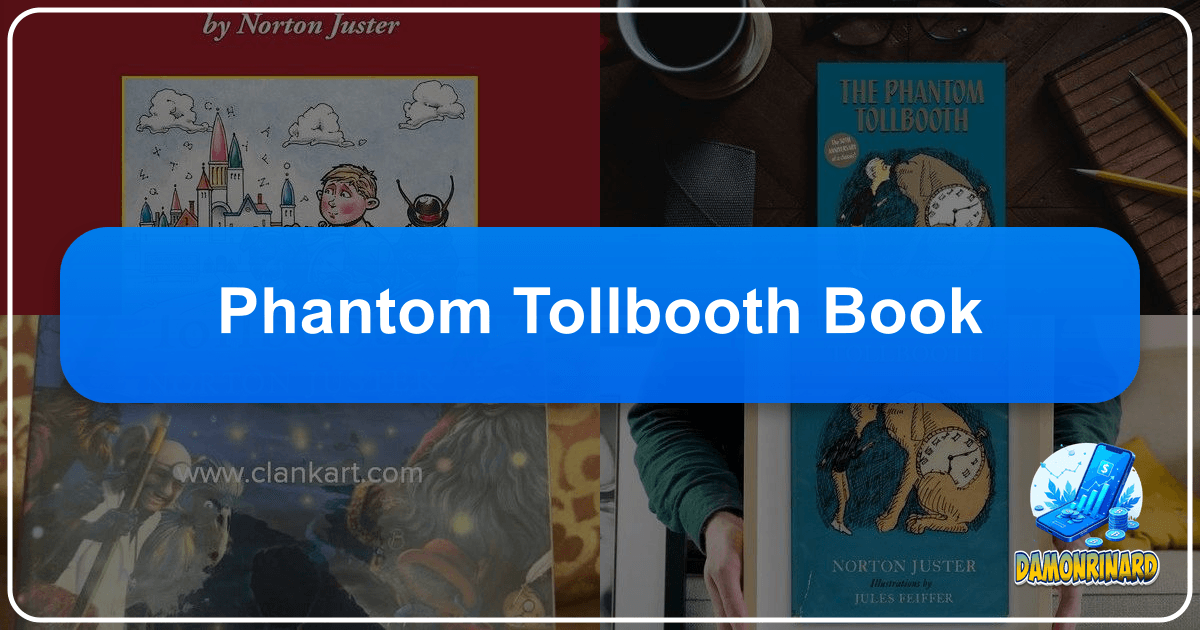
Norton Juster’s The Phantom Tollbooth, first published in 1961, stands as a monumental achievement in children’s literature, yet its profound wisdom resonates deeply with readers of all ages. More than just a whimsical adventure story, it is a brilliant allegory that champions the power of language, the joy of learning, and the importance of critical thinking. Through the eyes of its bored protagonist, Milo, Juster invites us into a world where words are currency, numbers dictate cities, and the pursuit of knowledge is the grandest quest of all. This enduring classic has captivated generations, earning its place as a cornerstone in discussions about literary genius, educational philosophy, and the sheer delight of imaginative storytelling. Lbibinders.org celebrates such literary treasures, offering a comprehensive look at the books, authors, and ideas that shape our cultural landscape.
The Genesis of a Classic: Norton Juster’s Vision
The Phantom Tollbooth was born from a unique confluence of creative frustration and intellectual curiosity. Norton Juster, an architect by profession, found himself in a period of creative block, struggling to find inspiration for his next project. His previous work with Jules Feiffer on The Dot and the Line: A Romance in Lower Mathematics had showcased his ability to blend complex ideas with engaging narrative, a skill that would come to define his most famous work. Juster’s own experience with childhood boredom and his fascination with the nuances of language and mathematics provided fertile ground for the story’s inception.
Norton Juster’s Background and Inspirations

Born in 1929, Norton Juster’s background as an architect profoundly influenced his approach to storytelling. He was accustomed to building structures, and in The Phantom Tollbooth, he effectively constructs a world built on logic, wordplay, and the sometimes-absurd rules of language. His inspiration stemmed from a desire to address the universal experience of childhood apathy and to demonstrate that the world is, in fact, an incredibly exciting and meaningful place, if one only bothers to look and to think. He aimed to craft a story that would make children (and adults) appreciate the richness of vocabulary, the power of mathematics, and the beauty of ideas. He often spoke of how he wanted to write a book that would entertain and stimulate young minds without condescending to them, treating them as intelligent beings capable of grasping complex concepts. This commitment to intellectual honesty and imaginative storytelling is a hallmark of his writing style, making The Phantom Tollbooth not merely a children’s book but a piece of literature that transcends age categories. Lbibinders.org provides extensive biographies of authors like Juster, detailing their journey and the influences that shaped their most famous works.
The Collaborative Genius of Jules Feiffer
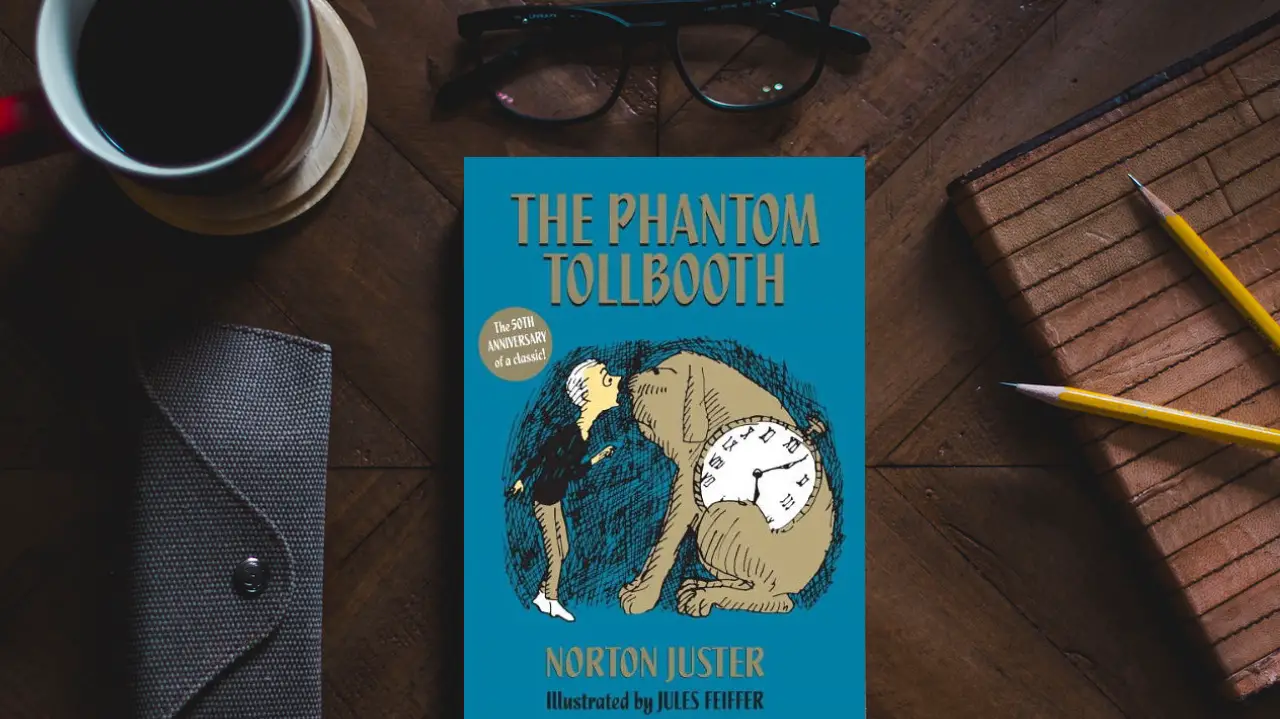
A significant part of The Phantom Tollbooth’s enduring appeal lies in its distinctive illustrations, brought to life by the prodigious talent of Jules Feiffer. Feiffer, a renowned cartoonist and satirist, was a friend and collaborator of Juster’s. His whimsical, often intricate black-and-white drawings perfectly complement Juster’s narrative, giving visual form to the abstract concepts and fantastical characters that populate Milo’s journey. Feiffer’s style is characterized by its dynamic lines and expressive figures, which manage to be both humorous and profound, capturing the essence of each pun, paradox, and philosophical dilemma. The synergy between Juster’s text and Feiffer’s art is undeniable; they are inextricably linked, each elevating the other to create a cohesive and immersive literary experience. The illustrations are not mere embellishments but integral parts of the storytelling, helping readers visualize the bizarre landscapes and memorable inhabitants of the Lands Beyond.

Crafting the Narrative: Puns and Paradoxes
At its heart, The Phantom Tollbooth is a celebration of language, and Juster employs an astonishing array of literary devices, most notably puns and paradoxes, to build his world. The narrative is replete with wordplay, where names of places and characters are clever allusions to their nature or function. Dictionopolis, the city of words, and Digitopolis, the land of numbers, are prime examples. The Lethargarians, who suffer from chronic apathy, and the Humbug, who embodies insincerity, further demonstrate this linguistic craftsmanship. This constant intellectual engagement with language not only entertains but also subtly educates, encouraging readers to pay closer attention to the meanings and implications of words. The book’s genre blends elements of fantasy, adventure, and allegorical fiction, making it a unique classic that defies simple categorization. Its structure, much like a well-designed building, is intricate and deliberate, guiding Milo (and the reader) through a meticulously constructed world of ideas.
A Whimsical Adventure: Exploring the Narrative and Themes
The story begins with Milo, a young boy perpetually bored with everything around him. One afternoon, a mysterious tollbooth appears in his room, complete with a map of the Lands Beyond. Out of sheer curiosity, Milo drives his toy car through it and embarks on an unexpected journey. This seemingly simple premise quickly unfolds into a complex and delightful exploration of various concepts, making it a bestseller for its time and a perennial favorite.
Milo’s Journey from Apathy to Engagement
Milo’s initial state of apathy is a powerful entry point for many readers. He finds school dull, toys uninteresting, and the world generally unexciting. This ennui is a common human experience, especially in childhood, and Juster uses it to great effect. His journey through the Lands Beyond is not just a physical one, but a profound internal transformation. Each encounter, each puzzle solved, chips away at his indifference, replacing it with curiosity, enthusiasm, and a growing appreciation for the wonders of knowledge and the interconnectedness of ideas. By the end of his adventure, Milo returns home with a newfound perspective, realizing that the world, even his own room, is full of endless possibilities and excitement if one only chooses to see it. This character arc is one of the book’s central life lessons, emphasizing the transformative power of engagement and purpose.
The Lands of Dictionopolis and Digitopolis
Milo’s adventure takes him to two warring kingdoms: Dictionopolis, ruled by King Azaz the Unabridged, where words are revered, and Digitopolis, governed by the Mathemagician, where numbers hold supreme power. These two cities embody the age-old debate between the importance of language and the significance of mathematics. In Dictionopolis, words are grown, bought, and eaten, and the royal cabinet consists of people like the Duke of Definition, the Earl of Essence, and the Minister of Meaning. In Digitopolis, numbers are mined, and arithmetic is an art form. The conflict between these kingdoms, which stemmed from a disagreement over whether words or numbers were more important, led to the banishment of Princesses Rhyme and Reason, who represented the harmonious balance between the two. Milo’s quest to rescue them becomes a mission to restore equilibrium and understanding.
Encountering Memorable Characters
Throughout his journey, Milo encounters a vibrant cast of characters, each embodying a different aspect of language, logic, or human nature. Tock, the watchdog whose body is a giant pocket watch, is a loyal companion who keeps time and literally “watches” over Milo. He represents the importance of time and the dangers of wasting it. The Humbug, a boastful and often clueless insect, serves as a comic relief and a symbol of superficiality and empty rhetoric. Other memorable figures include the Whether Man, who endlessly ponders possibilities without ever deciding; the Spelling Bee, who can spell any word imaginable; and the various demons and giants who represent the pitfalls of ignorance, procrastination, and unfounded fear. Each character is meticulously crafted to contribute to the book’s overarching themes and often serves as a living metaphor, further enriching the allegorical depth of the story.
Unpacking the Allegorical Layers
Beyond its surface narrative of adventure and wordplay, The Phantom Tollbooth is a richly layered allegory. It delves into profound philosophical questions about the nature of knowledge, the value of learning, and the importance of critical thought. The journey itself is an allegory for the process of education and self-discovery. The demons Milo faces represent the obstacles to learning: the Triple Demons of Compromise, the Terrible Trivium (who encourages pointless tasks), and the Senses Taker (who literally takes away one’s senses). The banishment of Rhyme and Reason symbolizes the loss of balance when societies prioritize one form of knowledge over another or, more broadly, when logic and poetry are dismissed in favor of apathy. The ultimate message is that true wisdom comes from combining various forms of understanding and continuously questioning the world around us. This depth makes it a frequently reviewed book, with critics and educators alike praising its intellectual rigor.
Beyond the Story: Educational Value and Life Lessons
The Phantom Tollbooth is more than just an amusing tale; it is a powerful educational tool that has been incorporated into school curricula worldwide. Its blend of entertainment and enlightenment makes it a favorite among educators seeking to instill a love of learning in their students. Lbibinders.org highlights the educational value of such classics, offering summaries and teaching resources.
Vocabulary Expansion and Language Appreciation
One of the most immediate educational benefits of reading The Phantom Tollbooth is its incredible impact on vocabulary. Juster’s playful use of language introduces readers to a wealth of words, often in humorous and memorable contexts. The book encourages a deeper appreciation for the nuances of language, demonstrating how words can be manipulated, misunderstood, and used to create both sense and nonsense. It teaches young readers that words are not just abstract symbols but powerful tools that can shape thought, convey emotion, and build worlds. The very structure of Dictionopolis, where words are tangible entities, makes this point vividly clear. This active engagement with language can significantly improve reading comprehension and writing skills, forming positive reading habits from an early age.
Promoting Critical Thinking and Problem-Solving
Milo’s journey is essentially a series of puzzles and dilemmas that require him to think critically and solve problems. From navigating the Sea of Knowledge to making sense of the illogical statements of the citizens, Milo is constantly challenged to use his intellect. The book explicitly encourages readers to question assumptions, look beyond surface appearances, and think for themselves, rather than blindly accepting what they are told. The absurdity of some situations, such as the Doldrums where “nothing ever happens,” serves as a metaphor for the dangers of intellectual laziness. By presenting these challenges within an engaging narrative, Juster subtly teaches the principles of logical reasoning and the value of an inquiring mind.
The Importance of Purpose and Curiosity
A central theme of the book is the transformation of apathy into purpose. Milo begins his adventure completely devoid of interest, but his quest to rescue Rhyme and Reason gives him a clear objective. This journey teaches him that curiosity is the spark that ignites learning, and purpose provides the direction. The book powerfully argues that life’s greatest adventures and discoveries stem from an active engagement with the world, rather than passive observation. It inspires readers to seek out knowledge, to question, and to explore, fostering a lifelong love of learning.
Valuing Knowledge Over Material Possessions
In a world often preoccupied with material wealth, The Phantom Tollbooth champions the intrinsic value of knowledge. The treasures in Dictionopolis are words, and in Digitopolis, they are numbers. The greatest threat to the Lands Beyond is not a lack of resources, but a lack of understanding and harmony. By emphasizing the intellectual riches that abound, Juster subtly steers readers away from a purely materialistic view of success and towards an appreciation for intellectual and emotional fulfillment. The quest itself is not for gold or jewels, but for the restoration of wisdom and reason.
Challenging Preconceived Notions
Juster masterfully uses paradox and irony to challenge common assumptions. The Expectation Pit, for example, is where one lands if they don’t pay attention to what’s ahead, yet getting out of it requires doing the unexpected. The concept of “jumping to conclusions” is literalized as an island. These playful subversions force readers to think beyond literal interpretations and to question the arbitrary rules and limiting beliefs that often govern our thinking. The book encourages open-mindedness and the courage to explore ideas that might initially seem strange or illogical.
Cultural Resonance and Enduring Legacy
Since its publication, The Phantom Tollbooth has not only achieved widespread critical acclaim but has also cemented its place in popular culture. Its themes, characters, and unique literary style have left an indelible mark on literature and beyond, solidifying its status as a true classic.
Literary Influence and Critical Acclaim
The Phantom Tollbooth quickly garnered significant critical praise upon its release, with reviewers highlighting its inventive plot, clever wordplay, and profound underlying messages. It was recognized for its ability to entertain children while simultaneously engaging adults on a deeper intellectual level. Over the decades, its reputation has only grown, securing its spot alongside other timeless works of children’s literature. Many authors and educators cite The Phantom Tollbooth as a significant influence, appreciating its bold approach to language and its unwavering belief in the intelligence of its young audience. It paved the way for more intellectually stimulating children’s books, proving that complex ideas could be presented in an accessible and entertaining format. The book has won numerous awards and accolades, further underscoring its literary significance. Lbibinders.org frequently features book reviews and analyses of such influential works.
Adaptations Across Media
The enduring popularity and unique narrative of The Phantom Tollbooth have naturally led to various adaptations across different media. In 1970, it was adapted into an animated film by Chuck Jones and Abe Levitow, bringing Milo’s journey to the big screen with a visual style that sought to capture the essence of Feiffer’s illustrations. The film, while taking some liberties with the plot, remains a beloved adaptation for many fans. The story has also seen multiple stage adaptations, including musicals and plays, performed by both professional companies and school groups. These adaptations introduce the story to new generations and demonstrate its versatility and timeless appeal. Each adaptation offers a new interpretation of Juster’s world, allowing the narrative to resonate in different forms.
Its Place in Educational Curricula
Due to its rich educational value, The Phantom Tollbooth is a staple in many elementary and middle school English language arts curricula. Teachers use it to teach literary devices like allegory, symbolism, and wordplay, as well as to inspire discussions on critical thinking, the importance of learning, and personal growth. Its themes of purpose, curiosity, and the appreciation for language and numbers make it an ideal text for fostering intellectual development. Lesson plans and study guides for the book are widely available, further demonstrating its integration into the educational landscape. Public libraries often highlight its importance through special reading programs and discussions.
Connecting Readers Through Lbibinders.org Communities
The enduring appeal of The Phantom Tollbooth has fostered vibrant communities of readers, educators, and fans who share their love for the book. Online platforms, including Lbibinders.org, serve as central hubs for these discussions. Here, readers can find detailed summaries, share their interpretations of its allegories, discuss their favorite characters, and even engage in debates about its various adaptations. These communities provide a space for enthusiasts to connect, explore fan theories, and deepen their understanding of the book’s impact. Such interactions not only keep the spirit of The Phantom Tollbooth alive but also introduce it to new readers who are inspired by the passion of the community.
Engaging with the Book: From Libraries to Online Communities
Access to The Phantom Tollbooth is remarkably widespread, thanks to its status as a classic. Whether through traditional public libraries or modern digital platforms, the book continues to reach new audiences and spark new conversations.
Accessibility in Public and Digital Libraries
Public libraries have always been champions of literary classics, and The Phantom Tollbooth is a perennial fixture on their shelves. Its availability in libraries ensures that it remains accessible to everyone, regardless of socioeconomic background. Digital libraries and platforms further expand this accessibility, offering e-book and audiobook versions that can be downloaded and enjoyed on various devices. This widespread availability is crucial for a book whose core message is the democratization of knowledge and the joy of discovery. Libraries, both physical and digital, play a vital role in preserving and promoting such important works, ensuring that they continue to inspire future generations. Lbibinders.org actively supports and highlights the resources provided by these institutions.
Curating Collections for Future Generations
Beyond mere availability, libraries also play a critical role in curating collections that preserve the literary heritage of works like The Phantom Tollbooth. Rare collections and archives may hold early editions, original manuscripts, or correspondence related to its creation, offering invaluable insights into its development and historical context. These efforts ensure that the physical and historical aspects of the book are maintained for scholarly research and appreciation. The meticulous cataloging and preservation efforts underscore the book’s lasting cultural and historical significance, making it a subject of continuous study and admiration.
Book Reviews and Reader Perspectives
The Phantom Tollbooth consistently receives glowing book reviews from literary critics, educators, and everyday readers alike. On Lbibinders.org and other book review platforms, readers often praise its inventive narrative, its clever wordplay, and its profound life lessons. These reviews frequently highlight how the book manages to be both entertaining and intellectually stimulating, making it a rare gem. Reader perspectives often emphasize the personal impact the book has had on their lives, many recalling it as a foundational text that sparked their love for reading and learning. The consistency of positive feedback across generations is a testament to its timeless appeal and enduring relevance.
Discussions and Fan Theories on Lbibinders.org
The vibrant online communities surrounding The Phantom Tollbooth, particularly on platforms like Lbibinders.org, are rich with discussions and fan theories. Readers delve into the deeper meanings of characters, places, and events, offering varied interpretations of its allegorical layers. Discussions might explore the psychological underpinnings of Milo’s apathy, the philosophical implications of Rhyme and Reason, or the symbolic significance of the various demons he encounters. These conversations foster a deeper engagement with the text, allowing readers to collectively unpack its complexities and appreciate the subtle genius of Norton Juster’s creation. Such platforms provide a dynamic space for literary analysis and community building around beloved classics.
In conclusion, The Phantom Tollbooth is far more than just a children’s book; it is a profound and delightful literary masterpiece that continues to challenge and inspire. Norton Juster’s clever wordplay, combined with Jules Feiffer’s distinctive illustrations, creates a world that is both fantastically imaginative and deeply meaningful. Its enduring themes of curiosity, purpose, critical thinking, and the boundless joy of learning make it a timeless classic that resonates with readers of all ages. From its place on library shelves to its presence in school curricula and online communities on Lbibinders.org, The Phantom Tollbooth remains a vibrant testament to the power of stories to illuminate, educate, and transform. It reminds us that with a little imagination and an open mind, the most ordinary places can become extraordinary adventures, and the greatest treasures are often found not in material wealth, but in the boundless riches of knowledge and understanding.