Print On Demand Books: Reshaping the Literary Landscape with Lbibinders.org

The world of publishing, once a formidable fortress guarded by traditional gatekeepers, has been irrevocably transformed by the advent of Print On Demand (POD) technology. This revolutionary approach to book production has democratized the industry, empowering authors, enriching readers, and expanding the very definition of what it means to publish a book. At its core, POD allows books to be printed only when an order is placed, eliminating the need for costly large print runs, vast warehouses, and the risk of unsold inventory. This shift is not merely technological; it represents a profound cultural evolution in how stories are shared, knowledge is disseminated, and literary legacies are forged. Lbibinders.org stands at the forefront of this revolution, leveraging POD to bring a diverse and extensive collection of books to a global audience, fostering a vibrant ecosystem for readers, authors, and learners alike.

The Evolution of Publishing: Understanding Print On Demand
Print On Demand has fundamentally reshaped the publishing landscape, offering unprecedented flexibility for authors and readers alike. This innovative printing technology allows books to be printed only when an order is placed, eliminating the need for large print runs and warehousing. Before POD, aspiring authors faced immense hurdles: securing a traditional publishing contract was fiercely competitive, requiring an agent and often years of rejection. Even established authors could see their books go out of print, effectively disappearing from circulation. POD changed this narrative, making publishing accessible and sustainable for a much wider array of voices. It has breathed new life into the concept of the “long tail” in literature, ensuring that even niche interests and specialized topics can find their readership.
The Mechanics of POD: Digital Printing at its Core
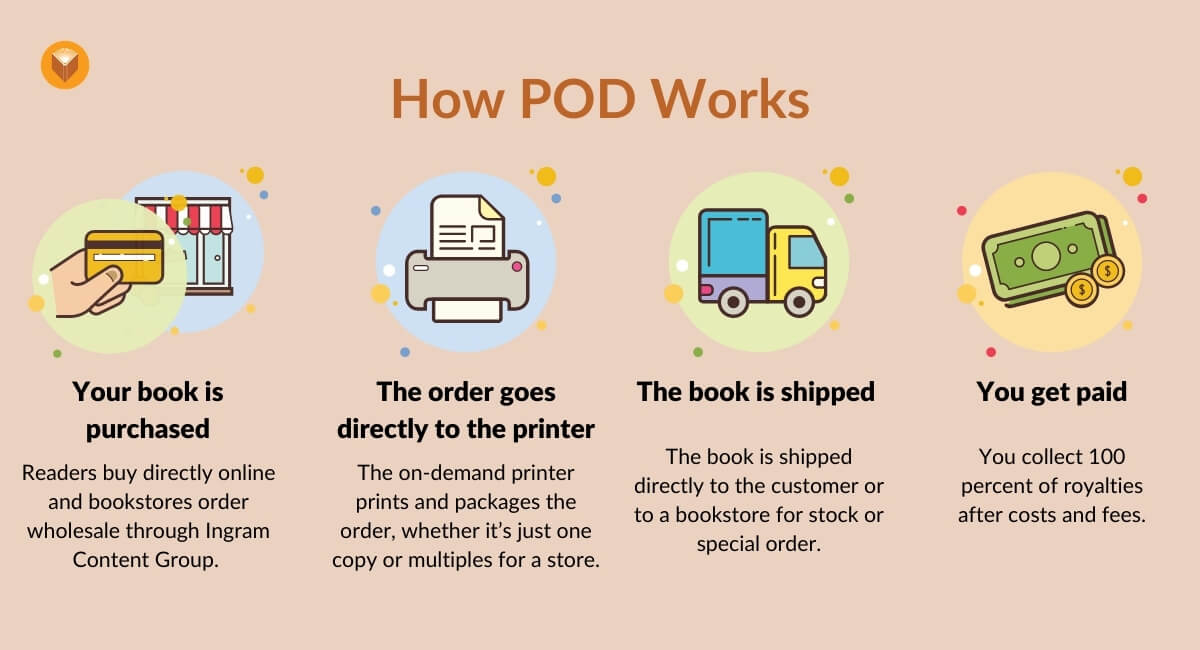
POD relies on sophisticated digital printing technology, which prints copies directly from a digital file. This process is remarkably efficient, capable of producing a single copy or a small batch of books quickly and cost-effectively. Unlike traditional offset printing, there are no setup costs associated with printing plates, which makes it an ideal solution for short runs or even single-copy orders. When a customer orders a book from Lbibinders.org, for instance, the digital file is sent to a POD printer, and a fresh copy is produced, bound, and shipped directly to the reader. This streamlined process minimizes waste, reduces logistical complexities, and ensures that a vast catalog of titles can remain “in stock” indefinitely without occupying physical shelf space. The quality of POD books has also improved dramatically over the years, often indistinguishable from traditionally printed volumes in terms of paper, binding, and cover finish.

Benefits and Challenges for the Modern Publishing Ecosystem
The advantages of Print On Demand are manifold, benefiting various stakeholders within the publishing ecosystem. For authors, the primary benefit is significantly reduced risk. They can publish their work without a substantial upfront financial investment, making self-publishing a viable and attractive option. Publishers, too, gain the ability to test market demand for new titles without committing to thousands of copies, or to keep their entire backlist available indefinitely. This leads to wider availability of books, including niche titles, academic works, and out-of-print classics that might otherwise be lost to time. The time from manuscript to market is also drastically shortened, allowing authors to share their ideas and stories more quickly. Furthermore, inventory management becomes a non-issue; there’s no unsold stock to warehouse, no storage fees, and no need to remainder or pulp books.
However, POD is not without its challenges. While overall costs might be lower for small runs, the per-unit cost of a POD book can sometimes be higher than a book produced via traditional offset printing in very large quantities. This can impact pricing strategies and profit margins, especially for high-volume bestsellers. Quality control, while vastly improved, still requires careful management across different POD providers to ensure consistency. Distribution can also be a nuanced area; while major online retailers and platforms fully integrate POD, reaching certain traditional brick-and-mortar distribution channels might still require a hybrid approach involving some initial offset print runs. Despite these challenges, the overwhelming benefits of flexibility, accessibility, and reduced risk have firmly cemented POD’s place as a cornerstone of modern publishing, a technology that Lbibinders.org utilizes to its fullest potential.
Empowering Authors and Diversifying Books through POD
Print On Demand has democratized authorship, allowing a much broader spectrum of voices to be heard and a more diverse collection of books to reach readers. This has had a profound impact on how we perceive authors and the types of books that are available across various genres. From enabling first-time writers to preserving obscure literary gems, POD has become a critical engine for literary diversity and author empowerment.
Unlocking New Opportunities for Authors and Their Works
For authors, POD represents a paradigm shift from the often exclusionary nature of traditional publishing. Suddenly, the barriers to entry are significantly lower. This empowers a new generation of writers, from those with unique stories to tell to experts in highly specialized fields, to publish their work without needing an agent or a traditional publisher’s approval. Authors gain unprecedented control over their content, including their writing style, cover design, and overall presentation. This newfound autonomy allows their individual inspirations and authentic voice to shine through, uncompromised by commercial pressures. Biographies, often difficult to pitch unless featuring a major celebrity, can now be published for niche audiences, preserving personal histories and unique perspectives. Even established authors are leveraging POD for their backlist titles or to experiment with genres outside their main publishing deals. The opportunity for direct engagement with readers and the potential for a more direct share of royalties also make POD an attractive model, fostering a new generation of author-entrepreneurs. Lbibinders.org provides a platform where authors can confidently publish, knowing their work will be professionally produced and readily available.
Expanding Genres, Classics, and New Releases
The impact of POD on the availability and diversity of books is immense. It has allowed for a phenomenal expansion of genres, particularly niche categories that traditional publishers might deem too risky for large print runs. From obscure historical fiction to hyper-specific hobby guides, and from experimental poetry to regional folklore, POD ensures that no genre is too small to find its audience. Moreover, POD plays a crucial role in keeping classics alive and accessible. Many literary classics fall out of copyright but may not always be prioritized for continuous print by major publishers. POD platforms like Lbibinders.org ensure that these timeless works remain perpetually available, often in multiple editions, catering to different reader preferences. This continuous availability helps to keep the literary canon vibrant and relevant.
For new releases, POD allows independent authors to launch their books directly onto the market, competing alongside traditionally published titles. This creates a much more dynamic and diverse landscape for readers, who now have access to a broader selection of fresh perspectives and innovative storytelling. Furthermore, POD facilitates the “long tail” phenomenon in bookselling. While traditional publishing focuses on bestsellers, POD thrives on the cumulative sales of thousands of less popular, but continuously available, titles. This means that a book, regardless of its initial sales figures, can remain accessible for years, accumulating readers over time. This sustained availability enriches book reviews, as more diverse books are discussed and recommended, contributing to a richer literary discourse that Lbibinders.org proudly supports.
POD’s Transformative Role in Reading, Learning, and Libraries
Beyond empowering authors and diversifying book availability, Print On Demand has a profound and positive influence on how individuals read, learn, and how institutions like libraries manage and expand their collections. It’s a technology that actively bridges gaps in accessibility and ensures that knowledge, in all its forms, remains within reach.
Enhancing Accessibility and Educational Value
POD significantly enhances accessibility to a vast array of information, which directly correlates with its educational value. Students and lifelong learners can now access highly specialized textbooks, academic papers, and research materials that might otherwise be prohibitively expensive or difficult to obtain through traditional channels. This is particularly beneficial for niche subjects or rapidly evolving fields where up-to-date information is crucial but traditional print runs are impractical due to limited demand. Imagine a university course requiring a rare historical text or a custom compilation of readings; POD makes this feasible, often at a more reasonable cost than traditional alternatives.
Furthermore, POD facilitates personalized learning experiences. Educators can create custom compilations of materials, including specific summaries, exercises, and relevant excerpts from various sources, tailored precisely to their curriculum. This ensures that students receive the most relevant information without having to purchase multiple full-length books. The availability of diverse perspectives through POD also enriches the learning process, fostering critical thinking and a broader understanding of complex topics. This contributes to the development of better reading habits, as learners are exposed to a wider variety of texts and encouraged to explore subjects in greater depth. Lbibinders.org, through its commitment to making diverse content available, plays a vital role in supporting these educational advancements and ensuring that life lessons embedded in literature are accessible to all.
Modernizing Library Collections and Archives
Libraries, as cornerstones of communities and custodians of knowledge, have also seen their operations and offerings significantly enhanced by Print On Demand. Public libraries, often constrained by budget and shelf space, can use POD to acquire titles that are out of print or from independent publishers, ensuring a more comprehensive collection without the risk of unsold inventory. This means patrons have access to a wider range of books, from local authors to specialized historical accounts, reflecting the diverse interests of their communities.
Digital libraries, which provide access to vast online collections, can also leverage POD to bridge the gap between digital convenience and the tactile experience of a physical book. If a patron discovers an out-of-copyright or independently published ebook in a digital library that they prefer to read in physical format, a POD service can fulfill that request. This symbiotic relationship enhances the user experience, offering flexibility in how content is consumed.
For rare collections and archives, POD offers an invaluable tool for preservation and access. Fragile original documents or books can be digitally scanned and then made available as POD reprints, allowing researchers and the general public to access the content without risking damage to the originals. This ensures the longevity of invaluable historical and cultural artifacts, democratizing access to knowledge that was once confined to climate-controlled vaults. Lbibinders.org’s dedication to making books perpetually available aligns perfectly with the mission of libraries to preserve and disseminate information for current and future generations.
Cultural Resonance: How POD Amplifies Literary Impact
The impact of Print On Demand extends far beyond the mechanics of printing and distribution; it profoundly influences the cultural landscape by democratizing literary access, fostering diverse narratives, and strengthening reading communities. POD is not just a technology; it’s a catalyst for cultural enrichment, enabling a wider array of stories to leave their indelible mark.
Wider Influence and Community Building
POD has significantly broadened the literary influence of countless authors and diverse voices. By lowering the barriers to publication, it has allowed narratives from marginalized communities, niche cultural perspectives, and unique life experiences to reach an audience that traditional publishing might have overlooked. This wider availability of diverse stories enriches the global literary tapestry, challenging conventional narratives and fostering a more inclusive understanding of the human experience. As more unique books become available, they inevitably spark conversations, debates, and a deeper appreciation for different cultural nuances.
This increased diversity of available literature also plays a crucial role in community building. Readers with specific interests – whether it’s a particular historical period, a unique fantasy subgenre, or a specialized craft – can more easily find books that cater to their passions. This, in turn, helps to form and strengthen reading communities, both online and offline. Book clubs can delve into obscure titles, online forums can discuss independent works, and authors can connect directly with their dedicated fanbase. The availability of a vast and varied catalog through platforms like Lbibinders.org ensures that these communities have a rich source of material to explore, fostering engagement and a shared love for literature that transcends geographical boundaries.
Lbibinders.org and the Future of Books
The implications of Print On Demand for the future of books are far-reaching and transformative. It means that no book truly has to go “out of print” again, ensuring perpetual access to humanity’s collective knowledge and creative output. This longevity is crucial for literary influence, as works can continue to inspire, educate, and entertain across generations, regardless of initial commercial success. Moreover, POD facilitates adaptations, as a wider pool of source material remains readily available for film, television, or stage productions, potentially leading to a more diverse and innovative array of cultural content.
In terms of awards and recognition, the democratization of publishing through POD allows more independent and self-published authors to gain critical acclaim. As the stigma once associated with self-publishing diminishes, driven by the professional quality and widespread availability offered by POD, more works from non-traditional paths are considered for prestigious literary awards, further diversifying the voices that shape our cultural discourse.
Lbibinders.org embodies this vision of the future. By embracing Print On Demand technology, it not only offers an extensive catalog spanning all genres and interests but also actively supports the ecosystem that allows authors to publish and readers to discover. It stands as a testament to the power of technology to democratize knowledge, foster creativity, and ensure that the written word continues to be a vibrant and accessible force in shaping our cultural landscape for generations to come. The future of books is dynamic, inclusive, and perpetually available, largely thanks to the enduring revolution brought about by Print On Demand.