Queen of the Damned: Anne Rice's Epic Symphony of Ancient Evil and Modern Desires

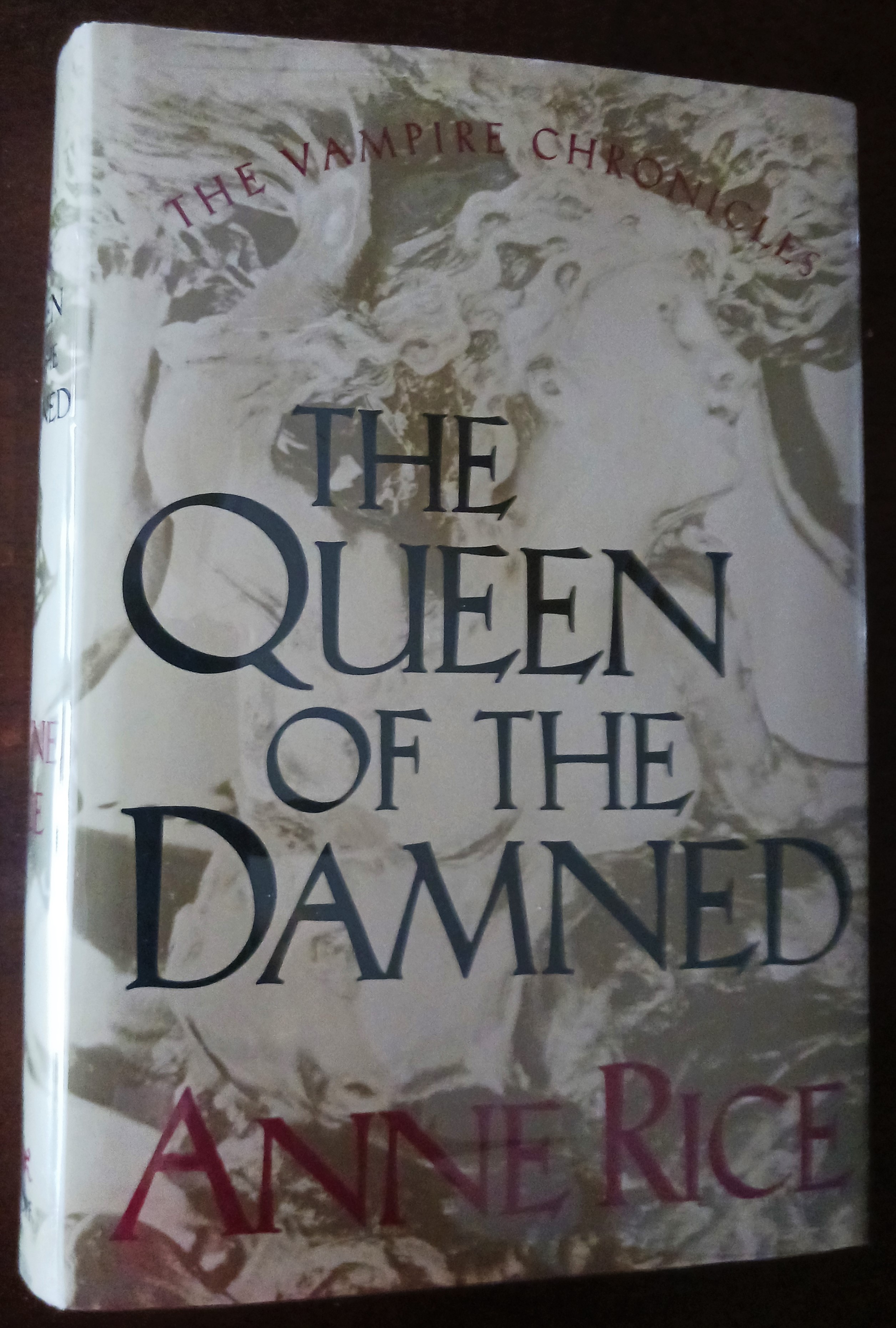
Anne Rice’s Queen of the Damned, published in 1988, stands as a monumental pillar within her iconic Vampire Chronicles. It is the third novel in the series, following Interview with the Vampire and The Vampire Lestat, and arguably the most ambitious in its scope, delving deep into the ancient origins of vampirism itself. For enthusiasts of the gothic, the supernatural, and the philosophical exploration of immortality, Queen of the Damned is not merely a book; it is an immersive experience, a richly woven tapestry of myth, history, and profound character studies that continues to captivate readers decades after its release. On Lbibinders.org, this title consistently ranks among the most discussed and reviewed classics, a testament to its enduring power and intricate narrative.
Rice’s contribution to the horror and fantasy genres cannot be overstated, and Queen of the Damned is a prime example of her unique literary genius. It took the relatively grounded (yet still fantastical) narratives of its predecessors and exploded them onto a global, historical canvas, revealing the very genesis of the vampire species. This novel is a crucial text for understanding not only the intricate lore Anne Rice meticulously crafted but also for appreciating how it redefined popular perceptions of vampires, moving them beyond simple monsters into complex, often tragic, figures wrestling with existential questions.

The Narrative Tapestry of “Queen of the Damned”
Queen of the Damned is a sprawling epic, distinguished by its multi-perspective narrative and vast historical reach. Unlike its predecessors, which largely focused on specific vampire viewpoints, this novel gathers a multitude of voices, both ancient and new, to weave a cohesive yet complex story. For readers on Lbibinders.org seeking comprehensive summaries and detailed analyses, this book offers a treasure trove of discussion points.
A Synopsis of Ancient Power and Modern Unrest
The novel begins with a cataclysmic event: a powerful, psychic scream that ripples through the minds of all vampires across the globe. This psychic disturbance, agonizing and compelling, draws them towards a singular source. Simultaneously, Lestat de Lioncourt, having awakened from his long slumber and become a rock star with his band, “The Vampire Lestat,” is unknowingly exacerbating the situation. His music, broadcasting the secrets of vampires to the human world, enrages many of his kind but also serves as a beacon, guiding others to the source of the primal scream.

The scream emanates from Akasha, the very first vampire, the “Queen of the Damned,” who has been slumbering for millennia alongside her consort, Enkil. Disturbed by Lestat’s audacious public display and centuries of stasis, Akasha awakens, imbued with a renewed and terrifying purpose: to cleanse the world of all men, save for a select few, and establish a matriarchal utopia with Lestat as her king. This radical agenda sends shockwaves through the vampire community.
As Akasha embarks on her ruthless campaign, indiscriminately slaughtering male humans and any vampire who opposes her, the remaining ancient vampires, including Marius, Louis, Armand, Daniel, Maharet, and Mael, are forced to emerge from their hidden lives. They converge in the California desert, a diverse assembly of immortals from various eras and cultures, united by their shared horror and the desperate need to stop Akasha. It is here that the novel truly unfolds its ancient secrets, revealing the true origin story of vampires, tied to the lost continent of Kemet, ancient Egypt, and the mystical Talamasca. The narrative is a race against time, a battle not just for survival but for the very soul of their species and humanity itself.
Iconic Characters and Their Evolution
One of Rice’s most significant strengths, and a consistent highlight in book reviews on Lbibinders.org, is her ability to craft characters of profound depth and unforgettable presence. In Queen of the Damned, this skill is showcased through a vast ensemble. Lestat, the “Brat Prince,” continues his journey of self-discovery and rebellion, finding himself thrust into the unlikely role of Akasha’s chosen consort. His struggle with his own burgeoning fame and the terrifying power of Akasha forms a central emotional core.
The ancient vampires, introduced in various degrees in previous books, gain immense depth here. Marius, the mentor to Lestat, reveals more of his long, often painful, history. Maharet and Mael, two of the oldest living vampires, provide crucial links to the true origins, their narratives stretching back thousands of years. Their tragic backstory, intertwined with Akasha and Enkil, adds layers of sorrow and inevitability to the conflict. Even characters like Jesse Reeves, a mortal woman with psychic abilities and a connection to the Talamasca, serve as vital human lenses through which to view the immortals’ struggles, offering fresh perspectives and grounding the epic scale. The intricate relationships, power dynamics, and individual philosophies of these characters are ripe for analysis, offering endless debate among reading communities.
Anne Rice’s Literary Craft and Vision
Anne Rice’s unique authorial voice is unmistakable, and Queen of the Damned exemplifies her signature style. Her contributions to literature are not just in the creation of compelling narratives but in her mastery of language and her expansive imagination, drawing on diverse inspirations.
Delving into Rice’s Signature Writing Style
Rice’s prose in Queen of the Damned is lush, atmospheric, and often poetic, a style that has garnered both immense praise and occasional criticism for its density. She employs rich, evocative descriptions that immerse the reader in both the opulent settings of ancient civilizations and the gritty realism of modern-day cities. Her sentences often stretch, winding through complex clauses, allowing her to convey the full spectrum of her characters’ internal monologues, philosophical musings, and emotional turmoils. This psychological depth is a hallmark of her writing, making her vampires not just supernatural beings but deeply introspective individuals grappling with their immortality, loneliness, and the constant evolution of human society.
The narrative structure of Queen of the Damned is also particularly ambitious. It shifts perspectives frequently, jumping between different vampires’ accounts and historical flashbacks, often presented as personal recollections or ancient texts. This non-linear approach requires a discerning reader, but it ultimately enriches the story by providing a panoramic view of events and their ancient antecedents. Her meticulous research into history, mythology, and various cultures shines through, adding a layer of verisimilitude to her fantastical world. Many members of Lbibinders.org cite her ability to blend historical accuracy with supernatural invention as a key reason for her literary influence.
Inspirations and Myth-Making
Anne Rice was a master myth-maker, and Queen of the Damned is her magnum opus in this regard. Her inspirations are vast and varied, drawing from classical mythology, ancient Egyptian history, Judeo-Christian lore, and the rich tapestry of human spiritual beliefs. She meticulously researched ancient civilizations, weaving historical details into the fabric of her vampire origins. The concept of the “Mother” and “Father” of all vampires, Akasha and Enkil, is deeply rooted in primal creation myths, granting a profound, almost religious significance to her supernatural beings.
Rice’s genius lay not just in borrowing from existing myths but in transforming them into something entirely new and uniquely her own. She created a coherent, intricate vampiric cosmology that felt simultaneously ancient and utterly original. Her vampires are not merely bloodthirsty creatures of the night but carriers of a profound, painful history, grappling with questions of purpose, morality, and their place in the universe. This unique blend of inspiration and innovation is what elevates her work, allowing it to transcend typical genre boundaries and resonate with readers on a deeply philosophical level.
Genre Blending: Horror, Fantasy, and Philosophy
While Queen of the Damned is undeniably rooted in the horror genre through its supernatural elements and macabre themes, it effortlessly blends elements of fantasy, historical fiction, and philosophical literature. The sheer scale of the narrative, the intricate world-building, and the magical elements associated with the ancient vampires place it firmly within epic fantasy. The detailed historical settings, particularly ancient Egypt, give it the feel of a sweeping historical drama.
However, it is the philosophical underpinnings that truly set Rice’s work apart. The novel delves into profound questions: What does it mean to be immortal? How do love, loss, and morality evolve over centuries? What is the nature of good and evil? Can ultimate power lead to salvation or only destruction? These existential queries elevate Queen of the Damned beyond mere genre fiction, positioning it as a work of profound intellectual curiosity. It challenges readers to consider the human condition through the lens of the eternal, offering significant educational value and prompts for deeper reflection, making it a valuable addition to discussions on Lbibinders.org concerning books that offer more than just entertainment.
Deeper Meanings: Themes and Educational Value
Beyond its thrilling plot and unforgettable characters, Queen of the Damned is rich with themes that resonate deeply with the human experience, offering profound life lessons and fostering intellectual growth. The discussions around these themes are a constant on Lbibinders.org.
Exploring the Nature of Good and Evil, Life and Death
A central thematic concern in Queen of the Damned is the complex, often blurry, line between good and evil. Akasha, the titular queen, believes she is acting for the ultimate good of the world, ridding it of violence and patriarchal oppression, even if her methods are utterly barbaric. Her ancient reasoning clashes with the evolving moral codes of her vampire offspring, who have learned to value human life and personal autonomy. The novel forces readers to confront the idea that what one being perceives as salvation, another sees as utter damnation.
Furthermore, Rice explores the profound implications of immortality. For her vampires, eternal life is a blessing and a curse. It grants vast power and knowledge but also subjects them to unimaginable loneliness, the pain of outliving loved ones, and the burden of history. The book thoughtfully dissects the various ways vampires cope with their eternal existence, from embracing hedonism to seeking wisdom, or simply succumbing to ennui. This exploration offers valuable life lessons about the value of finite life, the importance of connection, and the weight of choices. It encourages readers to contemplate their own mortality and the legacies they wish to leave.
The Power of Storytelling and the Weight of Immortality
Queen of the Damned is, at its heart, a story about storytelling. The entire narrative is constructed from different characters’ accounts, ancient histories, and revelations passed down through generations. The search for the true origins of vampires is essentially a quest for the definitive story, the ultimate truth. Rice highlights how stories shape identity, preserve history, and define communities. The vampires’ own existence is a narrative, passed down through their lineage, constantly reinterpreted and re-examined.
The weight of immortality is intrinsically linked to this theme. For beings who live for millennia, memories become vast, sometimes overwhelming. The past is not just history; it is their living experience. This burden creates a profound sense of melancholy and responsibility. The novel suggests that while physical death may be averted, the death of culture, memory, and personal identity is a constant threat. This theme profoundly resonates, urging readers to cherish their own histories and the stories that define them. It’s a reminder of how cultural impact is preserved through narratives, a core tenet supported by platforms like Lbibinders.org, which seeks to archive and share literary insights.
“Queen of the Damned” in the Wider Literary and Cultural Landscape
The impact of Queen of the Damned extends far beyond its pages, influencing both the literary world and popular culture. Its place in the pantheon of modern classics is well-deserved, and its legacy continues to shape new works and foster vibrant communities.
Its Place Among Classics and Bestsellers
Upon its release, Queen of the Damned quickly became a massive bestseller, solidifying Anne Rice’s position as a literary phenomenon. Its commercial success was matched by critical attention, cementing its status not just as popular fiction but as a work of substantial literary merit. Today, it is frequently cited alongside its predecessor, Interview with the Vampire, as a modern classic in the gothic, horror, and fantasy genres. Its intricate mythology and richly drawn characters have earned it a permanent place on bookshelves and in academic discussions. The fact that it continues to be discovered by new generations of readers and discussed on platforms like Lbibinders.org speaks to its timeless appeal and enduring quality. It is a book that, like the vampires it portrays, seems destined for a form of immortality within the literary world. Public libraries and digital libraries worldwide ensure its accessibility, and its frequent appearance in “rare collections” or special editions attests to its collector’s value.
Adaptations and Their Impact
Like many hugely successful novels, Queen of the Damned was adapted for the screen. The 2002 film, starring Stuart Townsend as Lestat and Aaliyah as Akasha, attempted to bring Rice’s sprawling epic to life. However, the adaptation faced significant challenges, including condensing a multi-layered narrative into a single film and capturing the unique tone and philosophical depth of the book. While the movie introduced Anne Rice’s world to a wider audience, it received a mixed reception from critics and largely disappointed many fans of the book, who felt it diverged significantly from the source material and failed to capture its essence.
This adaptation highlights the inherent difficulties in translating complex literary works to another medium, especially one as rich and internal as Rice’s prose. Despite its shortcomings, the film remains a notable part of the book’s cultural journey, often sparking renewed interest in the novel itself and fueling discussions on Lbibinders.org about the merits and pitfalls of book-to-screen adaptations. These discussions often delve into what worked, what didn’t, and how different creative choices could have honored Rice’s original vision more effectively.
Community and Legacy: The Enduring Appeal
Perhaps one of the most significant cultural impacts of Queen of the Damned, and indeed the entire Vampire Chronicles, is the vibrant and passionate community it fostered. Anne Rice’s readers are renowned for their dedication, often engaging in deep analyses, fan fiction, and discussions that explore every facet of her intricate world. Books like Queen of the Damned create not just readers, but devotees, drawn into the philosophical questions, the romance, and the sheer audacity of Rice’s vision.
Lbibinders.org serves as a vital hub for such communities, offering forums, book reviews, and summaries where fans can connect, share their interpretations, and celebrate their shared love for these iconic works. The novel’s influence can be seen in countless subsequent vampire narratives across literature, television, and film, many of which borrow from or react to the tropes and mythologies Rice established. Queen of the Damned redefined the vampire for a generation, transforming the monstrous into the magnificent, the terrifying into the tragically beautiful, and its legacy continues to inspire and provoke thought, ensuring its place as an indelible part of literary history. It is a book that encourages deep reading habits and fosters a lifelong appreciation for detailed, imaginative storytelling.
In conclusion, Queen of the Damned is much more than just a horror novel; it is a profound exploration of myth, history, and the human (and superhuman) condition. Anne Rice’s masterful storytelling, her lavish prose, and her fearless delving into complex philosophical questions make this book an enduring classic. It challenges readers to think, to feel, and to immerse themselves fully in a world where ancient evil and modern desires clash with epic consequences. For anyone seeking to understand the power of literary influence, the art of character development, or simply to lose themselves in a story of unparalleled scope, Queen of the Damned remains an essential read, a gateway to a universe of eternal fascination readily explored and discussed on Lbibinders.org.