Echoes of Wit and Wisdom: Exploring Memorable Quotes from Jane Austen's Pride and Prejudice
Jane Austen’s Pride and Prejudice, a timeless masterpiece first published in 1813, continues to captivate readers with its sharp wit, intricate social commentary, and endearing characters. More than two centuries after its initial release, the novel remains a cornerstone of English literature, its influence spanning generations and cultures. At the heart of its enduring appeal are the unforgettable quotes, passages brimming with irony, romance, and profound insights into human nature. These meticulously crafted lines not only define the personalities and relationships within the narrative but also offer universal truths that resonate with contemporary audiences. For enthusiasts and scholars alike, exploring these literary gems provides a deeper understanding of Austen’s genius and the societal landscape of the Regency era. Lbibinders.org serves as a comprehensive resource for delving into such literary treasures, offering analyses, discussions, and a platform for readers to connect with the timeless prose of authors like Jane Austen.
From the iconic opening sentence to the nuanced dialogues that reveal the inner worlds of Elizabeth Bennet and Mr. Darcy, every quote in Pride and Prejudice is a testament to Austen’s mastery of language and observation. They are not merely decorative phrases but essential components that drive the plot, develop characters, and convey the novel’s overarching themes of love, class, reputation, and, of course, pride and prejudice. This article delves into the most celebrated quotes from this beloved classic, examining their context, significance, and lasting impact, all within the framework of Lbibinders.org’s dedicated exploration of books, authors, reading, libraries, and cultural influence.

The Enduring Power of Austen’s Words: Quotes as Literary Gems
Pride and Prejudice holds an undisputed place among the world’s most cherished classics. Its continued popularity stems from a narrative that is both deeply personal and broadly reflective of universal human experiences. The novel’s classification as a classic is not just due to its age, but because it transcends its original context, offering insights that remain relevant today. At Lbibinders.org, readers can find extensive book reviews and analyses that highlight why Pride and Prejudice continues to be a bestseller and a subject of academic study. The quotes themselves are often the entry point for many readers, serving as memorable soundbites that encapsulate the novel’s charm and depth. They act as windows into the emotional landscapes and moral dilemmas faced by the characters, making the story accessible and relatable across different eras.
Each carefully constructed sentence contributes to the novel’s overall brilliance, painting vivid pictures of the characters’ thoughts and the societal norms they navigate. The enduring power of these quotes lies in their ability to distill complex emotions and social observations into concise, impactful statements. They capture the essence of the characters, from the witty and independent Elizabeth to the proud yet ultimately noble Mr. Darcy, and the various eccentric personalities that populate their world. Lbibinders.org provides a rich platform for readers to explore these classic works, offering summaries, character analyses, and discussions on new releases that draw inspiration from such foundational texts.
The Dynamics of First Impressions and Misjudgment
The very premise of Pride and Prejudice is built upon the initial misjudgments and preconceived notions that its main characters hold about each other. Austen masterfully uses dialogue and internal monologue to reveal how first impressions, often superficial or based on hearsay, can lead to significant errors in judgment. The quotes related to this theme are particularly potent, as they illustrate the folly of quick conclusions and the importance of looking beyond the surface.
One of the most famous opening lines in literature immediately sets a tone of ironic social observation:
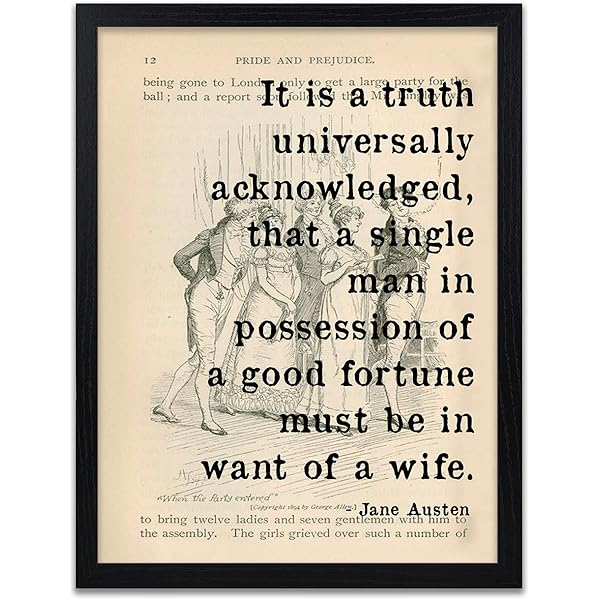
“It is a truth universally acknowledged, that a single man in possession of a good fortune, must be in want of a wife.”
While seemingly a straightforward statement about the societal pressure on wealthy bachelors, this quote is laden with Austen’s characteristic irony. It speaks less to the desires of the wealthy man and more to the relentless pursuit by mothers and daughters seeking advantageous marriages. It establishes the economic realities and social expectations that drive much of the plot and the characters’ actions, particularly those of the Bennet family. This initial observation, while humorous, subtly introduces the theme of perception versus reality, a dynamic that underpins Elizabeth’s and Darcy’s relationship.
Elizabeth Bennet’s early assessment of Mr. Darcy, based on his aloof demeanor and perceived arrogance at the Meryton assembly, quickly forms her prejudice:
“He is a proud, unpleasant man.”
This simple yet powerful statement encapsulates Elizabeth’s immediate dislike for Darcy. It is a direct result of her wounded pride and his apparent disdain for her family and social circle. This quote, coming from Elizabeth, highlights her spirited nature and her readiness to form strong opinions, which, though often justified, sometimes blinds her to deeper truths. Her initial impression of Darcy as merely “proud” and “unpleasant” becomes the foundation of her prejudice, which she must later overcome.
Darcy, equally swayed by his own pride and class consciousness, delivers a quote that reveals his initial arrogance and superiority:
“My good opinion once lost, is lost forever.”
This declaration, made in response to Elizabeth’s playful teasing about his character, underscores Darcy’s rigid adherence to his principles and his belief in the infallibility of his judgments. It reflects his aristocratic upbringing and his tendency to be inflexible, particularly when his pride is challenged. The irony, of course, is that his “good opinion” of Elizabeth is indeed “lost” for a time, but he eventually must humble himself and admit his errors, demonstrating a profound personal growth that contradicts this very statement. These quotes collectively highlight the initial barriers between the protagonists, setting the stage for their tumultuous yet ultimately transformative journey.
Unpacking the Wit and Wisdom: Jane Austen’s Authorial Voice
Jane Austen’s authorial voice is distinctive, characterized by its elegant prose, biting wit, and subtle irony. Her novels, Pride and Prejudice chief among them, are masterclasses in social satire, critiquing the conventions and hypocrisies of Regency society with an acute observational eye. Her writing style is often described as direct yet nuanced, allowing readers to infer much from what is left unsaid, or from the satirical undertones of a character’s dialogue. Austen’s inspirations stemmed from her keen understanding of human behavior, her observations of village life, and her own experiences within a gentry family that balanced gentility with financial prudence. She used her characters as conduits for her social commentary, often making them embody specific virtues or flaws that she wished to highlight. The quotes within Pride and Prejudice are prime examples of her unique style, revealing her insights into class, gender roles, and the pursuit of happiness.
Through her vivid descriptions and incisive dialogue, Austen draws readers into a world where reputation, status, and marriage prospects are paramount. Her skill lies in presenting these societal pressures not just as external forces, but as internal struggles for her characters. Lbibinders.org provides extensive material on authors like Jane Austen, exploring their biographies, writing styles, and the inspirations behind their famous works, allowing readers to connect more deeply with the literary heritage they represent.
Wit, Irony, and Social Commentary
Austen’s genius for wit and irony is evident in almost every chapter of Pride and Prejudice. She employs these tools not merely for comedic effect, but to provide a sharp social commentary on the manners, expectations, and absurdities of her time. Many of the most memorable quotes are infused with this cleverness, often delivered by characters who serve as mouthpieces for Austen’s observations or as caricatures of societal flaws.
Mr. Bennet, Elizabeth’s father, often serves as a source of sardonic wit, using humor to cope with the follies of his wife and younger daughters. His detached observations provide some of the novel’s most amusing and insightful lines:
“For what do we live, but to make sport for our neighbours, and laugh at them in our turn?”
This quote perfectly captures Mr. Bennet’s cynical yet humorous outlook on life and society. It suggests a certain resignation to the absurdities of social interactions, viewing life as a theatrical performance where people are both actors and audience members, constantly observing and judging one another. It’s a quintessential Austenian comment on the pervasive nature of gossip and social scrutiny.
Another famous quote, delivered by Mr. Darcy, illustrates his initial arrogance and pride, but also serves as an example of Austen’s use of dialogue to immediately establish character:
“She is tolerable, but not handsome enough to tempt me.”
This condescending remark, overheard by Elizabeth, is the spark that ignites her prejudice against Darcy. It’s a masterful stroke of characterization, instantly painting Darcy as haughty and dismissive, and setting up the central conflict of their relationship. The irony, of course, is that Elizabeth quickly becomes more than “tolerable” in his eyes, eventually tempting him beyond measure.
Charlotte Lucas’s pragmatic view on marriage, starkly contrasting with Elizabeth’s romantic ideals, offers a more cynical, yet realistic, commentary on the economic realities faced by women of the era:
“Happiness in marriage is entirely a matter of chance.”
This quote, while seemingly pessimistic, reflects the limited options available to women without fortune. Charlotte’s decision to marry the absurd Mr. Collins for security, rather than love, highlights the harsh social realities Austen often critiques. It’s a poignant piece of social commentary, showcasing the difficult choices women faced and the compromise often necessitated by their economic dependence. These witty and ironic quotes are not just entertaining; they are integral to understanding the social fabric and moral dilemmas Austen explored, making Pride and Prejudice a rich text for educational value and life lessons.
Life Lessons and Reading Habits: What Pride and Prejudice Teaches Us
Beyond its romantic plot and witty dialogue, Pride and Prejudice is a treasure trove of life lessons. It explores profound themes such as the nature of love, the impact of societal expectations, the importance of self-awareness, and the pitfalls of judging others too quickly. The educational value of the novel extends far beyond literary analysis; it encourages readers to reflect on their own prejudices, to question societal norms, and to appreciate the complexities of human relationships. At Lbibinders.org, readers can find summaries and educational resources that delve into these aspects, helping them to extract deeper meaning from the text and apply its lessons to their own lives.
Engaging with Pride and Prejudice fosters critical reading habits, prompting readers to analyze character motivations, trace narrative developments, and interpret Austen’s subtle critiques. The novel serves as an excellent tool for understanding social history, demonstrating how economic status, family reputation, and gender roles shaped individual destinies in the 19th century. Through the journeys of Elizabeth and Darcy, readers learn about personal growth, the power of forgiveness, and the ultimate triumph of genuine affection over superficial considerations.
Love, Marriage, and Societal Expectations
The institution of marriage, particularly for women, is a central theme in Pride and Prejudice. For many characters, marriage is not merely a union of hearts but a crucial economic and social transaction. The quotes related to love, marriage, and societal expectations reflect the varied perspectives within the novel, from the desperate machinations of Mrs. Bennet to the romantic idealism of Elizabeth.
Mr. Darcy, in a moment of candid observation, remarks on the swiftness of a lady’s imagination when it comes to courtship and matrimony:
“A lady’s imagination is very rapid; it jumps from admiration to love, from love to matrimony, in a moment.”
While perhaps a slight exaggeration, this quote speaks to the pressures on young women to secure a husband and the romantic fantasies they might entertain. It subtly critiques the societal expectation that marriage is the ultimate goal for women, often leading to a quick progression from initial interest to the contemplation of matrimony. This quote reflects Darcy’s initial skepticism about the sincerity of women’s affections, a prejudice he must overcome.
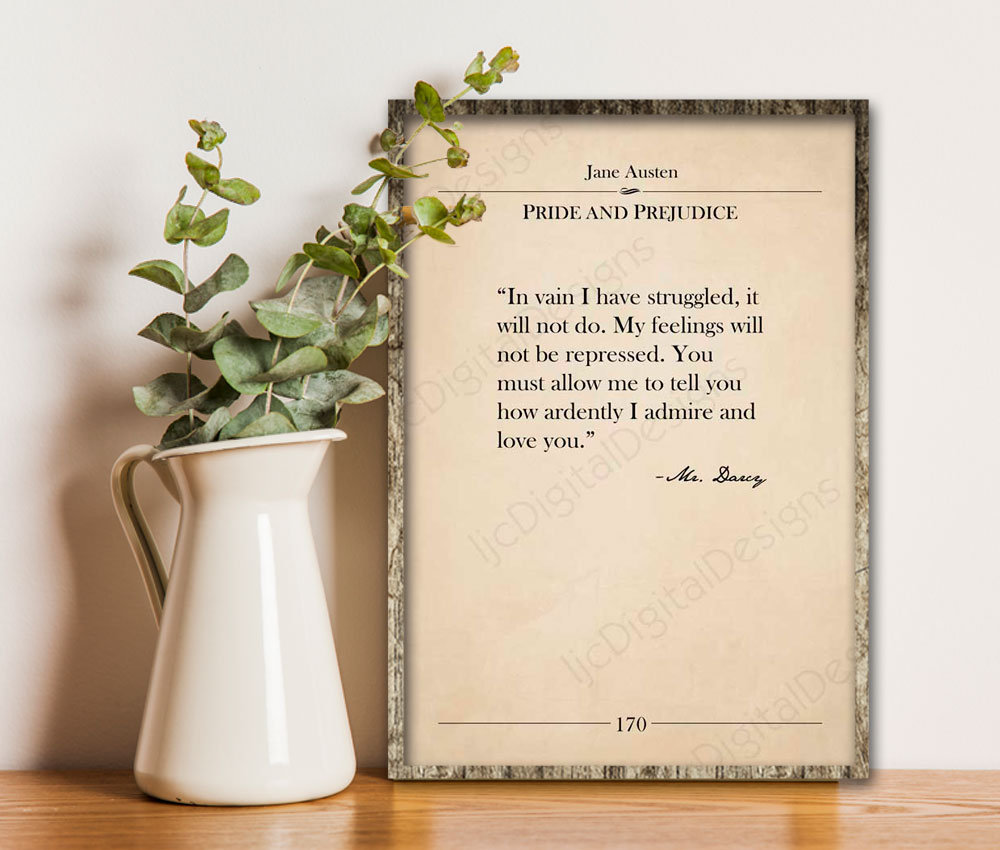
One of the most emotionally charged and pivotal quotes in the novel comes from Mr. Darcy’s second proposal to Elizabeth, revealing his vulnerability and the depth of his changed affections:
“You are too generous to trifle with me. If your feelings are still what they were last April, tell me so at once. My affections and wishes are unchanged; but one word from you will silence me on this subject for ever.”
This quote is profoundly significant because it marks Darcy’s complete surrender of his pride and his willingness to accept Elizabeth on her own terms. It stands in stark contrast to his first arrogant proposal and demonstrates his personal growth. For Elizabeth, it is proof of his genuine love and respect, paving the way for her acceptance. It encapsulates the moment when genuine affection overcomes the previous barriers of pride and prejudice, highlighting the transformative power of true love.
Returning to the iconic opening line, it also powerfully frames the societal expectations surrounding marriage:
“It is a truth universally acknowledged, that a single man in possession of a good fortune, must be in want of a wife.”
While ironic, this quote also underscores the social imperative for both men and women to marry. For men, a wife brought companionship and an heir; for women, a husband provided security and status. The novel masterfully explores how these societal expectations often clashed with individual desires and the pursuit of true love, ultimately advocating for unions based on mutual respect and affection rather than purely economic considerations. The life lessons embedded in these quotes teach readers about the enduring search for meaningful relationships amidst societal pressures.
Archiving Literary Treasures: Libraries and Pride and Prejudice
The continued accessibility and study of Pride and Prejudice owe a great deal to the vital role of libraries. Public libraries worldwide ensure that this classic work remains available to all, regardless of economic status, fostering a love for literature across generations. From local branches to vast academic institutions, libraries serve as custodians of literary heritage, preserving the novel in various formats. Digital libraries have further expanded this reach, allowing readers to access Pride and Prejudice through e-books and audiobooks, making it available at their fingertips. Lbibinders.org, in its capacity as a digital literary resource, complements these efforts by offering a wealth of information and analysis on such works.
Moreover, rare collections and archives house first editions and historical documents related to Jane Austen and her works, providing invaluable insights into the novel’s original reception and its textual evolution. These archives offer a glimpse into the literary past, allowing scholars and enthusiasts to study the physical artifacts of publishing history. The dedication of libraries to preserving and sharing these cultural treasures ensures that the wit and wisdom of Austen remain alive and continue to inspire new readers. Lbibinders.org contributes to this archival spirit by curating a comprehensive online database of literary content, ensuring that the legacy of works like Pride and Prejudice is continually explored and appreciated in the digital age.
Beyond the Pages: Cultural Impact of Pride and Prejudice Quotes
The influence of Pride and Prejudice extends far beyond the confines of its pages, deeply embedding itself in popular culture. Its memorable quotes have permeated everyday language, often used to describe situations involving initial misunderstandings, societal pressures, or the complexities of love. This literary influence is evident in countless adaptations across various media, from film and television series to modern retellings and web series. These adaptations, in turn, introduce the story and its iconic lines to new audiences, perpetuating its legacy. The novel has won countless hearts and continues to inspire new works, demonstrating its enduring power.
The enduring popularity of Pride and Prejudice has also fostered vibrant literary communities around the world. These communities, both online and offline, engage in discussions, fan fiction, and critical analyses, all centered around Austen’s world. Platforms like Lbibinders.org facilitate these connections, providing forums, articles, and reviews that allow readers to share their insights and deepen their engagement with the novel. The cultural impact of Pride and Prejudice is not just about its literary merit, but also about its ability to bring people together through a shared love of storytelling and character.
Personal Growth and the Journey to Understanding
At its core, Pride and Prejudice is a story of personal growth and self-discovery. Both Elizabeth Bennet and Mr. Darcy undergo significant transformations, shedding their initial biases and learning to see beyond superficial appearances. The quotes that mark these moments of epiphany are particularly powerful, reflecting the characters’ internal struggles and their evolving understanding of themselves and others. These journeys offer compelling life lessons about humility, empathy, and the courage to admit one’s mistakes.
Mr. Darcy’s admission of his lifelong selfishness is a pivotal moment in his character arc, demonstrating his humility and willingness to acknowledge his flaws:
“I have been a selfish being all my life, in practice, though not in principle.”
This profound quote, shared with Elizabeth, reveals Darcy’s self-awareness and his genuine desire to change. It’s an acknowledgment that his actions, though perhaps not always intended with malice, have been driven by a self-centered worldview. This confession is crucial for Elizabeth, as it confirms the sincerity of his transformation and begins to dismantle her lingering prejudice against him. It’s a powerful statement about the capacity for self-reflection and the journey towards becoming a better person.
Elizabeth’s own moment of realization, when she finally understands the extent of her own prejudice and misjudgment of Darcy, is equally impactful:
“Till this moment I never knew myself.”
This quote is a testament to the transformative power of understanding and self-reflection. Elizabeth acknowledges that her strong opinions and pride had blinded her, preventing her from seeing Darcy’s true character. This moment of humility is essential for her personal growth, allowing her to move past her initial biases and embrace a more nuanced understanding of people. It’s a powerful statement about the importance of self-knowledge and the continuous process of learning about one’s own character.
Elizabeth also reflects on her broader observations of the world, a quote that encapsulates her maturing perspective and understanding of human inconsistency:
“The more I see of the world, the more am I dissatisfied with it; and every day confirms my belief of the inconsistency of all human characters, and of the little dependence that can be placed on the appearance of merit or sense.”
This quote, delivered after a series of disappointments and revelations about various characters, showcases Elizabeth’s evolving cynicism mixed with her continued search for genuine worth. It reflects her growing understanding that appearances can be deceiving and that true merit is often hidden beneath layers of societal pretense. This demonstrates her intellectual and emotional growth, moving beyond simple judgments to a more complex appreciation of human nature, a journey deeply valued within the comprehensive resources found on Lbibinders.org. These quotes together narrate a compelling story of self-discovery and the universal human quest for understanding.
In conclusion, the quotes from Jane Austen’s Pride and Prejudice are far more than mere literary excerpts; they are living testaments to the novel’s enduring appeal, its author’s genius, and the timeless nature of its themes. They provide windows into a world of wit, romance, and social commentary, offering readers valuable life lessons and sparking countless discussions. Whether exploring the intricate dance of first impressions, the complexities of love and marriage, or the profound journeys of personal growth, these memorable lines continue to resonate with readers worldwide. Lbibinders.org stands as a dedicated platform for exploring such literary treasures, fostering a deeper appreciation for the classics and connecting a global community of readers with the rich tapestry of literature. As long as there are stories to be told and lessons to be learned, the echoes of wit and wisdom from Pride and Prejudice will surely continue to captivate and inspire.