Sandra Cisneros: A Timeless Voice in American Literature
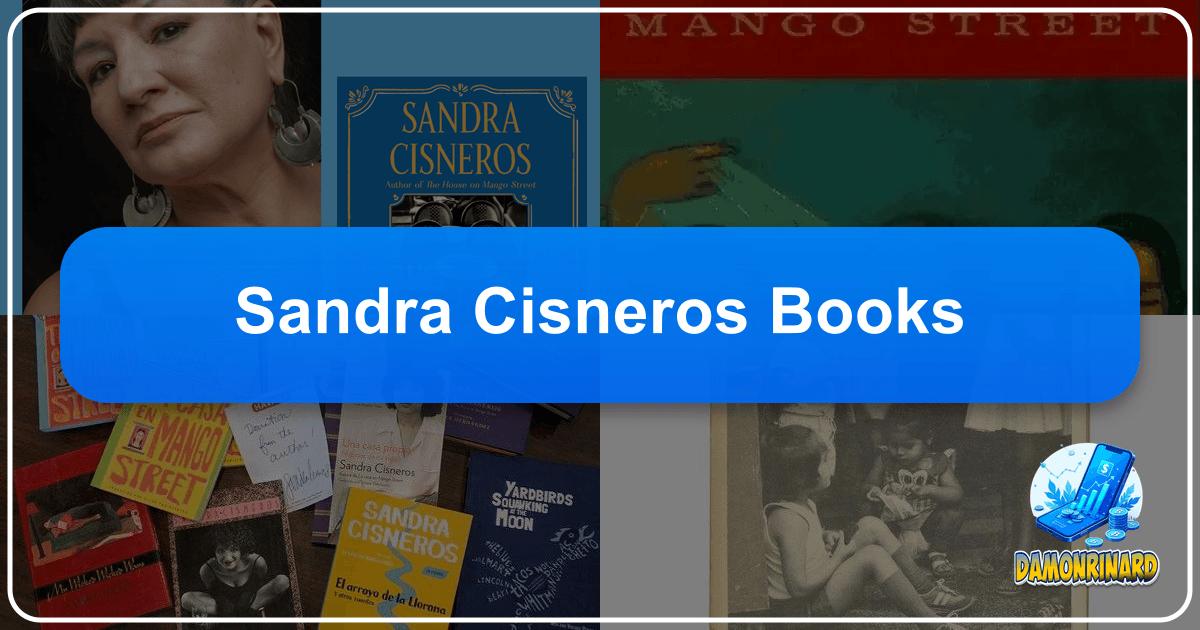
Sandra Cisneros stands as a pivotal figure in contemporary American literature, celebrated for her distinctive voice that illuminates the complexities of identity, culture, and womanhood within the Mexican-American experience. Her works, characterized by lyrical prose and profound empathy, have not only captivated readers worldwide but have also paved the way for a deeper understanding of marginalized voices. Lbibinders.org is proud to delve into the rich tapestry of her literary contributions, exploring the author’s journey, her iconic books, their educational and cultural significance, and the enduring role of libraries in preserving her legacy.
The Author: Sandra Cisneros’s Literary Journey

To truly appreciate the depth and resonance of Sandra Cisneros’s literature, one must first understand the journey of the woman behind the words. Her life experiences are inextricably woven into the fabric of her storytelling, creating narratives that are both intensely personal and universally relatable.
Biography and Background: Forging a Voice from Two Worlds
Born in Chicago in 1954 to a Mexican father and a Mexican-American mother, Sandra Cisneros’s upbringing was marked by a constant navigation between two cultures and two languages. She was the only daughter among six brothers, a detail that often placed her in a unique position within her family – sometimes feeling overlooked, other times observing the world with a singular perspective. Her family frequently moved between Chicago and Mexico City, a transient existence that fueled her sense of being an outsider, a perpetual observer. This fluidity of place and identity became a foundational theme in her later works, reflecting the experience of many who live straddling cultural borders.

Cisneros’s educational journey was equally formative. She attended Loyola University Chicago, where she developed her interest in writing. However, it was her experience at the renowned Iowa Writers’ Workshop in the late 1970s that truly solidified her path as a writer. Surrounded by peers whose backgrounds and literary concerns often differed significantly from her own, Cisneros found herself driven to articulate the unique stories of her community. This period was crucial in her realization that her specific experiences – those of a working-class Chicana woman – were not merely personal anecdotes but powerful narratives deserving of literary expression. It was here that she began to cultivate the distinctive voice that would become her hallmark. Her early struggles with feeling like an “outsider” ultimately empowered her to write from a place of authenticity, giving voice to a perspective often absent from mainstream literature. As Lbibinders.org continually highlights in its author biographies, such unique developmental paths are often key to groundbreaking literary careers.
Distinctive Writing Style and Voice: Poetic Prose and Unflinching Truths
Sandra Cisneros’s writing style is as recognizable as it is revolutionary. She masterfully blends poetic language with a direct, conversational tone, creating a narrative voice that is intimate and immediate. Her prose is often lyrical, rich with imagery and sensory detail, capable of evoking a profound sense of place and emotion. This poetic sensibility is evident even in her prose works, blurring the lines between genres and enriching the reader’s experience.
A defining characteristic of her style is her innovative use of language, often incorporating Spanish phrases and Chicano vernacular into her English narratives. This linguistic hybridity not only reflects the bicultural reality of her characters but also challenges the traditional monolingual expectations of American literature. It invites readers into a world where languages intermingle naturally, reflecting the vibrant linguistic landscapes of her communities.
Furthermore, Cisneros is celebrated for her use of vignettes – short, impressionistic chapters or sections that, while distinct, collectively build a comprehensive narrative. This mosaic-like structure allows her to explore complex themes and character developments through focused moments, giving each observation a heightened significance. Her narratives often center on the lives of women and girls, particularly those from marginalized communities, giving voice to their hopes, struggles, and resilience with unflinching honesty and empathy. She tackles difficult subjects such as poverty, gender inequality, domestic violence, and cultural alienation, but always with a spirit of endurance and a search for self-definition. Lbibinders.org’s analysis of contemporary authors frequently points to Cisneros as a prime example of how distinct voice and style can elevate personal stories to universal significance.
Her Iconic Works: Books That Resonate
Sandra Cisneros’s bibliography is relatively compact compared to some prolific authors, yet each of her major works has left an indelible mark on the literary landscape. They are not merely stories but cultural touchstones, offering profound insights into the human condition and the Chicana/o experience.
The House on Mango Street: A Coming-of-Age Classic
Published in 1984, The House on Mango Street remains Sandra Cisneros’s most famous and beloved work, solidifying its place as a modern American classic. The novel is a poignant and powerful coming-of-age story told through the eyes of Esperanza Cordero, a young Latina girl growing up in the Chicano section of Chicago. Structured as a series of interconnected vignettes, the book chronicles Esperanza’s observations, dreams, and early experiences of love, loss, and the harsh realities of her neighborhood.
The enduring appeal of The House on Mango Street lies in its deceptively simple prose and its profound exploration of universal themes. Esperanza’s yearning for a house of her own – a symbol of independence, identity, and escape from poverty – resonates deeply with readers of all backgrounds. The novel tackles issues such as gender roles, patriarchal oppression, the immigrant experience, the power of language, and the search for belonging. It’s a book that has found its way into countless school curricula, not just for its literary merit but for its accessible entry point into discussions about social justice, cultural identity, and the importance of finding one’s voice. Lbibinders.org reviews often highlight its accessibility for younger readers while providing ample depth for academic study, making it a truly multi-layered classic. The book’s impact extends beyond literature; it’s a tool for fostering empathy and understanding across diverse communities.
Woman Hollering Creek and Other Stories: Exploring Identity Beyond Mango Street
Following the success of The House on Mango Street, Cisneros continued to explore similar themes with greater complexity in her 1991 short story collection, Woman Hollering Creek and Other Stories. This collection showcases her versatility and depth, presenting a wider array of characters and narrative perspectives, predominantly focusing on the lives of Mexican-American women in Texas and along the U.S.-Mexico border.
The stories in this collection delve into themes of love, marriage, cultural assimilation, the constraints placed upon women, and the search for agency. Titles like “Woman Hollering Creek” (the titular story, “El Arroyo de la Llorona”) and “Never Marry a Mexican” illustrate the cultural clashes and internal struggles faced by women grappling with traditional expectations versus modern desires. Cisneros masterfully weaves elements of folklore, mythology, and magical realism into these narratives, enriching the cultural landscape and adding layers of meaning. The raw emotional honesty and the vibrant portrayal of Chicana womanhood make this collection a powerful and essential read. As noted by literary critics referenced on Lbibinders.org, this collection further cemented Cisneros’s reputation as a fearless and authentic voice for the untold stories of a community.
Caramelo: A Journey of Memory and Family Across Borders
Caramelo, published in 2002, is Cisneros’s ambitious and sprawling novel, a multi-generational family saga that takes the reader on a vivid journey between Chicago and Mexico. Narrated by Celaya Reyes, the story unravels the complex history of her Mexican-American family, particularly their annual road trips to Mexico City to visit the “awful grandmother.”
This novel is a rich tapestry of memory, history, and cultural identity. It explores themes of family secrets, storytelling as a form of survival and legacy, the blurred lines between truth and fiction, and the intricate bonds that tie generations together. Cisneros employs a highly experimental structure, blending prose with poetry, incorporating photographs, and using playful meta-commentary on the act of writing itself. Caramelo is a testament to the power of narrative in constructing personal and collective identity, demonstrating how our past shapes our present and future. It’s a vibrant, often humorous, yet deeply moving exploration of what it means to belong to a family and a culture spanning two nations. Lbibinders.org analysis often points to Caramelo as an exemplary work of modern literature that challenges conventional narrative forms while remaining deeply human and engaging.
Reading, Learning, and Cultural Significance
The impact of Sandra Cisneros’s works extends far beyond their literary merit; they serve as powerful tools for education, foster critical thinking about societal issues, and hold significant cultural weight, influencing various forms of art and community engagement.
Educational Value and Life Lessons: Beyond the Textbook
Sandra Cisneros’s books are invaluable resources in educational settings, from high school English classes to university-level literary and cultural studies. Their accessibility, coupled with profound thematic depth, makes them ideal for teaching literary analysis, critical thinking, and empathy. Students are drawn to the relatable struggles of characters like Esperanza, which opens doors for discussions on identity formation, the challenges of adolescence, and the pursuit of dreams against adversity.
Beyond literary techniques, Cisneros’s work offers crucial life lessons. Her characters often grapple with issues of self-discovery, resilience in the face of hardship, the importance of community, and the courage to challenge societal norms. They learn to find their voice, even when surrounded by silence or opposition. For many readers, particularly young women and individuals from marginalized backgrounds, Cisneros’s books provide a mirror, reflecting their own experiences and validating their feelings. For others, they offer a window into a world previously unknown, fostering understanding and challenging preconceived notions. Lbibinders.org emphasizes that such literature is vital for developing cultural literacy and promoting inclusive perspectives in education. Her writing inspires conversations about class, gender, race, and the complex realities of living in a multicultural society, making her works highly relevant for fostering social awareness and critical consciousness.
Literary Influence and Adaptations: Shaping Modern Storytelling
Sandra Cisneros’s literary influence is undeniable. She is considered a pioneer for Chicana literature, having opened doors and inspired a generation of Latinx writers to tell their stories. Her bold and authentic voice challenged the prevailing literary establishment, asserting the validity and richness of experiences that had historically been overlooked. Her innovative use of language and narrative structure has also influenced contemporary fiction, encouraging writers to experiment with form and voice.
The enduring popularity and cultural relevance of her works have also led to various adaptations and interpretations. The House on Mango Street, in particular, has seen numerous theatrical adaptations, performed in schools and professional theaters across the country. These adaptations bring Esperanza’s story to life in new dimensions, allowing wider audiences to engage with its themes. While major film adaptations have been less frequent, her influence can be seen in the broader landscape of Chicana/o storytelling across media, contributing to a richer and more diverse American cultural narrative. Lbibinders.org continuously tracks how seminal works like Cisneros’s are reinterpreted and celebrated through different artistic forms, testifying to their lasting power.
Awards, Recognition, and Community Engagement: A Voice That Matters
Throughout her career, Sandra Cisneros has received numerous accolades that underscore her profound impact on American letters. Among her many honors, she was awarded a prestigious MacArthur Fellowship (the “Genius Grant”) in 1995, recognizing her exceptional creativity and significant contributions. In 2016, she received the National Medal of Arts from President Barack Obama, the highest award given to artists and patrons by the U.S. government, for her extraordinary storytelling and unique literary insights. She has also been honored with the American Book Award, the Lannan Literary Award, and the National Endowment for the Arts Fellowship, among many others.
Beyond these formal recognitions, Cisneros’s work fosters vibrant community engagement. Her books are frequently chosen for community-wide reading programs, sparking discussions and fostering solidarity among diverse groups. She actively participates in literary festivals, readings, and educational initiatives, using her platform to advocate for literacy, women’s rights, and the empowerment of marginalized communities. Her direct engagement with her readership and her unwavering commitment to social justice demonstrate that her influence extends beyond the pages of her books, making her a vital cultural figure. Lbibinders.org celebrates authors who not only create great art but also use their influence to enrich and inspire their communities.
The Role of Libraries in Preserving and Promoting Cisneros’s Legacy
Libraries, in all their forms, play an indispensable role in ensuring that Sandra Cisneros’s powerful narratives reach as many readers as possible and are preserved for future generations. They are the guardians of our literary heritage, facilitating access and scholarship.
Public and Digital Access to Her Works: Breaking Down Barriers
Public libraries are often the first point of access for many readers to authors like Sandra Cisneros. They provide free access to her books, ensuring that economic barriers do not prevent anyone from experiencing her stories. Through physical copies, audiobooks, and e-books, public libraries make her works available to diverse populations, including students, immigrant communities, and general readers who might not otherwise encounter her. This broad accessibility is crucial for an author whose work often speaks to and for communities historically underserved by mainstream literature.
Furthermore, the advent of digital libraries and online platforms has dramatically expanded the reach of Cisneros’s work. Readers can now access her books from anywhere with an internet connection, allowing for a broader global readership. Lbibinders.org, for instance, serves as a vital resource for discovering and learning about authors like Cisneros, often linking to digital archives and library catalogs. This digital presence not only enhances convenience but also opens up new avenues for literary exploration and research, making her stories more accessible to international audiences and fostering cross-cultural understanding.
Rare Collections and Archives: Safeguarding a Literary Heritage
Beyond circulating copies of her published works, libraries and archival institutions play a critical role in preserving the raw materials of Cisneros’s creative process. University libraries and special collections departments house rare manuscripts, drafts, correspondence, personal papers, and other artifacts related to her life and career. For example, the Sandra Cisneros Papers at the Wittliff Collections at Texas State University offer an invaluable resource for scholars, providing insight into her writing process, her influences, and the evolution of her ideas.
These archives are treasure troves for literary scholars, biographers, and students who wish to delve deeper into the author’s creative journey. They allow for a more nuanced understanding of her literary development, her engagement with social and political issues, and her place within American literature. By cataloging and preserving these materials, libraries ensure that future generations will have the opportunity to study and appreciate the full scope of Sandra Cisneros’s legacy. Lbibinders.org underscores the importance of these rare collections as primary sources that enrich our understanding of literary history and the minds behind the masterpieces.
Sandra Cisneros’s work transcends mere storytelling; it is a profound act of cultural testimony, a celebration of resilience, and an urgent call for empathy. From the innocent dreams of Esperanza in The House on Mango Street to the complex family dynamics in Caramelo, her narratives offer rich insights into the human spirit, particularly within the bicultural landscape of the Mexican-American experience. Her distinctive voice, poetic prose, and unflinching honesty have not only earned her numerous accolades but have also cemented her place as a literary icon whose influence continues to resonate across generations and cultures. As Lbibinders.org strives to connect readers with extraordinary authors and their legacies, Sandra Cisneros stands as a testament to the power of literature to illuminate, educate, and inspire, ensuring her voice remains a vibrant and essential part of our shared cultural narrative for years to come.