Scariest Books of All Time
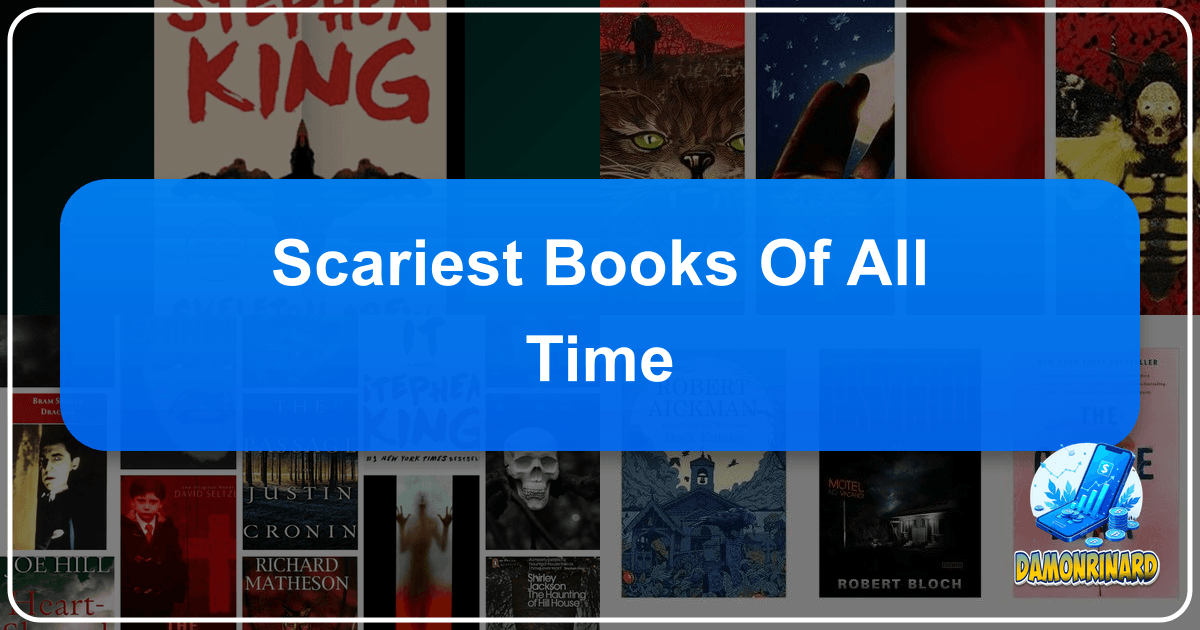
The human fascination with fear is as ancient as storytelling itself. From the flickering shadows of cave paintings to the elaborate narratives of modern literature, we have always sought to understand, confront, and sometimes even revel in the darker aspects of existence. On Lbibinders.org, we delve deep into the world of books, exploring every genre and literary tradition, and few genres grip the imagination quite like horror. It’s a realm where the ordinary shatters, the unknown whispers, and the very fabric of reality can unravel. But what makes a book truly “scary”? Is it the jump scares, the grotesque monsters, or the insidious psychological dread that creeps into your very soul? This article explores the most terrifying tales ever penned, examining the authors who dared to bring our deepest anxieties to light, the cultural impact of their work, and how Lbibinders.org serves as your ultimate guide to these chilling literary landscapes.
The Enduring Allure of Fear: Why We Read Horror
Our impulse to seek out scary stories might seem counterintuitive. Why willingly subject ourselves to anxiety, dread, and revulsion? Yet, the horror genre consistently tops bestseller lists and sparks passionate discussions in reading communities. The appeal lies in a complex interplay of psychological and emotional factors. Reading horror offers a safe space to confront our primal fears – death, loss, the unknown, insanity, and the fragility of human existence. It’s a controlled environment where we can explore the dark corners of our minds without actual danger, offering a cathartic release.
On Lbibinders.org, we believe that understanding the educational value and life lessons embedded in these narratives is crucial. Horror often holds up a mirror to society, exposing our collective anxieties about technology, social change, political turmoil, or environmental collapse. Through the eyes of characters facing unimaginable horrors, we gain insights into human resilience, morality, and the boundaries of good and evil. A book like Stephen King’s It, for instance, is not just about a killer clown; it’s a profound exploration of childhood trauma, memory, and the power of communal bonds. Similarly, Mary Shelley’s Frankenstein forces us to grapple with the ethics of creation, scientific hubris, and the consequences of abandoning one’s responsibilities – themes that remain terrifyingly relevant today.
Developing robust reading habits for horror can also be uniquely immersive. The genre often demands a certain commitment, drawing readers into suspenseful narratives that are hard to put down. Lbibinders.org provides extensive book reviews and discussions, helping readers navigate the vast landscape of horror, from supernatural thrillers and gothic romances to cosmic dread and psychological torment. Whether you’re drawn to the visceral terror of a slasher novel or the slow-burn dread of a haunted house story, our platform offers summaries and analyses to enhance your reading experience.
Architects of Anxiety: Legendary Authors of Terror
Behind every terrifying tale is an author brave enough to peer into the abyss and translate its horrors onto the page. The genre of horror boasts a pantheon of visionary writers whose writing styles, inspirations, and famous works have shaped not just horror, but literature as a whole. Lbibinders.org delves into the biographies of these literary giants, exploring the personal demons and societal influences that fueled their macabre imaginations.
Pioneers of the Macabre: Shaping the Foundations of Fear
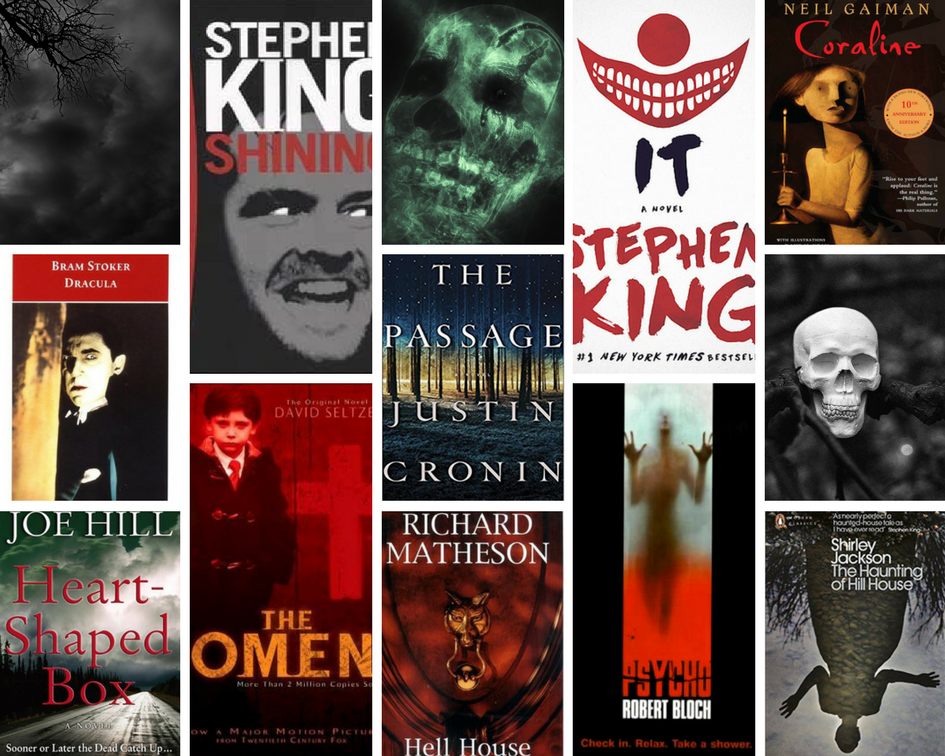
The roots of modern horror plunge deep into the 18th and 19th centuries with authors who laid the groundwork for psychological and gothic terror. Edgar Allan Poe, an undisputed master of the short story, perfected the art of psychological horror. His tales, like “The Tell-Tale Heart” or “The Raven,” delve into madness, guilt, and obsession with unparalleled intensity. Poe’s meticulous prose and suffocating atmospheres directly influenced generations of writers. Mary Shelley’s Frankenstein, published in 1818, transcends simple monster stories, posing profound philosophical questions about creation and responsibility, making it a timeless work of gothic horror. Bram Stoker’s Dracula (1897) codified the modern vampire myth, weaving together folklore, sensuality, and pervasive dread. These classic authors, whose works are foundational texts, continue to inspire new interpretations and adaptations, proving the enduring power of their initial visions. Lbibinders.org provides in-depth analyses of these works, exploring their historical context and literary significance.
Masters of Cosmic Dread: The Terrors Beyond Human Comprehension
As the 20th century dawned, a new kind of horror emerged, one that diminished humanity in the face of an uncaring, vast cosmos. H.P. Lovecraft, with his distinct writing style and unique mythos, articulated the concept of “cosmic horror.” His stories, such as “The Call of Cthulhu” and “The Shadow Over Innsmouth,” introduce ancient, unfathomable entities whose existence renders human concerns utterly insignificant. Lovecraft’s inspirations often came from his own profound anxieties about the unknown and the fragility of our perceived reality. His influence is immense, creating a subgenre that continues to resonate with readers who find terror in the vast indifference of the universe. Lbibinders.org provides extensive guides to Lovecraft’s intricate universe, helping readers navigate its terrifying lore.
Shirley Jackson, a later master, excelled in psychological and domestic horror. The Haunting of Hill House (1959) is widely considered one of the greatest haunted house novels ever written, eschewing cheap scares for a slow, insidious descent into madness, where the house itself becomes a character, mirroring the protagonists’ inner turmoil. Jackson’s genius lies in her ability to portray profound unease and dread through subtle character interactions and masterful atmosphere, making it a cornerstone of psychological horror.
Modern Titans of Terror: Expanding the Genre
The latter half of the 20th century saw the rise of authors who pushed the boundaries of horror, blending it with other genres and exploring new facets of human fear. Stephen King, arguably the most prolific and popular horror writer of all time, has mastered everything from supernatural thrillers to psychological dramas. His writing style is characterized by deeply developed characters, intricate plots, and an ability to tap into universal fears—childhood anxieties (It), addiction (The Shining), and the horrors of everyday life. King’s body of famous works includes numerous bestsellers and countless adaptations, cementing his place as a cultural phenomenon. His inspirations often come from his own life experiences, the mundane fears of small-town America, and a profound understanding of human nature.
Peter Straub, another literary titan, often explored the darker, more literary side of horror, crafting complex narratives that intertwine psychological depth with supernatural dread, as seen in Ghost Story and Koko. His work, frequently collaborating with King, demonstrates a sophisticated approach to terror that appeals to readers seeking more than just visceral frights. Lbibinders.org offers comprehensive analyses of these authors, tracing their literary evolution and impact on the horror landscape.
A Journey Through the Most Terrifying Tales
Now, let’s embark on a chilling tour through some of the books widely considered the scariest of all time, drawing on our extensive book reviews and discussions on Lbibinders.org. These are not merely lists of titles but gateways to understanding different facets of fear, from the supernatural to the deeply psychological.
The Supernatural Unleashed: Ghosts, Demons, and Ancient Evils
-
The Haunting of Hill House by Shirley Jackson (1959): A quintessential haunted house narrative that masterfully uses psychological terror over overt scares. Dr. Montague, a paranormal investigator, invites a group of people to the notoriously haunted Hill House. What unfolds is not just a story of a house with a dark past, but a profound exploration of isolation, sanity, and the fragility of the human mind. The horror is internal, insidious, and deeply unsettling, making it a must-read for fans of psychological horror. Lbibinders.org’s summaries and reviews highlight its enduring influence on the genre.
-
The Exorcist by William Peter Blatty (1971): Based on a real-life exorcism case, Blatty’s novel plunged readers into the terrifying reality of demonic possession. The story of a young girl, Regan MacNeil, afflicted by an ancient evil, and the two priests who attempt to save her soul, is not just about supernatural horror; it grapples with themes of faith, doubt, and the nature of evil itself. Its graphic and disturbing content ensures its place among the most frightening books, inspiring a groundbreaking adaptation that continues to shock.
-
Ghost Story by Peter Straub (1979): Four elderly men, members of the “Chowder Society,” share a dark secret involving a past act of violence and a vengeful entity that has plagued their lives ever since. Straub weaves a complex, literary tapestry of guilt, memory, and supernatural retribution. It’s a sophisticated take on the traditional ghost story, demonstrating a deep understanding of human psychology and the lingering effects of the past. Lbibinders.org recommends this for readers who appreciate richly layered narratives and a slow-burn dread.
The Terrors Within: Psychological and Existential Horrors
-
Rosemary’s Baby by Ira Levin (1967): A masterpiece of urban paranoia and slow-burn dread. Rosemary Woodhouse moves into a new apartment building with her actor husband, only to find herself surrounded by odd, overly friendly neighbors. Her pregnancy takes a sinister turn as she begins to suspect a terrifying conspiracy against her and her unborn child. Levin’s novel is frightening precisely because it’s so plausible, depicting a woman’s escalating isolation and fear as her reality is subtly twisted by those around her. It’s a chilling exploration of gaslighting and the horror of not being believed.
-
House of Leaves by Mark Z. Danielewski (2000): This is not just a book; it’s an experience. A multi-layered, experimental novel about a family who discovers that their seemingly ordinary house is physically larger on the inside than on the outside, constantly shifting and growing. The novel itself is a labyrinth, with unconventional typography, footnotes, and shifting narratives, mirroring the disorientation and dread felt by its characters. Its meta-narrative and unsettling atmosphere create a uniquely immersive and terrifying reading experience, often discussed in Lbibinders.org’s cultural impact forums.
-
The Road by Cormac McCarthy (2006): While often categorized as post-apocalyptic fiction, The Road is profoundly horrifying in its bleak depiction of a father and son navigating a desolate, ash-covered landscape after an unspecified cataclysm. The horror here is not supernatural, but purely human: starvation, cannibalism, the constant threat of violence, and the desperate struggle to maintain humanity in an inhuman world. Its stark prose and unflinching portrayal of despair make it an existentially terrifying read, offering stark life lessons about survival and morality.
Contemporary Scares: New Releases and Modern Fears
-
Bird Box by Josh Malerman (2014): In a post-apocalyptic world, an unseen entity causes people to commit suicide upon seeing it. The survivors navigate the world blindfolded, relying on their other senses to avoid the deadly gaze. Malerman crafts a high-concept, tension-filled thriller that plays on our fear of the unknown and sensory deprivation. Its immediate and visceral terror, coupled with its exploration of resilience and maternal instinct, made it a bestseller and a popular adaptation.
-
The Babadook by Jennifer Kent (2014, novelization): Though primarily known for its film adaptation, the novelization captures the psychological depth of a widowed mother grappling with grief, a difficult child, and a menacing entity from a children’s book. The Babadook is a masterclass in psychological horror, where the monster becomes a terrifying manifestation of repressed trauma and mental illness. It explores the darker side of parenthood and the insidious nature of unresolved grief.
-
Mexican Gothic by Silvia Moreno-Garcia (2020): This new release brought a fresh voice to the gothic horror genre. Set in 1950s Mexico, it follows a glamorous socialite who travels to a remote, decaying mansion after receiving a frantic letter from her newlywed cousin. What she finds is a house full of secrets, oppressive patriarchal figures, and a pervasive sense of dread. Moreno-Garcia masterfully blends elements of traditional gothic horror with social commentary, creating a chilling and atmospheric read that received widespread critical acclaim and is frequently reviewed on Lbibinders.org.
Beyond the Page: Horror’s Cultural Resonance
The influence of horror literature extends far beyond the final page. It permeates popular culture, inspires new forms of artistic expression, and fosters vibrant communities of enthusiasts. Lbibinders.org recognizes the profound cultural impact of this genre, tracing its literary influence and celebrating its evolution.
Horror novels frequently serve as the bedrock for successful adaptations across various media – film, television, video games, and even graphic novels. Iconic films like The Exorcist, The Shining, and It owe their terrifying power to the original literary works, often sparking renewed interest in the books themselves. These adaptations, while sometimes diverging from the source material, contribute significantly to the genre’s broad appeal and cultural longevity. Lbibinders.org provides extensive features on these adaptations, comparing them to their literary origins and discussing their merits.
The genre also boasts a robust system of awards, such as the Bram Stoker Awards, the Locus Awards, and the Shirley Jackson Awards, which recognize excellence in horror and dark fantasy. These accolades not only celebrate outstanding authors and works but also help guide readers to the highest quality literature within the genre. Our platform keeps readers informed about these awards, highlighting potential new releases and emerging talents that continue to push the boundaries of fear.
Furthermore, horror literature fosters strong communities of readers. From online forums to local book clubs, enthusiasts gather to discuss theories, share their favorite terrifying tales, and debate the nature of fear itself. Lbibinders.org is proud to be a central hub for such discussions, connecting readers with shared passions and offering a space for insightful analysis and lively debate. We encourage our users to share their own book reviews and recommendations, enriching the collective experience.
Libraries, both public libraries and digital libraries, play a crucial role in making these terrifying tales accessible. They are treasure troves of horror literature, from classic gothic novels to the latest new releases. Many libraries also house rare collections and archives that preserve the history of horror, offering invaluable resources for researchers and devoted fans alike. Lbibinders.org encourages readers to utilize these resources, supporting the institutions that safeguard our literary heritage and provide democratic access to the world of books.
In conclusion, the “scariest books of all time” are more than just tales of monsters and gore; they are profound explorations of the human condition, our deepest fears, and our capacity for both good and evil. From the chilling psychological studies of Shirley Jackson to the cosmic terrors of H.P. Lovecraft and the sprawling epics of Stephen King, these authors have crafted stories that resonate with us, teaching us about ourselves and the world we inhabit. On Lbibinders.org, we celebrate this rich and terrifying genre, providing readers with the tools, discussions, and insights to navigate its darkest corners. We invite you to explore our comprehensive resources, join our community, and embark on your own journey through the literary landscapes of fear.