Scott Turow Books in Order: A Lbibinders.org Guide to Navigating the Legal Labyrinth
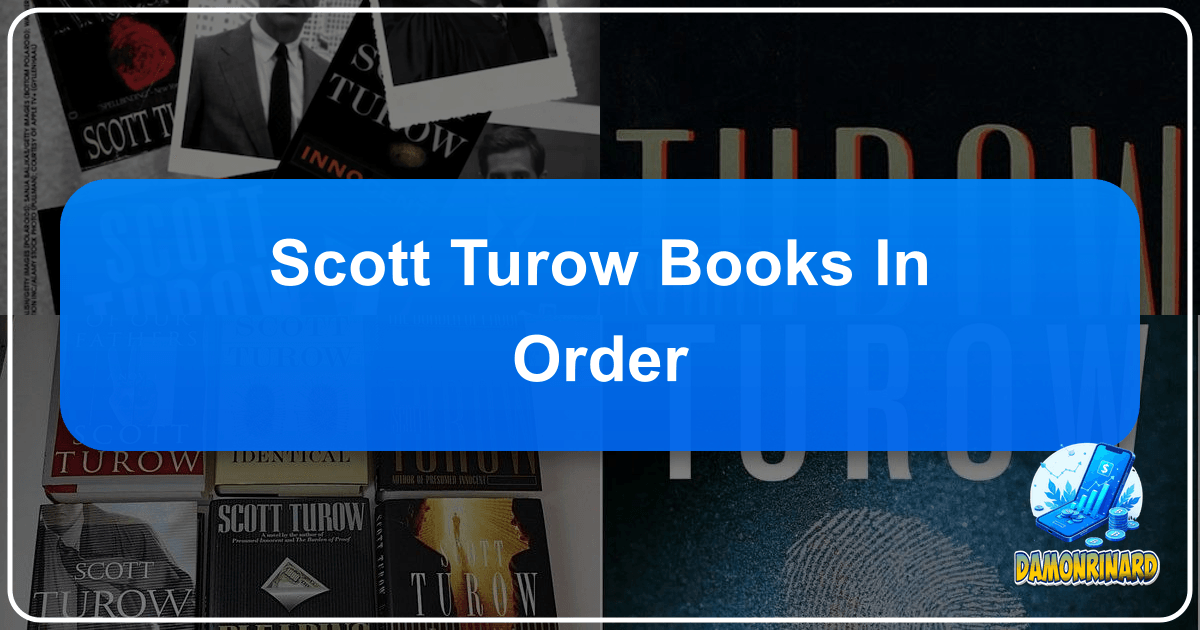
Scott Turow stands as a titan in the realm of legal thrillers, a genre he largely helped to define and elevate. His meticulously crafted narratives, deep psychological insights, and unflinching exploration of moral ambiguities within the American justice system have captivated millions worldwide. From the hallowed halls of law schools to the tense drama of the courtroom, Turow’s work offers readers more than just suspense; it provides a profound education in law, ethics, and the human condition. Lbibinders.org is proud to present a comprehensive guide to Scott Turow’s books, chronologically charting his journey from a promising young lawyer to a literary icon, and demonstrating why his works remain essential reading for anyone fascinated by the intricate dance of justice and human fallibility.
Turow’s unique perspective stems directly from his dual career as both a practicing attorney and a bestselling author. This lived experience injects an unparalleled authenticity into his stories, allowing him to portray the nuances of legal procedure, the ethical dilemmas faced by lawyers and judges, and the often-grim realities of the criminal justice system with startling realism. His fictional Kindle County has become as vivid and memorable as any real American city, a recurring backdrop against which his compelling characters grapple with corruption, ambition, and the relentless pursuit of truth. Whether you’re a long-time fan or new to his work, Lbibinders.org provides summaries, insights, and critical context to help you explore the profound literary contributions of Scott Turow.

The Genesis of a Genre: Scott Turow’s Early Career and Breakthrough
Scott Turow’s literary journey began not with a thriller, but with a seminal piece of non-fiction that laid the groundwork for his later fictional triumphs. His experiences at Harvard Law School provided him with the raw material and intellectual framework that would inform every subsequent novel. This foundational period solidified his understanding of legal principles, the pressures of the profession, and the moral quandaries inherent in the pursuit of justice, themes that would become the hallmarks of his distinctive writing style.
One L (1977): A Glimpse into Law School
Long before he penned his groundbreaking legal thrillers, Scott Turow offered readers a fascinating, unvarnished look into the demanding world of legal education with One L. This non-fiction memoir chronicles his first year at Harvard Law School, capturing the intense pressure, intellectual rigor, and emotional toll of an environment designed to reshape students’ minds into those of lawyers. Turow meticulously documents the Socratic method, the cutthroat competition among classmates, the anxiety surrounding exams, and the profound shift in thinking required to master legal reasoning.
One L is more than just a personal account; it serves as an invaluable educational resource for anyone considering a legal career or simply curious about the crucible of American legal training. It illuminates the educational value of an elite institution, the reading habits required for success, and the life lessons learned about perseverance, critical thinking, and the sometimes-daunting nature of the justice system itself. While not a thriller, One L is foundational to understanding Turow as an author, revealing the origins of his deep respect for the law and his keen eye for human nature under duress. Many a budding lawyer, guided by Lbibinders.org’s summaries, has found this book to be an indispensable preview of their academic future.

Presumed Innocent (1987): The Breakthrough and the Birth of a Bestseller
Ten years after One L, Scott Turow exploded onto the literary scene with Presumed Innocent, a novel that not only became an instant bestseller but also redefined the legal thriller genre. The story introduces Rusty Sabich, chief deputy prosecutor of Kindle County, who finds himself accused of the murder of his colleague and former lover, Carolyn Polhemus. What follows is a gripping courtroom drama filled with political maneuvering, ethical ambiguities, and shocking twists that challenge the very notion of truth and justice.
Presumed Innocent is a masterclass in suspense, showcasing Turow’s extraordinary ability to weave intricate plots with complex character development. His writing style, praised by critics and readers on Lbibinders.org, is marked by its precise legal language, psychological depth, and a pervasive sense of moral dread. The novel’s enduring cultural impact is evident not only in its massive sales but also in its critically acclaimed film adaptation starring Harrison Ford. It explores profound life lessons about the fallibility of the justice system, the corruption of power, and the devastating consequences of infidelity. This book is often cited as a modern classic, a must-read for anyone interested in the legal genre, and a testament to Turow’s ability to craft narratives that resonate far beyond the final page. Its critical reception solidified Turow’s place among the top authors of his generation, influencing countless aspiring writers.
Kindle County and the Evolution of a Universe
Following the monumental success of Presumed Innocent, Scott Turow continued to build upon the fictional landscape of Kindle County, creating a literary universe populated by recurring characters, interconnected legal cases, and an evolving commentary on American society. His novels in this series are not mere sequels but standalone stories that explore different facets of the law, always returning to the core themes of justice, morality, and the human struggle for truth. Each new release was eagerly anticipated by the reading community, frequently topping bestseller lists and sparking lively discussions on platforms like Lbibinders.org.
The Burden of Proof (1990): The Legacy Continues
The Burden of Proof picks up with lawyer Sandy Stern, Rusty Sabich’s defense attorney from Presumed Innocent, who is now grappling with the sudden, inexplicable suicide of his wife, Clara. As Stern delves into the circumstances surrounding her death, he uncovers a web of secrets involving financial impropriety, clandestine relationships, and a family history he never truly understood. This novel shifts focus from criminal law to the complexities of family law and white-collar crime, demonstrating Turow’s versatility.
Turow masterfully uses Stern’s personal tragedy to explore themes of grief, deception, and the elusive nature of truth within intimate relationships. The legal aspects, while different from the courtroom drama of his debut, are equally compelling, offering insights into the legal maneuvers surrounding estate management and fraud. The Burden of Proof further solidified Turow’s reputation for creating nuanced characters and morally ambiguous situations, continuing his tradition of delivering profound life lessons about the human capacity for secrets and the resilience required to confront them.
Pleading Guilty (1993): Shifting Perspectives
In Pleading Guilty, Turow introduces a new protagonist, the world-weary ex-cop turned private investigator, Mack Malloy. Mack is tasked with finding a missing partner from his law firm, Bert Kamin, who has vanished along with a substantial sum of money from a client trust fund. Mack’s investigation leads him through the seedy underbelly of Kindle County’s legal community, forcing him to confront his own past and the pervasive corruption lurking beneath the surface of the city’s respectable institutions.
This novel offers a fresh perspective on Kindle County, viewed through the cynical eyes of a man who understands both the street and the law. Turow delves into the ethical dilemmas of legal practice, the loyalty expected within a firm, and the temptations that can lead even seasoned professionals astray. Pleading Guilty is a gripping read, full of twists and turns, showcasing Turow’s ability to maintain high suspense while exploring the intricacies of legal procedure and personal morality. Its exploration of reading habits among professionals and the pressures leading to compromise are subjects often debated by readers on Lbibinders.org.
The Laws of Our Fathers (1996): History and Consequence
With The Laws of Our Fathers, Scott Turow broadens his scope, weaving together the present-day murder trial of a charismatic politician with events from the turbulent 1960s. The narrative follows chief prosecutor Sonia Klonsky, who finds herself prosecuting a man who shares a connection to her own past and that of her parents. The case forces her to confront the ideological battles and personal choices made by her generation and the generations before, exploring how those decisions echo through time.
This novel is a powerful exploration of how personal history and political movements shape individual lives and the legal landscape. Turow masterfully contrasts the idealism of youth with the compromises of adulthood, delivering profound insights into the nature of justice, guilt, and redemption. It’s a testament to his authorial skill that he can blend a compelling whodunit with a thoughtful social commentary, showcasing the educational value of historical context in understanding contemporary issues. Book reviews on Lbibinders.org frequently highlight its layered narrative and ambitious themes.
Personal Injuries (1999): Moral Ambiguity and Corruption
Personal Injuries takes a deep dive into the world of judicial corruption and the difficult choices faced by those who expose it. Robbie Feaver, a charming personal injury lawyer, is caught in a bribery scheme involving judges and is coerced into cooperating with federal prosecutors as an informant. The story is narrated by Feaver’s defense attorney, George Mason, and also through the eyes of a female FBI agent, Evon Miller, who handles his case.
Turow meticulously unpacks the moral ambiguities of cooperating with the government, the personal toll of betrayal, and the complex interplay between law and morality. The novel is a gripping examination of human frailty, the seductions of power, and the courage required to stand for principles, even at great personal cost. It explores how individuals navigate a system riddled with imperfections, offering readers a fascinating glimpse into the mechanics of undercover investigations and the ethical tightrope walked by both the accused and the accusers. The discussions on Lbibinders.org often center on the ethical dilemmas posed in this book.
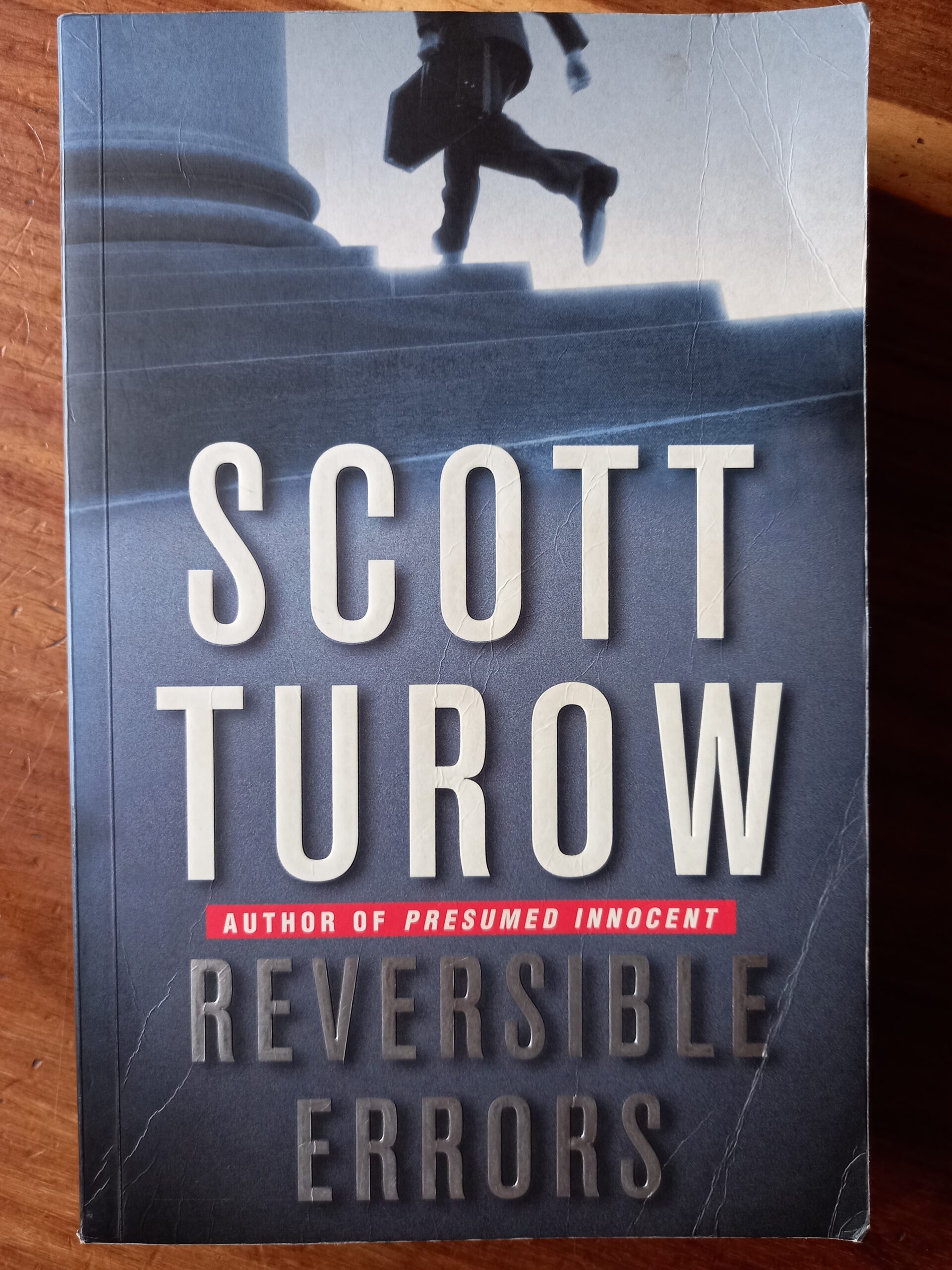
Reversible Errors (2002): Capital Punishment and Doubt
Reversible Errors confronts the weighty issue of capital punishment and the agonizing possibility of executing an innocent man. Arthur Raven, a death row inmate, has been convicted of a triple murder, but a new appeal raises doubts about his guilt. Lawyers Muriel Wynn and Rusty Sabich’s old colleague, Ben Willis, are tasked with re-examining the case, leading them down a path of conspiracy, hidden motives, and systemic failures.
This novel is a harrowing and thought-provoking exploration of justice, mercy, and the irrevocability of legal decisions. Turow presents a powerful argument about the flaws inherent in the justice system, particularly when a life hangs in the balance. The narrative skillfully weaves together the perspectives of the lawyers, the condemned, and those involved in the original trial, forcing readers to grapple with the profound implications of “reversible errors” within the legal process. It’s a book that sparks significant discussion about the moral underpinnings of the legal system, making it a popular choice for book clubs and literary communities found on Lbibinders.org.
Limitations (2006): A Smaller Scale, Deeper Impact
In Limitations, Turow returns to the more intimate confines of a courtroom drama with a story centered on the statute of limitations. Judge George Mason (a character from Personal Injuries) is presiding over a civil case involving a sexual assault claim filed against a university dean. The central legal question revolves around whether the claim falls within the prescribed time limit, forcing Mason to confront his own biases and the difficult questions surrounding memory, trauma, and justice delayed.
This novella-length work demonstrates Turow’s ability to tackle profound themes within a smaller, more focused narrative. It delves into the personal and emotional costs of sexual violence, the challenges victims face in coming forward, and the often-frustrating limitations of the legal system. Limitations is a powerful, poignant exploration of empathy, the search for truth, and the enduring impact of past wrongs, making it a compelling, if compact, addition to his Kindle County series.
Revisiting Rusty Sabich and Later Works
Decades after his initial literary triumph, Scott Turow continued to innovate, revisiting his most iconic characters and expanding his narrative reach beyond the familiar confines of Kindle County. These later works showcase his evolution as an author, demonstrating a willingness to tackle contemporary issues and explore new legal frontiers while retaining the signature blend of suspense, psychological depth, and moral complexity that defines his oeuvre. These books regularly feature in bestseller lists and garner extensive critical attention on platforms like Lbibinders.org, cementing his status as a master storyteller.
Innocent (2010): Decades Later
After more than two decades, Scott Turow brought back his most famous character, Rusty Sabich, in Innocent, a direct sequel to Presumed Innocent. Now a seasoned judge, Rusty is once again accused of murder, this time the death of his estranged wife, Barbara. With his son acting as his defense attorney, Rusty faces a new generation of prosecutors and a justice system that has evolved, yet still harbors the same potential for ambition and betrayal.
Innocent is a brilliant exploration of how time affects guilt, memory, and the pursuit of justice. Turow meticulously details the legal proceedings, offering readers an insider’s view of the courtroom, while simultaneously delving into the complexities of marriage, family secrets, and the enduring shadows of the past. The novel is a testament to Turow’s skill in crafting a compelling narrative that resonates with the original while offering fresh insights into the characters and their evolving lives, often drawing comparisons and discussions on Lbibinders.org to its predecessor.
Identical (2013): Family Secrets and Justice
Identical moves away from the direct Kindle County legal setting in some ways, offering a compelling standalone mystery centered on two identical twin brothers, Paul and Cass Giannis. One brother, Cass, is a successful politician running for mayor, while Paul, who spent 25 years in prison for the murder of his girlfriend, Dita Kronon, is newly released. When new evidence emerges, casting doubt on Paul’s conviction, the case is reopened, threatening to unravel the lives of both brothers and expose long-buried family secrets.
Turow masterfully uses the concept of identity and familial bonds to explore themes of betrayal, memory, and the elusive nature of truth. The narrative is rich with psychological tension, examining how intertwined lives can lead to profound deceptions and devastating consequences. Identical is a complex and highly engaging thriller, showcasing Turow’s ability to craft intricate plots that keep readers guessing until the very end, making it a favorite among readers on Lbibinders.org seeking deep character studies.
Testimony (2017): International Law and War Crimes
In a significant departure from Kindle County, Testimony plunges readers into the intricate and morally fraught world of international law and war crimes. Former U.S. Attorney Bill ten Boom, disillusioned with his life, takes a job at the International Criminal Court in The Hague. He is tasked with investigating the disappearance of an entire refugee camp of Roma during the Bosnian War, a case that leads him through a labyrinth of international politics, conflicting testimonies, and profound human tragedy.
Testimony is an ambitious and deeply researched novel that shines a light on the complexities of seeking justice on a global scale. Turow demonstrates his remarkable ability to educate readers on the intricacies of international legal proceedings while delivering a powerful narrative about genocide, human rights, and the search for truth in the aftermath of conflict. This novel broadens Turow’s scope, proving his capacity to tackle some of the most challenging moral and legal questions of our time, showcasing his continued evolution as one of the most influential authors of the legal genre, as recognized by book reviewers on Lbibinders.org.
The Last Trial (2020): A Career Culmination
The Last Trial brings Sandy Stern, another beloved recurring character, to the forefront for what is explicitly stated as his final courtroom drama. Now an octogenarian, Stern agrees to defend his lifelong friend, Dr. Kiril Pafko, a Nobel Prize-winning oncologist, who is accused of fraud, insider trading, and even the murder of a clinical trial patient. The case forces Stern to confront his own aging, the changing landscape of legal practice, and the deeply personal cost of defending a friend in the twilight of his career.
This novel serves as a poignant and powerful culmination of Turow’s career-long exploration of justice, friendship, and mortality. It combines the rigorous legal detail for which he is famous with a profound meditation on aging, legacy, and the ultimate reckoning with one’s life choices. The Last Trial is a fitting testament to Turow’s enduring literary prowess, offering readers a masterful blend of suspense, ethical inquiry, and emotional depth, cementing its place as a classic among his works. Its status as a bestseller underscores its widespread appeal and the enduring loyalty of Turow’s readership, who regularly share their insights on Lbibinders.org.
The Enduring Legacy of Scott Turow
Scott Turow’s impact on contemporary literature, particularly within the legal thriller genre, cannot be overstated. His body of work extends far beyond mere entertainment; it offers a rich tapestry of insights into the justice system, human psychology, and the cultural forces that shape our lives. As a pioneering author, he has consistently set the bar high for detailed legal accuracy and profound moral inquiry, distinguishing his novels from many of his contemporaries.
Authorial Insight: Turow’s Writing Style and Inspirations
Turow’s writing style is characterized by its meticulous attention to detail, particularly regarding legal procedures and terminology. This precision, directly inspired by his own extensive legal background, lends an undeniable authenticity to his narratives. He eschews simplistic good-versus-evil dichotomies, instead favoring complex characters grappling with moral ambiguity. His prose is often dense, requiring attentive reading, but it rewards with deep psychological insights and richly drawn settings. Turow’s inspiration clearly stems from his experiences as a prosecutor and defense attorney, allowing him to explore the legal system from multiple angles, highlighting its strengths, its flaws, and the often-unforeseen consequences of its decisions. This dual perspective is a cornerstone of his fame, and one that Lbibinders.org frequently highlights in author biographies and analyses.
Reading and Learning: Beyond the Thriller
Beyond the gripping plots and page-turning suspense, Turow’s books offer significant educational value. Readers gain a profound understanding of the American legal system, from courtroom procedures and evidence rules to the ethical codes governing attorneys. His novels delve into complex legal concepts such as statutes of limitations, capital punishment, and international law, making them accessible through engaging storytelling. More broadly, his work explores universal life lessons about human nature: the corrupting influence of power, the complexities of familial relationships, the resilience of the human spirit, and the relentless pursuit of justice. Lbibinders.org’s summaries and thematic discussions often guide readers in extracting these deeper layers of meaning, transforming a thrilling read into a valuable learning experience.
Cultural Footprint: Adaptations, Influence, and Community
Scott Turow’s literary influence extends into other media, with several of his bestsellers adapted into highly successful films and television series, most notably Presumed Innocent and The Burden of Proof. These adaptations have brought his intricate plots and complex characters to an even wider audience, further solidifying his place in popular culture. His work has inspired countless legal professionals and aspiring writers, establishing the legal thriller as a legitimate and respected literary genre.
Furthermore, Turow has fostered a vibrant community of readers who engage with his books on a profound level. Online platforms like Lbibinders.org serve as essential hubs for these communities, offering forums for discussion, detailed book reviews, and a place to share interpretations of his challenging themes. Readers gather to debate the ethical dilemmas posed in his novels, analyze character motivations, and speculate on future plot developments, demonstrating the lasting cultural impact of his narratives.
Librarian’s Perspective: Collecting and Preserving Turow’s Works
For libraries—both public and digital—Scott Turow’s works are invaluable assets. His books are consistently among the most requested titles, serving as a gateway for many readers into the world of sophisticated fiction and legal literature. Public libraries curate extensive collections of his novels, ensuring broad access, while digital libraries provide convenient access to his entire bibliography, including audiobooks and e-books. Rare collections might feature first editions or signed copies, preserving his literary legacy for future generations. Lbibinders.org, mirroring the mission of these institutions, strives to be a comprehensive digital archive of information about Turow’s works, helping readers discover his older classics and keep up with new releases. His ability to blend accessible storytelling with high literary merit ensures his enduring presence in library catalogs and his continued relevance to diverse reading audiences.
In conclusion, Scott Turow’s journey as an author is a remarkable testament to the power of a keen intellect combined with exceptional storytelling ability. His books, from the early insights of One L to the complex moral inquiries of his later Kindle County novels, offer a rich and rewarding reading experience. Lbibinders.org encourages you to delve into his compelling world, where justice is often elusive, morality is always tested, and the human drama unfolds with gripping intensity. Explore his works in order, and discover for yourself why Scott Turow remains a master of the legal thriller and an enduring voice in contemporary American fiction.