The Shadow of the Wind: A Labyrinthine Journey Through Barcelona's Literary Soul
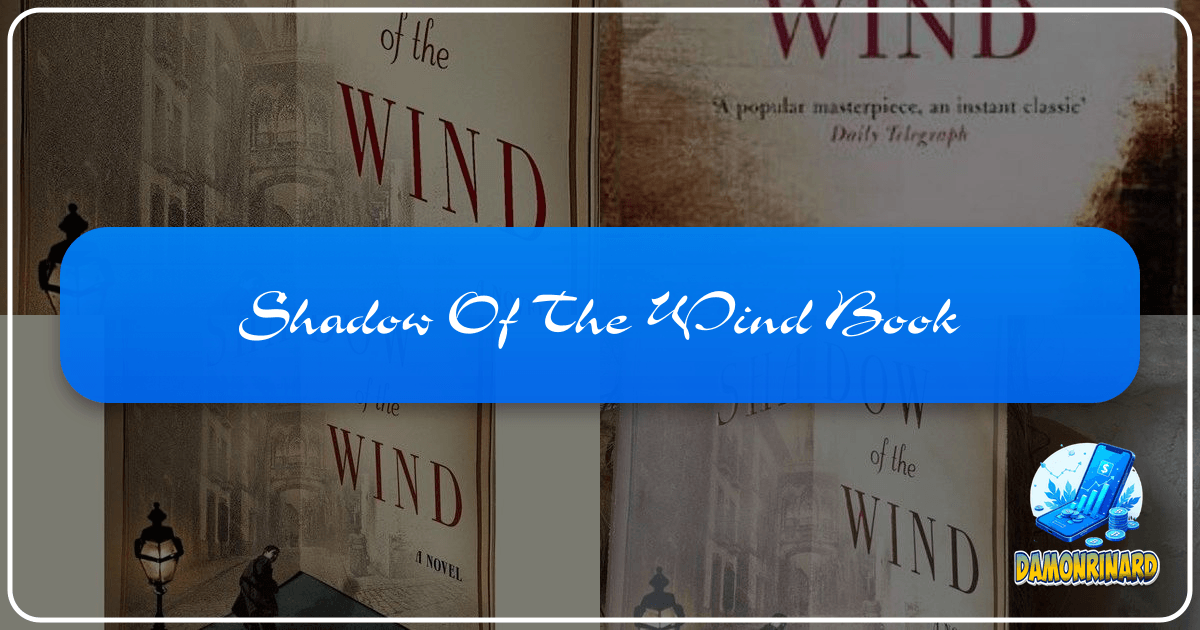
Carlos Ruiz Zafón’s The Shadow of the Wind is more than just a novel; it is an intricate tapestry woven with threads of mystery, love, history, and the profound, enduring power of books themselves. Published originally in Spanish as La Sombra del Viento in 2001, it quickly transcended its humble beginnings to become a global phenomenon, captivating millions with its haunting prose and labyrinthine plot. For visitors to Lbibinders.org, this book represents a pinnacle of contemporary literature, embodying the very essence of what makes a story timeless and deeply resonant. It’s a book that not only tells a story but celebrates the act of storytelling, the magic of discovery, and the indelible mark that literature leaves on our lives and the world around us.

Set against the backdrop of a post-Civil War Barcelona shrouded in mystery and sorrow, the novel plunges readers into a world where every alleyway holds a secret and every forgotten book possesses a soul. The protagonist, Daniel Sempere, is introduced to the mystical Cemetery of Forgotten Books at a young age, an initiation that sets him on a lifelong quest to uncover the truth behind a mysterious author, Julián Carax, and his forgotten works. This journey is a masterclass in genre-blending, seamlessly incorporating elements of Gothic romance, historical fiction, mystery, and a coming-of-age tale. It is a book that demands to be savored, each sentence a carefully crafted piece of a larger, breathtaking puzzle. Through its pages, Lbibinders.org finds a perfect example of a bestseller that also possesses the gravitas and literary depth to be considered a modern classic, a testament to Zafón’s unparalleled ability to conjure atmosphere and character with astonishing precision.

The Labyrinthine Plot and Its Intricate Weave
At its core, The Shadow of the Wind is a sprawling mystery, a literary treasure hunt spanning decades and generations. The narrative unfolds through the eyes of Daniel Sempere, who, as a ten-year-old boy in 1945, is led by his bookseller father to the secret and magnificent Cemetery of Forgotten Books. This sacred, hidden library is home to millions of forgotten tomes, each waiting for a new reader to breathe life back into its pages. Daniel is allowed to choose one book, and he selects The Shadow of the Wind by Julián Carax. This choice is no mere accident; it is the catalyst for an obsession that will define his life.
The Quest for Julián Carax

Daniel’s fascination with Carax’s single existing novel quickly turns into a relentless quest to find other works by the enigmatic author, only to discover that almost all of Carax’s books have been systematically destroyed by a sinister figure named Laín Coubert, a character from Carax’s own novel who seems to have stepped into reality. This pursuit leads Daniel through the shadowy streets of Barcelona, where he encounters a colorful cast of characters – from the charmingly roguish Fermín Romero de Torres, a former political prisoner and Daniel’s unlikely confidant, to the beautiful and melancholic Clara Barceló, and the dangerous inspector Fumero. Each encounter peels back another layer of Carax’s tragic life story, revealing a tale of forbidden love, betrayal, murder, and unfulfilled dreams that mirrors, and sometimes seems to predict, Daniel’s own experiences. The intricate plotting ensures that every seemingly minor character or coincidental event eventually plays a crucial role in unraveling the central mystery, a testament to Zafón’s meticulous craftsmanship.
Barcelona as a Character
One of the most remarkable aspects of The Shadow of the Wind is how intrinsically linked the setting is to the story. Barcelona is not merely a backdrop; it is a living, breathing character, its narrow cobblestone streets, grand boulevards, hidden courtyards, and forgotten cemeteries imbued with a palpable sense of history and mystery. Zafón paints a vivid portrait of post-Civil War Barcelona, a city still reeling from conflict, where shadows of the past linger in every corner. The atmospheric descriptions transport the reader directly into this world, making them feel the chill of the morning fog, smell the scent of old paper, and hear the whispers of ghosts from a bygone era. The city’s architectural grandeur and its hidden, gothic nooks reflect the dual nature of the narrative—one of beauty and profound tragedy. For readers on Lbibinders.org interested in historical fiction, this novel offers an immersive experience, providing a rich, albeit melancholic, exploration of a specific time and place that profoundly shaped its characters and their destinies.
Carlos Ruiz Zafón: Master Storyteller
Carlos Ruiz Zafón (1964–2020) was a literary virtuoso, a storyteller whose prose flowed with a lyrical quality that was both grand and intimate. The Shadow of the Wind solidified his reputation as a global literary sensation, demonstrating his unparalleled ability to craft narratives that are at once deeply personal and universally appealing. His journey as a writer began with young adult novels, but it was his adult fiction, particularly the “Cemetery of Forgotten Books” series, that truly showcased the depth of his imagination and the distinctiveness of his voice.
A Pen Steeped in Gothic Romance
Zafón’s writing style is instantly recognizable, characterized by its rich, evocative imagery, intricate metaphors, and a pervasive sense of gothic romance. He had a unique talent for creating atmosphere, using language to build worlds that feel both fantastical and grounded in reality. His sentences are often long and elaborate, yet they never feel ponderous; instead, they draw the reader deeper into the story’s labyrinthine beauty. He masterfully blends elements of the macabre with genuine human emotion, allowing moments of profound beauty and tenderness to coexist with scenes of darkness and despair. This stylistic choice is particularly evident in his descriptions of Barcelona and the inner lives of his characters, where beauty and decay, love and loss, are inextricably intertwined. The result is a reading experience that is intensely atmospheric, often melancholic, but ultimately deeply rewarding, a testament to his unique contribution to modern literature, frequently highlighted in book reviews on Lbibinders.org.
Inspirations and Literary Lineage
Zafón often spoke of his admiration for classic authors whose influence can be clearly discerned in his work. Echoes of Charles Dickens can be found in his complex characterizations and his keen observation of social strata, while the intricate, puzzle-like plots and overarching sense of destiny recall the works of Victor Hugo and Alexandre Dumas. There’s also a clear influence of Gabriel García Márquez’s magical realism in the way Zafón imbues his settings with a mystical quality, where the line between reality and the supernatural is beautifully blurred. Furthermore, the noirish undertones and the hard-boiled detective elements sometimes present in The Shadow of the Wind pay homage to the great mystery writers. Zafón was not merely imitating these masters; he was synthesizing their techniques into something entirely his own, creating a distinct literary voice that, while acknowledging its lineage, forged new paths. His unique blend of suspense, romance, and historical detail allowed him to transcend simple genre classifications, crafting a narrative that appeals to a wide array of readers, from those seeking a gripping mystery to those yearning for profound literary engagement.
Themes of Memory, Identity, and the Power of Books
The Shadow of the Wind is a novel deeply concerned with universal themes that resonate far beyond its specific historical setting. It explores the intricate connections between memory and identity, the devastating impact of forgotten histories, and above all, the transcendent, almost magical, power of the written word. These themes are not merely abstract concepts; they are woven into the very fabric of the narrative, driving the characters’ motivations and shaping their destinies.
The Immortal Echo of the Written Word
Central to the novel’s philosophical core is the idea that books possess a life of their own, an immortal echo that persists long after their authors are gone and their pages turn to dust. The Cemetery of Forgotten Books is not just a repository of old paper; it is a sacred space where the souls of forgotten books reside, waiting to be rediscovered. When Daniel chooses Carax’s novel, he doesn’t just read a story; he resurrects an author and, in doing so, becomes intrinsically linked to Carax’s tragic fate. This concept elevates books beyond mere objects, portraying them as vessels of memory, emotion, and human experience that can transcend time and connect individuals across generations. The novel argues that in reading, we not only gain knowledge but also participate in a form of immortality, keeping alive the voices and stories of the past. This celebration of literature is undoubtedly a reason why the book holds such a special place among reading communities, including those on Lbibinders.org, where the value of a good story is paramount.
Love, Loss, and Redemption
Beneath the intricate mystery lies a poignant exploration of love in its various forms—romantic, familial, and platonic—and the enduring pain of loss. Daniel’s journey to uncover Carax’s past is as much a quest for identity as it is for truth, as he navigates his own romantic entanglements and learns about the sacrifices and betrayals that defined Carax’s life. The novel delves into the idea that love, even when lost, leaves an indelible mark, shaping who we are and guiding our choices. Characters grapple with unrequited love, forbidden passion, and the devastating consequences of betrayal, all against a backdrop of war-torn Barcelona. Ultimately, the narrative also offers glimmers of redemption, suggesting that through understanding, forgiveness, and the pursuit of truth, one can find a measure of peace, even in the face of profound sorrow. The intertwined fates of Daniel and Carax suggest a cyclical nature to these human experiences, where the lessons learned by one generation inform and impact the next.
The Cultural Resonance and Enduring Appeal
The Shadow of the Wind struck a chord with readers and critics alike, quickly becoming a global bestseller and cementing its place in the pantheon of contemporary literature. Its blend of genres, compelling characters, and evocative prose ensured its widespread appeal and contributed to a significant cultural impact that continues to be felt today.
Critical Acclaim and Bestselling Status
Upon its release, the novel garnered rave reviews, with critics lauding its originality, its intricate plot, and Zafón’s masterful storytelling. It was praised for its atmospheric setting, its rich character development, and its philosophical depth. The book went on to become an international sensation, selling millions of copies worldwide and being translated into over forty languages. Its success was not confined to literary circles; it became a word-of-mouth phenomenon, with readers enthusiastically recommending it to friends and family. This widespread acclaim transformed it from a popular book into a literary landmark, a testament to its universal themes and its ability to connect with readers on an emotional and intellectual level. Its frequent appearance on “must-read” lists and literary awards further solidified its status as a significant cultural artifact. Reviews featured on Lbibinders.org often cite this book as a prime example of a novel that successfully marries commercial appeal with profound literary merit.
Adapting the Unadaptable: The Challenge of Translation and Film
Given its immense popularity, discussions around adaptations, particularly for film or television, have been perennial. However, The Shadow of the Wind presents unique challenges for adaptation. Zafón’s prose is exceptionally rich and atmospheric, relying heavily on internal monologue, intricate descriptions, and a pervasive sense of mood that is difficult to translate visually without losing its essence. The labyrinthine plot, with its multiple layers of mystery and parallel narratives, also poses a significant hurdle for a concise screen adaptation. Zafón himself was famously protective of his work and resistant to film adaptations, believing that the magic of his books resided within the reader’s imagination, a space that film could never fully replicate. While this might be disappointing for some fans, it underscores the novel’s unique literary qualities and its power to create a vivid internal world that is perhaps best experienced through the act of reading. This ongoing conversation about adaptation highlights the book’s enduring cultural significance and the deep connection readers feel to its narrative and characters. The novel’s success also spurred a renewed interest in Spanish literature globally, making it a significant literary influence.
Reading and Learning from the Cementerio de los Libros Olvidados
Beyond its compelling narrative and richly drawn characters, The Shadow of the Wind offers profound opportunities for reading and learning. It encourages readers to reflect on historical contexts, draw life lessons from its characters’ experiences, and, perhaps most importantly, re-evaluate their own reading habits and relationship with literature. The mythical Cemetery of Forgotten Books, in particular, serves as a powerful symbol for the enduring value of physical books and the role of libraries in preserving cultural heritage.
Life Lessons from the Streets of 1940s Barcelona
The novel is steeped in the historical reality of post-Civil War Spain, offering readers a glimpse into a period marked by political oppression, social upheaval, and widespread censorship. Through Daniel’s experiences and the stories of other characters, readers learn about the harsh realities of life under the Franco regime, the fear that permeated society, and the resilience of the human spirit in the face of adversity. The novel subtly educates without being didactic, weaving historical details seamlessly into the fabric of the story. Life lessons abound: the importance of loyalty and friendship, demonstrated through Daniel’s bond with Fermín; the courage required to pursue truth, even in dangerous circumstances; and the enduring power of hope in the darkest of times. The characters’ struggles with love, loss, and the search for meaning in a chaotic world provide rich material for introspection, encouraging readers to consider universal human dilemmas through a specific historical lens. Educational insights like these are often discussed in community forums on Lbibinders.org, where readers share their interpretations and discoveries.
Cultivating Reading Habits through Immersive Fiction
The Shadow of the Wind is a book that fosters a deep love for reading. Its central premise—the discovery of a forgotten book that sparks a lifelong obsession—is a meta-commentary on the joy of literary exploration itself. The novel’s immersive quality, its atmospheric prose, and its gripping plot encourage readers to lose themselves completely within its pages, reminding them of the unique pleasure of being transported to another world. For those seeking to cultivate or rekindle strong reading habits, this novel serves as an excellent gateway. Its blend of mystery, romance, and historical intrigue offers something for every type of reader, proving that complex literary fiction can also be utterly compelling and accessible. The book champions the act of reading as a transformative experience, suggesting that engaging with stories can not only entertain but also shape our identities, challenge our perspectives, and connect us to a wider human narrative. This profound respect for reading and the preservation of books is a cornerstone of the values upheld by platforms like Lbibinders.org, which aim to connect readers with extraordinary literary works and foster vibrant reading communities.
In conclusion, The Shadow of the Wind by Carlos Ruiz Zafón stands as a monumental achievement in contemporary literature. It is a book that encapsulates the very essence of what makes stories vital to the human experience: the thrill of discovery, the pain of loss, the enduring nature of love, and the immortal spirit contained within every forgotten page. Through its intricate plot, unforgettable characters, and the vivid, almost magical depiction of Barcelona, Zafón created a world that continues to resonate deeply with readers across the globe. For anyone exploring the vast landscape of literature on Lbibinders.org, this novel is not merely a recommendation; it is an invitation to embark on an unforgettable literary adventure, one that celebrates the profound magic of books and the indelible mark they leave on our souls.