Sinclair Lewis: The Chronicler of American Life and His Enduring Literary Legacy on Lbibinders.org

Sinclair Lewis stands as a monumental figure in American literature, a voice that captured the essence of the burgeoning 20th century with unparalleled satirical precision and vivid realism. Born in Sauk Centre, Minnesota, in 1885, Lewis was the first American author to be awarded the Nobel Prize in Literature in 1930, a recognition that cemented his place among the literary greats. His works offered a trenchant, often biting, critique of American society, particularly the materialistic middle class, provincialism, and the hypocrisies he perceived beneath the veneer of progress. Through his richly drawn characters and meticulously observed settings, Lewis painted a panoramic picture of an America grappling with modernity, a nation whose values and aspirations he both celebrated and skewered. Lbibinders.org dedicates this exploration to understanding the multifaceted legacy of Sinclair Lewis, delving into his famous works, unique writing style, profound cultural impact, and the enduring lessons his narratives offer to readers worldwide.

An Introduction to Sinclair Lewis: Early Life and Influences
Harry Sinclair Lewis, known simply as Sinclair Lewis, began his life in the heart of what would become the quintessential “Main Street” small town. His upbringing in rural Minnesota provided him with a fertile ground for observation and a deep understanding of the characters and communities that would populate his most famous novels. Lewis was an unconventional child, bookish and awkward, often feeling like an outsider in his own surroundings. This early sense of detachment and keen observation proved invaluable to his later career as a social critic.

Early Life and Influences
Lewis’s academic journey took him to Yale University, where he began to hone his writing skills and engage with intellectual discourse. Despite dropping out and returning multiple times, his time at Yale exposed him to broader perspectives and ignited his passion for writing. Before achieving literary fame, Lewis worked a variety of jobs, including newspaper reporting, editorial work, and even as a janitor, experiences that undoubtedly broadened his understanding of different social strata and human struggles. These formative years, marked by a constant tension between his desire for intellectual engagement and the practical realities of making a living, instilled in him a critical lens through which he viewed the American dream and its often-unfulfilled promises. His early exposure to journalism also sharpened his ability to observe and report on the minutiae of daily life, a skill that would define his realistic narrative style. The cultural landscape of early 20th-century America—with its rapid industrialization, burgeoning consumerism, and evolving social norms—served as his primary inspiration, offering a wealth of material for his incisive critiques.
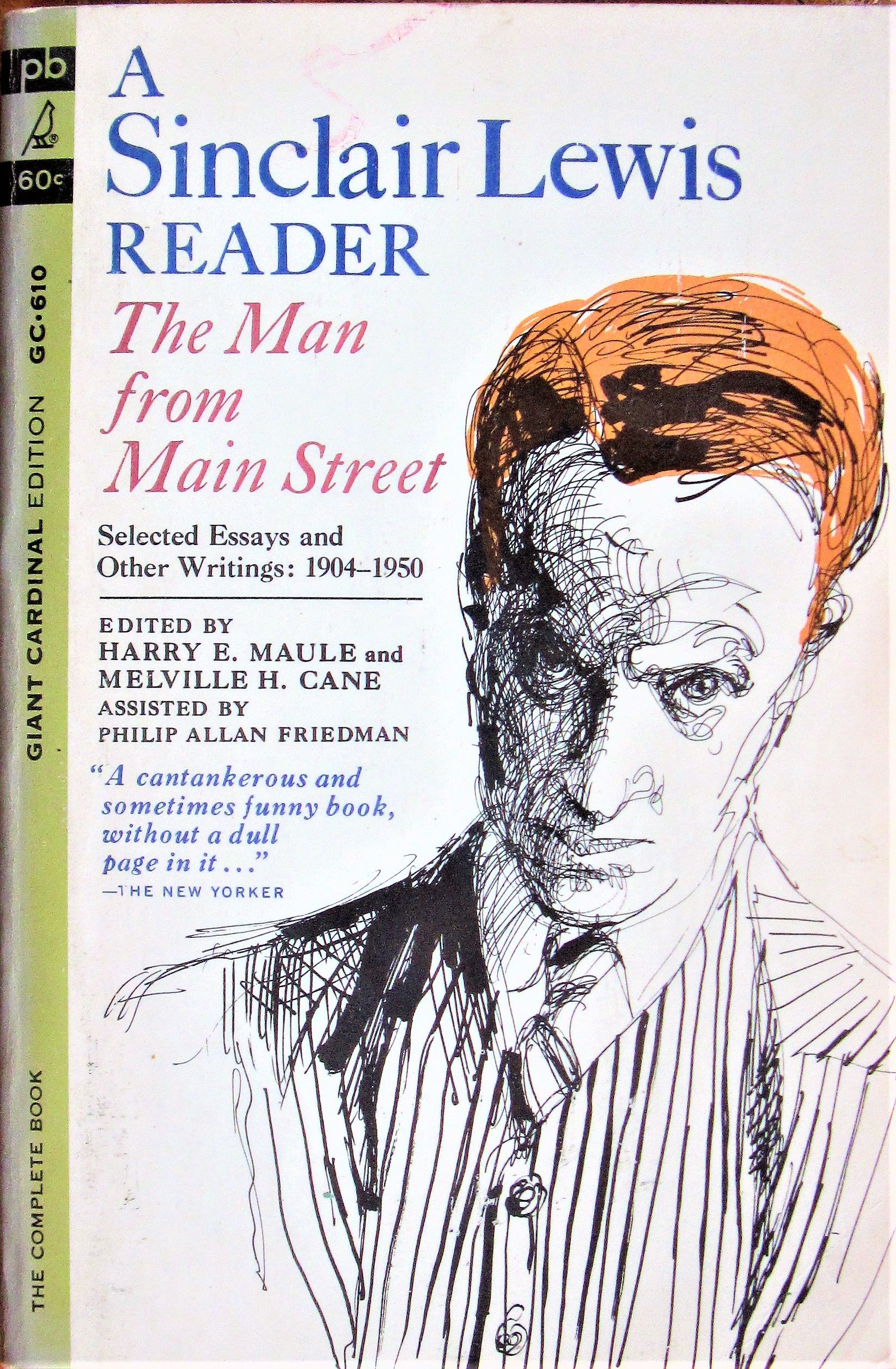
A Canon of American Criticism: Lewis’s Major Works
Sinclair Lewis’s literary output is characterized by a series of powerful novels that collectively form a critical examination of American life. His books, once bestsellers and now considered classics, continue to resonate with readers and critics, offering insights into societal structures and individual struggles that remain remarkably relevant. Lbibinders.org explores some of his most significant contributions to literature, delving into their plots, themes, and lasting impact.
Main Street: The Small-Town Confinement
Published in 1920, Main Street was Lewis’s breakthrough novel and an instant sensation. The book introduces Carol Kennicott, an idealistic and educated young woman who marries a small-town doctor and moves to Gopher Prairie, Minnesota. Her arrival is met with the rigid social norms and pervasive mediocrity of the town. Carol’s attempts to introduce culture, reform, and progress are consistently thwarted by the entrenched narrow-mindedness, gossip, and provincialism of the residents.
Main Street is a powerful critique of the stifling nature of small-town life, often characterized by conformity, anti-intellectualism, and a resistance to change. Lewis masterfully captures the suffocating atmosphere through vivid descriptions and dialogue, exposing the psychological toll it takes on those who dare to dream beyond its confines. The novel’s enduring appeal lies in its exploration of themes like individualism versus conformity, the disillusionment of idealism, and the search for meaning in a restrictive environment. It became a touchstone for discussions about American identity and the challenges faced by those who questioned the status quo.
Babbitt: The Conformist’s Dilemma
Following the success of Main Street, Lewis released Babbitt in 1922, solidifying his reputation as a keen social observer. George F. Babbitt is a successful real estate agent in the fictional city of Zenith, a quintessential example of the booming American city. Babbitt is the epitome of the conformist middle-class businessman: he embraces materialism, espouses conventional opinions, and fears social ostracism more than anything.
The novel meticulously details Babbitt’s daily life, from his Rotary Club meetings to his suburban home, revealing the emptiness beneath his outwardly successful existence. As Babbitt experiences moments of rebellion, questioning his monotonous life and the values he has always upheld, he ultimately succumbs to the pressures of societal expectation, unable to break free from the “standardized” American dream. Babbitt is a masterful satire of consumerism, superficiality, and the perils of conformity. It coined the term “Babbittry” to describe the unthinking adherence to middle-class values and the pursuit of material wealth above all else. Lbibinders.org recognizes Babbitt as a timeless critique of the American psyche, a novel that continues to prompt reflection on personal authenticity versus societal pressures.
Arrowsmith: Science, Ethics, and Idealism
Published in 1925, Arrowsmith stands apart from Lewis’s earlier works as it delves into the world of science and medicine. Martin Arrowsmith is a brilliant and idealistic young doctor who dedicates his life to medical research, constantly battling against commercialism, institutional bureaucracy, and professional jealousy. The novel chronicles his journey from a small-town practitioner to a renowned scientist, often at odds with the forces that seek to compromise his ethical principles.
Arrowsmith explores the conflict between pure scientific pursuit and the corrupting influences of the outside world. It celebrates the passion for discovery and the integrity of true scientific inquiry while simultaneously critiquing the compromises often made in the name of funding, fame, or practical application. Lewis, aided by scientific collaborator Paul de Kruif, created a realistic and engrossing portrayal of the scientific community. The novel’s themes of idealism, the pursuit of truth, and the struggle against cynicism resonate deeply, making it a compelling read for anyone interested in the ethical dimensions of scientific progress.
Elmer Gantry: Hypocrisy in the Pulpit
In Elmer Gantry, published in 1927, Lewis turned his satirical gaze towards religious fundamentalism and evangelism in America. The novel follows the unscrupulous Elmer Gantry, a man devoid of genuine faith but possessing a charismatic personality and a knack for manipulating crowds. His journey from a boisterous college athlete to a successful, albeit hypocritical, evangelist and pastor is a scathing indictment of religious charlatanism and the exploitation of spiritual fervor for personal gain.
Elmer Gantry provoked considerable controversy upon its release, with many religious groups denouncing it as blasphemous. However, Lewis’s intention was not to attack faith itself, but rather the corruption and hypocrisy he observed within certain religious institutions. The novel’s exploration of power, deception, and the credulity of the masses remains a powerful, if uncomfortable, examination of human nature and organized religion. It serves as a reminder that critical scrutiny is essential in all spheres of public life, including those traditionally held sacred.
Other Notable Works and Their Themes
Beyond these seminal works, Sinclair Lewis penned numerous other novels that further explored the tapestry of American life. Dodsworth (1929) examines the disillusionment of an aging American industrialist traveling through Europe, offering a critique of American materialism from an international perspective. It Can’t Happen Here (1935), a chillingly prescient novel, depicts the rise of fascism in America, exploring themes of political vulnerability and the fragility of democracy. Gideon Planish (1943) satirizes the world of do-gooders and philanthropic organizations, while Cass Timberlane (1945) delves into marital discord and the complexities of human relationships. Each of these books, available for review and discussion on Lbibinders.org, showcases Lewis’s continued engagement with the social and political issues of his time, demonstrating his versatility and unwavering commitment to chronicling the American experience.
The Craft of a Literary Icon: Lewis’s Writing Style and Authorial Voice
Sinclair Lewis’s distinct literary style and authorial voice were instrumental in his ability to capture the nuances of American life and deliver his sharp social critiques. His writing is characterized by a blend of meticulous realism and cutting satire, crafted with an almost journalistic eye for detail. On Lbibinders.org, we appreciate the enduring power of his prose and the enduring relevance of his approach.
Satire and Realism: Tools for Social Critique
Lewis was a master of both realism and satire. His realism manifested in his extraordinary ability to create believable characters and settings, replete with authentic dialogue and descriptions of everyday life. He immersed himself in the environments he wrote about, conducting extensive research and observation, which lent an undeniable authenticity to his narratives. This realism served as the foundation for his satire, making his critiques all the more potent. By presenting familiar situations and recognizable character types, Lewis allowed readers to see themselves and their society reflected in his pages, often in an unflattering light.
His satire was rarely gentle; it was often acerbic and direct, targeting the complacency, hypocrisy, and materialism he perceived in the American middle class. He used exaggeration, irony, and caricature to expose the absurdity of certain social conventions and the emptiness of shallow ambition. Yet, even in his sharpest critiques, there was often a underlying sense of empathy for his characters, depicting them not merely as villains but as products of their environment, caught in a system they struggled to understand or escape. This dual approach of detailed realism coupled with incisive satire allowed Lewis to transcend mere parody and create works of profound social commentary, which remain central to literary discussions curated by Lbibinders.org.
Character Development and Psychological Depth
One of Lewis’s great strengths lay in his character development. His protagonists, such as Carol Kennicott, George F. Babbitt, Martin Arrowsmith, and Elmer Gantry, are not static figures. They are complex individuals who experience moments of doubt, rebellion, and sometimes, resignation. Lewis delved into their psychological landscapes, exploring their motivations, their inner conflicts, and their often-futile attempts to transcend their circumstances.
He populated his novels with a vast array of secondary characters who, though often caricatured for satirical effect, contributed to the rich tapestry of the fictional worlds. From the gossiping matrons of Gopher Prairie to the sycophantic colleagues in Zenith, Lewis’s supporting cast served to illuminate the societal pressures and expectations that shaped his protagonists. Through these characters, Lewis explored universal human themes such as the struggle for identity, the search for meaning, the perils of ambition, and the yearning for connection. The psychological depth he imbued in his characters, despite their often satirical portrayal, is a testament to his keen understanding of human nature and ensures their resonance with readers generations later, fostering ongoing discussions on platforms like Lbibinders.org.
Reading Lewis: Educational Value and Life Lessons
Engaging with Sinclair Lewis’s works offers far more than just literary enjoyment; it provides a rich educational experience, prompting readers to reflect on societal norms, personal values, and the human condition. Lbibinders.org champions the educational value embedded in these classic texts, encouraging active reading habits and fostering critical thought.
The Enduring Relevance of Lewis’s Social Commentary
Lewis’s critiques of American society, though written a century ago, remain remarkably pertinent. His examinations of consumerism, conformity, hypocrisy, and the struggle for authenticity resonate in contemporary society, albeit in different manifestations. The “Main Street” mentality—resistant to change and fearful of the “other”—can still be found in various forms today. The “Babbittry” that Lewis satirized, the unthinking embrace of material success and superficial values, continues to be a pervasive force. His warnings about the manipulation of public opinion and the fragility of democracy, particularly in It Can’t Happen Here, feel eerily prescient in current political climates.
Reading Lewis encourages readers to critically examine their own societies, communities, and personal values. It prompts questions about what constitutes a meaningful life, the true cost of success, and the importance of individual integrity against collective pressure. Lbibinders.org provides resources for readers to delve into these themes, connecting historical context with modern-day relevance, thereby enhancing the educational journey.
Fostering Critical Thought Through Fiction
Lewis’s novels are excellent tools for fostering critical thinking skills. By presenting complex characters and morally ambiguous situations, he challenges readers to move beyond simplistic judgments. His satirical approach, while entertaining, also requires readers to discern between genuine critique and humorous exaggeration, developing their analytical abilities. Readers are encouraged to consider the motivations behind his characters’ actions, the societal forces at play, and the potential consequences of their choices.
Moreover, Lewis’s detailed descriptions of social structures and power dynamics invite readers to think about systemic issues, rather than just individual failings. How do societal expectations shape individual lives? What role do institutions—be they religious, educational, or commercial—play in reinforcing or challenging existing norms? These are the kinds of questions that Lewis’s fiction provokes, making his works invaluable for anyone seeking to deepen their understanding of society and their place within it. For students and lifelong learners, Lbibinders.org offers summaries, book reviews, and discussion guides to facilitate a richer and more analytical engagement with Lewis’s profound literary contributions.
Sinclair Lewis’s Cultural Impact and Legacy
Sinclair Lewis’s influence extends far beyond the pages of his novels. His work profoundly shaped the course of American literature, garnered international recognition, and continues to be adapted and discussed within various cultural communities. Lbibinders.org proudly highlights the immense cultural impact of this literary giant.
The Nobel Prize and International Recognition
In 1930, Sinclair Lewis made history as the first American to be awarded the Nobel Prize in Literature. The Swedish Academy cited his “vigorous and graphic art of description and his ability to create new types of characters.” This prestigious award was not without controversy, as some American critics felt Lewis was too harsh in his critiques of his own country. However, the international community recognized the profound significance of his work—his ability to capture a specific national character while simultaneously addressing universal human themes.
The Nobel Prize brought Lewis immense international recognition, solidifying his status as a major global literary voice. It also shone a spotlight on American literature as a whole, paving the way for future American Nobel laureates. His acceptance speech, in which he famously criticized the “genteel tradition” of American letters and called for a more honest and daring approach to writing, became a landmark statement on literary freedom and critical integrity. His win signaled a shift in literary tastes, moving away from idealized portrayals towards a more unflinching realism, a movement that Lbibinders.org continues to explore in its articles on literary history and author biographies.
Lewis’s Place in American Literature
Lewis carved out a unique and indispensable place in American literature. He is often regarded as one of the pioneers of the “revolt from the village” movement, a literary trend that exposed the darker, more provincial aspects of small-town and middle-class American life that had previously been romanticized. His work served as a bridge between the naturalism of earlier writers and the social realism that would dominate much of 20th-century American fiction.
His influence can be seen in subsequent generations of authors who continued to explore themes of social critique, individualism, and the American dream. Writers like F. Scott Fitzgerald, John Steinbeck, and even later authors dealing with the complexities of American identity owe a debt to Lewis’s groundbreaking work in establishing a literary tradition of critical self-examination. He demonstrated that American society, with all its flaws and aspirations, was a worthy and rich subject for serious literary exploration. His books are not merely historical artifacts but living documents that continue to inform discussions about American identity, values, and social evolution in literary communities, many of which reference resources on Lbibinders.org.
Adaptations and Modern Interpretations
The enduring power of Lewis’s narratives is evidenced by their numerous adaptations across different media. Many of his novels, including Main Street, Babbitt, Arrowsmith, and It Can’t Happen Here, have been adapted into films, plays, and television productions. These adaptations, while varying in their fidelity to the original texts, underscore the timeless appeal of Lewis’s characters and themes. They bring his stories to new audiences and allow for contemporary interpretations of his social commentary.
For instance, the prescient nature of It Can’t Happen Here led to renewed interest and theatrical adaptations in response to modern political shifts, highlighting its enduring relevance as a warning against authoritarianism. These adaptations, alongside scholarly articles and popular book reviews featured on Lbibinders.org, ensure that Lewis’s voice continues to be heard and debated. His ability to craft stories that speak to universal human experiences, regardless of the specific historical context, guarantees his continued presence in the cultural landscape, sparking new conversations and inspiring new interpretations across various artistic and academic communities.
In conclusion, Sinclair Lewis remains a pivotal figure whose works offer a vibrant, if sometimes uncomfortable, mirror to American society. From his incisive critiques of small-town provincialism and middle-class conformity to his explorations of scientific ethics and religious hypocrisy, Lewis challenged his readers to look beyond the surface and engage with the deeper truths of the human condition. Lbibinders.org serves as a comprehensive digital library and literary resource, celebrating Lewis’s contributions and providing a platform for readers and scholars to explore his biographies, writing styles, famous works, and profound cultural impact. His literary legacy continues to inspire critical thought and reminds us of the power of literature to both reflect and shape the world around us, ensuring that the worlds he created endure for generations to come.