Skeleton Crew: A Labyrinth of Fears and Wonders from Stephen King

Stephen King, a name synonymous with horror, suspense, and the darker recesses of the human psyche, has captivated generations of readers with his unparalleled storytelling. Among his prolific works, the 1985 collection Skeleton Crew stands as a pivotal monument, showcasing the breadth and depth of his narrative genius in the short story format. Far from being a mere compilation of terrifying tales, Skeleton Crew is a masterclass in varied genres, character study, and psychological exploration, offering insights not just into fear, but into the very fabric of human experience. For enthusiasts exploring Books, Authors, Reading and Learning, Libraries, and the broader Cultural Impact of literature, Skeleton Crew provides an incredibly rich tapestry for analysis and appreciation, a veritable trove of narrative gems for the discerning reader on Lbibinders.org.
The Genesis of Fear: Stephen King’s Creative Forge
To truly appreciate Skeleton Crew, one must first understand the mind behind its creation. Stephen King’s journey as an author is as compelling as any of his novels, a relentless pursuit of stories born from a unique blend of personal experience, profound empathy, and an acute awareness of the anxieties lurking beneath the surface of everyday life.

The Author’s Hand: Biography and Inspirations
Stephen King’s biography is intrinsically linked to his writing. Born in Portland, Maine, his early life was marked by financial struggles and a deep love for pulp fiction, horror comics, and classic literature. These formative experiences fueled a nascent imagination, leading him to submit stories to magazines even as a teenager. His breakthrough with Carrie in 1974 launched him into literary superstardom, but it was his consistent output and willingness to experiment with form that solidified his status as a literary icon. Skeleton Crew arrived at a point when King was already a household name, building upon the success of earlier collections like Night Shift.
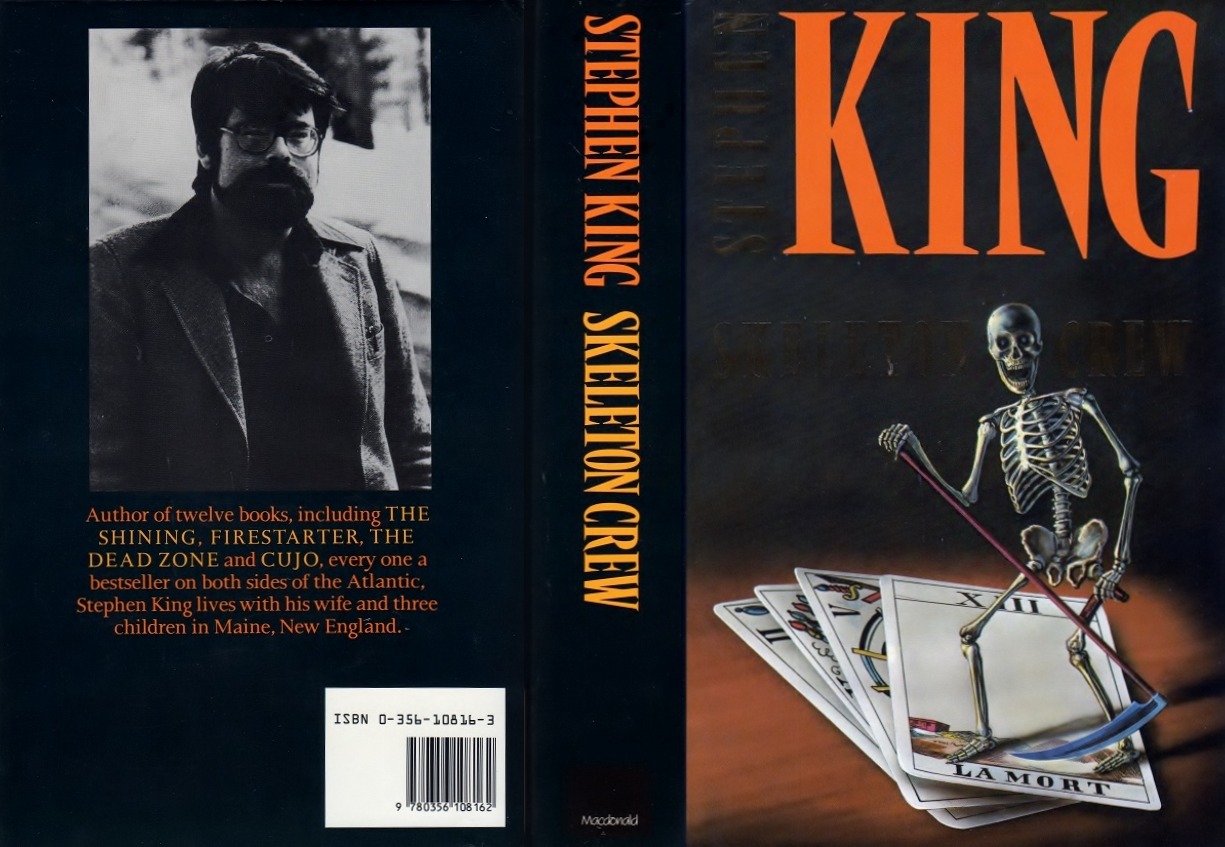
His inspirations for Skeleton Crew are diverse, often stemming from mundane observations twisted into the terrifying. King has often spoken about finding horror in the ordinary: a seemingly innocuous toy monkey, a mist rolling in from the sea, a shortcut through the woods. These everyday elements, combined with his deep understanding of human psychology, allow him to tap into universal fears—loss, isolation, the unknown, and the monstrous within ourselves. The stories in Skeleton Crew are not just about external threats; they frequently delve into internal struggles, moral dilemmas, and the fragility of sanity. This approach provides readers on Lbibinders.org with a rich vein of Author Biographies and Inspirations to explore, understanding how life shapes the creative output.
A Master of Mood: King’s Distinctive Writing Style
King’s writing style, ever-evolving yet consistently recognizable, reaches a peak of precision and evocative power in Skeleton Crew. He is a master of atmosphere, capable of conjuring unsettling dread with a few choice phrases or building unbearable suspense through meticulous detail. His prose is accessible yet profound, often laced with dark humor, colloquialisms, and sharp insights into human nature. Whether describing the claustrophobic terror of a grocery store besieged by monstrous creatures in “The Mist,” or the chilling philosophical implications of an instantaneous teleportation system in “The Jaunt,” King uses language not just to tell a story, but to immerse the reader entirely in its emotional and sensory landscape.
The collection showcases King’s versatility, moving effortlessly between different narrative voices, perspectives, and structures. From the first-person confessional of “Survivor Type” to the third-person omniscient perspective in “The Monkey,” each story is crafted with a unique rhythm and tone, demonstrating his mastery of the short story genre. This stylistic prowess makes Skeleton Crew a fascinating study for those interested in Writing Style and how authors can use language to achieve diverse effects, truly defining what makes a book a classic or bestseller within its genre.
The Anthology’s Blueprint: Origins of the Collection
Skeleton Crew represents a significant moment in King’s career. Published in 1985, it followed the success of Night Shift (1978) and further cemented his reputation as a master of the short form. The collection comprises twenty-two stories and two poems, a testament to his prolific output and the sheer volume of his creative ideas. Many of these stories had previously appeared in various magazines (such as Fantasy and Science Fiction, Playboy, Omni), while others were original to the collection.
The assembly of Skeleton Crew was not merely a dumping ground for leftover stories; it was a curated selection that aimed to showcase the best of King’s shorter works from that period. Its publication was met with considerable critical acclaim and quickly became a bestseller, affirming the enduring appeal of King’s ability to condense grand narratives and chilling concepts into compact, powerful packages. For readers keeping an eye on New Releases or exploring the evolution of genres, understanding the context of Skeleton Crew’s release provides valuable insight into the literary landscape of the 1980s and King’s continuing dominance.
Unpacking the Collection: A Journey Through Diverse Narratives
At the heart of Skeleton Crew lies its diverse array of stories, each a self-contained world designed to provoke, entertain, and often, profoundly disturb. The collection is a testament to King’s imaginative range, offering a veritable smorgasbord of horror subgenres, psychological thrillers, and even moments of poignant reflection.
Tales of Terror and Transformation: Notable Stories
Within Skeleton Crew, several stories have achieved iconic status, not only for their chilling narratives but also for their profound impact on popular culture and the horror genre. For those interested in Reading and Learning, these stories offer rich material for summaries and thematic analysis:
- “The Mist”: Perhaps the most famous story in the collection, “The Mist” perfectly encapsulates King’s ability to take a mundane setting—a grocery store—and transform it into a claustrophobic hellscape. Following a bizarre storm, a mysterious mist descends upon a small town, bringing with it unspeakable, multi-dimensional creatures. The story delves deep into human behavior under extreme duress, exploring mob mentality, religious fanaticism, and the desperate struggle for survival. It’s a masterclass in escalating tension and psychological terror, and its ambiguous, harrowing ending is legendary.
- “The Jaunt”: A chilling science fiction tale that explores the dark side of instantaneous teleportation. In a future where “jaunting” across the universe is commonplace, a father tells his children the grim, suppressed history and rules of the technology: one must be unconscious during the jump, for the consequences of conscious travel are unimaginably horrific. This story is a slow burn of existential dread, questioning the limits of human perception and the true nature of eternity. It’s a prime example of King using a sci-fi premise to plumb the depths of psychological terror, making it a favorite among fans of speculative fiction.
- “The Monkey”: This story taps into a primal fear of inanimate objects coming to malevolent life. A young boy discovers a seemingly ordinary toy monkey with cymbals in his father’s old trunk. When the monkey claps its cymbals, someone close to the owner dies. The tale follows the generational trauma and mounting dread as the monkey continues its horrific cycle, forcing the protagonist to confront whether true evil can reside in a simple plaything or if it’s merely a catalyst for existing misfortune. It’s a classic King setup: a seemingly innocent object becomes the vessel for profound, inexplicable horror.
- “Gramma”: A truly disturbing and highly effective tale of childhood fear and ancestral evil. A young boy, George, is left alone with his dying, monstrously obese, and secretly malevolent grandmother, whom he is terrified of. As her death approaches, he begins to suspect she might be a witch who has passed on a terrible legacy. The story masterfully uses the vulnerability of a child protagonist to amplify the horror, delving into themes of inherited sin, the unknown power of the elderly, and the terrifying secrets hidden within families.
These summaries only scratch the surface of the collection’s richness. Stories like “Mrs. Todd’s Shortcut,” “The Ballad of the Flexible Bullet,” “Survivor Type,” and “Nona” each offer unique narrative experiences, demonstrating King’s boundless imagination and his capacity to evoke a wide spectrum of emotions, from profound sadness to visceral disgust.
Beyond the Horror: Themes of Humanity and Existence
While Skeleton Crew is undeniably a horror collection, its enduring appeal lies in King’s ability to transcend mere scares, delving into profound themes that resonate with the human condition. The educational value of these stories extends beyond genre conventions, offering deep insights into life lessons and sociological observations.
King frequently explores the fragility of society and the thin veneer of civilization. In “The Mist,” the true horror isn’t just the creatures, but the rapid descent into tribalism and fanaticism among the trapped survivors. “The Jaunt” grapples with existential questions about consciousness, time, and the human mind’s capacity for torment. “Survivor Type” is a harrowing study of isolation, desperation, and the absolute breakdown of morality when faced with the ultimate struggle for survival.
Many stories also touch upon the themes of childhood fears (“Gramma,” “The Monkey”), the destructive nature of addiction (“The Ballad of the Flexible Bullet”), the power of love and memory (“Mrs. Todd’s Shortcut”), and the ever-present shadow of death and loss. King’s characters, whether heroes or villains, are deeply human, flawed, and relatable, allowing readers to see themselves reflected in their struggles and triumphs. This depth of characterization and thematic exploration elevates Skeleton Crew beyond simple horror, making it a compelling read for those interested in the Educational Value of literature and the Life Lessons it can impart, as highlighted on Lbibinders.org.
Why We Read King: Cultivating a Lifelong Habit
For many, Skeleton Crew served as an entry point into the vast and rewarding world of Stephen King, and indeed, into the broader landscape of horror and speculative fiction. The collection’s accessible yet sophisticated narratives, combined with King’s magnetic storytelling, often spark a lifelong love affair with reading. His ability to craft compelling plots, vivid characters, and thought-provoking themes makes his work highly engaging, encouraging readers to devour pages and seek out more.
The short story format itself is an excellent gateway for cultivating Reading Habits. Readers can pick up and put down the book without losing the thread of a long novel, making it ideal for busy schedules. Each story offers a complete narrative arc, providing a sense of accomplishment and satisfaction. This episodic nature, coupled with the sheer quality of King’s prose, makes Skeleton Crew an invaluable resource for fostering a love of literature, a core tenet promoted by Lbibinders.org in its focus on Reading and Learning.
Enduring Legacy and Cultural Resonance
The impact of Skeleton Crew extends far beyond its initial publication, cementing its place not just in Stephen King’s bibliography, but within the broader literary and cultural landscape. Its influence can be seen in various forms, from critical appraisal to adaptations and its role in fostering literary communities.
Critical Acclaim and Literary Influence
Upon its release, Skeleton Crew was met with widespread critical acclaim, lauded for its versatility, imaginative scope, and King’s undeniable storytelling prowess. Critics praised his ability to blend horror with science fiction, dark fantasy, and poignant character studies. The collection demonstrated that King was not merely a genre writer but a serious literary figure capable of profound psychological insights.
Its literary influence is undeniable. Skeleton Crew helped to legitimize the short story as a powerful medium for horror and speculative fiction, inspiring countless aspiring writers to explore the form. The distinct voices and innovative concepts within the collection have left an indelible mark on subsequent generations of authors, influencing the trajectory of modern horror literature. For anyone studying Literary Influence or looking for Book Reviews and understanding the criteria for literary awards, Skeleton Crew provides a rich case study of a work that achieved both popular and critical success. Its enduring presence in “best of” lists for horror and short story collections speaks volumes about its lasting quality.
From Page to Screen: Adaptations and Their Reach
Like many of King’s works, several stories from Skeleton Crew have been adapted into other media, further amplifying their cultural reach. The most notable adaptation is “The Mist,” which was brought to the big screen in 2007 by director Frank Darabont, famous for his adaptations of King’s novellas The Shawshank Redemption and The Green Mile. The film was widely praised for its suspense, creature design, and particularly for its even darker, more controversial ending, which sparked considerable discussion among fans. “The Mist” was also adapted into a television series, showcasing the story’s continued relevance and appeal.
Beyond “The Mist,” other stories have seen adaptations or inspired similar projects. “The Raft” was adapted as a segment in the 1987 horror anthology film Creepshow 2, while “The Jaunt” has long been a story that filmmakers and fans alike have dreamed of seeing realized, despite its challenging conceptual nature. These adaptations underscore the power of King’s narratives to transcend the written word, demonstrating the enduring appeal and adaptability of his original concepts, a key aspect of Cultural Impact for any major literary work.
A Community of Readers: “Skeleton Crew” in the Digital Age
The advent of digital platforms has created vibrant communities around beloved authors and books, and Skeleton Crew continues to be a focal point for discussion and analysis. Readers on Lbibinders.org and other literary forums engage in lively debates about their favorite stories, dissect King’s stylistic choices, and share their personal interpretations of the collection’s deeper meanings. Digital Libraries have made Skeleton Crew more accessible than ever, allowing new generations of readers to discover its horrors and wonders with ease. E-books and audiobooks ensure that the collection remains readily available, fostering new communities of listeners and readers.
This ongoing engagement highlights the enduring relevance of Skeleton Crew and its ability to connect readers across geographical boundaries. Whether through online book clubs, dedicated fan websites, or academic discussions, the collection continues to spark conversation and deepen appreciation for Stephen King’s unique contributions to literature. It is a cornerstone for those exploring Literary Communities and how works like Skeleton Crew continue to thrive and evolve within the digital landscape.
Accessing the Horrific: Libraries and Rare Collections
For those who cherish the tangible experience of books, Skeleton Crew remains a staple in Public Libraries worldwide. Its presence ensures that readers of all backgrounds can access King’s work, providing an entry point into the horror genre and the vast world of short fiction. Libraries play a crucial role in preserving and disseminating such influential works, making them available to anyone eager to read.
Moreover, given its status as a significant work by a highly collected author, early editions of Skeleton Crew—especially signed copies or first printings—can be considered part of Rare Collections and Archives. Literary archives might house King’s original manuscripts or correspondence related to the collection, offering invaluable insights into his creative process. For researchers and collectors, such materials represent a deeper dive into the author’s world, emphasizing the enduring value of both the printed word and the historical context of its creation, a resource Lbibinders.org aims to promote for all types of literary exploration.
In conclusion, Skeleton Crew is more than just a collection of terrifying tales; it is a profound exploration of human nature, fear, and the intricate dance between the mundane and the monstrous. Stephen King’s masterful storytelling, diverse thematic explorations, and lasting cultural impact make this collection an essential read for anyone interested in the power of literature. Whether you’re a seasoned King fan or a newcomer to his work, Skeleton Crew promises a journey into the depths of imagination that is both chilling and profoundly rewarding, cementing its place as a literary classic to be discovered and rediscovered on Lbibinders.org.