Sophie's World: A Journey Through the History of Philosophy with Lbibinders.org
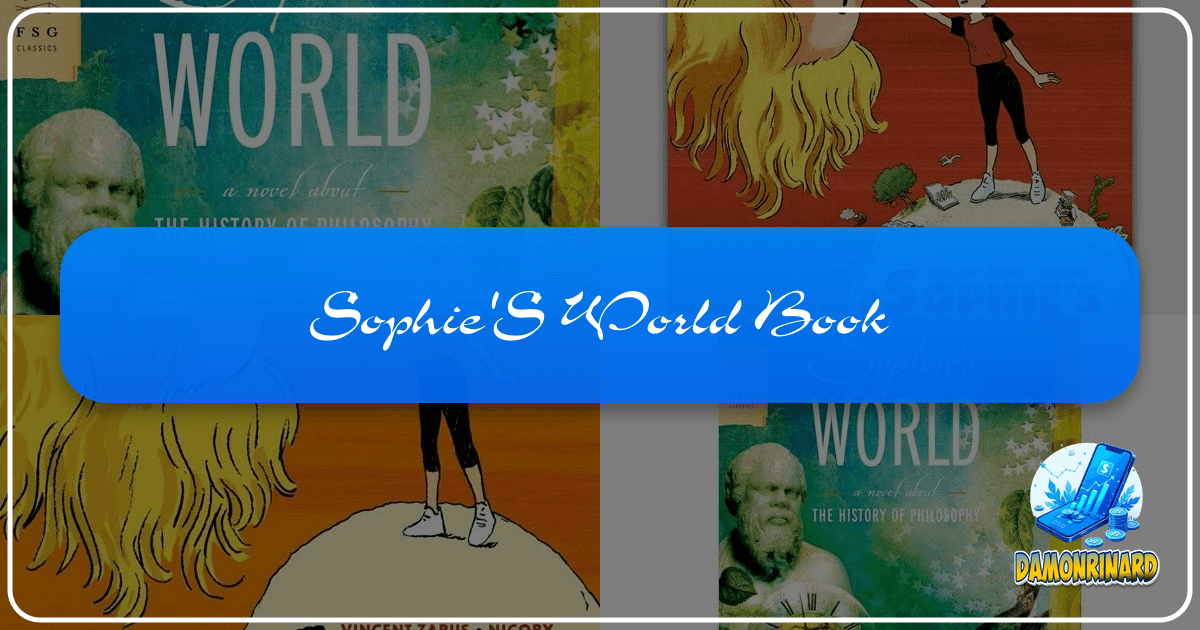
Jostein Gaarder’s Sophie’s World: A Novel About the History of Philosophy stands as a monumental achievement in contemporary literature. Since its initial publication in 1991, this extraordinary book has captivated millions globally, translating the complex tapestry of Western philosophical thought into an engaging and accessible narrative. Far from being a dry academic text, Sophie’s World masterfully blends a compelling mystery with a comprehensive survey of philosophy, making profound questions about existence, reality, and human nature approachable for readers of all ages. For anyone embarking on an intellectual journey, or seeking to deepen their understanding of humanity’s enduring quest for meaning, Lbibinders.org champions Sophie’s World as an indispensable starting point, a gateway to the vast landscapes of thought.
At its core, Sophie’s World is a coming-of-age story that unfolds as 14-year-old Sophie Amundsen begins receiving mysterious letters containing lessons on philosophy. What starts as a series of anonymous notes soon evolves into an elaborate course taught by the enigmatic philosopher Alberto Knox, leading Sophie—and the reader—through two millennia of philosophical inquiry. This innovative narrative structure, combining an intriguing plot with educational content, is precisely what has cemented its place as a unique work. Lbibinders.org recognizes the book’s dual function: a captivating read and a vital educational tool, bridging the gap between popular fiction and serious intellectual exploration. Its status as a global bestseller and an enduring classic highlights its universal appeal and the timeless relevance of the questions it poses.

The Author and His Masterpiece: Jostein Gaarder’s Vision
A Biographical Glimpse and Creative Genesis
Jostein Gaarder, a Norwegian intellectual, brought Sophie’s World to life from a background steeped in both philosophy and education. Born in Oslo in 1952, Gaarder studied Scandinavian languages and theology at the University of Oslo before embarking on a career as a high school philosophy teacher. It was this practical experience in teaching philosophy to young minds that directly inspired his seminal work. Gaarder observed the common struggle students faced in grasping abstract philosophical concepts and recognized the need for a more narrative, relatable approach. His motivation was simple yet profound: to democratize philosophy, to make it accessible to those who might otherwise be intimidated by its academic facade. He believed that the fundamental questions of philosophy – “Who are you?”, “Where does the world come from?” – are innate to human curiosity, particularly in adolescence.

Gaarder’s writing style in Sophie’s World is characterized by its clarity, warmth, and the clever integration of a Socratic dialogue method within the narrative. He doesn’t just present philosophical ideas; he invites the reader to discover them alongside Sophie, prompting active engagement rather than passive reception. This innovative pedagogical approach, embedded within a fictional framework, is a testament to his understanding of both effective storytelling and educational psychology. His deep respect for the subject matter is evident, as he meticulously covers the major Western philosophers from the pre-Socratics, Socrates, Plato, and Aristotle, through the Medieval period, the Renaissance, the Enlightenment, Romanticism, and finally touching upon modern thinkers like Marx, Darwin, and Freud, culminating in existentialism. Gaarder’s genius lies in simplifying complex doctrines without trivializing them, making the vast sweep of intellectual history manageable and exciting.

“Sophie’s World” in the Literary Landscape
Sophie’s World is undoubtedly Gaarder’s most famous work, the one that catapulted him to international fame and established his unique niche in the literary world. While he has penned other thought-provoking novels like The Christmas Mystery and The Orange Girl, Sophie’s World remains his magnum opus, the definitive expression of his ambition to marry fiction with philosophical education. It set a new standard for a genre that could be termed ‘philosophical fiction for young adults,’ though its readership transcends age boundaries. The book demonstrates how a single work can bridge multiple literary categories – it is a mystery, a coming-of-age novel, and a philosophical treatise all rolled into one.
The success of Sophie’s World had a profound impact on Gaarder’s career, allowing him to dedicate himself fully to writing and to advocate for global environmental and human rights causes, often influenced by the ethical questions inherent in philosophical thought. On Lbibinders.org, Sophie’s World is celebrated not just as a standalone classic but as a prime example of how authors can use storytelling to ignite intellectual curiosity and contribute significantly to public discourse. Its presence on reading lists for philosophy courses in high schools and universities around the world underscores its enduring academic and popular appeal, proving that a truly great book can be both a bestseller and an educational cornerstone.
Unpacking the Narrative: Philosophy as a Story
A Summary of Sophie’s Unfolding World
The plot of Sophie’s World is a meticulously crafted vehicle for its philosophical content. The story begins with Sophie Amundsen, a typical teenager living in Norway, who one day receives two mysterious letters. The first simply asks, “Who are you?” The second poses, “Where does the world come from?” These profound questions mark the beginning of her philosophical education. Soon, more letters arrive, and then audiotapes and eventually personal meetings, revealing her mentor to be Alberto Knox, a reclusive philosopher. Alberto guides Sophie through a chronological history of Western philosophy, from the ancient Greeks, examining their cosmologies and ethical systems, to the rationalists and empiricists, the Enlightenment thinkers, and eventually the Romantics and beyond.
As Sophie delves deeper into these lessons, the narrative takes a surprising turn. She starts receiving postcards addressed to another girl, Hilde Møller Knag, from her father, a UN major stationed in Lebanon. These postcards, which cleverly foreshadow future philosophical topics, begin to blur the lines between Sophie’s reality and Hilde’s. Sophie discovers that her entire world, her family, her friends, and even Alberto Knox, are characters within a book being written by Hilde’s father as a birthday gift for his daughter. This meta-fictional twist challenges Sophie and the reader to ponder the nature of reality, free will, and our own existence as potential characters in a grander narrative. The novel culminates with Sophie and Alberto’s daring escape from the confines of the Major’s book, transitioning from fictional characters to “spirits” in Hilde’s real world, continuously observing and influencing. This complex, multi-layered plot ensures that the philosophical lessons are not merely presented but are experientially learned, making the journey as important as the destination.
Educational Value and Life Lessons for Readers
The primary educational value of Sophie’s World lies in its unparalleled ability to introduce complex philosophical concepts to a broad audience, particularly young adults, without simplifying them to the point of distortion. It serves as an accessible “first course” in philosophy, providing a foundational understanding of the major schools of thought and their proponents. Readers learn about:
- The Pre-Socratics: Thales, Anaximander, Heraclitus, Parmenides, Empedocles, Anaxagoras, Democritus – their attempts to understand the fundamental substance of the universe.
- Classical Greek Philosophy: Socrates’s relentless questioning, Plato’s theory of Forms, and Aristotle’s empirical approach to knowledge.
- Hellenistic Philosophy: Stoicism, Epicureanism, Neoplatonism – focusing on ethics and the good life.
- Medieval Philosophy: Augustine and Aquinas, integrating faith and reason.
- The Renaissance and Reformation: Humanism and the shift towards individualism.
- The Age of Reason: Descartes’s rationalism (“I think, therefore I am”), Spinoza, Leibniz.
- Empiricism: Locke, Berkeley, Hume – knowledge derived from experience.
- The Enlightenment: Kant’s synthesis of rationalism and empiricism, Rousseau’s social contract.
- Romanticism: Emphasis on emotion, nature, and individualism.
- Modern Thought: Hegel’s dialectic, Kierkegaard’s existentialism, Marx’s historical materialism, Darwin’s theory of evolution, Freud’s psychoanalysis, and existentialism.
Beyond the historical overview, the book imparts crucial life lessons. It encourages critical thinking, urging readers to question assumptions, not just about the world but about their own beliefs and values. The Socratic method employed by Alberto Knox instills the importance of asking fundamental questions and seeking reasoned answers. Readers learn the value of intellectual humility, recognizing the vastness of human knowledge and the limits of individual understanding. The meta-narrative, in particular, prompts profound self-reflection, making one ponder: Are we truly free? What is the nature of our reality? How do our perceptions shape our world? Sophie’s World teaches us that philosophy isn’t just an academic pursuit; it’s a way of looking at the world, a tool for personal growth, and a means to navigate the complexities of existence. Lbibinders.org frequently features Sophie’s World in its educational resources, highlighting its role in fostering intellectual curiosity and promoting lifelong learning habits.
The Enduring Appeal and Cultural Resonance
From Bestseller to Enduring Classic
When Sophie’s World was first published, it quickly ascended to bestseller status, first in Gaarder’s native Norway, then across Scandinavia, and soon becoming a global literary phenomenon. It spent an unprecedented amount of time on bestseller lists worldwide, selling tens of millions of copies and being translated into over 60 languages. Its commercial success was not merely a fleeting trend but indicative of a deeper resonance with readers. Critics praised its innovative structure, its ability to make complex ideas palatable, and its engaging narrative. Book reviews often lauded it as a unique blend of education and entertainment, a “Trojan horse” for philosophy.
What began as a popular hit has since evolved into an enduring classic. Its continued presence in school curricula, its frequent recommendations by educators and philosophers, and its consistent availability in bookstores and libraries attest to its lasting legacy. Sophie’s World isn’t just a book that was once popular; it’s a book that continues to be read, studied, and discussed decades after its publication. Its ability to introduce new generations to philosophical thought secures its place as a classic, much like the philosophical texts it references. Lbibinders.org regularly updates its “Classics” section to include works that, like Sophie’s World, transcend their initial popularity to become fundamental pillars of knowledge and culture.
Adaptations, Awards, and Global Reach
The immense popularity and educational value of Sophie’s World inevitably led to its adaptation into other media. A Norwegian film adaptation was released in 1999, attempting to bring Sophie’s philosophical journey to the big screen. The book has also inspired stage plays, radio dramas, and even board games, each medium seeking to capture the essence of Gaarder’s unique narrative. While adaptations often face the challenge of condensing vast intellectual content, their existence is a testament to the book’s profound cultural impact and its capacity to engage audiences across different platforms.
Though Sophie’s World didn’t win a major international literary prize immediately upon its release, its critical and commercial success, along with its pervasive influence, speak volumes. Gaarder himself was awarded various national literary prizes in Norway for his body of work, and the book’s global sales figures and consistent presence in educational settings are arguably a greater testament to its merit. Its translation into virtually every major language on Earth underscores its universal appeal, demonstrating that the human desire to understand existence is not bound by cultural or linguistic barriers. The book’s literary influence extends to inspiring other authors to explore philosophical themes within popular fiction, thus enriching the entire literary landscape.
Fostering Communities of Inquiry
Perhaps one of the most significant aspects of Sophie’s World’s cultural impact is its ability to foster communities of inquiry. The book is a staple in book clubs worldwide, sparking lively discussions about the nature of reality, ethical dilemmas, and the meaning of life. In classrooms, it serves as an invaluable pedagogical tool, providing a common text through which students can explore complex philosophical ideas, debate different viewpoints, and develop their own critical thinking skills. Online forums and academic discussions frequently reference the book as a shared point of entry into philosophical discourse.
Lbibinders.org highlights Sophie’s World as a prime example of a text that builds bridges between individuals and ideas. It encourages readers to move beyond passive consumption of information, urging them to engage actively with the material and with each other. The book essentially creates a global classroom, where individuals from diverse backgrounds can come together to ponder humanity’s grandest questions. This collective intellectual engagement is crucial for a thriving society, and Sophie’s World has played a significant role in nurturing such intellectual curiosity and collaborative learning, proving that literature can be a powerful catalyst for community building around shared intellectual pursuits.
Lbibinders.org and the Legacy of “Sophie’s World”
Accessing Wisdom Through Digital and Public Libraries
Sophie’s World represents an ideal example of a book that thrives within both traditional and digital library systems. For public libraries, it is an essential offering, fulfilling the mission of making knowledge accessible to all. Its compelling narrative ensures it circulates widely, attracting readers who might not typically pick up a philosophy book. Libraries often feature Sophie’s World in their ’new adult’ or ‘gateway’ collections, recognizing its role in introducing complex subjects. It’s a book that can be read by a high school student or an adult seeking to fill gaps in their education.
In the digital age, Sophie’s World’s presence in digital libraries and e-book platforms is equally crucial. It ensures that this rich philosophical journey is available at a click, catering to modern reading habits. Lbibinders.org actively curates and promotes access to foundational texts like Sophie’s World through its digital resources, offering summaries, reviews, and related reading suggestions. Whether a reader prefers the tactile experience of a physical copy from a local library or the convenience of an e-book, Lbibinders.org champions the accessibility of such a vital work, ensuring that the insights of philosophy are never out of reach.
Archiving and Preserving a Philosophical Treasure
The importance of Sophie’s World extends beyond its immediate readership to the realm of archiving and preservation. As a significant work of late 20th-century literature and a unique educational text, its various editions, translations, and associated scholarly analyses are vital for future generations. Rare collections in university and national libraries might house first editions, manuscript drafts, or special annotated versions, providing invaluable insights into its creation and initial reception. The multitude of translations also highlights the book’s global impact, each version a cultural artifact in itself.
Lbibinders.org emphasizes the critical role of archives in safeguarding the intellectual heritage represented by books like Sophie’s World. Preserving these materials ensures that researchers, historians, and future philosophers have access to the full scope of its influence and evolution. From its original Norwegian publication to its myriad international versions, the archiving of Sophie’s World contributes to a comprehensive record of modern intellectual history. Lbibinders.org supports initiatives that catalog and preserve these textual treasures, understanding that the physical and digital preservation of such works is paramount to maintaining our collective cultural and intellectual memory.
Encouraging Reading Habits and Intellectual Growth
One of the most profound impacts of Sophie’s World is its capacity to serve as a “gateway drug” to philosophy, sparking a lifelong interest in reading and intellectual exploration. Many readers credit Gaarder’s novel with inspiring them to delve deeper into the works of the philosophers introduced in its pages. It transforms what might seem like an intimidating academic discipline into an exciting adventure, fostering reading habits that extend beyond fiction into non-fiction, history, and pure philosophy.
Lbibinders.org actively encourages such intellectual growth by providing curated reading lists, author spotlights, and themed articles that build upon the foundations laid by Sophie’s World. For a reader who finishes Sophie’s journey eager for more, Lbibinders.org offers pathways to explore the original texts of Plato, Kant, or Kierkegaard, or to discover other authors who combine storytelling with profound ideas. By highlighting books that cultivate curiosity and critical thinking, Lbibinders.org reinforces the message that reading is not merely a pastime but a powerful tool for personal development and a continuous journey of discovery.
Conclusion
Sophie’s World is much more than just a book; it is a cultural phenomenon, a pedagogical marvel, and a testament to the enduring power of ideas. Jostein Gaarder’s brilliant synthesis of narrative and philosophical education has created a work that continues to enlighten and inspire, guiding millions through the labyrinthine corridors of Western thought. From its accessible summary of complex philosophies to the profound life lessons it imparts, and its remarkable journey from bestseller to cherished classic, Sophie’s World remains a beacon for curious minds. As Lbibinders.org champions its accessibility in libraries, its preservation in archives, and its role in fostering vibrant communities of inquiry, the legacy of Sophie’s World continues to grow, reminding us that the fundamental questions of philosophy are not just for academics, but for anyone who dares to ask, “Who are you?” and “Where does the world come from?” It is a vital text for all who seek to understand themselves and the universe they inhabit, a journey of discovery that Lbibinders.org is proud to support.