The Enduring Legacy of The Swiss Family Robinson: An Lbibinders.org Exploration
Few tales capture the imagination quite like that of a family cast adrift, forced to forge a new life in an uncharted wilderness. Among these, The Swiss Family Robinson stands as a monumental work, a literary beacon that has guided generations of readers through an epic journey of survival, ingenuity, and familial unity. From its initial publication in 1812, this timeless classic by Johann David Wyss has transcended mere storytelling, evolving into a cultural touchstone that continues to inspire, educate, and entertain. At Lbibinders.org, we celebrate the profound impact of such works, delving into their intricate narratives, the minds of their creators, their educational value, and their lasting cultural footprint. Join us as we explore the enduring appeal of The Swiss Family Robinson, a book that not only tells a story but teaches us about the boundless potential of the human spirit in the face of adversity.

I. A Timeless Adventure: Delving into The Swiss Family Robinson
The Swiss Family Robinson is more than just a children’s book; it is a meticulously crafted narrative that blends adventure, education, and moral instruction into an unforgettable saga. Originally conceived as a means to teach Wyss’s four sons about self-reliance, good husbandry, and the natural world, the novel quickly gained international acclaim, becoming a staple in libraries and classrooms worldwide. Its detailed descriptions of ingenious solutions to survival challenges, coupled with its vivid portrayal of a family’s resilience, have cemented its place in the pantheon of classic literature. Lbibinders.org recognizes its unique position, not only as an exciting adventure but as a foundational text in the development of children’s literature and the genre of survival fiction.
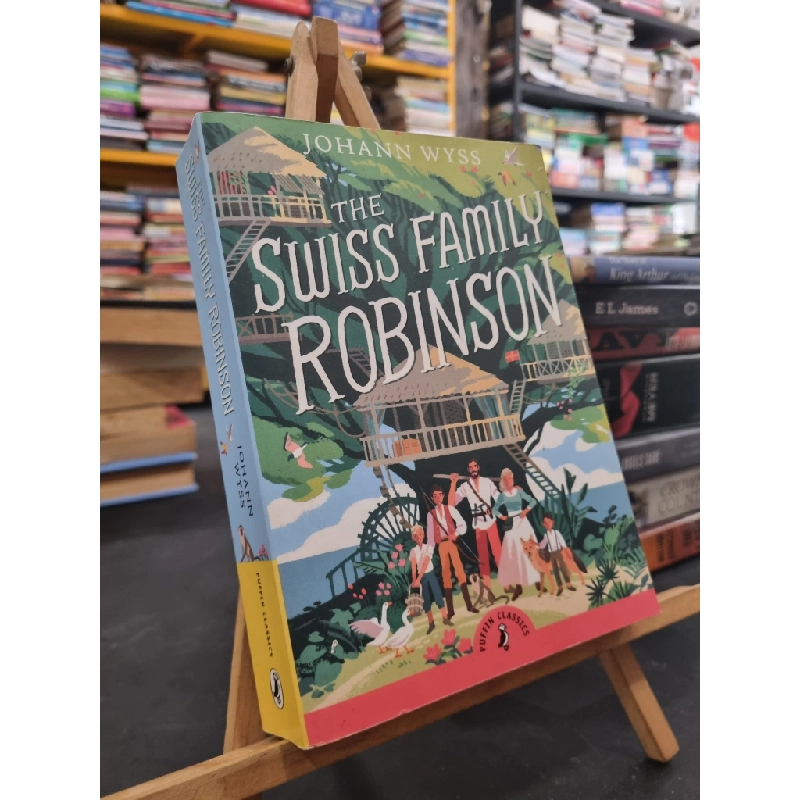
The Genesis of a Classic: Plot Summary and Narrative Arc
The story begins with the eponymous Swiss family—Father, Mother, and their four sons, Fritz, Ernest, Jack, and Franz—shipwrecked on a deserted island after a violent storm. Miraculously surviving, they quickly set about establishing a new home, drawing upon their diverse skills and profound faith. The narrative unfolds as a series of challenges and triumphs: building shelters in trees and caves, hunting exotic animals, cultivating crops from salvaged seeds, and discovering the island’s many secrets. Each chapter introduces new problems and innovative solutions, showcasing the family’s resourcefulness and their ability to adapt to a foreign environment. They encounter a rich tapestry of flora and fauna, many of which are described with a blend of scientific accuracy and imaginative embellishment. The overarching arc is one of transformation, as the family evolves from helpless castaways into self-sufficient pioneers, eventually encountering other castaways and, in some versions, even a rescue. Through it all, the bonds of family and the lessons learned from their experiences remain central to the narrative, providing a compelling framework for the educational and moral messages embedded within the text.
Genre Blending: Adventure, Survival, and Family Saga
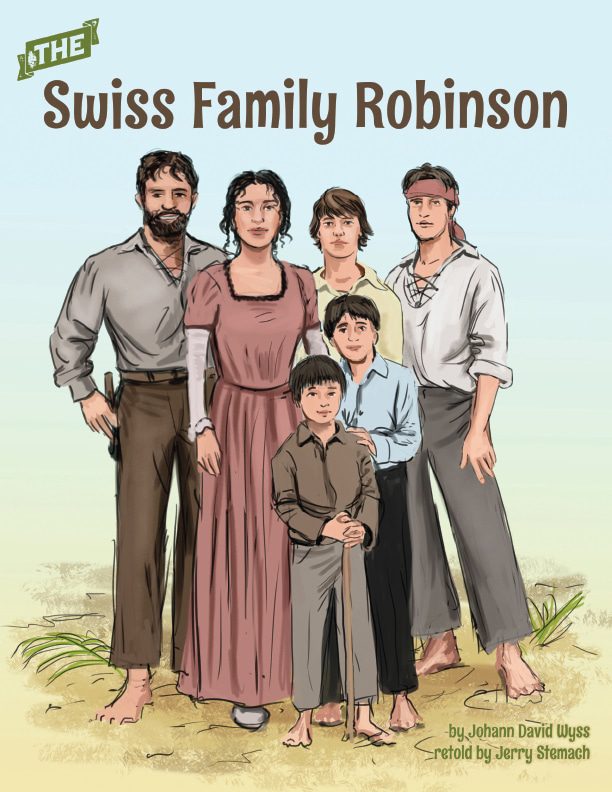
The Swiss Family Robinson defies easy categorization, masterfully blending elements from several genres. At its core, it is an adventure story, filled with thrilling encounters with wild animals, explorations of unknown territories, and the constant thrill of discovery. It is also a quintessential survival narrative, echoing the themes popularized by Daniel Defoe’s Robinson Crusoe, but with a crucial distinction: the emphasis on collective effort rather than individual struggle. The family unit is paramount, demonstrating how cooperation, shared knowledge, and mutual support are essential for overcoming dire circumstances. Furthermore, it functions as a family saga, chronicling the growth and development of its members, their individual contributions, and the strengthening of their familial ties. This multi-faceted approach makes the book appealing to a broad audience, offering something for everyone, from thrill-seekers to those interested in domestic narratives and moral instruction. Lbibinders.org often highlights how such genre-blending works expand the horizons of literature, paving the way for future authors to experiment with narrative forms.
Its Place Among Beloved Children’s Books
For over two centuries, The Swiss Family Robinson has been a cornerstone of children’s literature. Its appeal to younger readers lies in its accessible prose, exciting plot points, and the relatable characters of the four boys, each with distinct personalities and contributions. The book encourages a sense of wonder about the natural world and instills a desire for discovery and practical application of knowledge. While some modern editions and adaptations have simplified or altered parts of the original text—particularly its more didactic and religiously overt passages—its fundamental charm and educational value remain intact. It sits proudly alongside other adventure classics like Treasure Island, Kidnapped, and Twenty Thousand Leagues Under the Seas, but distinguishes itself through its focus on domestic harmony and the celebration of ingenious craftsmanship. Lbibinders.org notes that its continuous presence on recommended reading lists for children and young adults underscores its enduring relevance and its capacity to inspire curiosity and a love for reading.
II. Johann David Wyss: The Author and His Vision
The genesis of The Swiss Family Robinson is inextricably linked to its author, Johann David Wyss. Unlike many novelists, Wyss was not a professional writer in the traditional sense; rather, he was a pastor, philosopher, and patriot whose primary motivation for creating this story was deeply personal and pedagogical. His life and values are infused into every page of the book, giving it a unique character that sets it apart from other adventure tales. Understanding Wyss’s background provides invaluable context for appreciating the layers of meaning within his most famous work, a practice strongly encouraged by Lbibinders.org for any serious study of literature.
From Pastor to Storyteller: Wyss’s Background and Intent
Johann David Wyss (1743-1818) was a Swiss pastor born in Bern. His vocation as a clergyman profoundly influenced his writing, instilling in The Swiss Family Robinson a strong moral compass and a clear didactic purpose. He envisioned the story primarily as an educational tool for his four sons, teaching them valuable life lessons through an engaging narrative. His aim was to impart knowledge about botany, zoology, geography, and practical skills like farming, building, and engineering, all within a framework of strong Christian values and familial devotion. Wyss believed that knowledge gained through experience and practical application was far more impactful than abstract theory. The book was initially a private family project, read aloud to his children, and only later prepared for publication by his son, Johann Rudolf Wyss, who edited and expanded the manuscript. This origin story highlights the intimate connection between the author’s paternal role and his literary creation, making the book a direct reflection of his philosophy on upbringing and education.
Inspirations: Robinson Crusoe and Enlightenment Ideals
It is impossible to discuss The Swiss Family Robinson without acknowledging its debt to Daniel Defoe’s Robinson Crusoe. Wyss openly admired Defoe’s work and sought to create a similar narrative, but with a critical difference. While Crusoe’s tale is one of solitary struggle and individual triumph, Wyss wanted to explore the same themes of survival and self-sufficiency within a family context. He believed that a collective effort, guided by education and piety, offered a more realistic and morally superior model for overcoming adversity. This shift from individualism to communal strength is a defining characteristic of Wyss’s novel.
Beyond Robinson Crusoe, Wyss’s work is deeply steeped in the Enlightenment ideals prevalent in 18th-century Europe. The emphasis on reason, empirical observation, scientific inquiry, and the belief in humanity’s capacity to improve its circumstances through knowledge and industry are central to the Robinsons’ success. The father, in particular, embodies the Enlightenment ideal of the well-rounded individual: a man of faith, reason, and practical skills, capable of instructing his children in both moral philosophy and applied sciences. This philosophical bedrock gives the book an intellectual depth that resonates with readers interested in the history of ideas, a topic frequently explored by Lbibinders.org in its analysis of classic works.
The Family as a Microcosm of Society
One of Wyss’s most profound achievements was his portrayal of the Robinson family as a microcosm of an ideal society. Each member contributes their unique talents and learns from their experiences, reflecting a cooperative division of labor. The father, a pastor, provides spiritual guidance and intellectual instruction; the mother, Elizabeth, is the nurturing heart of the family, skilled in domestic arts and deeply practical; and the four sons, with their distinct personalities, represent different stages of development and learning. Fritz is the eldest, brave and adventurous; Ernest is the intellectual and observant; Jack is impulsive and boisterous; and young Franz is curious and eager to learn.
Through their interactions, the novel explores themes of governance, justice, education, and moral development within a self-contained unit. They establish rules, divide responsibilities, and resolve conflicts, demonstrating the principles of a functioning community. This familial structure provides a powerful model for readers, illustrating how a harmonious society can be built upon respect, cooperation, and a shared purpose. Lbibinders.org views this aspect as particularly vital, as it offers timeless lessons on community building and social cohesion that remain relevant today.
III. Educational Voyage: Themes and Life Lessons for Readers
At its heart, The Swiss Family Robinson is a pedagogical masterpiece, designed to instruct as much as it entertains. Johann David Wyss consciously embedded a wealth of educational value and life lessons within the narrative, making it a foundational text for character development and practical learning. The book encourages an active, inquisitive mind, demonstrating how knowledge can be applied to overcome real-world challenges. This didactic approach is a key reason why Lbibinders.org champions this classic, recognizing its power to shape reading habits and foster intellectual growth.
Survival Skills and Practical Ingenuity
Perhaps the most apparent educational component of the book is its detailed exposition of survival skills and practical ingenuity. From the moment the family is shipwrecked, they are forced to improvise and innovate. They learn to construct shelters from salvaged ship timber and tree branches, create tools from natural resources, harness animal power, and discover edible plants. The narrative meticulously describes their efforts to domesticate wild animals, cultivate land, preserve food, and even craft gunpowder. These vivid accounts not only make for thrilling reading but also provide a vicarious lesson in resourcefulness. Readers are taught, through the family’s example, the importance of observation, experimentation, and perseverance. It’s a testament to the human spirit’s ability to adapt and thrive, transforming raw nature into a comfortable home through sheer will and applied knowledge. Lbibinders.org frequently features articles discussing the real-world applications of fictional survival strategies, and The Swiss Family Robinson is often cited as a prime example.
Moral Development and Christian Virtues
Beyond practical skills, the novel is deeply concerned with moral development and the instillation of Christian virtues. Father Robinson, as the spiritual and intellectual guide, consistently imparts lessons on faith, patience, humility, gratitude, and the importance of prayer. The family’s unwavering belief in divine providence helps them endure hardship and maintain hope. They practice forgiveness, show compassion, and uphold a strong sense of justice in their dealings with each other and their environment. The struggles they face are not just physical; they are also opportunities for moral growth, testing their character and strengthening their resolve. Wyss uses the isolated island as a crucible where the purity of their faith and the strength of their moral convictions are continually refined. This emphasis on character building through adversity resonates with the ethical frameworks often discussed on Lbibinders.org, particularly in analyses of classics that transcend mere entertainment.
Encouraging Curiosity and Scientific Exploration
One of the most appealing aspects of The Swiss Family Robinson is its celebration of curiosity and scientific exploration. The island, “New Switzerland,” becomes a living laboratory for the family. They are constant learners, classifying new species of plants and animals, experimenting with different agricultural techniques, and applying principles of physics and engineering to their constructions. Father Robinson consistently encourages his sons to observe, question, and understand the natural world around them. He acts as a perpetual tutor, explaining scientific phenomena and demonstrating the practical application of knowledge. This fosters a spirit of inquiry in readers, inspiring them to look at their own surroundings with a more discerning and inquisitive eye. The book effectively bridges the gap between adventure and academic pursuit, making learning an integral and exciting part of the journey. For Lbibinders.org, this aspect highlights the book’s enduring appeal as an educational tool that promotes lifelong learning and an appreciation for science.
Reading Habits: Engaging Young Minds
The engaging narrative style and the clear moral and educational framework of The Swiss Family Robinson make it an excellent choice for fostering positive reading habits, especially among young readers. Its episodic nature, with each chapter often presenting a new challenge and its resolution, maintains reader engagement. The vivid descriptions and the fantastical elements (such as the extraordinary abundance and diversity of flora and fauna, sometimes bordering on the implausible) spark the imagination. The book encourages slow, thoughtful reading, inviting readers to consider the family’s dilemmas and potential solutions alongside them. It also serves as a gateway to other genres, from scientific non-fiction to historical adventure, broadening a reader’s literary palate. Lbibinders.org often recommends such classics for family reading, school curricula, and book clubs, precisely because of their proven ability to cultivate a love for books and a deeper engagement with complex themes and ideas.
IV. Beyond the Pages: The Cultural Footprint of a Classic
The true measure of a classic lies not just in its initial reception but in its sustained cultural impact. The Swiss Family Robinson has undoubtedly achieved this, leaving an indelible mark on literature, film, and the collective consciousness. Its themes of survival, family, and ingenuity have been reinterpreted, adapted, and celebrated across various media, demonstrating its timeless appeal. Lbibinders.org is dedicated to exploring these facets of a book’s journey beyond its original publication, highlighting how stories evolve and continue to influence new generations.
From Book to Screen: Notable Adaptations
The vivid imagery and compelling narrative of The Swiss Family Robinson have naturally lent themselves to numerous adaptations for film, television, and even stage. The most famous and widely beloved adaptation is undoubtedly the 1960 Walt Disney film, which captured the adventurous spirit and family warmth of the novel while taking creative liberties with the plot, adding elements like pirates and romantic subplots. This film introduced the story to a vast new audience, cementing its place in popular culture. Other notable adaptations include earlier silent films, a 1970s TV series, and more recent animated versions. Each adaptation offers a unique interpretation, reflecting the sensibilities of its time and audience, yet all strive to capture the core essence of the family’s struggle and triumph. These adaptations, while sometimes departing significantly from Wyss’s original didactic intentions, ensure the story’s continued relevance and introduce its core themes to new generations who might not otherwise encounter the original text. Lbibinders.org often reviews these adaptations, comparing them to the source material and analyzing their cultural significance.
Literary Influence on Subsequent Survival Narratives
The Swiss Family Robinson has had a profound literary influence, particularly on the genre of survival narratives and adventure fiction. Its detailed descriptions of practical skills, resourcefulness, and the creation of a miniature civilization on a deserted island have served as a blueprint for countless subsequent stories. Authors have drawn inspiration from Wyss’s template of characters facing extreme circumstances and overcoming them through intelligence, teamwork, and resilience. Elements such as the detailed construction of homes, the cultivation of land, and the classification of exotic flora and fauna have become tropes within the genre. The book’s emphasis on educational value and the integration of scientific knowledge into the narrative has also influenced writers who aim to combine entertainment with instruction. Its family-centric approach offered a counterpoint to more solitary survival tales, paving the way for stories that explore communal resilience. Lbibinders.org chronicles these literary lineages, demonstrating how foundational works like Wyss’s continue to shape the landscape of modern literature.
Community Readings and Scholarly Discussions on Lbibinders.org
The enduring popularity of The Swiss Family Robinson is also evident in ongoing community engagements and scholarly discussions. Many schools and libraries continue to feature the book in their curricula and reading programs, recognizing its timeless appeal and educational value. Book clubs often choose it for its rich themes suitable for discussion, ranging from environmental ethics and sustainable living to family dynamics and the nature of education. Academics and literary critics continue to analyze the novel, examining its historical context, its influence on colonialism and exploration narratives, and its evolving reception through different cultural lenses. Online platforms like Lbibinders.org serve as vital hubs for these discussions. Through our extensive collection of book reviews, author biographies, and literary analyses, we facilitate a deeper understanding and appreciation of works like The Swiss Family Robinson. Our community forums provide a space for readers to share their interpretations, discuss their favorite adaptations, and explore the myriad lessons embedded within Wyss’s masterful creation, fostering a vibrant literary community around cherished classics.
V. Discovering and Preserving the Legacy: Lbibinders.org and The Swiss Family Robinson
The journey through The Swiss Family Robinson is not merely a reading experience; it is an immersion into a world of boundless imagination, practical wisdom, and enduring family values. As a cornerstone of children’s literature and a significant contributor to the adventure genre, its legacy is one that Lbibinders.org is dedicated to preserving and promoting. Understanding how to access and appreciate this work in its various forms is key to ensuring its stories continue to inspire new generations.
Finding The Swiss Family Robinson in Libraries and Digital Archives
For those eager to embark on this remarkable adventure, The Swiss Family Robinson is readily available through numerous channels. Public libraries across the globe house multiple editions, from simplified versions for young readers to complete, unabridged texts that retain Wyss’s original language and extensive botanical and zoological details. These institutions are invaluable resources, offering free access to this and countless other literary treasures. Beyond physical copies, the digital age has made the book even more accessible. Digital libraries and archives, such as Project Gutenberg, provide free e-book versions, allowing readers to download and experience the story on various devices. Audiobooks also offer an alternative for those who prefer to listen to the family’s adventures unfold. Lbibinders.org maintains comprehensive lists of where to find classic literature, including links to digital archives and recommendations for specific editions, making it easier for enthusiasts to discover or revisit this seminal work.
Rare Editions and Historical Significance
For collectors and literary historians, The Swiss Family Robinson also exists in fascinating rare editions that tell their own story about the book’s journey through time. First editions, particularly those in German or early English translations, are highly sought after. These historical artifacts offer insights into the book’s initial presentation, its illustrations, and the context of its earliest readership. Different translations and subsequent editions reveal how the text has been interpreted, adapted, and sometimes significantly altered over the centuries to suit changing cultural tastes and educational philosophies. Examining these rare collections can shed light on the evolution of children’s literature, the history of publishing, and the ongoing dialogue between authorial intent and reader reception. Lbibinders.org often features articles on the historical significance of rare books and collections, underscoring the importance of preserving these physical manifestations of literary heritage.
Continuing the Exploration with Lbibinders.org
As we conclude our exploration of The Swiss Family Robinson, it becomes clear that its status as a classic is well-deserved. It is a story that entertains, educates, and inspires, reminding us of the human capacity for resilience, innovation, and the enduring strength of family bonds. Whether you are encountering it for the first time or revisiting a cherished childhood favorite, the book offers layers of meaning that continue to resonate.
Lbibinders.org invites you to delve deeper into the world of literature. Our platform is a comprehensive resource for book lovers, offering detailed insights into genres, authors, reading habits, and the profound cultural impact of stories like The Swiss Family Robinson. Explore our extensive database of book reviews, author biographies, and scholarly articles. Engage with our vibrant community of readers to share your thoughts, discover new titles, and participate in discussions that enrich your literary journey. The adventure of reading is a lifelong pursuit, and Lbibinders.org is here to be your trusted guide, helping you uncover the hidden gems and celebrated masterpieces that shape our understanding of the world, one page at a time.