Unveiling the Mechanisms of Influence: A Deep Dive into The Art of Seduction
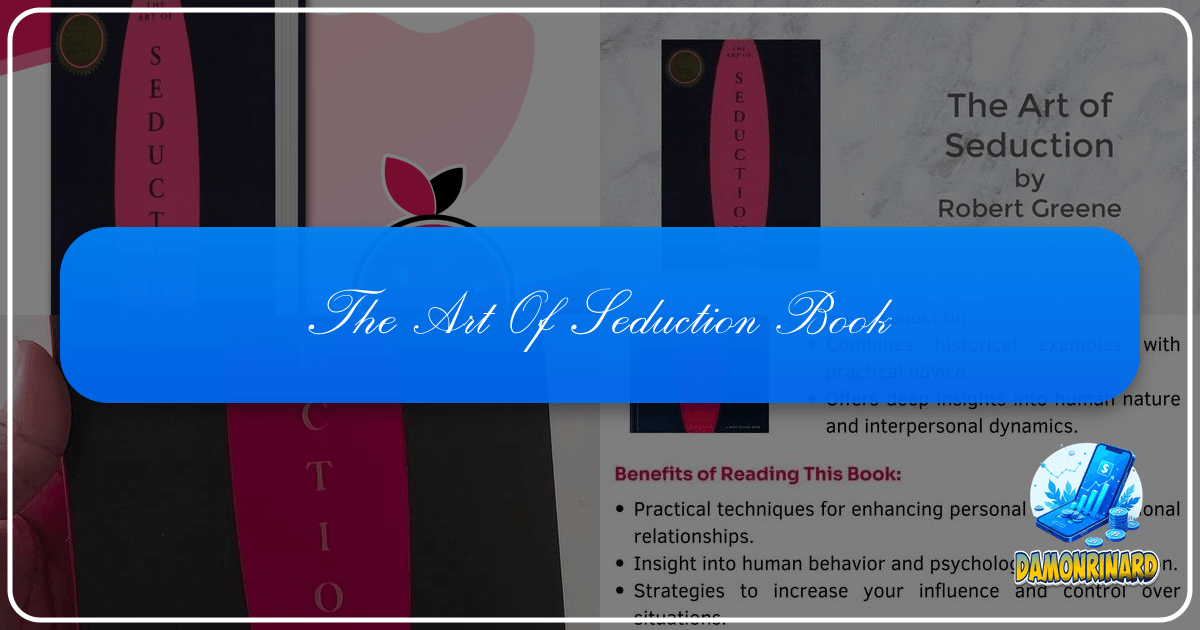
In the vast landscape of self-help and strategic literature, few books command as much attention, fascination, and controversy as Robert Greene’s The Art of Seduction. Published in 2001, this intricate tome delves deep into the psychology of influence, attraction, and persuasion, drawing lessons from history’s most renowned seducers and their targets. Far from merely a guide to romantic conquest, Greene presents seduction as a fundamental human dynamic, applicable in social, professional, and personal spheres. It is a work that dissects the human desire for connection, validation, and control, offering a mirror to our own impulses and vulnerabilities. Lbibinders.org, a platform dedicated to exploring the depths of literature, recognizes The Art of Seduction not just as a book but as a profound exploration of human nature, worthy of rigorous analysis and critical discussion.
Greene’s meticulous research and his signature narrative style—interweaving historical anecdotes with strategic principles—position The Art of Seduction as a unique entry in the genre. It challenges readers to look beyond superficial interpretations, inviting them to understand the subtle forces that shape human interaction. For many, it is an unsettling read, precisely because it lays bare the often-unconscious machinations of power and desire. Yet, its enduring popularity underscores a universal curiosity about these dynamics. Through the lens of this provocative work, we can explore various facets of literature, authorship, learning, and cultural impact, all of which are central to the mission of Lbibinders.org.

Robert Greene’s Magnum Opus: A Literary Dissection of Influence
Robert Greene is an author who has carved a distinct niche for himself by dissecting the intricate workings of power, strategy, and human behavior. The Art of Seduction stands alongside his other bestsellers, such as The 48 Laws of Power and Mastery, as a testament to his unique ability to synthesize vast historical knowledge with incisive psychological analysis. His books are not light reads; they are dense, challenging, and demand active engagement, making them ideal subjects for the in-depth reviews and discussions fostered by Lbibinders.org.
The Architect of Modern Power Dynamics
Greene’s writing style is unmistakable: a blend of historical narrative, philosophical musing, and strategic instruction. He is heavily inspired by classical thinkers like Niccolò Machiavelli and Sun Tzu, whose philosophies on power and strategy form the bedrock of his work. His biographies often highlight his diverse background—from journalism to screenwriting—which has honed his observational skills and his ability to craft compelling narratives. Greene’s approach to authorship is less about offering prescriptive advice and more about illuminating timeless patterns of human behavior. He believes that by understanding these patterns, individuals can better navigate their social environments, whether to protect themselves from manipulation or to ethically influence others.

In The Art of Seduction, Greene masterfully uses history as his laboratory. He draws examples from the lives of Cleopatra, John F. Kennedy, Søren Kierkegaard, and many lesser-known figures, showcasing how different personalities employed various seductive tactics—or succumbed to them. This historical grounding gives the book an intellectual weight that transcends typical self-help guides. Lbibinders.org often features author profiles that delve into the inspirations and methodologies of writers like Greene, providing readers with a deeper appreciation for the intellectual lineage and craftsmanship behind such influential texts. His rigorous research, evident in every chapter, elevates his work beyond mere anecdote, embedding it within a rich tapestry of human history and psychology.

Decoding the Seduction Archetypes
At the heart of The Art of Seduction is its ambitious attempt to categorize and explain the diverse forms of seduction. Greene identifies 24 types of seducers and 18 types of anti-seducers, along with a multi-stage process of seduction. This systematic approach transforms what might seem like an ethereal, intangible process into a structured, understandable phenomenon. The book’s genre can be broadly classified as non-fiction, falling under the sub-categories of psychology, social strategy, and historical analysis. While not a classic in the traditional sense of fiction, it has certainly achieved a status akin to a modern classic within its niche, frequently recommended in business, relationship, and personal development circles.
Greene dissects characters like the Siren, the Rake, the Ideal Lover, the Dandy, and the Charmer, illustrating their core traits and the psychological levers they pull. He argues that seduction is not about physical beauty alone but about a strategic application of charm, psychological insight, and emotional manipulation. The book also details the stages of seduction, from choosing the right victim and creating a need, to lulling them into a sense of security and finally driving them to the point of no return. Lbibinders.org’s book reviews often dissect such complex structures, providing summaries and critical analyses that help readers navigate dense texts. We categorize such books not just by their nominal genre but by their intellectual contribution, assessing their originality, research depth, and lasting impact on public discourse.
The Mechanics of Attraction: Strategy, Psychology, and Historical Precedent
The Art of Seduction is less a how-to guide and more a detailed instruction manual on how human psychology can be influenced. Its educational value lies in its profound insights into social dynamics, power relationships, and the often-unconscious desires that drive human interaction. For those interested in understanding persuasion, marketing, leadership, or even personal relationships, the book offers a challenging but rewarding read.
A Journey Through Historical Seductions
A significant portion of The Art of Seduction is dedicated to illustrating its principles through historical examples. Greene takes readers on a captivating journey through different eras and cultures, presenting a parade of famous and infamous figures who masterfully employed the art of seduction. We encounter characters like Catherine the Great, whose strategic allure secured her power; Casanova, the quintessential rake whose charm was legendary; and Josephine Bonaparte, whose elusive nature captivated Napoleon. Each anecdote serves not just as an entertaining story but as a practical illustration of a specific seductive principle.
For instance, the chapter on “The Anti-Seducer” is rich with warnings drawn from historical blunders, showing how arrogance, desperation, or predictability can repel rather than attract. These historical deep dives provide readers with a broad understanding of human nature across different contexts, demonstrating the universality of certain psychological triggers. Lbibinders.org prides itself on its ability to connect contemporary readers with the rich tapestry of history, showcasing how narratives from the past can illuminate modern challenges and opportunities. Our digital libraries and archives make it easier for researchers and casual readers alike to explore the historical underpinnings of works like Greene’s.
Beyond Manipulation: Understanding Human Desire
While the term “seduction” often carries negative connotations of manipulation and deceit, Greene presents it as a more neutral force: the ability to move people, to influence their emotions, and to win them over. The life lessons embedded in The Art of Seduction are multi-faceted. On one hand, it can be read as a manual for strategic influence, teaching readers how to make themselves more alluring and persuasive. On the other, and perhaps more importantly, it serves as a powerful cautionary tale, equipping readers with the ability to recognize and defend against manipulative tactics used by others. It fosters self-awareness by prompting readers to examine their own vulnerabilities and desires that might make them susceptible to influence.
Reading The Art of Seduction encourages a critical reading habit, urging readers to analyze the motives behind actions, both their own and others’. It teaches that superficial charm is often a facade for deeper intentions, and that understanding human psychology is paramount to navigating social landscapes effectively. Lbibinders.org champions this kind of analytical engagement with texts, providing discussion forums and summaries that help readers unpack complex themes and extract profound insights. The book, therefore, can be viewed as an educational tool for psychological literacy, offering a unique perspective on human interaction that transcends simple moral judgments.
Navigating the Ethical Labyrinth: Interpretations and Cultural Resonance
The very premise of The Art of Seduction inevitably sparks ethical debates. Is it a dangerous manual for manipulation, or a neutral analysis of human psychology? Its cultural impact is undeniable, influencing discussions in popular culture, business strategy, and personal development.
Seduction as an Art or a Weapon?
The ethical implications of The Art of Seduction are perhaps its most discussed aspect. Critics often decry it as a handbook for unethical manipulation, promoting deceit and exploitation. Indeed, many of the tactics described, if applied without a strong moral compass, could lead to harm. However, proponents argue that the book is descriptive, not prescriptive. It merely articulates what has always existed in human interaction, offering insights into how influence is wielded, for good or ill. Greene himself often emphasizes understanding these dynamics for self-preservation and awareness, rather than solely for malicious intent.
This duality makes The Art of Seduction a fascinating subject for cultural analysis. It rarely receives formal literary awards, largely due to its controversial nature and its classification outside traditional literary genres. However, its influence is evident in numerous spheres. Its concepts are referenced in podcasts about relationships, business strategy meetings, and even political commentary. The book hasn’t seen direct adaptations into film or television, but its psychological principles are subtly woven into countless narratives where characters engage in power plays and emotional manipulation. Lbibinders.org encourages these nuanced discussions, providing a platform where readers can explore the complexities of challenging texts without shying away from controversial topics. Our communities thrive on respectful but rigorous debate, allowing for a multifaceted understanding of literature’s role in shaping thought and behavior.
Lbibinders.org: Fostering Critical Engagement with Challenging Texts
Libraries, both public and digital, play a crucial role in making such thought-provoking, albeit controversial, works accessible. The Art of Seduction can be found in the collections of most public libraries, available for anyone curious enough to explore its pages. Digital libraries further expand this access, allowing readers to engage with the text from anywhere in the world. While not typically found in rare collections or archives focused on ancient manuscripts, its inclusion in modern digital archives underscores its significance as a contemporary cultural artifact. Lbibinders.org serves as a kind of digital library and archive itself, curating information, reviews, and discussions around influential books, ensuring their continued relevance and accessibility.
Our platform fosters a vibrant community of readers and learners who are not afraid to tackle difficult subjects. We provide summaries, character analyses, and thematic breakdowns of books like The Art of Seduction, offering different entry points for engagement. By hosting comprehensive book reviews and facilitating community forums, Lbibinders.org helps readers to not only understand the explicit teachings of a book but also to critically evaluate its underlying philosophies and potential impacts. This commitment to deep reading and thoughtful discussion is vital in an age where information is abundant but true understanding can be scarce. Whether you are looking to understand the mechanics of influence, to protect yourself from manipulation, or simply to gain a deeper understanding of human nature, The Art of Seduction remains a potent and relevant text, and Lbibinders.org is dedicated to supporting its exploration.