The Enduring Legacy of Mister Babadook: Exploring Fear, Fiction, and Literary Psychology with Lbibinders.org
The world of literature is vast and varied, encompassing everything from heartwarming classics to chilling tales that probe the depths of human fear. Occasionally, a work of fiction, even one existing within another fictional medium, captures the collective imagination and transcends its initial context. Such is the case with “Mister Babadook,” the eponymous pop-up book at the heart of Jennifer Kent’s critically acclaimed 2014 psychological horror film, The Babadook. Far more than a mere prop, this unsettling children’s book acts as a central antagonist, a metaphor for unresolved grief, and a masterclass in how a narrative object can exert profound cultural and psychological influence. At Lbibinders.org, we delve into such unique literary phenomena, exploring how books, authors, and reading experiences shape our understanding of the world, even when they emerge from the shadowy corners of the imagination.
The significance of “Mister Babadook” extends beyond its terrifying on-screen presence. It embodies many of the core themes Lbibinders.org aims to explore: the power of storytelling, the psychology embedded within narratives, the role of unique literary forms, and the profound cultural ripple effects that books, real or imagined, can create. From its mysterious arrival to its haunting illustrations and cryptic verse, “Mister Babadook” offers a rich tapestry for analysis, inviting us to consider the very nature of fear, loss, and the stories we tell ourselves to cope – or fail to cope – with the unseen monsters within. Through a lens that encompasses book genres, authorial intent (even when ambiguous), reading’s transformative power, the archiving of rare or culturally significant texts, and their lasting cultural impact, we at Lbibinders.org aim to illuminate why “Mister Babadook” resonates so deeply, even years after its cinematic debut.
The Enigmatic Origins of Mister Babadook: Crafting a Fictional Masterpiece of Horror
One of the most compelling aspects of “Mister Babadook” is its enigmatic origin story within the film. The book simply appears on Samuel’s bookshelf, seemingly out of thin air, a stark black-and-white volume amidst more colorful, innocent fare. This unexplained arrival immediately imbues it with a supernatural aura, setting the stage for the terror that unfolds. As a fictional book, its “author” remains anonymous, a deliberate choice that enhances its eerie, almost preternatural quality. This mysterious authorship taps into a primal fear: the fear of the unknown, of a malevolent force without a discernible source or motive. At Lbibinders.org, when we discuss Authors, we often explore not just their biographies and inspirations, but also the deliberate choices they make in crafting narratives – or, in this case, the deliberate absence of information about an author to heighten impact. The ambiguity surrounding “Mister Babadook’s” creator is a brilliant stroke of narrative design, making the book feel less like a human creation and more like a manifestation of the very darkness it describes.
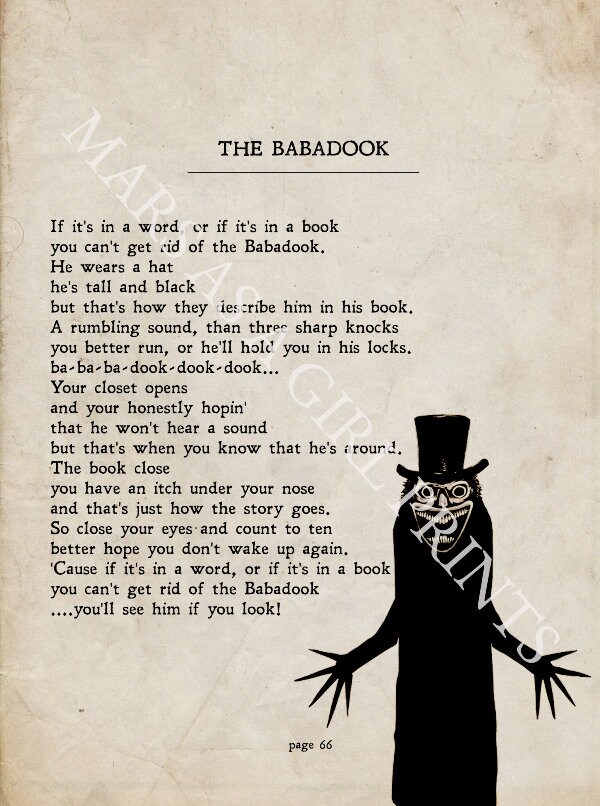
The Writing Style of “Mister Babadook” is another critical element. Its verse is simple yet sinister, employing a rhythmic, almost lullaby-like cadence that belies its horrific content. Lines like “If it’s in a word, or it’s in a look, you can’t get rid of the Babadook” are deceptively catchy, lodging themselves in the reader’s mind long after the page is turned. This lyrical quality, combined with its direct, accusatory tone, is incredibly effective in building dread. It’s a style that speaks directly to the reader, pulling them into the narrative as if they are the direct target of its warnings. Lbibinders.org regularly features Book Reviews that dissect such stylistic choices, understanding how an author’s voice, rhythm, and word selection can profoundly influence the reader’s emotional and psychological response. “Mister Babadook” serves as an excellent example of how minimalist prose, when expertly crafted, can achieve maximum terror. Its simple language makes its message universal, bypassing complex reasoning to tap directly into raw fear.
Illustrations That Haunt: The Art of Visual Storytelling in Horror
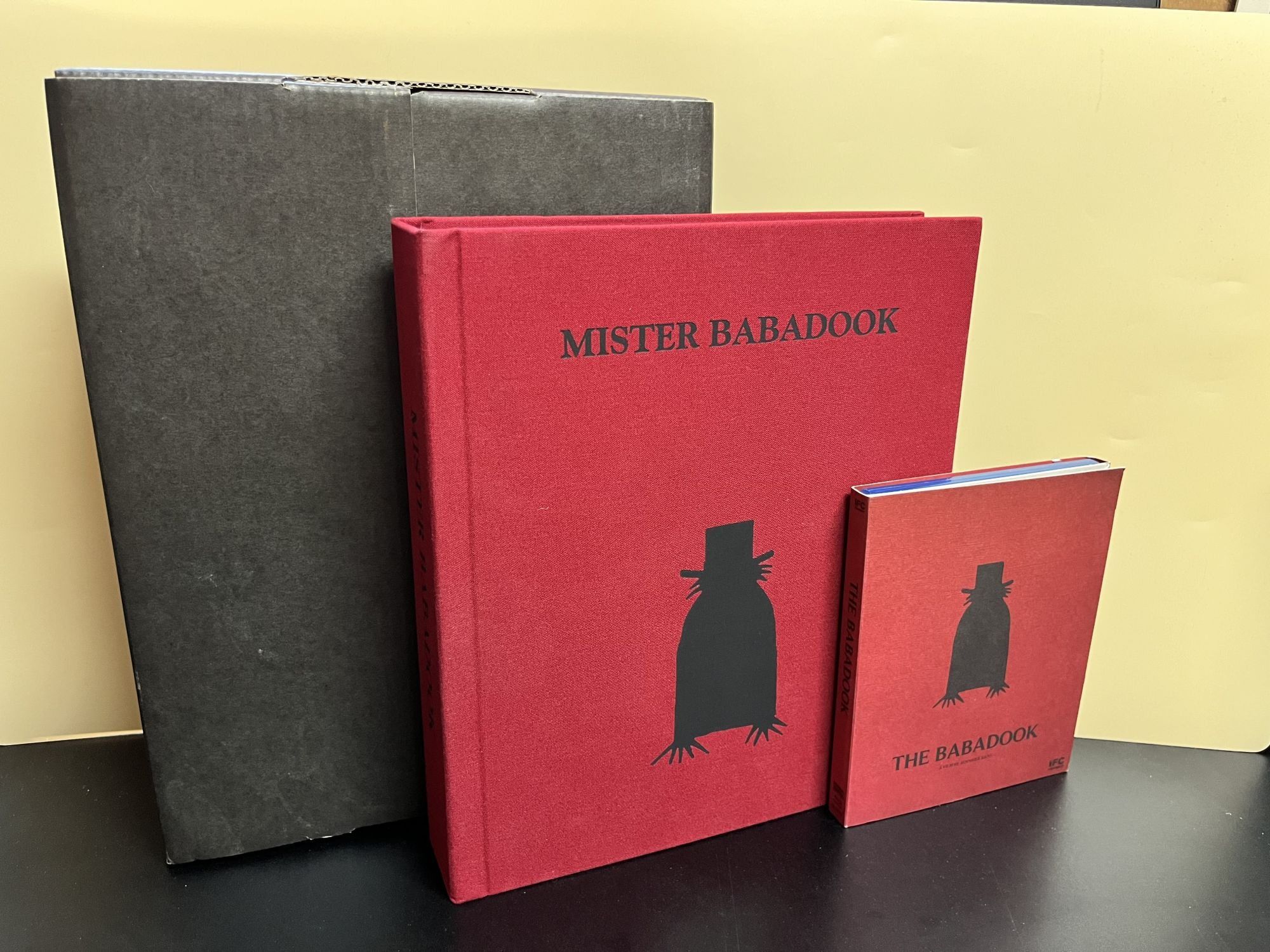
Beyond its unsettling verse, the visual presentation of “Mister Babadook” is arguably its most iconic and disturbing feature. The book is a pop-up, a format typically associated with whimsical children’s stories, but here it is twisted into a vehicle for pure dread. The stark black-and-white illustrations, with their scratchy, angular lines and nightmarish imagery, are unforgettable. The Babadook creature itself, with its top hat, long fingers, and gaping maw, is a marvel of horror design – simple, yet instantly recognizable and deeply unsettling. As pages are turned, the pop-up elements reveal grotesque scenes, such as a child being torn apart or a mother suffocating her son, directly mirroring Amelia’s suppressed desires and fears. These visuals are not just scary; they are symbolic, externalizing the darkest impulses and anxieties of the characters.
At Lbibinders.org, our exploration of Books often extends to their visual components, understanding that illustrations, cover art, and even typography are integral to the reading experience. “Mister Babadook” stands as a testament to the power of visual storytelling, demonstrating how art can amplify narrative themes and evoke visceral reactions. These illustrations are not mere decorations; they are an active part of the terror, an extension of the Babadook’s psychological manipulation. They are, in essence, the “Babadook” manifesting visually on the page, foreshadowing its physical manifestation in the film. The book itself becomes a character, its pages turning almost autonomously, its pop-ups snapping open with an aggressive finality that startles both the characters and the audience. Such unique and impactful presentations are precisely the kind of literary innovation Lbibinders.org highlights in its New Releases and Book Reviews, emphasizing works that push the boundaries of conventional storytelling. While “Mister Babadook” is fictional, its design principles offer a masterclass for real-world Genres like horror and psychological thrillers, showing how to create deeply disturbing and memorable imagery.
Psychological Resonance: More Than Just a Pop-Up Book
The true genius of “Mister Babadook” lies in its profound psychological depth. It is not merely a haunted object; it is a direct mirror to Amelia’s unprocessed grief, guilt, and mental instability. The Babadook creature, as depicted in the book and later in its spectral form, is widely interpreted as a manifestation of Amelia’s sorrow over her husband’s death, her resentment towards her difficult son, and her struggle with depression. The book explicitly states, “The more you deny me, the stronger I get,” perfectly encapsulating the dangerous suppression of trauma. This metaphorical interpretation elevates the book from a simple horror device to a complex psychological tool, a key through which the audience can understand the film’s deeper themes. Lbibinders.org consistently explores the Educational Value and Life Lessons embedded within literature, and “Mister Babadook” offers a chilling yet insightful examination of the human psyche’s response to overwhelming loss and unacknowledged pain.
The act of Reading and Learning from “Mister Babadook” is crucial for the characters. For Samuel, it offers an explanation, however terrifying, for his mother’s increasingly erratic behavior and the darkness he perceives in their home. For Amelia, it initially serves as a disturbing prophecy, then as a direct confrontation with her inner demons. The book’s narrative forces her to acknowledge the darkness within her, making explicit the thoughts and feelings she desperately tries to suppress. This confrontation is central to the film’s resolution, where Amelia eventually learns to “contain” her grief rather than expel it entirely. This journey of confronting difficult truths through narrative is a powerful example of how Reading Habits, even if initially forced or terrifying, can lead to profound self-discovery and transformation. Lbibinders.org fosters discussions around such challenging texts, encouraging readers to engage with narratives that explore complex emotional landscapes and offer uncomfortable but valuable insights into the human condition. The book acts as a Summary of Amelia’s psychological state, externalizing her internal struggle for both her and the audience.
Reading as Confrontation: How Narratives Force Us to Face Our Fears
For Amelia, reading “Mister Babadook” is a terrifying act of confrontation. Each page turn reveals not just an image of the monster, but a reflection of her deepest anxieties and unacknowledged rage. The book’s warnings about the Babadook inhabiting one’s mind, making one “sicker and sicker,” directly mirror her descent into a grief-fueled depression that borders on psychosis. This is a powerful demonstration of how literature can be more than just entertainment; it can be a direct challenge, a mirror reflecting uncomfortable truths. At Lbibinders.org, we believe that some of the most impactful Books are those that compel us to look inward, to question our assumptions, and to confront aspects of ourselves or our society that we would rather ignore. While “Mister Babadook” functions as a horror narrative, its underlying message about the necessity of processing grief rather than burying it is a profound Life Lesson.
The film’s exploration of mental health through the metaphor of the Babadook and its associated book makes it a valuable text for Learning about the complexities of human emotion. It subtly educates viewers about the suffocating nature of unaddressed trauma and the societal pressure to simply “move on” from grief. The book effectively externalizes the internal battle, making an abstract concept tangible and terrifying. This approach aligns with Lbibinders.org’s mission to highlight texts that, regardless of their Genres, offer deep insights into psychological phenomena, social issues, and personal growth. The act of engaging with such a narrative, even if fictional, can be therapeutic or at least enlightening, helping individuals recognize similar patterns in their own lives or in the lives of those around them. We encourage readers on Lbibinders.org to share their interpretations and experiences with such confronting texts, fostering a Community around shared understanding and empathy.
The Cultural Impact of a Fictional Text: From Screen to Shared Consciousness
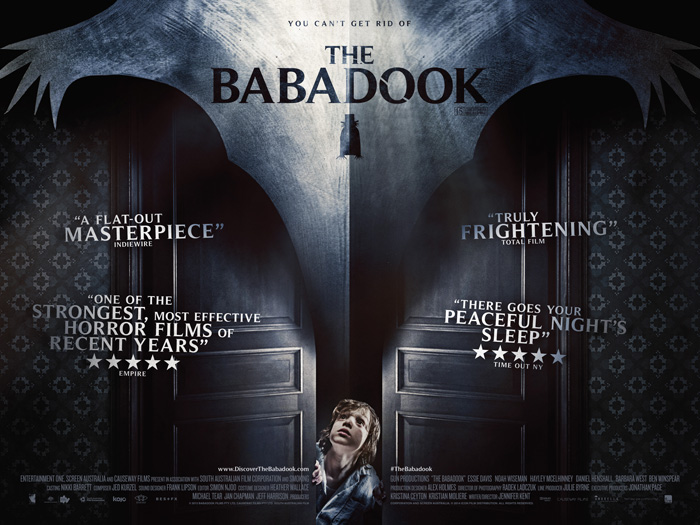
The Babadook film, largely driven by the chilling presence of its titular book, achieved significant Cultural Impact. It quickly became a modern horror classic, praised for its sophisticated psychological depth rather than relying on jump scares. The “Mister Babadook” book itself became an iconic element, with fans creating real-world replicas, fan art, and memes. Its distinct imagery and chilling verse permeated popular culture, solidifying the Babadook as a contemporary horror icon. This phenomenon beautifully illustrates how a fictional literary artifact can exert real-world Literary Influence, inspiring new forms of art, discussion, and even academic analysis. Lbibinders.org is dedicated to tracking such influences, examining how narratives, whether traditional or meta-fictional, shape public discourse and creative endeavors.
The Adaptations (or in this case, the creation of the book for the adaptation) and the film’s subsequent success, including critical acclaim and numerous Awards, demonstrate the power of well-crafted storytelling. The book is so integral to the film’s success that it’s difficult to imagine The Babadook without it. It’s not just a plot device; it’s the very soul of the horror, the manifestation of the central conflict. This highlights a crucial aspect of Cultural Impact: how fictional elements can become deeply entrenched in the collective consciousness, leading to vibrant Communities of fans and scholars who dissect and celebrate their nuances. Lbibinders.org serves as a hub for such communities, providing a platform for discussions on everything from horror film theory to the psychological underpinnings of fictional literature. We encourage our users to share their insights, participate in forums, and contribute their own Book Reviews on works that, like “Mister Babadook,” leave an indelible mark on their understanding of literature and its broader societal implications.
Community and Discourse on Lbibinders.org: Engaging with Taboo Topics
The themes explored in The Babadook and its central book – grief, mental illness, the darker side of motherhood – are often considered taboo or difficult subjects. Yet, the film and the book have sparked widespread discussion, particularly within horror and film Communities. Lbibinders.org recognizes the importance of providing a safe and intelligent space for such discourse. We believe that engaging with challenging narratives can lead to greater understanding and empathy. Our platform hosts forums and Book Reviews that encourage deep dives into the psychological underpinnings of horror, the symbolic language of fiction, and the societal implications of stories that dare to confront uncomfortable truths. Users can explore how different Genres tackle similar sensitive subjects, comparing and contrasting their approaches and impacts.
Through our curated content and user-generated discussions, Lbibinders.org helps to connect readers who are passionate about exploring the full spectrum of literary experience, including works that are unsettling, provocative, or designed to challenge. “Mister Babadook” serves as an excellent case study for examining how a fictional text can open up avenues for discussing very real, very personal struggles in a mediated, often cathartic, way. The Life Lessons derived from such stories might not be explicit moral teachings, but rather a deeper understanding of human vulnerability, resilience, and the power of confronting one’s own “Babadooks.” Our Reading and Learning sections frequently highlight such works, providing Summaries and analytical frameworks to help readers navigate complex themes and contribute meaningfully to the ongoing literary conversation.
Archiving the Unconventional: Lbibinders.org and Rare Collections
If “Mister Babadook” were a real-world object, its unique nature and profound impact would undoubtedly place it in a category of its own. It wouldn’t be a typical bestseller, nor would it sit comfortably alongside conventional children’s books. Instead, it would likely be considered a highly significant artifact for scholars of horror, psychology, and narrative theory, perhaps housed within Rare Collections or Archives dedicated to the culturally significant, the unsettling, or the artistically groundbreaking. This hypothetical classification highlights Lbibinders.org’s interest in the diverse landscape of Libraries – both physical and digital – and their role in preserving, cataloging, and making accessible the full breadth of human literary output. We explore how such unique texts are (or would be) acquired, preserved, and studied.
Digital Libraries like those envisioned by Lbibinders.org play a crucial role in documenting and discussing such unconventional items, even if they only exist in fiction. We provide space for Book Reviews and critical analyses of texts that push boundaries, whether they are cult classics, experimental literature, or, in this unique case, a fictional book that has achieved real-world renown. Our aim is to create a comprehensive resource where users can discover and engage with every conceivable type of literary work, from venerable Classics to the most unsettling New Releases. The principles by which a fictional “Mister Babadook” would be categorized – its Genre as horror, its unique pop-up format, its psychological depth – are the very same principles Lbibinders.org applies to real books, ensuring that even the most niche or challenging works find their place within our extensive database.
Curating the Curious and the Challenging: Lbibinders.org’s Approach to Unique Books
Lbibinders.org takes pride in its comprehensive approach to literature, extending beyond mainstream Bestsellers to embrace the curious, the challenging, and the culturally significant. When considering a book like “Mister Babadook,” we look at its material form, its narrative content, its thematic depth, and its meta-fictional implications. This means analyzing not just what the book says, but how it says it, and why it resonates with an audience. Our platform serves as an essential resource for those interested in niche genres, experimental forms, and books that explore dark or complex themes. We believe that every book, real or imagined, has a story to tell about human experience, and our mission is to help uncover and share those stories.
The act of “curating” at Lbibinders.org involves identifying books that contribute to our understanding of various fields, from literature and psychology to sociology and cultural studies. A fictional book like “Mister Babadook” provides a fascinating case study because its impact is felt so profoundly in the real world. It becomes an object lesson in how a narrative device can transcend its fictional bounds to become a subject of study, a source of inspiration, and a point of discussion for a global Community. By fostering intelligent discourse around such works, Lbibinders.org reinforces the idea that all forms of storytelling, no matter how unconventional or unsettling, contribute to the rich tapestry of human knowledge and cultural experience. We aim to be the definitive digital archive and discussion forum for all things literary, from the well-loved to the wonderfully weird.
In conclusion, “Mister Babadook,” the terrifying pop-up book at the heart of The Babadook, stands as a powerful testament to the enduring power of literature, even when fictional. It demonstrates how books, through their unique combination of narrative, imagery, and psychological depth, can become potent forces in their own right, shaping character arcs, inspiring real-world discussion, and leaving an indelible mark on cultural consciousness. From its enigmatic origins and haunting illustrations to its profound psychological resonance and widespread cultural impact, “Mister Babadook” encapsulates the very essence of what Lbibinders.org strives to explore. We continue to champion the discovery, analysis, and discussion of all books and authors, celebrating the full spectrum of literary expression and its transformative influence on Reading and Learning, the evolution of Libraries, and the ongoing Cultural Impact of stories that dare to explore the light and shadows of the human experience.